Limit Orders Explained: How to Use Them in Crypto and Stock Markets
When you trade crypto or stocks, a limit order, a trade instruction that only executes at a specific price or better. Also known as price-bound order, it gives you control over when and at what price your trade happens—unlike market orders that buy or sell right away at whatever price is available. This isn’t just for pros. If you’ve ever waited for Bitcoin to drop to $60,000 before buying, or sold Ethereum at $3,200 because you didn’t want to hold lower, you’ve used a limit order without knowing the name.
Limit orders work best on platforms with an order book, a live list of buy and sell offers waiting to be matched. That’s how exchanges like Binance, MEXC, or Aster DEX show you depth charts and price levels. The order book is where your limit order sits, waiting. If someone else matches your price, the trade goes through. If not, it stays open—sometimes for days. This is why limit orders are common in low-liquidity markets like new tokens (think PDEX or SNE), where prices jump around. You’re not gambling on the next tick—you’re setting your own terms.
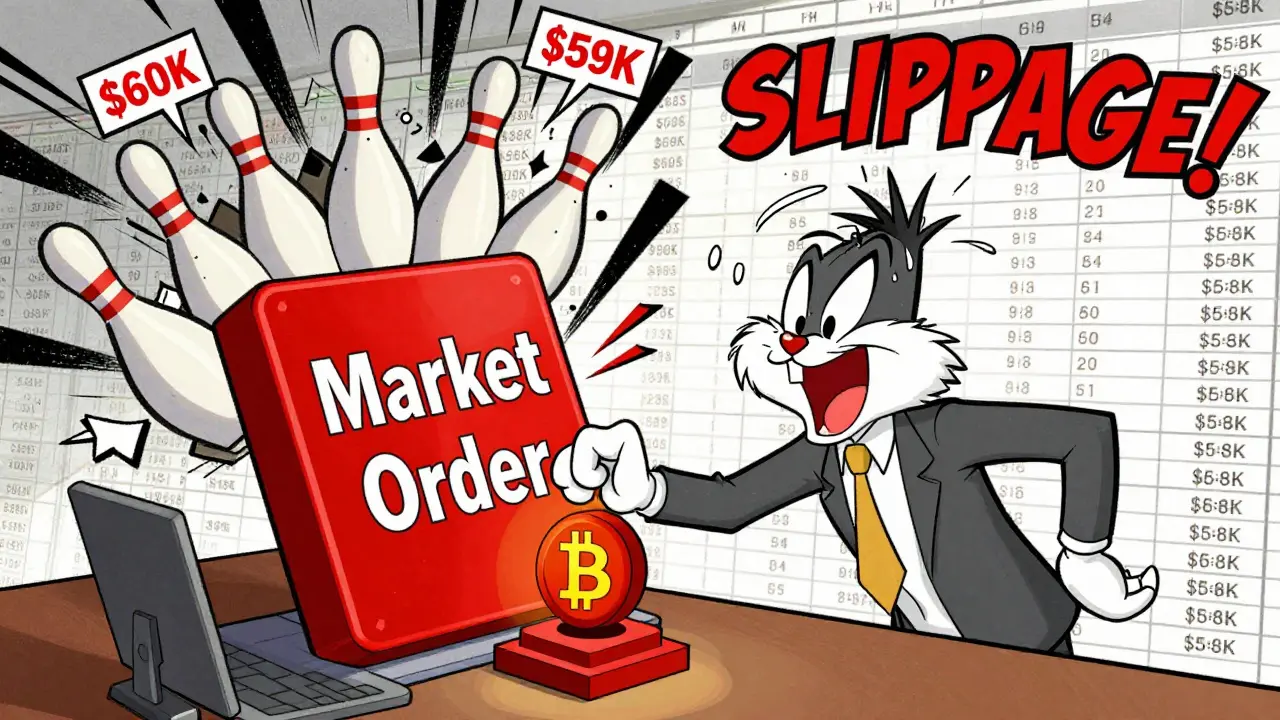
But here’s the catch: if the price never hits your limit, your order never fills. That’s why you need to understand trading strategies, planned approaches to entering and exiting trades based on market behavior. A limit order isn’t magic. It’s a tool. Use it to avoid emotional buying at highs or panic selling at lows. Many new traders lose money chasing pumps—limit orders help you stay calm. In fact, in the posts below, you’ll see how traders use them on platforms like Echobit for high-leverage trades, or on DEXs like Aster to avoid slippage on volatile tokens. You’ll also see why fake exchanges like IMOEX or EvmoSwap can’t even support real limit orders—they don’t have order books at all.
Limit orders are also how you avoid scams. If a platform promises instant fills on obscure tokens like CTC or TDROP without showing price levels, it’s probably not real. Real trading needs transparency. That’s why you’ll find guides here on how to spot the difference between exchanges that let you set your own prices—and those that just take your money.
Whether you’re buying Bit Hotel tokens, staking VLX, or tracking TVL in DeFi, knowing how to use limit orders gives you power. You’re not reacting—you’re planning. And in markets that move fast, that’s the edge you need. Below, you’ll find real examples from actual trading situations—no theory, no fluff. Just what works, what doesn’t, and why.