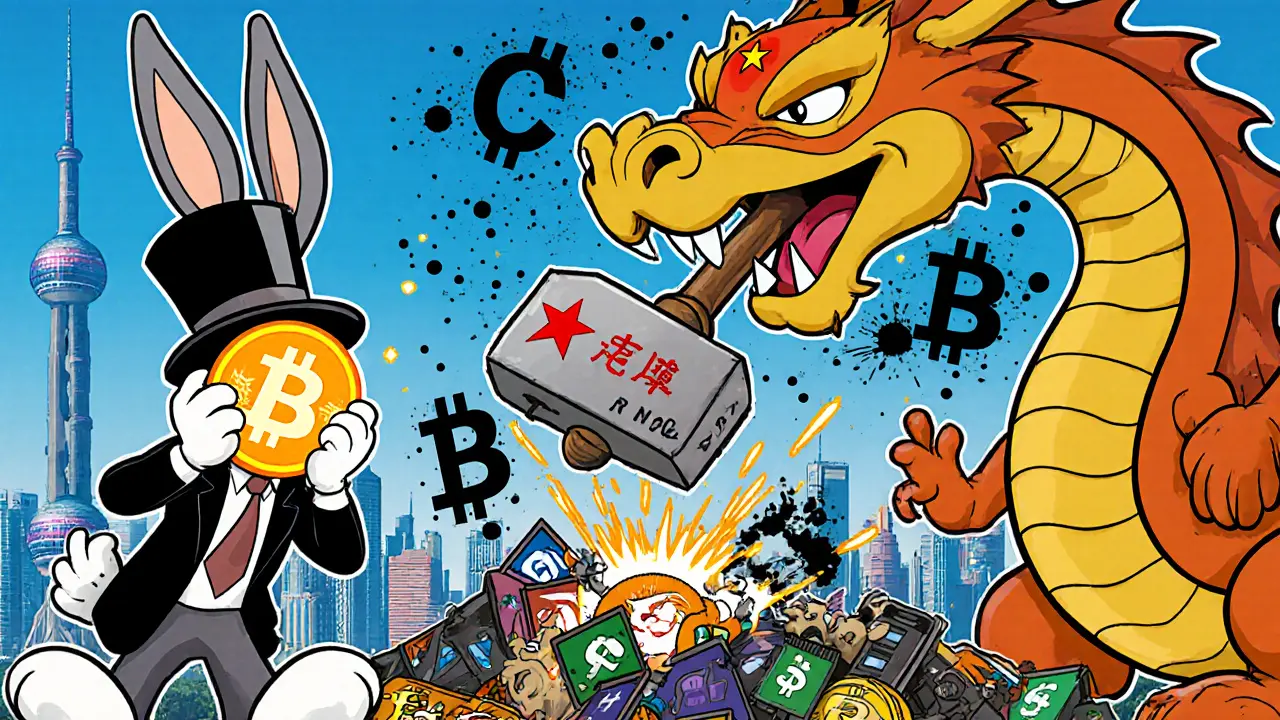
Digital Yuan: What It Is, How It Works, and Why It Matters
When you hear digital yuan, China's official central bank digital currency issued by the People's Bank of China. Also known as e-CNY, it's not crypto—it's the exact same currency as physical cash, just digital and tracked by the government. Unlike Bitcoin or Ethereum, the digital yuan doesn’t aim to replace banks. It aims to replace cash. Every transaction leaves a trace. Every payment is recorded. There’s no anonymity. And that’s the whole point.
This isn’t just about convenience. It’s about control. The Chinese government uses the digital yuan to monitor spending patterns, target economic stimulus, and reduce tax evasion. It also helps bypass Western financial systems like SWIFT, giving China more independence in global trade. Countries like Russia and Iran are watching closely. So are the U.S. and EU. The digital yuan is the first real-world test of a central bank digital currency, a government-issued digital form of a nation’s fiat currency at national scale. No other country has rolled one out this far, this fast.
It’s not a blockchain project like most people assume. The digital yuan runs on a hybrid system—part centralized ledger, part distributed tech. It doesn’t need miners or stakers. It doesn’t use smart contracts. It’s built for speed, scalability, and surveillance. You can pay for groceries, subway rides, or online orders with a simple app. Even offline, using NFC, it works without internet. That’s why it’s already used by over 500 million people in China. And it’s being tested abroad—in places like Thailand, Hong Kong, and the UAE—for cross-border trade.
What does this mean for you? If you trade crypto, the digital yuan is a quiet competitor. It’s not decentralized. It’s not volatile. But it’s faster, cheaper, and more widely accepted than most tokens. If you run a business, it could mean new payment options—or new compliance headaches. If you’re worried about privacy, it’s a warning sign. Governments are no longer just watching your bank accounts. They’re watching your every digital purchase.
The digital yuan isn’t a fad. It’s the future of money—and China is leading it. What follows are real reviews, analyses, and warnings about how this shift affects crypto markets, exchange policies, and global finance. You’ll see how it compares to Bitcoin mining in Iran, how it influences DeFi adoption, and why some exchanges are already adjusting their rules. This isn’t theory. It’s happening now. And if you’re not paying attention, you’re already behind.