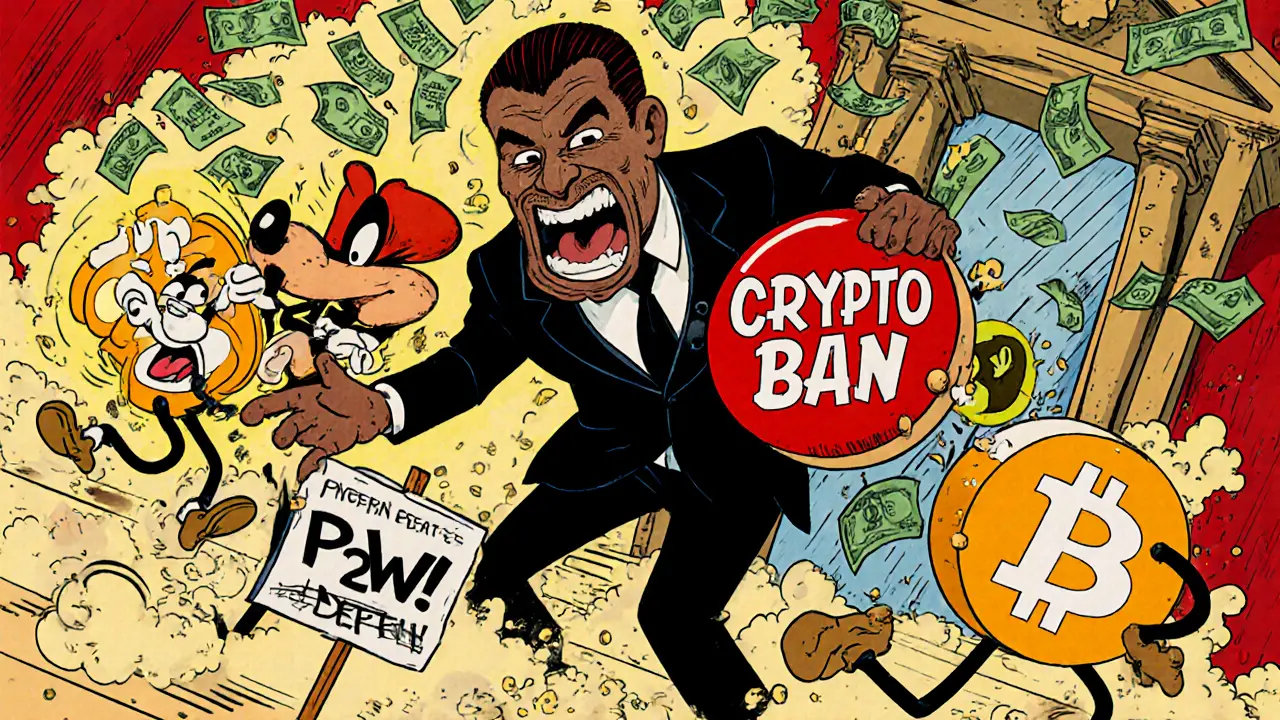
CBN Crypto Ban: What It Means for Crypto Users and How Countries Enforce It
When the Central Bank of Nigeria (CBN) crypto ban, a 2021 directive that prohibited Nigerian banks from processing cryptocurrency transactions. Also known as Nigeria’s crypto trading restriction, it didn’t outlaw owning crypto—but made it nearly impossible to buy or sell through traditional banks. The move sent shockwaves through Africa’s largest crypto market. People didn’t stop trading. They just found new ways.
What followed was a surge in peer-to-peer (P2P) platforms like Paxful and Binance P2P. Traders used mobile money, cash deposits, and even local market vendors to swap Naira for Bitcoin. Meanwhile, the government kept pushing its own digital currency, the eNaira, while cracking down on exchanges that didn’t comply. This isn’t unique. China’s cryptocurrency ban, a total prohibition on trading, mining, and even holding crypto since 2021. Also known as China’s crypto crackdown, it went further—shutting down mining farms and blocking access to foreign exchanges. In Iran, the state turned to crypto mining to bypass sanctions, using cheap power to mine Bitcoin and evade Western financial controls. Meanwhile, India took a different path: no ban, just a 30% tax. These differences show that a crypto ban isn’t just a rule—it’s a strategy, and enforcement varies wildly.
The real question isn’t whether a ban works. It’s who gets hurt. Ordinary users in Nigeria faced longer transaction times and higher P2P premiums. Miners lost income. Exchanges closed or moved offshore. But crypto didn’t disappear—it adapted. People used VPNs, decentralized wallets, and Telegram groups to keep trading. The CBN crypto ban exposed a truth: you can restrict banks, but you can’t stop a network built on global, decentralized nodes. What you see in the posts below are real stories from this battle—how scams exploited the confusion, how fake exchanges popped up promising "legal crypto access," and how users learned to protect themselves. You’ll find reviews of exchanges that vanished overnight, breakdowns of how airdrops turned into traps, and guides on how to trade safely when banks won’t help. This isn’t theory. It’s what happened when governments tried to shut down money that doesn’t need permission.