
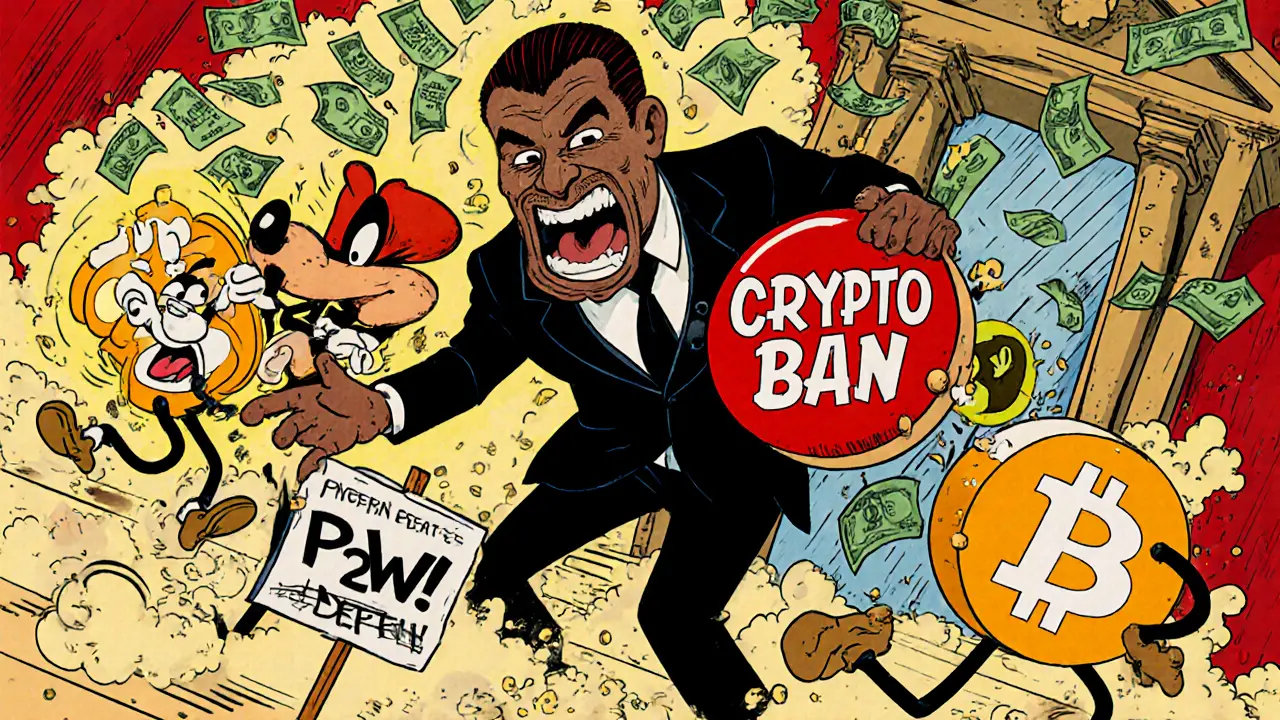
Nigeria Crypto Policy Timeline
How Nigeria's Crypto Rules Evolved
Explore key milestones in Nigeria's journey from crypto ban to regulation.
2017: First CBN Warning
CBN issued circular advising banks not to deal with crypto services. No outright ban but clear warning about risks.
Impact: Early crypto users moved to peer-to-peer platforms
February 5, 2021: Strict Ban
CBN ordered banks to close accounts of crypto businesses and stop processing crypto transactions.
Impact: P2P trading exploded as users switched to WhatsApp and mobile money
September 2020: SEC Steps In
SEC declared crypto tokens acting as securities would be regulated under Investment and Securities Act.
Impact: Created regulatory framework for security-like assets
December 2023: VASP Guidelines
CBN introduced Virtual Asset Service Provider guidelines allowing licensed crypto firms to operate.
Impact: Official end of ban; banks could hold accounts for licensed VASPs
2025: Digital Assets as Securities
Passed Investments and Securities Act 2025 recognizing digital assets as securities under SEC regulation.
Impact: Full regulatory framework; unlicensed exchanges made illegal
Back in 2021, if you were caught trading Bitcoin in Nigeria using a bank account, your account could be frozen overnight. No warning. No appeal. Just gone. That was the reality under the Central Bank of Nigeria’s (CBN) strict ban on cryptocurrency transactions. But by 2025, the same bank that once shut down crypto accounts now licenses crypto firms and lets banks work with them. This isn’t just a policy tweak-it’s a full reversal. And it tells you everything about how governments are learning to deal with decentralized money.
The 2017 Warning: Not a Ban, But a Red Flag
The CBN first spoke up about cryptocurrency in January 2017 with a circular to all banks. It didn’t say crypto was illegal. It didn’t say you couldn’t own it. But it told banks: don’t touch it. No accounts for crypto exchanges. No transfers for Bitcoin purchases. No processing payments for digital asset platforms. The goal? To stop money laundering and protect the banking system from unregulated risks. At the time, Nigeria’s crypto scene was tiny. A few early adopters, mostly tech-savvy students and freelancers sending remittances. But the CBN’s move sent a chill through the industry. Banks started closing accounts of people who traded crypto-even if they weren’t running exchanges. People didn’t stop trading. They just moved underground.The 2021 Crackdown: The Real Ban
On February 5, 2021, the CBN went further. It issued a letter to all deposit money banks, microfinance institutions, and financial intermediaries. It was clear: no dealing in crypto. No facilitating payments. No holding accounts for crypto businesses. This wasn’t a suggestion. It was an order. And it had teeth. Banks started shutting down thousands of accounts linked to crypto trading. Companies like Binance and OKX saw their Nigerian customers suddenly cut off. But here’s the twist: people didn’t stop trading. They just switched to peer-to-peer (P2P) platforms. Instead of using banks, Nigerians bought Bitcoin directly from other people using mobile money apps, cash deposits, and even WhatsApp. P2P trading exploded. Nigeria became one of the top countries in the world for P2P crypto volume. Why? Because when the government blocks the highway, people build dirt roads. And in Nigeria, those dirt roads ran through WhatsApp groups and local marketplaces. Crypto became a lifeline during the #EndSARS protests in 2020. When the government froze activist bank accounts, crypto donations kept the movement alive. That’s when the CBN realized: you can’t stop what people can’t see.The SEC Steps In: A Parallel Path
While the CBN was shutting doors, the Securities and Exchange Commission (SEC) was opening windows. In September 2020, the SEC declared that any digital asset that acted like a security-like a token promising returns or profit-sharing-would be regulated under the Investments and Securities Act. This was huge. It meant crypto wasn’t just gambling or tech hype. Some tokens were financial instruments. The SEC and CBN formed a joint committee to figure out how to handle crypto. The CBN wanted control over banks. The SEC wanted to regulate investment products. Neither wanted chaos. But neither had a clear plan-until 2023.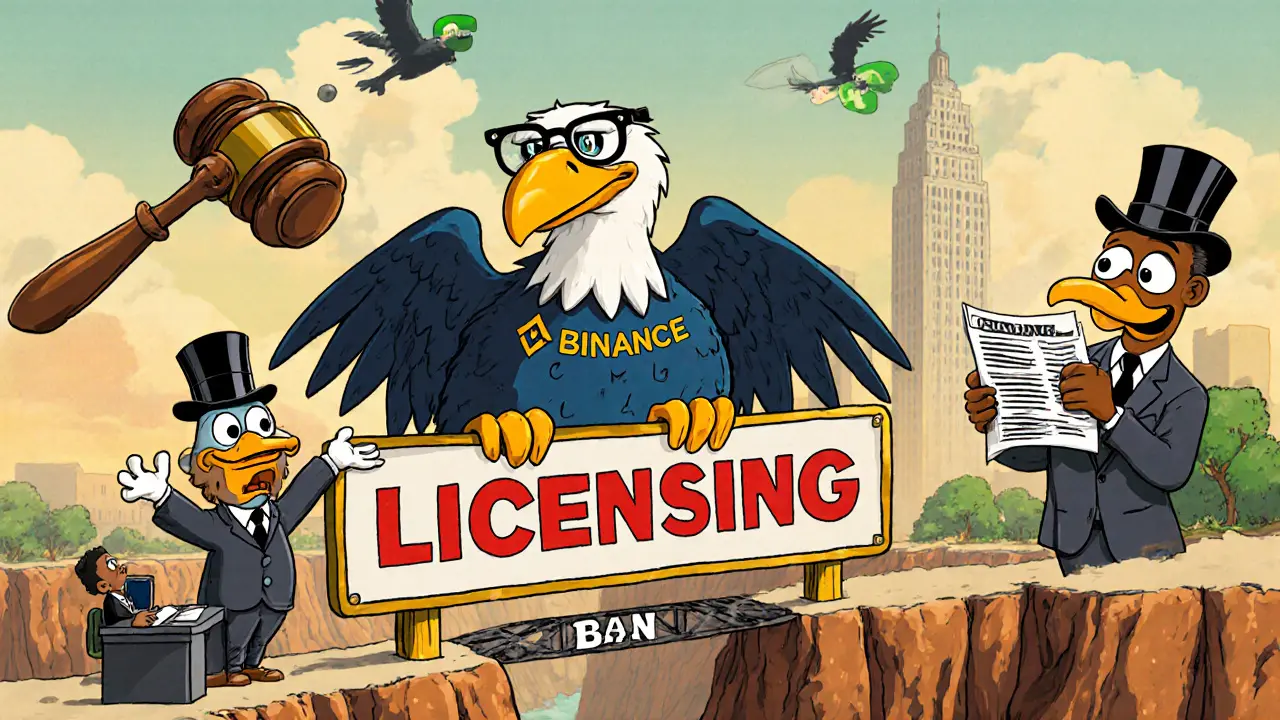
The 2023 Pivot: Licensing, Not Banning
In December 2023, everything changed. The CBN dropped the Virtual Asset Service Provider (VASP) Guidelines. For the first time, it said: banks can open accounts for crypto firms-if they’re licensed by the SEC. This was the official end of the ban. Not because crypto was safe. Not because the CBN suddenly loved Bitcoin. But because the ban had failed. People were still trading. Money was still moving. And the government was losing control-not because of hackers, but because of its own inflexibility. The new rules were strict. Crypto companies had to register with the SEC. They had to do full KYC (know your customer). They had to report all transactions. They had to prove they weren’t laundering money. The SEC became the gatekeeper. The CBN became the enabler.The 2025 Law: Crypto as a Security
By 2025, Nigeria passed the Investments and Securities Act 2025. This law formally recognized digital assets as securities. It gave the SEC full authority to license, audit, and penalize crypto firms. It also made it illegal to operate a crypto exchange without a license. This wasn’t just about regulation. It was about legitimacy. Nigeria was trying to get off the Financial Action Task Force’s (FATF) Gray List. The FATF had flagged Nigeria for weak anti-money laundering controls. Crypto was a big reason why. By bringing crypto into the formal system, Nigeria showed it could manage risk-even with decentralized tech.What Happened to the Big Exchanges?
During the ban, some big players left. OKX pulled out in July 2024, telling customers to withdraw funds because of "recent changes in local laws." Binance removed the naira from its trading pairs. Rumors swirled that two Binance executives were detained over untraceable funds. But here’s the irony: those same companies are now back. Not as outsiders. Not as rule-breakers. As licensed VASPs. They’re applying for SEC licenses. They’re setting up local offices. They’re hiring Nigerian compliance officers. The market didn’t die-it adapted.
Why the Change? The Real Reason
The CBN didn’t change its mind because it believed in crypto. It changed because it had no choice. Nigeria’s youth are among the most crypto-literate in the world. Over 30% of adults have traded or owned crypto. The country’s remittance market is worth over $20 billion a year. Much of it flows through crypto because traditional channels are slow and expensive. The government also realized it was losing tax revenue. When crypto trades happen off the books, no one pays tax. When they’re licensed and tracked, they can be taxed. And then there’s the dollar. Nigeria’s currency has been under pressure. The government blamed crypto traders for driving up demand for dollars. But the truth? The real problem was oil prices and poor fiscal policy. Crypto was just the scapegoat.Current Rules: What You Need to Know in 2025
If you want to trade crypto in Nigeria today, here’s what matters:- You can’t trade through an unlicensed exchange. The SEC has published a list of approved VASPs.
- Your bank can now legally hold your crypto business account-if the firm is licensed.
- You must complete KYC. No anonymous trading.
- All transactions over 500,000 naira must be reported to the Financial Intelligence Unit.
- Stablecoins like USDT are allowed-but only if issued by licensed entities.
Nelia Mcquiston
November 30, 2025 AT 16:54The shift from prohibition to regulation isn't just policy-it's a recognition that control is an illusion when people have access to technology and desperation. The CBN didn't change its mind. It realized it was fighting the tide with a paper towel.
Human behavior doesn't obey decrees. It finds paths. Nigeria didn't defeat crypto. It surrendered gracefully and turned surrender into strategy.
This is what real governance looks like: not domination, but adaptation.
Shari Heglin
December 1, 2025 AT 21:55While the narrative of regulatory evolution is compelling, it is imperative to note that the CBN’s reversal was not a principled shift but a pragmatic capitulation to market forces. The term ‘regulation’ is often misapplied; what occurred was merely the institutionalization of pre-existing underground activity. Legalization does not equate to legitimacy.
Reggie Herbert
December 3, 2025 AT 00:56Let’s be real-this isn’t regulation. It’s containment. The CBN didn’t embrace crypto. They just stopped pretending they could stop it. Now they get to tax it, monitor it, and blame it when it fails. Classic state move.
Also, ‘licensed VASPs’? That’s just a fancy way of saying ‘we’re letting them operate under our thumb.’
And don’t get me started on KYC. You think Bitcoin was about freedom? Now you’re handing your ID to a Nigerian compliance officer who gets paid in Naira. Irony level: max.
Mark Stoehr
December 4, 2025 AT 12:20lol the CBN thought they could ban something everyone was already using
now they’re trying to charge for the privilege of doing what they couldn’t stop
typical
Sarah Locke
December 5, 2025 AT 06:44This is one of the most beautiful examples of policy evolution I’ve ever seen. Imagine being a government that says, ‘We were wrong. People are using this. Let’s make it safe, legal, and fair.’
Most countries would double down. Nigeria said, ‘Let’s learn.’
To every young Nigerian who traded Bitcoin on WhatsApp during the protests-you didn’t just survive. You changed the system. And that’s power.
Mani Kumar
December 6, 2025 AT 19:21Regulatory capture disguised as innovation. The SEC, once a nominal watchdog, has become a gatekeeper for corporate interests. The CBN’s pivot reflects institutional weakness, not wisdom. Nigeria’s youth are not heroes-they are victims of economic collapse, forced into crypto as a survival mechanism. This is not progress. It is desperation institutionalized.
Tatiana Rodriguez
December 7, 2025 AT 20:54Oh my god. I just read this whole thing and I’m crying. Not because I’m emotional-but because this is the kind of story that gives me hope for humanity.
Think about it: a government that once froze accounts like they were crimes against the state… now has a whole licensing framework. People didn’t stop trading. They didn’t riot. They didn’t beg. They just… kept going. They built parallel economies with WhatsApp and cash. They made it work.
And now? The government is catching up. Not because they wanted to. Because they had to.
This isn’t just crypto. This is what resilience looks like when you have no safety net. This is Nigeria saying: ‘You can’t stop us. So let’s do it right.’
I’m so proud. And I’m not even Nigerian.
Also, the fact that people trusted Bitcoin more than their own central bank’s digital currency? That’s the most powerful line in this entire story. That’s not a failure of crypto. That’s a failure of trust in institutions.
Philip Mirchin
December 8, 2025 AT 22:45As someone who’s lived in Lagos and seen the P2P scene firsthand-this is the most honest policy shift I’ve ever seen in emerging markets.
The CBN didn’t ‘get it.’ They just ran out of options. But guess what? That’s still better than pretending you’re in control when you’re not.
What’s wild is how Nigerian traders didn’t wait for permission. They didn’t protest. They didn’t petition. They just moved money. And now the system’s adapting to them.
That’s not rebellion. That’s real-world innovation.
Britney Power
December 10, 2025 AT 07:16The entire narrative is dangerously romanticized. The CBN’s reversal was not a triumph of adaptability-it was an admission of catastrophic failure. The so-called ‘regulation’ is a veneer over systemic collapse. Nigeria’s currency is in freefall, youth unemployment is at 50%, and crypto became the only viable avenue for wealth preservation. This is not policy evolution-it is economic surrender dressed in compliance jargon.
And let’s not pretend KYC is about safety. It’s about surveillance. The SEC is not protecting consumers. It is creating a ledger for future asset seizures. The moment the state needs liquidity, these ‘licensed’ wallets will be the first to be frozen.
This isn’t progress. It’s prelude.
Maggie Harrison
December 12, 2025 AT 03:17THIS. IS. EVERYTHING. 💥
People didn’t stop trading. They just got smarter. They turned WhatsApp into a bank. They turned market stalls into exchanges. They turned desperation into innovation.
And now? The government’s playing catch-up… and honestly? I’m rooting for them.
They didn’t win the battle. They just stopped losing. And that’s how real change happens.
❤️🌍
justin allen
December 13, 2025 AT 03:49Y’all act like Nigeria did something heroic. Nah. They got outmaneuvered. The youth didn’t outsmart the state-they bypassed it. And now the state is trying to monetize the chaos they created.
Meanwhile, the U.S. is still stuck in crypto purgatory because Congress can’t agree on whether Bitcoin is a commodity or a security. Nigeria’s got it figured out. Not because they’re smart. Because they had no choice.
Don’t glorify desperation.
ashi chopra
December 14, 2025 AT 21:41I’ve seen this happen in my own family. My cousin, a nurse in Abuja, used crypto to send money to her sister in Mumbai when the banks froze transfers. She didn’t know about VASPs or SEC guidelines. She just knew she had to get money through.
Now, she’s registered. She’s compliant. She’s still using crypto-but now she has receipts.
This isn’t about policy. It’s about people. And Nigeria finally remembered that.
Darlene Johnson
December 15, 2025 AT 07:46They’re lying. This is all a distraction. The CBN is using crypto regulation to justify surveillance. The FATF Gray List? That’s a scare tactic. The real reason they flipped? They’re running out of dollars and need to tax every last naira flowing through crypto.
They’ll ban it again in 2027. Mark my words. This is just the calm before the next storm.
Ivanna Faith
December 15, 2025 AT 12:25So they let crypto in but only if you give them your ID and your transaction history… and then they call it ‘regulation’
so much for decentralization huh
lol
Akash Kumar Yadav
December 15, 2025 AT 13:48Nigeria didn’t win. They surrendered and called it a win. The CBN is now just a tax collector with a blockchain license.
And the people? They’re still paying the price-just with more paperwork.
samuel goodge
December 16, 2025 AT 08:54This is an extraordinary case study in regulatory adaptation under duress. The CBN’s initial stance was ideologically rigid, predicated on the assumption that financial systems must be centralized to be secure. The subsequent pivot-while pragmatic-reveals a deeper truth: decentralized systems, when adopted at scale, force institutional evolution. The emergence of the VASP framework, coupled with SEC oversight, represents not capitulation, but a necessary recalibration of state authority in the digital age.
What is particularly instructive is the role of informal networks: P2P trading via WhatsApp, cash-based settlements, and community trust systems. These were not ‘workarounds’-they were emergent financial infrastructures, predating formal recognition. The state’s role, therefore, is not to eliminate them, but to integrate them-without extinguishing their decentralized character.
Moreover, the contrast between the eNaira and Bitcoin adoption speaks volumes: the former was top-down, coercive, and institutionally opaque; the latter was bottom-up, voluntary, and user-owned. The market’s preference is not a technical failure-it is a legitimacy failure.
Nigeria’s journey is not unique. It is inevitable. All central banks will face this choice: regulate or become irrelevant.
alex bolduin
December 16, 2025 AT 17:00Man I remember when my friend’s account got frozen for buying ETH
he just switched to P2P and never looked back
now he’s got a crypto business account
weird how that worked out huh
Reggie Herbert
December 18, 2025 AT 02:12And yet the SEC still can’t figure out if a stablecoin is a security or not. They’re licensing exchanges like they’re fast food franchises. Meanwhile, the real innovation-DeFi, on-chain governance, DAOs-is still blocked because it doesn’t fit their compliance boxes.
They didn’t win. They just built a cage around the wild animal and called it a zoo.