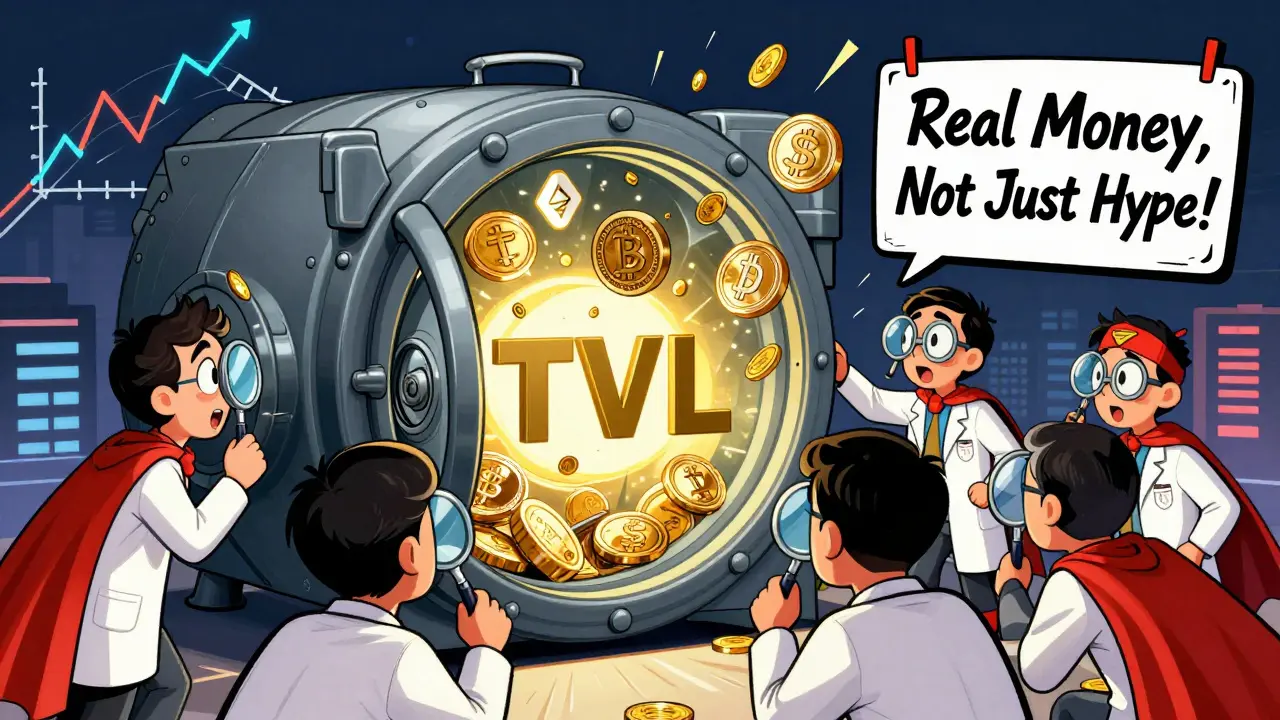
Blockchain Analytics: Tools, Trends, and How to Spot Real Crypto Projects
When you look at a blockchain, you're not just seeing coins moving—you're seeing a public ledger of every transaction ever made. Blockchain analytics, the process of examining on-chain data to uncover patterns, trace funds, and detect suspicious activity. Also known as on-chain analysis, it's what separates guesswork from real insight in crypto. Whether you're checking if a new token has real trading volume or trying to avoid a rug pull, blockchain analytics gives you the facts behind the hype.
This isn’t just for experts. If you’ve ever wondered why a coin with a big airdrop has zero trading volume, or why some exchanges disappear overnight, blockchain analytics answers those questions. It shows you who holds the tokens, how often they move, and if the same wallet is recycling funds to fake activity. Tools like on-chain data, real-time records of transactions stored on public ledgers like Bitcoin and Ethereum let you see if a project is growing—or just spinning its wheels. And when you combine that with blockchain security, the measures that protect networks from attacks like Sybil fraud or double-spending, you start to see which projects are built to last and which are just temporary noise.
Most of the posts here use blockchain analytics to cut through the lies. You’ll find cases where fake exchanges like IMOEX or EvmoSwap had no real users, where airdrops like SUNI or POLYS had no team or website, and where tokens like DMT or BTH sat untouched in wallets despite millions being distributed. These aren’t coincidences—they’re red flags visible through data. Blockchain analytics doesn’t care about marketing buzz. It only cares about what’s actually happening on the chain.
You don’t need to be a coder to use it. Start by checking a token’s wallet distribution on a block explorer. If 10 wallets hold 80% of the supply, that’s a warning. If trades happen only between a few addresses, that’s not liquidity—that’s manipulation. The best crypto tools today don’t just show prices—they show behavior. And in a market full of scams, that’s the only thing that matters.
Below, you’ll find real breakdowns of tokens, exchanges, and airdrops—all pulled apart using the same data-driven approach. No fluff. No promises. Just what the blockchain actually says.