
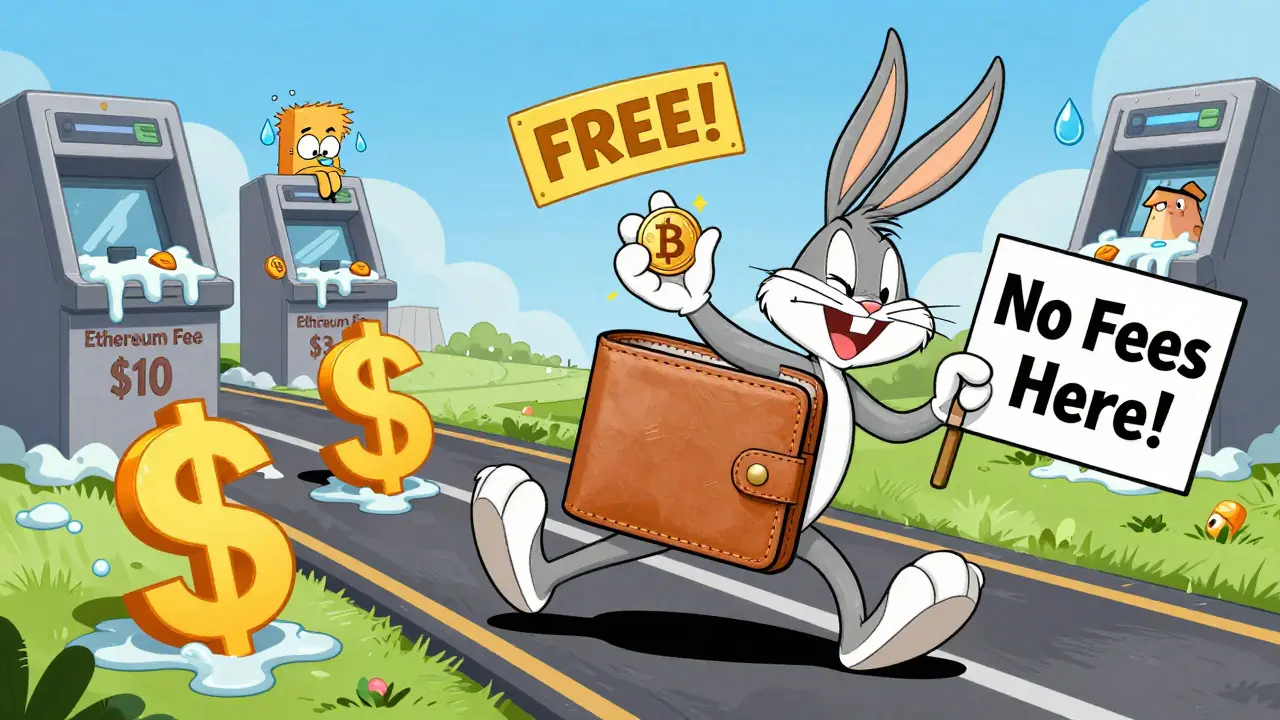
Think about the last time you sent money to a friend. Did you pay a fee? Probably. Even apps like Venmo or PayPal take a cut. Now imagine sending crypto without paying anything at all. No miner fees. No network charges. Just a instant, free transfer. That’s not a dream-it’s real. And it’s changing how we think about digital money.
Why Fees Exist (And Why They’re a Problem)
Most blockchains rely on transaction fees to keep things running. Bitcoin and Ethereum, for example, need miners or validators to process transactions. These people get paid in fees. It sounds fair-until you’re trying to send $5 and the fee is $3. Or worse, during peak times, Ethereum fees spike to over $10. That’s not practical for everyday use. It’s why many people still use banks or PayPal: they’re predictable. Zero-fee cryptocurrencies solve this by removing the need for fees entirely. They don’t rely on miners. They don’t charge users. And yet, they still secure the network. How? By redesigning the whole system.How Zero-Fee Crypto Actually Works
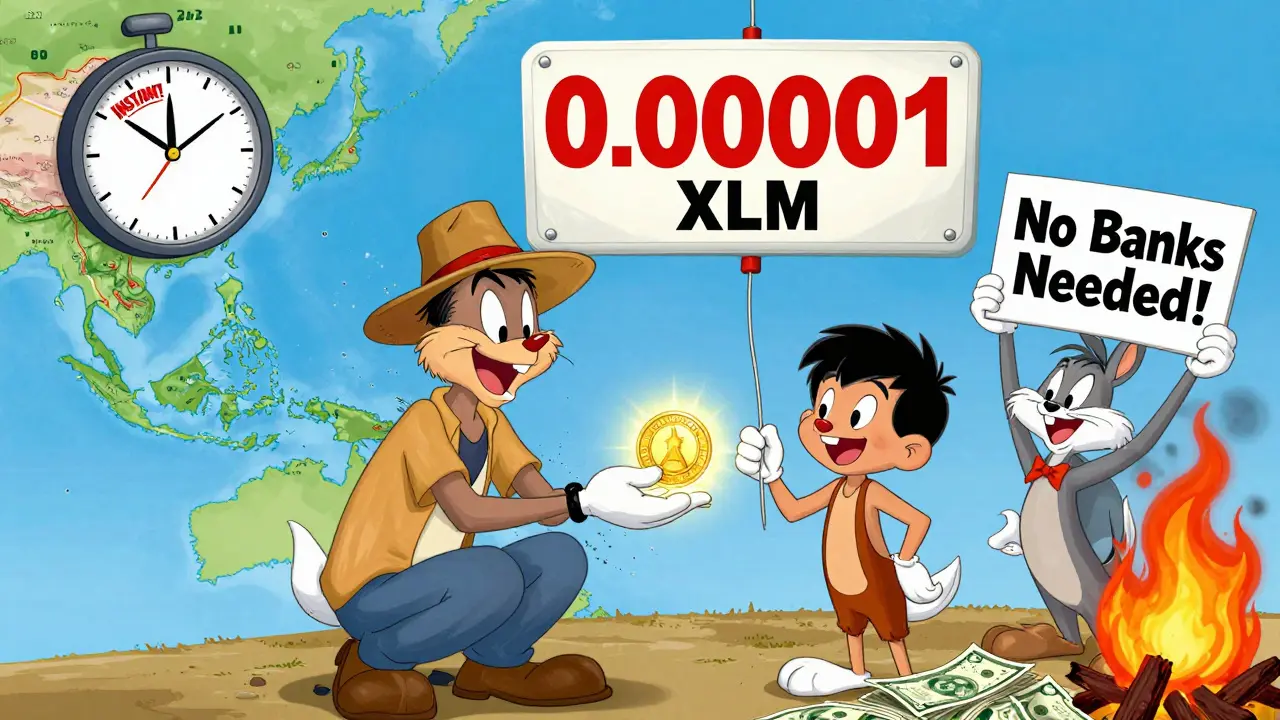
It’s not magic. It’s architecture. Take Nano a cryptocurrency built on a block-lattice structure where every user has their own blockchain. Instead of one giant chain that everyone validates, each account has its own chain. When you send Nano, you update your own chain. When you receive, you update yours. No middleman. No miners. No fees. The network is secured by elected representatives who vote on transaction validity. These representatives don’t need fees-they’re incentivized by reputation and network health. Then there’s IOTA a feeless system using a Tangle, a type of directed acyclic graph (DAG) that turns every user into a validator. When you send IOTA, you must approve two previous transactions. That’s your payment for using the network. You’re not paying a fee-you’re helping secure it. No central validator. No mining. Just peer-to-peer validation. Tron a high-throughput blockchain using Delegated Proof-of-Stake (DPoS) to achieve near-zero transaction costs doesn’t eliminate fees entirely, but it reduces them to less than $0.01-even for complex smart contracts. It does this by having 27 elected validators who handle all transactions. No competition. No bidding. Just efficiency. And Stellar a payment-focused network with a fixed fee of 0.00001 XLM, roughly $0.0000041 charges so little it’s practically free. Its Stellar Consensus Protocol (SCP) reaches agreement without proof-of-work. Transactions settle in 2-5 seconds. It’s designed for banks and remittance services, not just crypto traders.Real-World Use Cases That Actually Work
These aren’t lab experiments. People are using them every day. - Nano is perfect for micropayments. A blogger can tip readers $0.01 for a useful comment. A musician gets paid per stream without losing half to fees. In Wellington, a local café started accepting Nano for coffee. No processing fees. No chargebacks. Just a QR code scan. - IOTA powers machine-to-machine payments. Imagine a smart fridge that automatically orders milk when it’s low. It pays the delivery service in IOTA. No fee. No delay. This is already being tested in Germany and Japan. - Tron is the backbone of gaming and streaming platforms. On Tron, you can buy a skin in a game for $0.003. On Ethereum? It’d cost $5. Developers love it. Gamers love it. Tron processes over 1 million transactions per day. - Stellar connects banks across Africa and Southeast Asia. A farmer in Kenya sends money to family in the Philippines. It arrives in 3 seconds. Cost? Less than a cent. No middlemen. No currency conversion fees.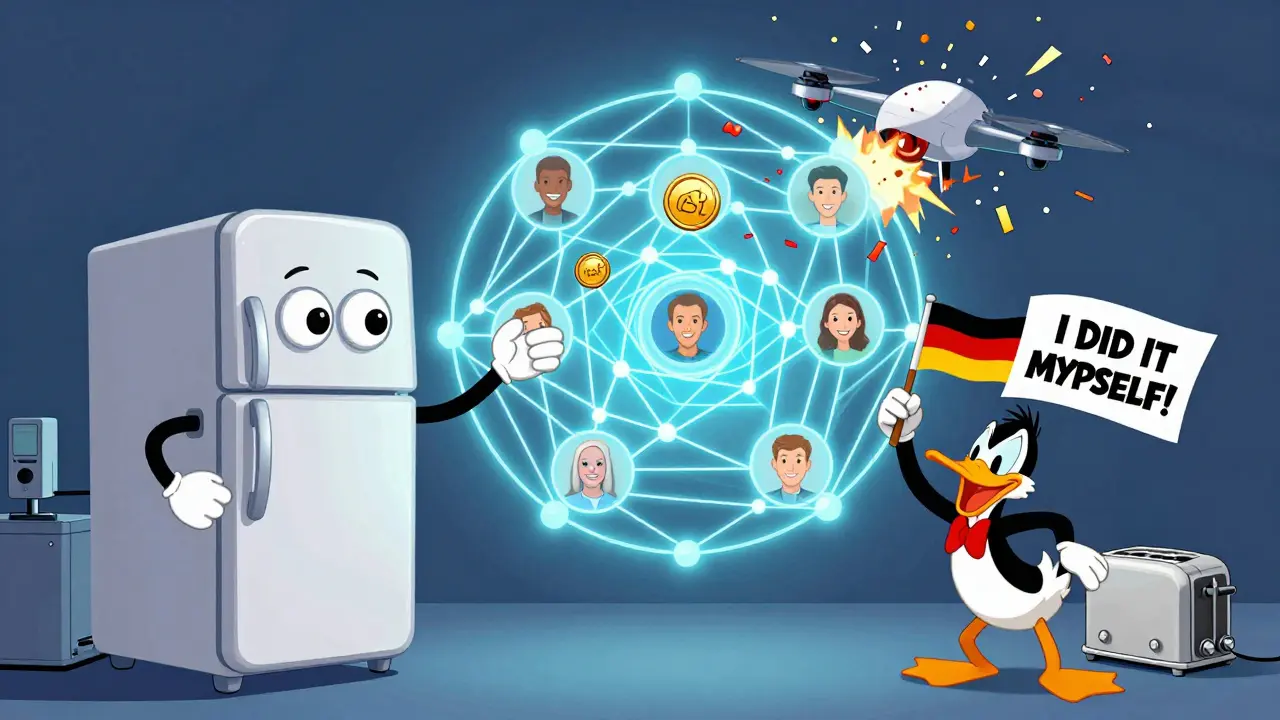
Trade-Offs: What You Give Up for Free
Nothing’s perfect. Zero-fee systems often sacrifice decentralization. Nano’s 72 representatives? That’s more centralized than Bitcoin’s 10,000+ nodes. Tron’s 27 validators? That’s a small group. IOTA’s coordination requirements? They’re complex for non-tech users. Also, adoption is still limited. You won’t find Nano on Coinbase. IOTA isn’t accepted at Amazon. Even if your wallet supports it, most stores don’t. That’s the biggest hurdle. And what about funding? Bitcoin miners get paid in fees and block rewards. What pays for Nano’s development? Donations. Community grants. That’s risky. If the community stops supporting it, the project stalls.How to Start Using Zero-Fee Crypto Today
If you want to try it, here’s how:- Choose your coin. Nano for simplicity. IOTA for IoT. Tron for apps and gaming. Stellar for payments.
- Get a wallet. Nano uses Natrium or Nano Wallet. IOTA uses Firefly. Tron uses TronLink. Stellar uses Freewallet.
- Buy some. Use exchanges like KuCoin, Gate.io, or Binance (for Tron and Stellar). Nano is harder to find-try BitMart or Bitrue.
- Send your first transaction. Send $1 to a friend. Watch it arrive in seconds. No fee. No waiting.
What the Future Holds
By 2026, zero-fee crypto is no longer a niche. It’s becoming a necessity. As more people realize that paying $5 to send $20 is insane, demand for alternatives grows. Tron is expanding into retail. Nano is partnering with mobile payment apps in Latin America. IOTA is rolling out its Tangle in smart cities. The big question isn’t whether zero fees are possible. It’s whether they’re sustainable. Can a network survive without transaction fees? Can it fund developers, security audits, and upgrades? So far, the answer is yes-but only if the community stays active. For everyday users, this is the future: instant, free, global payments. No banks. No middlemen. Just value moving as easily as information.Why This Matters More Than You Think
Crypto wasn’t supposed to be another Wall Street tool. It was supposed to give power back to people. But high fees turned it into a luxury. Zero-fee systems are bringing it back to its roots. Imagine a world where your child can send a birthday gift to a cousin overseas without costing $10 in fees. Where a freelance designer gets paid instantly for a $2 logo. Where a refugee can receive aid in crypto without losing half to processing charges. That’s not sci-fi. It’s happening. And it’s all because someone decided: transactions shouldn’t cost anything.Can I really send crypto with zero fees?
Yes. Nano, IOTA, and Stellar all offer truly zero or near-zero fees. Tron charges less than $0.01 per transaction. These networks don’t rely on miners, so they don’t need fees to incentivize validation. Instead, they use alternative consensus methods like block-lattice, Tangle, or DPoS.
Why don’t all cryptocurrencies have zero fees?
Most blockchains like Bitcoin and Ethereum use proof-of-work or proof-of-stake systems that require miners or validators to be paid. Fees cover their costs and keep the network secure. Without fees, there’s no economic incentive to maintain the network. Zero-fee coins solve this by redesigning how validation works-making users part of the process or using elected validators instead of open mining.
Is zero-fee crypto safe?
It depends. Nano and Stellar have been running for years with no major hacks. IOTA has had past issues but has since hardened its network. Tron’s DPoS system is efficient but less decentralized than Bitcoin. All are secure for everyday use, but they’re not as battle-tested as Bitcoin. Always use official wallets and never share your private keys.
Can I use zero-fee crypto to pay for things online?
Limited, but growing. Nano is accepted by small businesses, bloggers, and some cafes. Tron powers in-game purchases on gaming platforms. Stellar is used by remittance services in Africa and Asia. Most major retailers still don’t accept them. You’ll need to find merchants who support them directly or use crypto debit cards linked to your wallet.
Which zero-fee crypto is best for beginners?
Stellar is the easiest. It works like a traditional bank account but on blockchain. Nano is second-simple wallet, instant sends. Tron is good if you’re into apps or gaming. IOTA requires more technical understanding. Start with Stellar or Nano, and explore others once you’re comfortable.
Dionne van Diepenbeek
March 14, 2026 AT 12:42Ross McLeod
March 16, 2026 AT 04:52rajan gupta
March 17, 2026 AT 23:05Billy Karna
March 19, 2026 AT 15:57Tony Weaver
March 21, 2026 AT 10:01Patty Atima
March 23, 2026 AT 04:19Lucy de Gruchy
March 25, 2026 AT 04:07Lauren J. Walter
March 26, 2026 AT 03:19Carol Lueneburg
March 27, 2026 AT 13:24Brenda White
March 28, 2026 AT 11:10Tobias Wriedt
March 29, 2026 AT 11:02Ernestine La Baronne Orange
March 29, 2026 AT 15:49Manali Sovani
March 29, 2026 AT 19:11Konakuze Christopher
March 31, 2026 AT 08:35Elizabeth Kurtz
March 31, 2026 AT 22:36Derek Lynch
April 1, 2026 AT 11:11Shreya Baid
April 1, 2026 AT 23:11Robert Kunze
April 3, 2026 AT 03:43Sarah Zakareckis
April 4, 2026 AT 01:02Heather James
April 4, 2026 AT 02:36Sarah Hammon
April 5, 2026 AT 00:28iam jacob
April 6, 2026 AT 10:49Diane Overwise
April 8, 2026 AT 01:26Ann Liu
April 9, 2026 AT 20:46Bruce Doucette
April 10, 2026 AT 09:31