

Most people think of crypto exchanges as places to buy Bitcoin, trade Ethereum, or swap Solana for Dogecoin. But Xave Finance doesn’t play that game. It’s not trying to be the next Binance or Coinbase. Instead, it’s built for one specific, overlooked problem: how do you trade between non-USD stablecoins without going through a central bank?
If you’ve ever tried sending EUR-stablecoin to someone who only accepts JPY-stablecoin, you know the headache. You convert EUR to USD on a centralized exchange, wait for the transfer, then convert USD to JPY. Two trades. Two sets of fees. Two chances for delays. Xave Finance cuts that whole process out. It lets you swap EUR stablecoin directly for JPY stablecoin - no USD in between.
What Xave Finance Actually Does
Xave isn’t a typical crypto exchange. It doesn’t list hundreds of tokens. You won’t find Bitcoin, Chainlink, or Shiba Inu here. It’s focused entirely on stablecoin-to-stablecoin trades across different currencies: EUR, JPY, GBP, CAD, AUD, and a few others - all pegged to their real-world values. Think of it like a decentralized version of a foreign exchange desk, but running on blockchain.
The engine behind this is called FXPool. Unlike Uniswap or Curve, which use simple formulas to price trades, FXPool uses real-time price feeds from trusted oracles to track live exchange rates between currencies. It then automatically adjusts liquidity to keep trades accurate and efficient. The result? Less slippage, tighter spreads, and better rates than you’d get on a regular DEX trying to force a stablecoin swap through a generic pool.
According to Xave’s own data, FXPool uses 20x less capital than traditional AMMs to achieve the same liquidity depth. That means fewer people need to lock up their funds to keep the system running. For liquidity providers, that’s a big win. For users, it means faster, cheaper swaps.
How It Works: Multi-Chain, No Middlemen
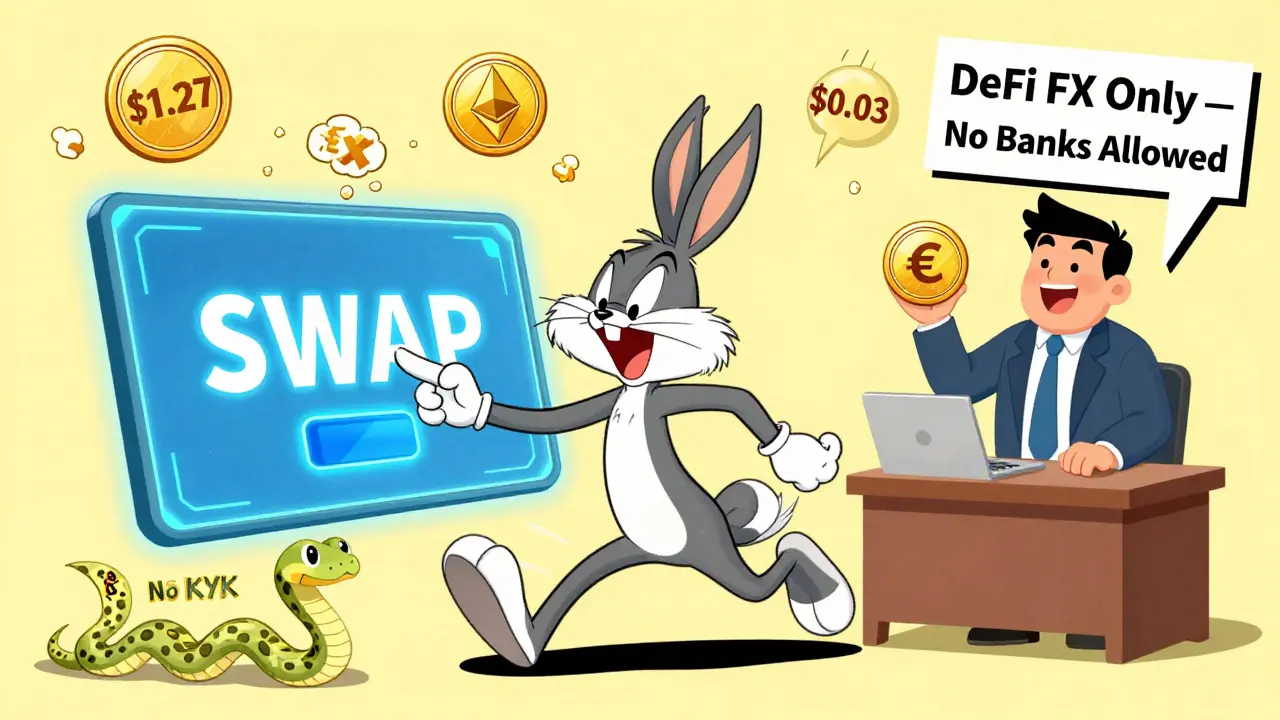
Xave runs on four major blockchains: Ethereum, Polygon, Avalanche, and Arbitrum. You can connect your wallet - MetaMask, Trust Wallet, or any EVM-compatible one - and trade from any of these chains. There’s no account sign-up. No KYC. No custodial risk. You hold your own keys. That’s the DeFi promise.
But here’s the catch: you need to understand gas fees. Each chain has different costs. On Ethereum, a single swap might cost $1.27. On Polygon? Just $0.03. If you’re trading small amounts, you’ll want to use Polygon or Arbitrum. If you’re moving large sums and want maximum security, Ethereum is still the safest bet. Xave doesn’t choose for you - it lets you pick.
There are no traditional trading fees listed on their site. That’s unusual. Most DEXs charge 0.05%-0.3% per trade. Xave might be using a different model - perhaps a small spread or a liquidity provider incentive system. But without clear documentation, users are left guessing. That’s a red flag for anyone used to transparent fee structures like Kraken or Coinbase.
Who Is This For? Not Beginners
If you’re new to crypto, walk away. Xave isn’t designed for you.
You need to know how to:
- Connect a wallet to a blockchain
- Understand gas fees and network selection
- Manage multiple stablecoins across currencies
- Recognize the risks of DeFi smart contracts
There’s no customer support chat. No tutorials. No help center. The website gives you the basics - a whitepaper, a tokenomics diagram, and a list of supported currencies. That’s it. If you get stuck, you’re on your own.
This platform targets international traders, freelancers, and small businesses who need to move money across borders without banks. Think: a freelance designer in Germany getting paid in EUR stablecoin, but needing to pay their accountant in Japan in JPY stablecoin. Xave makes that possible in one click.
Security: The Big Unknown
This is where Xave gets risky.
Platforms like Kraken have never been hacked. Coinbase holds 95% of funds in cold storage. They’ve been audited. They’ve survived bear markets. Xave? No public audits. No third-party security reports. No history. The website doesn’t mention any audits at all.
In Q3 2025, 37% of all crypto scams involved DeFi platforms, according to Cryptolegal.uk. That’s not because DeFi is inherently dangerous - it’s because many new protocols skip the basics: code audits, bug bounties, insurance pools. Xave hasn’t shown any of those.
If you’re trading $100, maybe it’s worth the risk. If you’re locking up $10,000 in EUR and GBP stablecoins? You’re gambling. There’s no insurance. No recovery process. No recourse if something goes wrong.
How Xave Compares to the Giants
| Feature | Xave Finance | Coinbase | Kraken | Uniswap |
|---|---|---|---|---|
| Type | DeFi FX DEX | CeFi Exchange | CeFi Exchange | General DEX |
| Supported Assets | Non-USD stablecoins only | 235+ cryptocurrencies | 350+ cryptocurrencies | 1,000+ tokens |
| Trading Pairs | FX pairs (EUR/JPY, GBP/AUD, etc.) | USD-based pairs | USD and major crypto pairs | Any token pair |
| Fee Structure | Not disclosed | 0.2%-2.95% | 0.03%-3.49% | 0.05% + gas |
| Regulation | None | US-regulated | US-regulated | Unregulated |
| Security Audits | Not published | Multiple public audits | Multiple public audits | Regular audits |
| User Support | None | 24/7 live chat | 24/7 support | Community forums only |
Xave doesn’t compete with Coinbase or Kraken. It doesn’t even compete with Uniswap. It’s in a different category entirely. It’s a tool for a very specific job: cross-border stablecoin transfers without USD as a middleman.
The Bigger Picture: Real-World Assets and DeFi
Xave isn’t just about trading. It’s part of a much larger trend: tokenized real-world assets (RWA). Bloomberg Intelligence predicts this market will grow from $10 billion in 2024 to $16 trillion by 2030. That’s not hype - it’s infrastructure.
Imagine a small business in Brazil selling goods to a buyer in South Korea. Instead of waiting days for a bank transfer, they use a stablecoin pegged to BRL and KRW. Xave lets them swap directly. No banks. No intermediaries. No hidden fees.
This is why Xave matters. It’s not trying to replace Bitcoin. It’s trying to replace the global banking system for small, frequent transactions.
Is Xave Finance Worth Using?
Here’s the truth:
- If you need to swap EUR to JPY stablecoin without touching USD - yes, it’s the best tool out there.
- If you’re new to crypto or scared of smart contract risk - skip it.
- If you want low fees, transparency, and customer support - look at Kraken or Coinbase.
- If you’re a DeFi veteran with a multi-chain wallet and understand the risks - try it with a small amount first.
There’s no guarantee Xave will survive. No track record. No audits. No user reviews. But if the world moves toward tokenized currencies - and it’s already starting - platforms like this won’t be niche for long.
For now, treat Xave like a prototype. It’s powerful. It’s innovative. And it’s still dangerous.
Is Xave Finance a centralized or decentralized exchange?
Xave Finance is a decentralized exchange (DEX). It runs on blockchain networks like Ethereum and Polygon, and users interact with it directly through their own wallets. There’s no account sign-up, no KYC, and no company holds your funds. You control your keys.
Can I trade Bitcoin or Ethereum on Xave?
No. Xave only supports non-USD stablecoins like EUR, JPY, GBP, CAD, and AUD. It doesn’t list Bitcoin, Ethereum, Solana, or any other cryptocurrency. Its entire purpose is to let you swap between different fiat-pegged stablecoins.
Does Xave Finance have a mobile app?
No, Xave doesn’t have a dedicated mobile app. You can access it through your mobile browser using a wallet like MetaMask. It works on mobile, but there’s no native app with push notifications or one-tap trading.
Are there fees on Xave Finance?
Xave doesn’t publish its fee structure publicly. Unlike centralized exchanges that charge clear percentages, Xave may use a spread (difference between buy and sell price) or rely on liquidity provider incentives. You’ll pay network gas fees (like $0.03 on Polygon), but the platform fee itself is undisclosed.
Is Xave Finance safe to use?
It carries significant risk. Xave hasn’t published any smart contract audits, and there’s no public record of security testing. Unlike Kraken or Coinbase, which have never been hacked and hold funds in cold storage, Xave relies entirely on untested code. Only use it with small amounts you can afford to lose.
Can I use Xave without a wallet?
No. You need a Web3 wallet like MetaMask, Trust Wallet, or Coinbase Wallet to connect and trade on Xave. There’s no custodial option - you can’t deposit funds into Xave like you would on Binance.
Why does Xave use multiple blockchains?
Using Ethereum, Polygon, Avalanche, and Arbitrum lets users choose the cheapest and fastest network for their trade. Ethereum is secure but expensive. Polygon is cheap and fast. This flexibility helps users avoid high gas fees, especially for small trades.
Final Thoughts
Xave Finance isn’t for everyone. But it’s one of the few platforms actually solving a real problem: the broken way global money moves online. Right now, it’s rough around the edges. No audits. No support. No safety nets. But if you’re someone who needs to move money across borders without banks - and you’re comfortable with DeFi risks - it’s worth testing. Start small. Watch how it behaves. And if it works? You might be looking at the future of cross-border finance.
Alan Enfield
February 18, 2026 AT 06:09kieron reid
February 19, 2026 AT 04:49Avantika Mann
February 20, 2026 AT 06:07george chehwane
February 20, 2026 AT 18:44andy donnachie
February 22, 2026 AT 04:02Lisa Parker
February 22, 2026 AT 12:26Nova Meristiana
February 23, 2026 AT 16:12Aileen Rothstein
February 24, 2026 AT 03:28JJ White
February 26, 2026 AT 02:51Nicole Stewart
February 27, 2026 AT 03:20Jennifer Riddalls
February 28, 2026 AT 13:31Kyle Tully
March 2, 2026 AT 06:21yogesh negi
March 4, 2026 AT 05:18Nikki Howard
March 4, 2026 AT 23:03Tarun Krishnakumar
March 5, 2026 AT 02:57