
You lock up your crypto to earn staking rewards. You expect passive income. Instead, you wake up to find a chunk of your stake gone. This is slashing, the automated penalty system in Proof-of-Stake (PoS) networks that punishes validators for breaking rules or failing to stay online. It’s not a bug; it’s a feature designed to keep the network secure by making attacks expensive.
If you are running a node or delegating tokens, understanding why slashing happens is critical. One wrong configuration or a momentary internet outage can cost you real money. Let’s break down exactly what triggers these penalties across major networks like Ethereum, Cosmos, and Polkadot, and how you can avoid them.
What Is Slashing and Why Does It Exist?
Slashing is an economic disincentive. In Proof-of-Stake systems, validators replace miners. Instead of burning electricity to secure the chain, they put up capital (stake). If they act maliciously or negligently, the protocol burns part of that stake. This concept was first formalized in the Tendermint consensus algorithm in 2014 and later popularized by Cosmos in 2019.
The goal is simple: make attacking the network more costly than any potential gain. Vitalik Buterin described this as creating "asymmetric punishment." If a validator tries to double-spend or lie about the state of the blockchain, they lose their stake. This ensures that honest behavior is the most profitable path. Without slashing, bad actors could easily compromise the network without financial risk.
The Two Main Types of Violations
Not all mistakes are treated equally. Protocols generally categorize offenses into two buckets: safety violations and liveness violations. Understanding the difference helps you prioritize your operational focus.
- Safety Violations: These are severe. They include actions like double-signing (signing two different blocks at the same height) or equivocation. These acts directly threaten the integrity of the ledger. Penalties are harsh because they indicate malicious intent or catastrophic failure.
- Liveness Violations: These are less severe but still costly. They involve downtime-failing to sign blocks when you should have. This usually results from technical issues like server crashes, internet outages, or software bugs. While not malicious, prolonged downtime weakens the network's decentralization.
Research from a16z crypto notes that safety violations are "fully attributable" in many protocols, meaning the network can prove who did it. Liveness violations are harder to attribute definitively, which is why penalties for downtime are often lower or structured differently.
Network-Specific Slashing Rules
Every blockchain has its own rulebook. What gets you slashed on Ethereum might be fine on another chain. Here is how the big players handle it.
| Network | Safety Penalty (e.g., Double-Signing) | Liveness Penalty (Downtime) | Key Feature |
|---|---|---|---|
| Ethereum | Minimum 1 ETH + variable % (can reach 100% in extreme cases) | Inactivity leaks; no direct slash for short downtime, but missed rewards accumulate | Dynamic penalties based on recent network health |
| Cosmos Hub | 5% of stake + "Tombstoning" (permanent removal) | 0.01% after 10,000 consecutive missed blocks | Linear downtime model; permanent ban for safety breaches |
| Polkadot | 0.1% to 30% depending on severity | Proportional to missed sessions; collective slashing possible | Nominated PoS; penalties scale with coordinated failures |
| ZetaChain | 5% for double-signing | 1% for downtime | Hybrid model; removal after three consecutive violations |
Ethereum’s approach is particularly strict. According to the Beacon Chain specification, if you double-sign, you lose at least 1 ETH plus a percentage calculated based on how many other validators were recently slashed. This creates a cascading effect during network-wide incidents. Cosmos takes a zero-tolerance approach to safety: double-signing leads to "tombstoning," where your validator is permanently removed from the active set. You cannot reactivate it.
Common Reasons Validators Get Slashed
Most slashing events aren’t caused by hackers trying to take over the network. They are caused by human error and infrastructure failures. Data from beaconcha.in shows that as of late 2023, double-signing accounted for nearly 70% of Ethereum slashing incidents. Here are the top culprits.
1. Double-Signing (Equivocation)
This is the cardinal sin. It happens when a validator signs two different blocks for the same slot. This usually occurs due to misconfiguration. For example, if you run two validator clients using the same private key simultaneously, they might try to vote on conflicting states. The network sees this as an attack and slashes you immediately. Always ensure your keys are unique per validator instance.
2. Time Synchronization Errors
Blockchains rely on precise timing. If your server’s clock drifts even slightly, you might sign a block too early or too late. A widely cited case involved a validator losing 3.5 ETH because their NTP (Network Time Protocol) server was out of sync. The solution is simple: use multiple reliable time sources and monitor your system clock regularly.
3. Client Bugs and Software Updates
Running outdated software is risky. During the April 2022 Ethereum incident, a bug in a specific consensus client caused 275 validators to be slashed simultaneously. They lost approximately 1,000 ETH ($2.8 million at the time). The issue wasn’t malicious; it was a software flaw. However, the protocol penalized the outcome. Keeping your execution and consensus clients updated is non-negotiable.
4. Infrastructure Downtime
While Ethereum doesn’t slash for short downtimes, other chains do. On Cosmos, missing 10,000 consecutive blocks triggers a penalty. On Polkadot, extended absence reduces your reward rate and can lead to slashing if you miss too many sessions. Internet outages, power failures, and cloud provider maintenance windows are common causes. Redundancy is key here.
5. Key Management Failures
Losing access to your signing keys or exposing them can lead to slashing. If an attacker gains access to your keys, they can double-sign and drain your stake. Even worse, if you lose your keys, you can’t sign blocks, leading to liveness penalties. Use hardware security modules (HSMs) or multi-party computation (MPC) wallets to protect your keys.
How to Avoid Getting Slashed
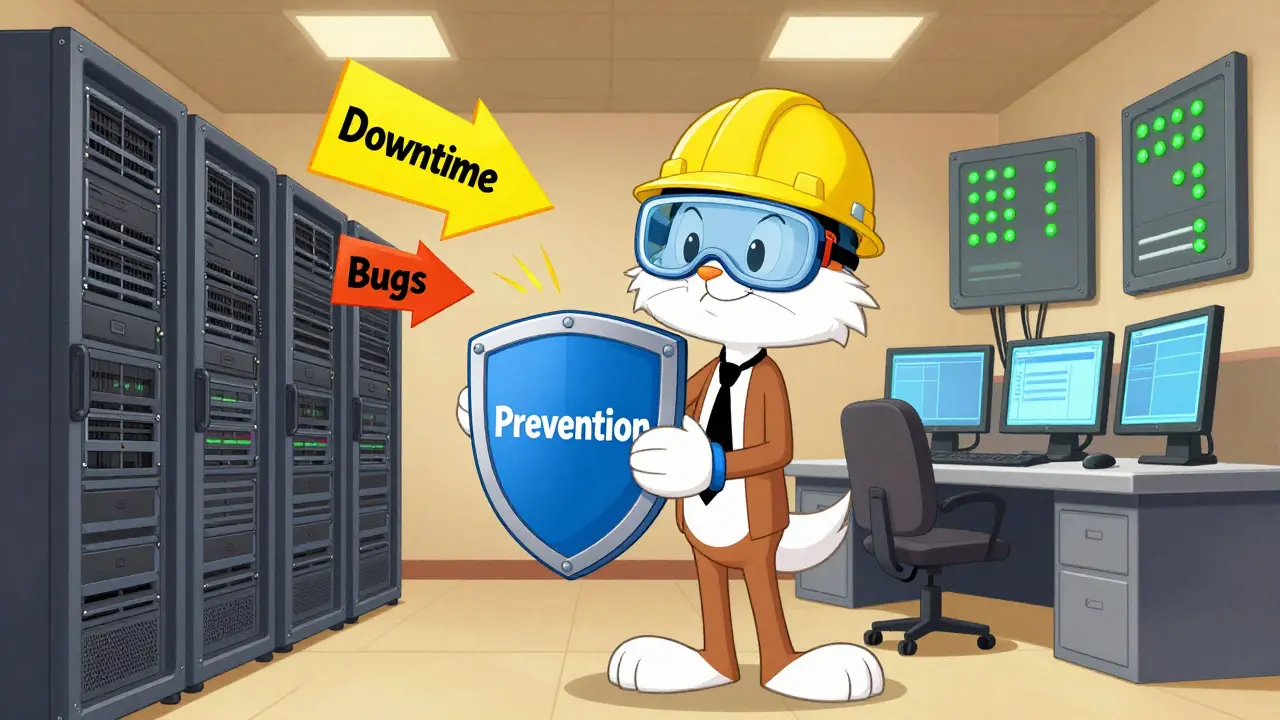
Prevention is cheaper than recovery. Here are practical steps to protect your stake.
- Implement Redundancy: Run backup nodes on different cloud providers or physical locations. If one goes down, the other picks up. Cosmos validator "NodeAstronaut" avoided a penalty by having a backup node maintain continuity during an ISP outage.
- Monitor Rigorously: Set up alerts via SMS, email, and Telegram. Don’t rely on just one channel. Monitor your uptime, disk space, and CPU usage. Tools like Prometheus and Grafana are industry standards.
- Keep Software Updated: Follow official upgrade checklists. Test updates on a testnet before applying them to mainnet. Never skip major upgrades.
- Sync Your Clock: Ensure your servers use accurate NTP services. Check for drift daily.
- Diversify Clients: Don’t run the same consensus client as everyone else. If one has a bug, you’ll be safe. The April 2022 incident showed that 76% of slashed validators used the same client.
- Use Professional Services if Needed: If you’re not comfortable managing infrastructure, consider delegating to reputable staking providers. Coinbase Cloud reports 99.998% uptime through multi-region redundancy.
The Future of Slashing
Slashing mechanisms are evolving. Ethereum’s upcoming upgrades aim to refine penalties, potentially reducing minimum fines while increasing costs for coordinated attacks. New concepts like "restaking" (via EigenLayer) introduce additional risks, as validators securing multiple protocols face compounded slashing exposure. If you get slashed in one protocol, you may lose security status in others.
Regulators are also watching. The SEC has noted that slashing mechanisms can influence whether staked assets are classified as securities. As the industry matures, expect more sophisticated, dynamic slashing models that adjust based on real-time network conditions. The goal remains the same: keep the network secure while protecting honest participants from disproportionate punishment.
Can I recover my stake after being slashed?
It depends on the network and the violation. On Ethereum, you can continue validating after a slash, though your stake is reduced. On Cosmos, double-signing leads to "tombstoning," which means permanent removal. You cannot recover the slashed portion; it is burned or redistributed to other validators.
Is slashing common?
For individual validators, serious slashing is rare if operations are managed correctly. However, minor incidents happen frequently due to configuration errors. Data shows thousands of slashing events on Ethereum since the Merge, mostly affecting small operators or those with poor infrastructure.
Do delegated stakers get slashed?
Yes. If a validator you delegate to gets slashed, you typically share in the penalty proportional to your stake. This is why choosing a reputable validator with high uptime and good security practices is crucial.
What is the difference between slashing and deactivation?
Deactivation is temporary. A validator might be deactivated for short-term downtime or low balance. Slashing is a permanent financial penalty for protocol violations. Deactivated validators can return once the issue is fixed; slashed validators lose funds and may be banned.
How does restaking affect slashing risk?
Restaking increases risk. When you opt-in to secure multiple Active Validated Services (AVSes), a slash in one service can invalidate your participation in all others. This compounding effect requires stricter operational controls and higher redundancy.