

You’ve probably seen the original Pepe is a popular Ethereum-based meme coin that surged to billions in market cap. But lately, a new name keeps popping up in your feed: NEXT GEN PEPE is a small-cap meme-style cryptocurrency token traded primarily on the Solana blockchain. It shares the ticker symbol **PEPE**, uses the same frog imagery, and promises something different: weekly rewards and supply burns. But here’s the catch-it’s not the same coin you know from Ethereum, and it carries risks that could wipe out your investment faster than you can say "meme."
So, what exactly is this token? Is it a legitimate innovation or just another copycat trying to ride the hype wave? Let’s break down the facts, the mechanics, and the massive red flags you need to watch out for before you click "swap."
The Basics: What Is NEXT GEN PEPE?
First things first: do not confuse NEXT GEN PEPE is a distinct asset from the larger Ethereum-based Pepe coin with the original Pepe Coin is the ERC-20 token launched in April 2023 that reached a market cap exceeding $1 billion. They are completely different assets living on different blockchains.
NEXT GEN PEPE operates on the Solana is a high-performance blockchain known for fast transactions and low fees network. This means if you want to buy or hold it, you need a Solana-compatible wallet like Phantom is a popular non-custodial wallet for Solana and Ethereum assets or Solflare is another secure wallet option for managing Solana tokens, and you’ll need some SOL to pay for transaction fees.
Here is the quick snapshot of where this token stands right now:
- Ticker: PEPE
- Blockchain: Solana (SPL token standard)
- Total Supply: Approximately 971-982 million tokens
- Market Cap: Roughly $11,000 - $14,500 (Micro-cap)
- All-Time High: $0.01382 (June 12, 2024)
- Current Price Range: $0.000011 - $0.000015
Notice that market cap number? That’s tiny. For context, the original Pepe has a market cap in the billions. NEXT GEN PEPE is what we call a micro-cap asset. This means even a small amount of buying or selling can cause wild price swings. If you’re looking for stability, look elsewhere.
How the Tokenomics Work: Rewards and Burns
Why would anyone buy a token with a $14,000 market cap? The project team claims it’s "more than just a memecoin" because of its built-in incentive structure. According to data from CoinGecko is a leading cryptocurrency tracking platform that provides price and market data, the token features two main mechanisms designed to reward holders and reduce supply.
Weekly SOL Rewards
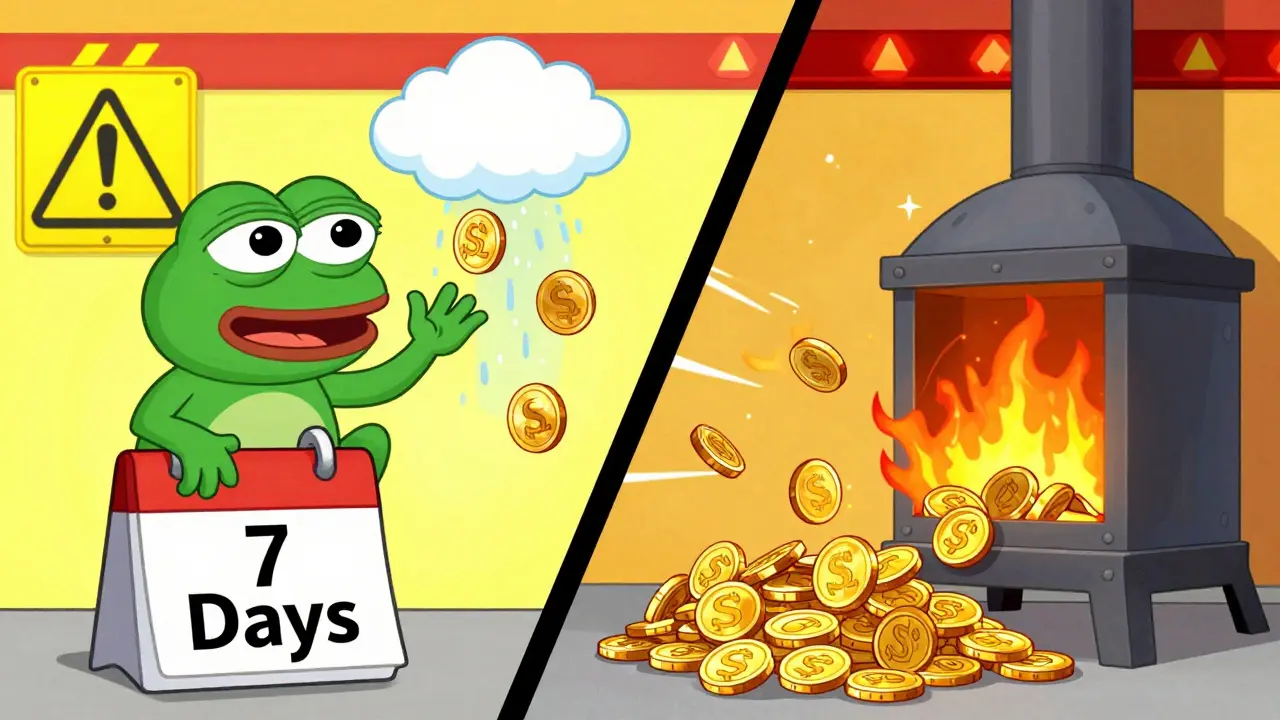
This is the hook. The project states that if you hold NEXT GEN PEPE in your wallet for at least seven days, you become eligible for weekly rewards paid in SOL is the native currency of the Solana blockchain. These rewards are supposedly deposited automatically into your wallet every week. In theory, this turns the token into a yield-bearing asset, giving you a reason to hold rather than sell immediately.
Supply Burns
The second pillar is deflation. The project conducts weekly supply burns, destroying a portion of the tokens to reduce the total circulating supply. CoinMarketCap is a major aggregator for cryptocurrency prices and market capitalizations notes that the long-term goal is to buy and burn up to $1,000,000 worth of tokens. Additionally, minting has been revoked, meaning no new tokens can be created beyond the current supply.
However, there’s a discrepancy in the numbers. Some sources mention an initial phase of 100 million tokens, while others show a supply near 980 million. Without a formal whitepaper or audited smart contract code available to the public, it’s hard to verify exactly how these burns and rewards are executed on-chain. You have to trust the aggregators’ descriptions, which is risky in the world of crypto.
Where Can You Buy NEXT GEN PEPE?
If you decide to take the plunge, you have a few options, but liquidity is thin. Here is where you can find it:
| Platform | Type | Key Details |
|---|---|---|
| Raydium is a decentralized exchange built on the Solana blockchain | DEX (Decentralized) | Primary liquidity source. Trade pair: PEPE/SOL. Requires a Solana wallet. |
| LCX is a regulated cryptocurrency exchange offering spot trading | CEX (Centralized) | Listed for fiat-to-crypto trading. Price quoted in EUR (~€0.000126). |
| Bitget is a global cryptocurrency exchange supporting various trading pairs | CEX (Centralized) | Offers guides for specific regions (e.g., Panama). Supports credit card buys. |
Most trading volume happens on Raydium. In recent snapshots, daily volume was around $5,000-$8,000. That’s incredibly low. If you try to sell a large amount, you might not find enough buyers, causing your price to crash instantly. This is called slippage, and it’s a major risk in micro-cap tokens.
The Risks: Why This Is a High-Stakes Gamble
Let’s get real about the danger here. NEXT GEN PEPE is not an investment; it’s speculation. Here is why you need to be extremely cautious:
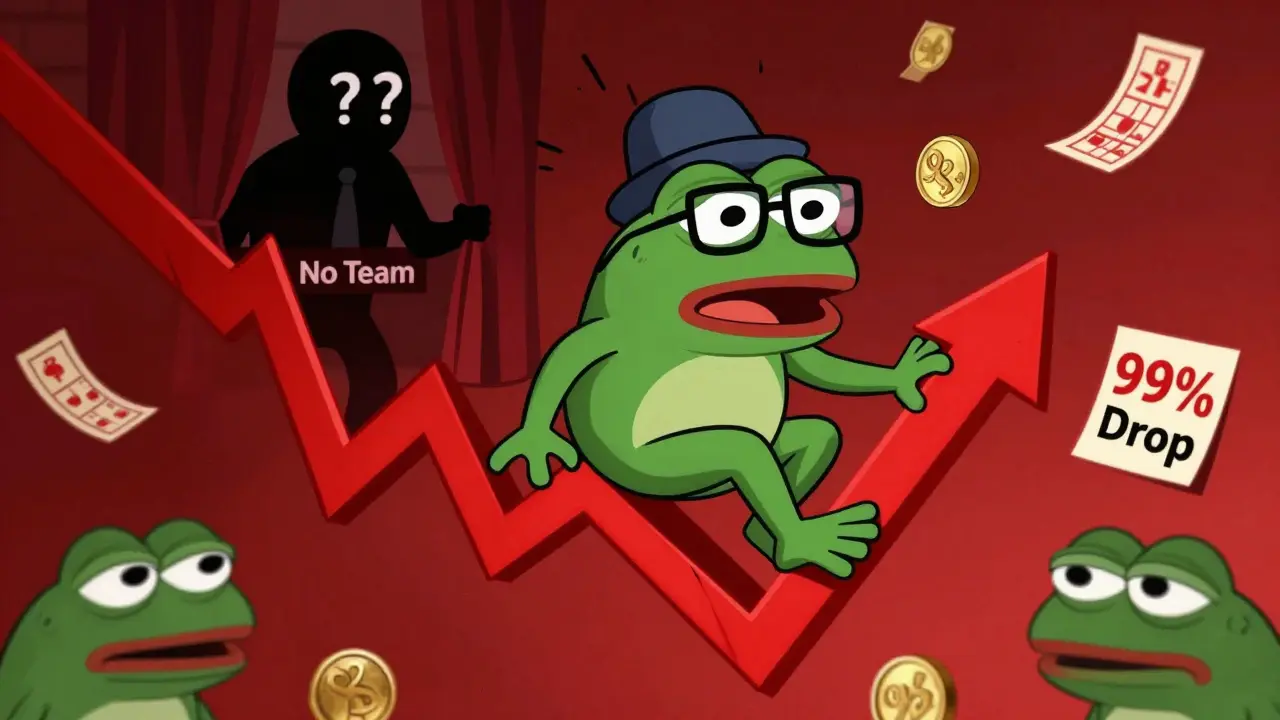
- Extreme Volatility: The token hit an all-time high of $0.01382 in June 2024. Today, it trades below $0.00002. That is a drawdown of roughly 99.89%. If you bought at the top, you lost almost everything. Prices can swing 50% or more in a single day based on social media trends.
- No Clear Team or Roadmap: Unlike established projects, there is no publicly verified founding team, no whitepaper, and no detailed roadmap. Who is behind this? We don’t know. Anonymous teams mean no accountability if things go wrong.
- Liquidity Issues: With a market cap under $15,000, the token is illiquid. Getting in is easy; getting out without crashing the price is hard.
- Confusing Naming: There is also a token called "Pepe Next Generation (PEPEGEN)" on other platforms. One wrong click, and you could buy the wrong asset entirely. Always double-check the contract address.
- No Utility: Despite claims of being "innovative," the token doesn’t solve a problem or offer a service. Its value is driven purely by community sentiment and meme culture.
Compare this to the original Pepe on Ethereum. While also a meme coin, it has a market cap over $1 billion and trades on major exchanges like Binance with hundreds of millions in daily volume. NEXT GEN PEPE is operating in a completely different league-one where rug pulls and sudden collapses are common.
Is It Worth Your Money?
Only if you treat it like a lottery ticket. Do not put money into NEXT GEN PEPE that you cannot afford to lose. The potential for gains exists-meme coins can pump 10x or 100x overnight-but the probability of losing it all is significantly higher.
If you’re interested in the Solana ecosystem, consider learning about more established DeFi protocols or blue-chip NFTs. If you love memes, stick to the larger caps with proven track records. NEXT GEN PEPE offers a unique twist with its SOL rewards, but the lack of transparency, tiny market cap, and anonymous development make it a hazardous play.
Always do your own research (DYOR). Check the live charts on CoinGecko or CoinMarketCap, read the latest community discussions on Twitter or Reddit, and never invest based on hype alone. In crypto, survival is just as important as profit.
Is NEXT GEN PEPE the same as the original Pepe coin?
No. The original Pepe is an ERC-20 token on the Ethereum blockchain with a market cap in the billions. NEXT GEN PEPE is a separate token on the Solana blockchain with a much smaller market cap and different tokenomics.
How do I claim the weekly SOL rewards?
According to project descriptions, you simply need to hold NEXT GEN PEPE in a compatible Solana wallet (like Phantom) for at least 7 days. The rewards are supposed to be deposited automatically, but ensure you check the official channels for any required claim actions.
Where can I buy NEXT GEN PEPE?
You can trade it on the decentralized exchange Raydium using SOL, or on centralized exchanges like LCX and Bitget, depending on your region. Always verify the contract address to avoid scams.
Who is the team behind NEXT GEN PEPE?
The team is anonymous. There is no publicly available information about the founders or developers, which adds to the risk profile of the token.
What happened to the price since its all-time high?
The price dropped by approximately 99.89% from its all-time high of $0.01382 in June 2024 to current levels below $0.00002. This extreme volatility is typical for micro-cap meme coins.