
Have you ever scrolled through your crypto feed and seen a monkey mascot that promises not just memes, but a whole "metaverse economy"? That’s Multiverse Monkey, known by its ticker symbol MMON. It is a meme-based cryptocurrency project that claims to bridge the gap between viral internet culture and practical Web3 utility.
On paper, MMON sounds like the next big thing. It operates on the Ethereum blockchain, which provides the security and transparency standard for most serious tokens. But here is the catch: the crypto space is flooded with projects that promise the moon but deliver dust. Before you connect your wallet, you need to understand what MMON actually is, where it stands in the market, and whether its "utility" claims hold up under scrutiny.
The Core Concept: More Than Just a Joke?
Most people know meme coins like Dogecoin or Shiba Inu. These tokens rely heavily on community hype, celebrity endorsements, and cultural moments. Their value is driven almost entirely by speculation. If the crowd loves it, the price goes up. If they lose interest, it crashes.
MMON tries to do something different. The anonymous team behind it positions the token as a gateway to a sustainable Web3 metaverse economy. They argue that while the entry point is a meme, the destination is utility. According to their official channels, the goal is to build an ecosystem where the token has real-world applications beyond just sitting in a wallet.
This distinction matters because pure meme coins are notoriously volatile and often lack long-term viability. By adding layers of functionality, MMON hopes to retain users even after the initial hype dies down. But does it actually work?
Ecosystem and Utility Features
To justify its claim of being "more than a meme," MMON has rolled out several features designed to create demand for the token. Here is what makes up their proposed ecosystem:
- MMON Exchange: This is perhaps the most ambitious part of their roadmap. The platform allows users to trade various cryptocurrencies using MMON points. Profits from trading are supposed to be added to the points earned through airdrops. The long-term plan is to evolve this into a fully-fledged exchange supporting spot and futures contracts.
- Gaming Integration: The project has introduced games that integrate entertainment with blockchain technology. The idea is simple: play games, earn rewards, and use MMON tokens. This aims to enhance both usability and liquidity by giving people a reason to hold and spend the token rather than just sell it.
- Airdrops and Rewards: Early adopters can earn MMON points through various activities, which can then be used within the ecosystem. This creates a loop where engagement leads to asset accumulation.
If these features gain traction, MMON could transition from a speculative asset to a utility token. However, right now, much of this remains theoretical. The exchange is still developing, and the gaming library is limited compared to established metaverse projects like Decentraland (MANA) or The Sandbox (SAND).
Market Data and Price Volatility
Here is where things get tricky. If you look up MMON’s price today, you might see wildly different numbers depending on which website you visit. This isn’t a glitch; it’s a sign of low liquidity and fragmented trading pairs.
| Platform | Price (USD) | 24h Volume | Market Cap Estimate |
|---|---|---|---|
| Binance | $0.0398 | $242,903 | ~$358 Million |
| CoinCarp | $0.0081 | $187,619 | ~$80 Million |
| CoinGecko | $0.0013 | $12.69 | ~$4.5 Million |
| TradingView | $0.0037 | N/A | N/A |
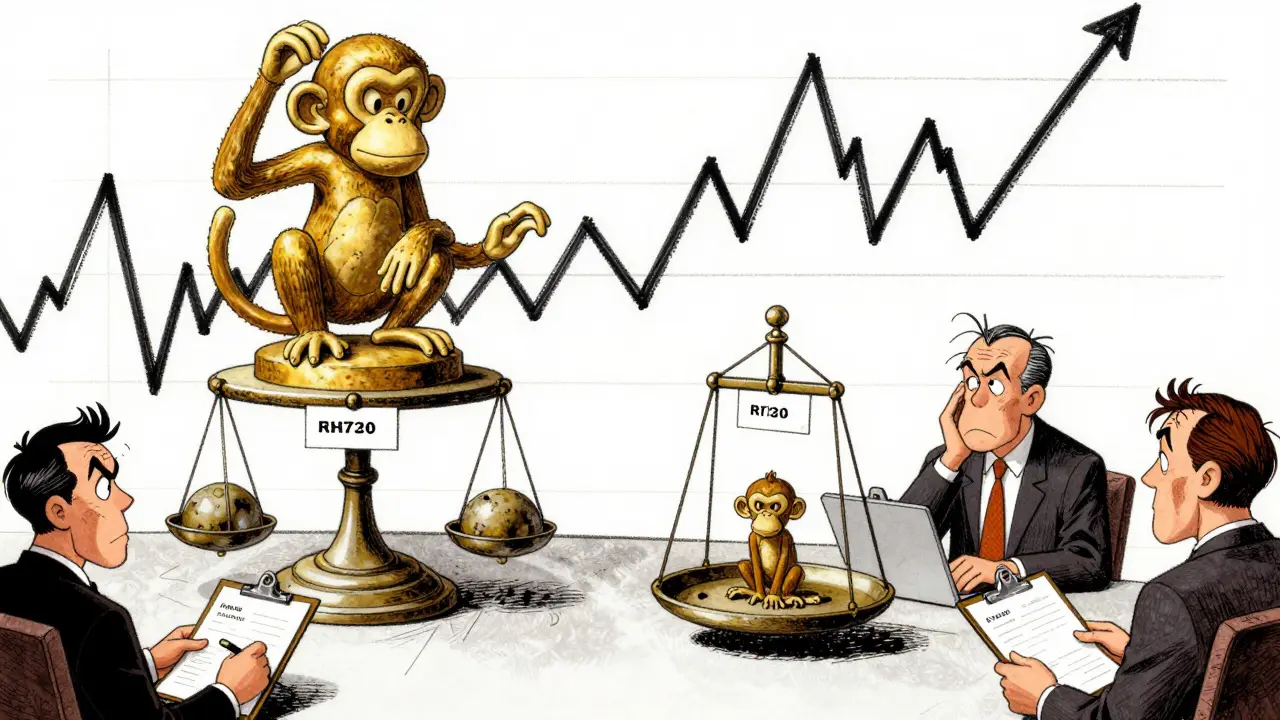
Look at those numbers. The price on Binance is nearly 30 times higher than on CoinGecko. Why? Because there is very little actual trading volume on many of these platforms. When volume is low, a few large buys or sells can swing the price dramatically. This makes MMON extremely risky for anyone looking for stability.
The all-time high for MMON was around $0.0427, reached sometime in late 2023 or early 2024. Since then, it has fluctuated wildly. The all-time low sits at roughly $0.0058. That is a massive range for a single asset. For context, Dogecoin typically trades billions of dollars in volume daily, providing deep liquidity. MMON moves in the hundreds of thousands, meaning slippage can eat into your profits quickly if you try to buy or sell large amounts.
Technical Specifications and Supply
Under the hood, MMON runs as an ERC-20 token on Ethereum. This means it benefits from Ethereum’s robust security infrastructure. You don’t need special hardware or software to hold it; any standard wallet like MetaMask or Trust Wallet will work.
The total supply is capped at either 9 billion or 10 billion tokens, depending on the source. This fixed supply prevents inflation, which is good for scarcity. However, without consistent demand, scarcity doesn’t matter much. The fully diluted valuation (FDV) varies based on the price discrepancy mentioned earlier, ranging from $4.5 million to over $350 million. This wide gap highlights the uncertainty surrounding the token’s true market value.
Risks and Red Flags
Let’s be honest about the risks. Investing in micro-cap meme coins is gambling, not investing. Here are the specific red flags you should watch out for with MMON:
- Anonymous Team: No one knows who created MMON. While anonymity is common in crypto, it means there is no accountability if the project fails or if the developers decide to dump their tokens.
- Liquidity Issues: As shown in the table above, some exchanges have negligible volume. You might buy MMON only to find you can’t sell it later without crashing the price.
- Unproven Utility: The exchange and gaming features are promising on paper but lack widespread adoption. Until real users are actively trading and playing, the utility is hypothetical.
- Regulatory Uncertainty: Global regulators are cracking down on meme coins that resemble securities. MMON’s hybrid model could attract scrutiny if it’s deemed an unregistered security offering.
Expert analysis on MMON is scarce. Major financial outlets like Bloomberg or CoinDesk rarely cover it, which suggests limited institutional interest. Most coverage comes from price-tracking sites, focusing on short-term movements rather than long-term fundamentals.
How to Buy MMON (Step-by-Step)
If you’ve weighed the risks and still want to proceed, here is how you can acquire MMON tokens. Keep in mind that prices vary significantly by platform, so choose your exchange carefully.
- Set Up a Wallet: Download MetaMask or Trust Wallet. Secure your seed phrase offline. Never share it with anyone.
- Fund Your Wallet: Buy ETH (Ethereum) or BNB (Binance Coin) on a major exchange like Coinbase or Binance. Transfer it to your wallet address. You’ll need this to pay for gas fees and to swap for MMON.
- Choose an Exchange: Connect your wallet to a decentralized exchange (DEX) like Uniswap or a centralized exchange (CEX) that lists MMON. Check the current price and volume before connecting.
- Swap for MMON: Enter the amount of ETH/BNB you want to trade. Set your slippage tolerance appropriately (usually 0.5% to 1% for stable tokens, but higher for volatile ones like MMON). Confirm the transaction.
- Verify Receipt: Wait for the blockchain confirmation. Once complete, MMON should appear in your wallet. Add the contract address manually if it doesn’t show up automatically.
The process takes about 15-30 minutes if you’re familiar with crypto wallets. If you’re new, expect to spend more time learning the interface. Always double-check contract addresses to avoid scams.
Future Outlook: Can MMON Survive?
The future of MMON depends entirely on execution. The roadmap includes expanding the exchange to support futures contracts and launching more games. If they pull this off, they could carve out a niche in the Web3 gaming sector. But competition is fierce. Established players like MANA and SAND have millions of users and billions in market cap. MMON is ranked #3821 on Binance, placing it firmly in the long tail of crypto projects.
For MMON to succeed, it needs to solve two problems: consistency and trust. Consistent pricing across exchanges requires deeper liquidity pools. Trust requires transparency from the development team and verifiable partnerships. Without these, MMON remains a high-risk speculative asset.
Is it worth buying? Only if you can afford to lose everything you put in. Treat it like a lottery ticket, not a retirement fund. If you’re looking for stable growth, stick to blue-chip assets. If you’re chasing the next 100x meme coin, MMON offers the potential-but also the peril-of that gamble.
Is Multiverse Monkey (MMON) a scam?
There is no definitive proof that MMON is a scam, but it carries significant risk factors typical of high-risk meme coins. These include an anonymous development team, extreme price volatility, and inconsistent data across exchanges. Always do your own research and never invest more than you can afford to lose.
Which blockchain does MMON use?
MMON operates on the Ethereum blockchain as an ERC-20 token. This means you need ETH to pay for transaction fees when buying, selling, or transferring MMON tokens.
Why is the price of MMON different on every website?
The price discrepancies are due to low liquidity and fragmented trading pairs. Different exchanges have different volumes of buyers and sellers, leading to varying prices. This is common for micro-cap tokens with limited market presence.
What is the utility of the MMON token?
MMON aims to provide utility through its integrated ecosystem, including the MMON Exchange for trading cryptocurrencies and various blockchain-based games. Users can earn points through airdrops and gameplay, which can be used within the platform.
How many MMON tokens are in circulation?
The maximum supply of MMON is reported as either 9 billion or 10 billion tokens, depending on the data source. This fixed supply helps prevent inflation, though circulating supply may vary based on locked or staked tokens.