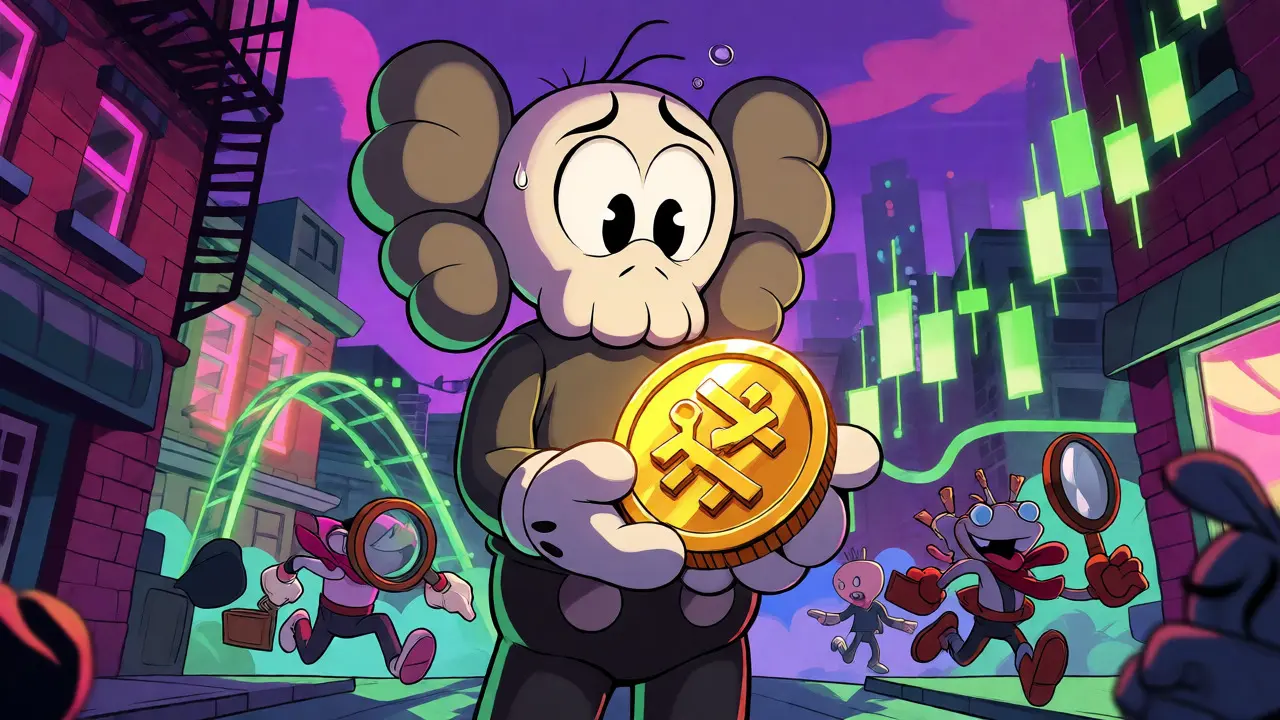
You might see KAWS trending on your feed and assume it’s the latest project from the famous artist Brian Donnelly. But here is the twist: this isn’t an official art release. It’s a community-created Solana-based meme coin that launched in May 2025, riding the wave of street culture hype rather than institutional backing.
If you are wondering whether this tiny digital asset has real staying power or if it’s just another flash-in-the-pan speculative play, you’re asking the right questions. With a market cap hovering in the low thousands of dollars and fewer than 2,000 holders, KAWS sits at the extreme edge of the crypto ecosystem. This guide breaks down exactly what KAWS is, how it works, and why its data looks so confusing across different platforms.
The Origin Story: Fan Art Meets Blockchain
KAWS isn’t a corporate product. It was launched by a loose group of art enthusiasts and crypto supporters who wanted to tokenize the aesthetic of Brian Donnelly, the American artist known for his "Companion" figures and collaborations with brands like Dior and Nike. The project draws direct inspiration from Donnelly’s work but operates independently of him. There is no foundation, no CEO, and no whitepaper detailing a complex roadmap. Instead, the project leans into meme culture, with one popular listing even tagging the ticker as "$KAWS - Killed All With Shitcoins," signaling its self-aware, humorous approach to value.
This distinction matters because it defines the risk profile. Unlike utility tokens that solve specific technical problems, KAWS derives its value almost entirely from social sentiment and brand association. It’s a fan token in the truest sense, where the community’s belief in the cultural relevance of the KAWS brand drives demand.
Technical Basics: Built on Solana
Technically, KAWS is a standard SPL token running on the Solana blockchain. This choice makes sense for a meme coin. Solana offers high transaction speeds and negligible fees, which is critical for traders making frequent, small bets on volatile assets. You can find the token using its contract address LZboYF8CPRYiswZFLSQusXEaMMwMxuSA5VtjGPtpump.
Because it’s an SPL token, it doesn’t have its own custom architecture or smart contract innovations beyond basic transfer functions. It lives in the same ecosystem as major players like Bonk and Jupiter, but without their massive liquidity pools or development teams. Interacting with KAWS requires a Solana-compatible wallet like Phantom or Solflare. If you try to buy it through a centralized exchange, you’ll often find the order books empty, meaning most trading activity happens directly on-chain via decentralized exchanges (DEXs).
Tokenomics: Supply and Market Cap Reality Check
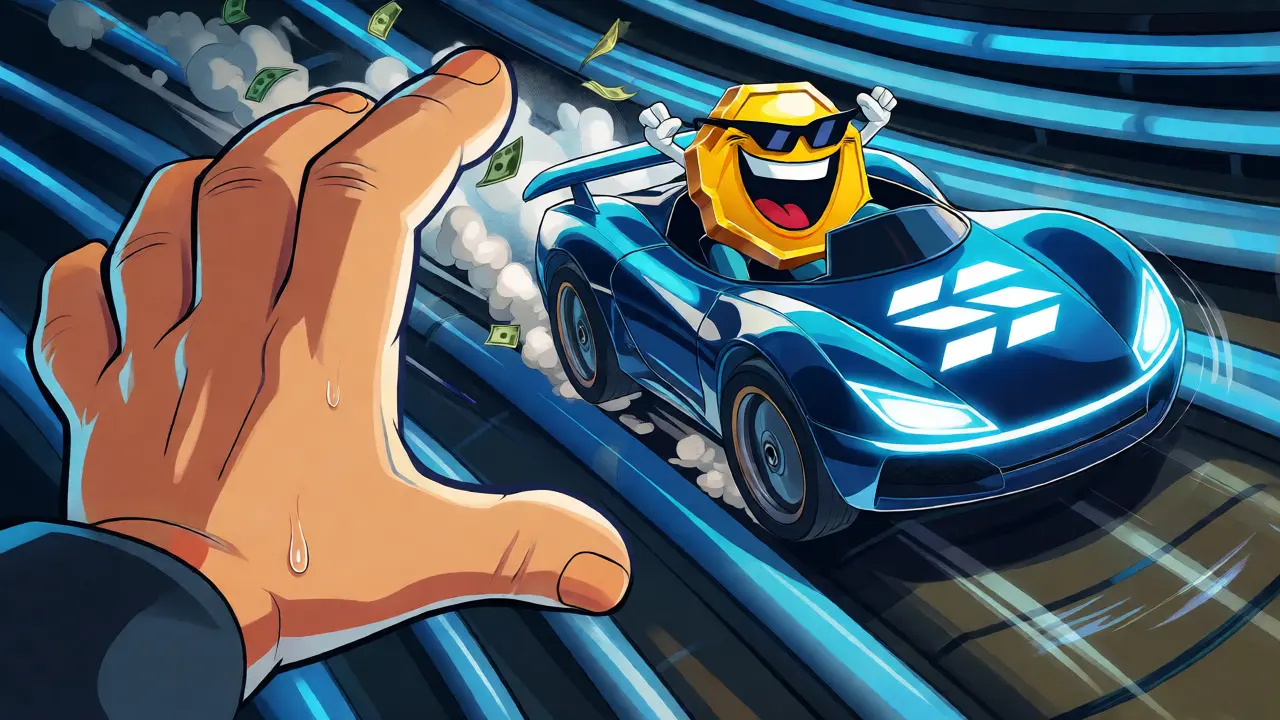
Here is where things get tricky. If you look up KAWS on different sites, you will see wildly different numbers. This inconsistency is common for micro-cap tokens, but it’s worth understanding why.
- Total Supply: Most reliable on-chain trackers list the total supply at approximately 971.7 million KAWS. Some sources round this to 961.79 million, likely due to slight variations in how they count burned or locked tokens.
- Circulating Supply: Nearly all tokens are in circulation-around 99%. This means there aren’t large amounts of tokens being slowly released over time (vesting), which reduces the risk of sudden sell-offs from team unlocks.
- Market Cap: Depending on the day and the source, the market cap fluctuates between $2,380 and $20,400 USD. Phantom and Solflare dashboards recently reported caps near $4,900, while Coinbase showed higher figures during brief spikes.
Be wary of outliers. One snapshot from OKX in April 2026 reported a market cap of over $100,000 and volume of $12 million. This discrepancy suggests either a temporary pump-and-dump event or a misconfiguration in how that exchange aggregates data. For a realistic view, trust the on-chain data from Solana explorers, which consistently show a sub-$10,000 valuation.
| Metric | Value / Status | Source Context |
|---|---|---|
| Blockchain | Solana (SPL Token) | Standard fast/low-cost chain |
| Total Supply | ~971.7 Million | Near 100% circulating |
| Holders | ~1,807 Addresses | Very small community |
| Liquidity | <$9,000 USD | High slippage risk |
| All-Time High | ~$0.0004 USD | Peak interest period |
| Current Price Range | $0.000002 - $0.00002 | Micro-cap volatility |
Where to Buy and Sell KAWS
You won’t find KAWS listed on every major exchange. While it appears on the radar of giants like Coinbase, Binance, and OKX, the actual trading depth on these platforms is often zero. Binance, for instance, has shown market caps of $0 and daily volumes of $0 in recent months, indicating that while the token is technically "listed," nobody is actually trading it there.
The real action happens on Solana DEXs:
- PumpSwap: Many early buyers entered here when the token first launched. It remains a hub for speculative entries.
- Raydium: The primary liquidity pool exists here, paired against SOL. This is where you’ll find the most consistent pricing data.
- Phantom/Solflare Integrations: These wallets allow you to swap directly within the app, routing you to the best available DEX pool.
A crucial warning: Because liquidity is under $9,000, buying $500 worth of KAWS could move the price significantly. Always check the "price impact" before confirming a trade. If you see a 10% or 20% price impact, you are paying a huge premium just to enter the position.
Risks: Why Micro-Caps Are Dangerous
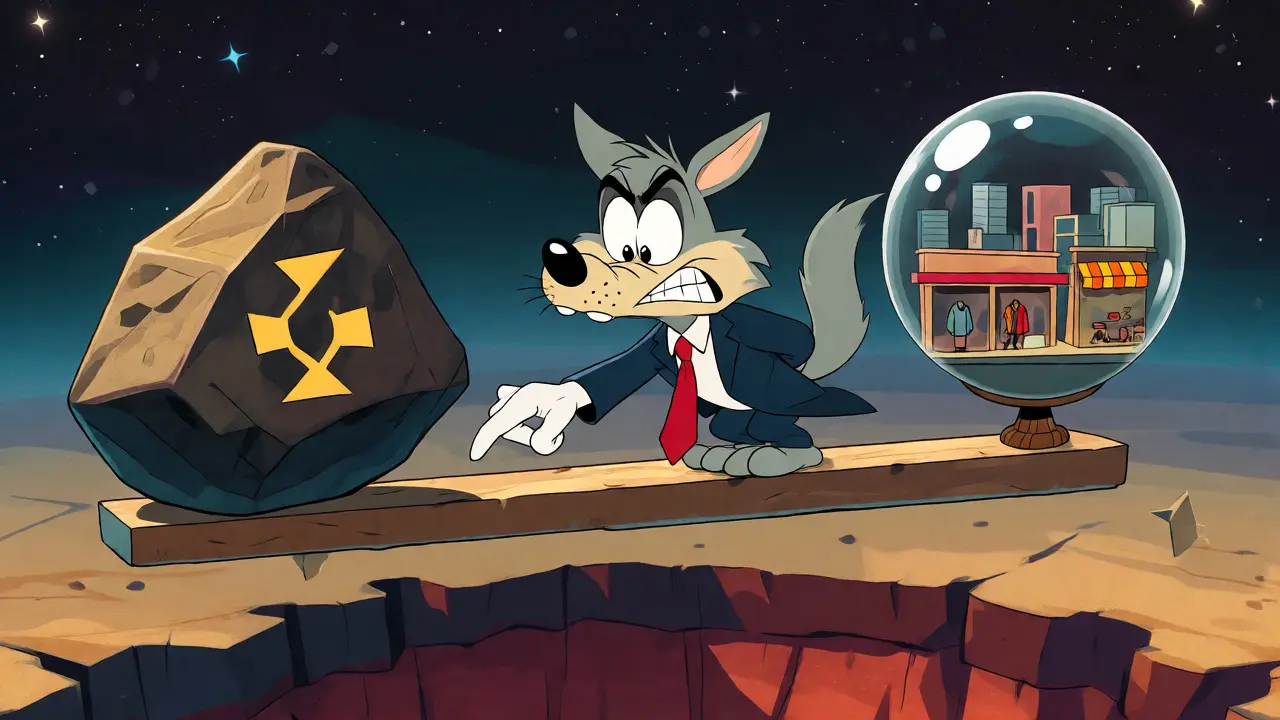
Investing in KAWS is not investing in technology; it’s betting on attention. Here are the specific risks you face with this asset:
- Concentration Risk: With only ~1,800 holders, a single whale selling their entire stack could crash the price by 50% instantly.
- No Utility: The token doesn’t grant governance rights, staking rewards, or access to a platform. Its value evaporates if the meme fades.
- Data Inconsistency: As noted, different exchanges report vastly different prices and volumes. This makes it hard to determine the "true" fair value.
- Regulatory Gray Area: There are no legal disclosures or audits. If regulators crack down on unregistered securities, projects like KAWS have no compliance framework to fall back on.
Compare this to established coins. Bitcoin acts as digital gold; Ethereum powers smart contracts. KAWS acts as a lottery ticket. If the community decides the KAWS brand is cool again, the price might spike 200% in a day (as seen in April 2026). If they lose interest, it can drift toward zero with little support.
How to Evaluate Similar Tokens
If you are looking at KAWS, you should also watch other art-inspired or celebrity-adjacent tokens on Solana. The success of these micro-caps depends on viral marketing. Keep an eye on Twitter/X trends involving Brian Donnelly or streetwear culture. If influencers start mentioning the "KAWS vibe" in the context of crypto, volume may pick up. Conversely, if the broader meme coin sector cools off, KAWS will likely suffer disproportionately due to its lack of fundamental floor.
Use tools like DexScreener or GeckoTerminal to monitor live trades. Look for clusters of buys from new wallets-that’s often a sign of organic community growth rather than bot manipulation. And always cross-reference the contract address to ensure you aren’t buying a fake copycat token with a similar name.
Is KAWS crypto officially affiliated with artist Brian Donnelly?
No. KAWS is a fan-created token inspired by Brian Donnelly’s work, but he is not involved in its creation, management, or promotion. It is a community-driven project on the Solana blockchain.
Why do different websites show different prices for KAWS?
KAWS is a micro-cap token with very low liquidity. Prices vary because different exchanges and data aggregators pull data from different times or pools. Centralized exchanges may show stale or zero-volume data, while on-chain trackers reflect real-time swaps on Solana DEXs.
Can I stake KAWS to earn rewards?
Currently, there is no official staking mechanism for KAWS. It is primarily a speculative asset held for potential price appreciation. Any third-party staking services would carry additional smart contract risks.
What is the maximum supply of KAWS?
The maximum supply is approximately 971.7 million tokens. Nearly all of these tokens are already in circulation, meaning there is no significant future inflation from token unlocks.
Is KAWS safe to buy?
It carries high risk. With a market cap under $10,000 and fewer than 2,000 holders, it is susceptible to manipulation and sudden crashes. Only invest money you can afford to lose completely.