
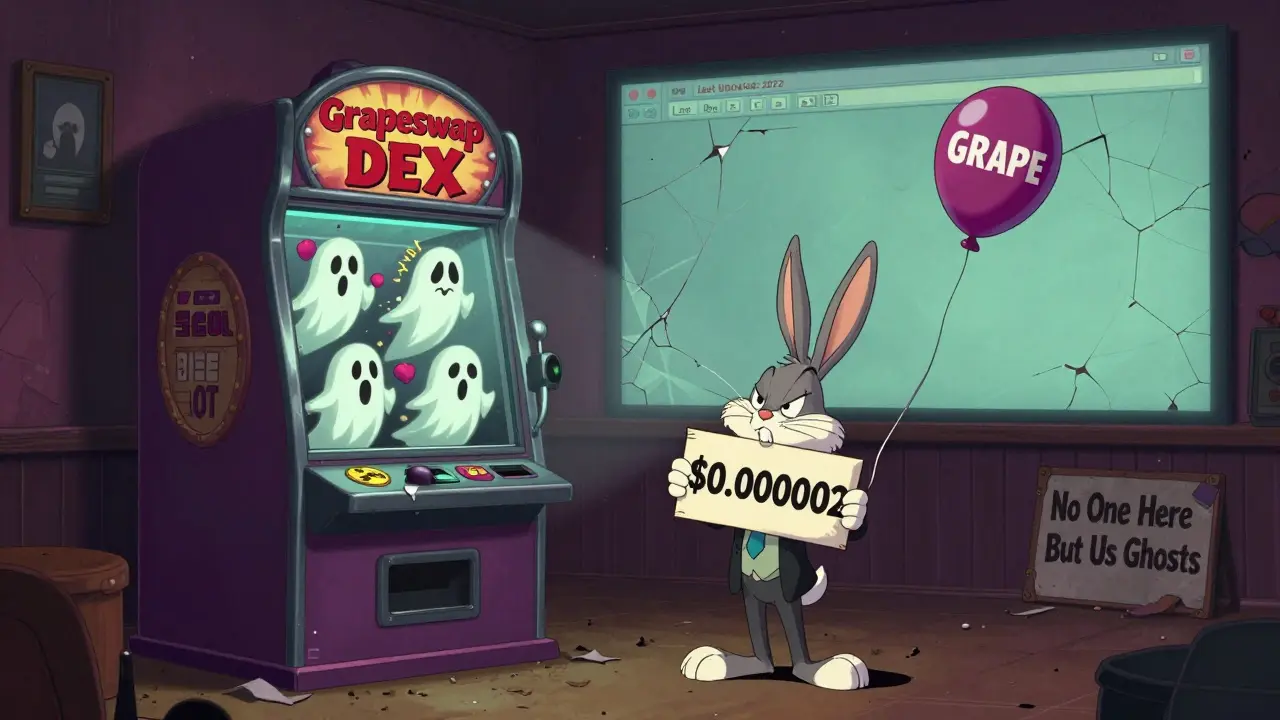
The Grapeswap (GRAPE) token was launched in 2020 with big promises: a decentralized exchange, play-to-earn games, crypto betting, and yield farming-all wrapped into one platform. Today, it’s a ghost town. The token trades at $0.000002, down more than 99% from its peak of $0.0018. Trading volume? Less than $1.02 in 24 hours. That’s not a dead coin-it’s a corpse with a heartbeat. Grapeswap runs on the BNB Smart Chain as a BEP20 token. That means it’s built on the same network as Binance Coin, which gives it some technical legitimacy. But being on BSC doesn’t save a project if no one uses it. The team claimed Grapeswap would be multi-chain, supporting Ethereum, Polygon, Avalanche, and Fantom. In practice, the only chain where GRAPE has any activity is BSC-and even there, it’s barely breathing. The platform tried to be everything at once. A DEX? Check. An order book system? Check. Liquidity pools? Check. But instead of focusing on making one thing work well, they threw in gaming features like Grapenopoly, Grape Slot, Grape Fortune, and Grape Joker. These weren’t minor add-ons. They were central to the pitch. The idea was simple: play games, earn GRAPE tokens, then use those tokens to bet on sports or trade on the DEX. It sounded fun. But no one showed up. There’s a wallet called the Grape Wallet tied to the ecosystem. It’s supposed to handle payments, staking, and access to yield features like the Yield Optimizer and Power-Up tools. These sound like smart features-automated compounding, boosted returns, smart liquidity routing. But without users, they’re just code sitting on a server. No one’s staking. No one’s optimizing. No one’s power-ups. The token also has a deflationary model. Every transaction burns a tiny percentage of GRAPE. That’s supposed to make the supply shrink over time, which should, in theory, push the price up. But when no one’s buying or selling, burning tokens doesn’t create scarcity-it just makes the numbers look prettier on paper. The circulating supply is so low, and the demand so nonexistent, that the burn mechanism is irrelevant. You can find GRAPE listed on CoinMarketCap, CoinGecko, and even Binance’s token directory. But listing doesn’t mean liquidity. It doesn’t mean trust. It doesn’t mean people care. Binance lists hundreds of tokens that trade $0.000001 a day. They’re there because anyone can pay to get listed. Not because they’re valuable. The real red flag? The team behind Grapeswap vanished. No official Twitter updates since 2022. No Discord activity. No GitHub commits. No roadmap updates. The website still loads, but it’s static-like a museum exhibit of a failed project. The gaming features? The DEX? The yield tools? All of them appear abandoned. Compare this to Grape (GRP), a completely different project. Grape is a Layer 1 blockchain using DAG technology, focused on gaming and metaverse infrastructure. It has active developers, real partnerships, and actual usage. Grapeswap (GRAPE) is not Grape. They share a name, but that’s where the similarity ends. Confusing them is like thinking a Honda Civic is a Ferrari because both have four wheels. So why does anyone still talk about GRAPE? Mostly because of curiosity. Or hope. Some people hold it because they bought it at the peak, clinging to the dream it’ll bounce back. Others trade it for fun, like flipping lottery tickets. But there’s no evidence of recovery. No news. No development. No community. If you’re thinking about buying GRAPE, ask yourself: Would you invest in a company that hasn’t updated its website in four years, has zero trading volume, and lost 99.82% of its value? If the answer isn’t a hard no, you’re not doing due diligence-you’re gambling. This isn’t a story of a crypto that failed. It’s a story of a project that never really started. It had the right tech stack. It had the right buzzwords. But it had no users, no team, and no plan. And in crypto, that’s a death sentence. Grapeswap (GRAPE) isn’t a coin you should own. It’s a case study in how not to build a crypto project.
What does Grapeswap actually do?
Grapeswap claims to be a multi-chain DeFi ecosystem, but in reality, it’s a Binance Smart Chain token with a handful of untested features. The core offerings include:- Decentralized Exchange (DEX) - Lets users swap tokens without a central authority. But with $1 in daily volume, it’s not functional.
- Order Book System - A traditional exchange-style matching engine, rare in DeFi. Never launched in any usable form.
- Liquidity Pools - Users could provide liquidity and earn fees. No one did.
- Grapenopoly - A play-to-earn game modeled after Monopoly. Players earned GRAPE tokens by landing on spaces. It had a handful of active users at launch, then vanished.
- Grape Slot - A crypto slot machine. Players bet GRAPE for a chance to win more. It was a gimmick, not a game.
- Grape Fortune - A lottery-style game with daily draws. No payout records exist.
- Grape Joker - A card game with random rewards. Never had more than 50 daily players.
- Grape Wallet - A non-custodial wallet for holding GRAPE and accessing ecosystem features. Still downloadable, but unsupported.
- Yield Optimizer - Automated compounding of staking rewards. Never activated.
- Power-Up Mechanism - Boosted returns for long-term holders. No one ever used it.
Why did Grapeswap fail?
It failed because it tried to be everything and did nothing well. Most successful crypto projects start with one strong use case and build from there. Grapeswap started with six. The gaming features were flashy but poorly built. The DEX had no liquidity. The team stopped communicating. The community disappeared. There was no marketing, no partnerships, no transparency. No one knew who was behind it. No one trusted it. It also suffered from a critical flaw: it had no real utility. You couldn’t use GRAPE to pay for anything. It wasn’t accepted by merchants. It didn’t power a network. It didn’t have a tokenomics model that rewarded long-term holders. It was just a token with games attached. And in crypto, if you don’t solve a real problem, you don’t survive.Is Grapeswap still being developed?
There’s no evidence of active development. The last commit on any public repository was in 2021. The official website hasn’t been updated since 2022. The team’s social media accounts went silent. Even the Discord server has fewer than 50 members, mostly bots and people hoping for a pump. The project’s whitepaper mentions “upcoming innovations,” but no details were ever released. No timelines. No demos. No testnets. Just promises. In crypto, silence is the loudest signal of death.Can you still trade GRAPE?
Technically, yes. You can still find GRAPE on decentralized exchanges like PancakeSwap and a few small CEXs. But trading it is risky. With a 24-hour volume of $1.02, you’re likely to get stuck. If you try to sell, you might not find a buyer. If you try to buy, you might pay 10x the market price because of slippage. The token’s price is manipulated by tiny wallets. A single transaction of 10 million GRAPE can swing the price by 30%. That’s not a market-it’s a casino.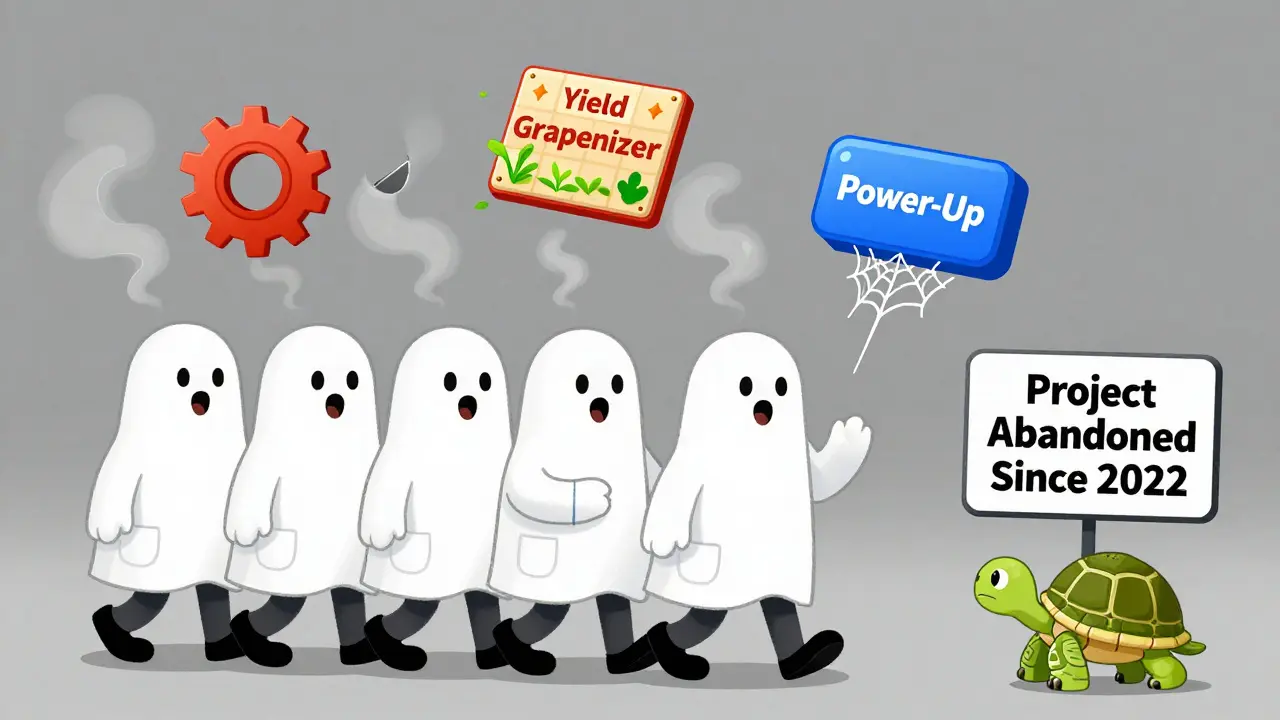
What happened to the team?
No one knows. The founders used pseudonyms. No LinkedIn profiles. No public interviews. No press releases. The project was launched with a website and a token, then abandoned. Some believe it was a rug pull. Others think the team got bored. Either way, they disappeared without a trace.Is Grapeswap a scam?
It’s not officially classified as a scam by regulators-because no one’s paying attention. But the signs are all there:- Massive price drop with no recovery
- No active development
- Zero community engagement
- Hidden team
- Unrealistic promises
- Minimal trading volume
Should you invest in GRAPE?
No. If you’re looking for a long-term investment, avoid GRAPE. If you’re looking for a quick flip, don’t. The odds are stacked against you. The liquidity is gone. The team is gone. The hype is gone. The only people still holding GRAPE are those who refuse to accept it’s dead.What’s the difference between Grapeswap (GRAPE) and Grape (GRP)?
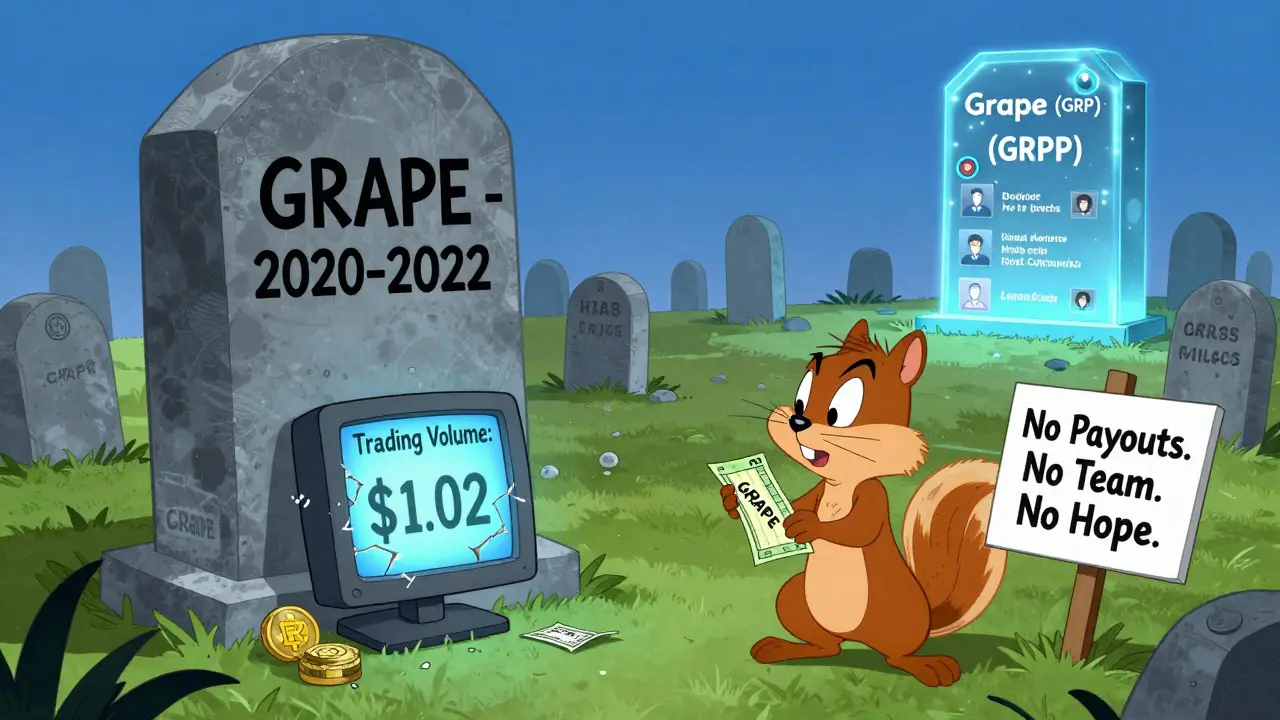
They’re completely different.- Grapeswap (GRAPE) is a BEP20 token on Binance Smart Chain. It’s a DeFi + gaming project with no active development.
- Grape (GRP) is a Layer 1 blockchain using DAG technology. It’s focused on gaming infrastructure, has active developers, and is building real products.
Where can you buy GRAPE?
You can find GRAPE on a few decentralized exchanges:- PancakeSwap (BSC)
- BitMart (limited listing)
- HotBit (inactive)
Can you stake GRAPE?
The platform claimed to have a staking system with a Yield Optimizer, but it was never activated. There are no staking pools. No APRs. No locks. No rewards. Trying to stake GRAPE today will lead you to a dead link or a 404 page.Is Grapeswap listed on major exchanges?
Yes, but only on token directories-not as a trading pair.- CoinMarketCap: Listed
- CoinGecko: Listed
- Binance: Listed as a token (not tradable)
- Coinbase: Not listed
What’s the future of Grapeswap?
There isn’t one. No team. No code. No updates. No users. No liquidity. No hope. It’s over. The project is dead. The token is worthless. The only thing left is a website that still loads, and a few people clinging to the past. If you’re holding GRAPE, cut your losses. If you’re thinking of buying it, walk away. This isn’t a coin. It’s a lesson.What is Grapeswap (GRAPE)?
Grapeswap (GRAPE) is a cryptocurrency token launched in 2020 on the BNB Smart Chain. It was marketed as a multi-chain DeFi platform with a decentralized exchange, gaming features like Grapenopoly, and yield optimization tools. Today, it trades at $0.000002 with near-zero trading volume, and all development has stopped.
Is Grapeswap still active?
No. The team stopped updating the project in 2022. There are no new code commits, no social media activity, no community engagement, and no liquidity. The website remains online but is static and outdated.
Can I still trade GRAPE tokens?
Technically yes, on platforms like PancakeSwap, but trading volume is less than $1.02 per day. Liquidity is extremely low, making it hard to buy or sell without massive slippage. It’s not a viable trading pair.
Is Grapeswap a scam?
It’s not legally classified as a scam, but it exhibits all the hallmarks: hidden team, massive price drop, zero development, no utility, and abandoned community. It’s best treated as a dead project.
What’s the difference between GRAPE and GRP?
Grapeswap (GRAPE) is a BEP20 token with gaming features on BSC. Grape (GRP) is a separate Layer 1 blockchain using DAG technology, focused on gaming infrastructure. They are unrelated projects with similar names.
Can I stake GRAPE for rewards?
No. The staking and yield optimizer features were never launched. Any links to staking pages are broken or lead to placeholder pages.
Why did Grapeswap fail?
It tried to do too much without focusing on execution. The gaming features were underdeveloped, the DEX had no liquidity, the team vanished, and there was no long-term utility for the token. In crypto, ambition without execution always fails.
Is GRAPE listed on Binance or Coinbase?
GRAPE is listed on Binance as a token (not a trading pair), and on CoinMarketCap and CoinGecko. It is not listed on Coinbase. Listing on these sites doesn’t mean you can trade it-it just means the data is recorded.
Ian Plunkett
February 18, 2026 AT 15:02Avantika Mann
February 20, 2026 AT 10:34Sasha Wynnters
February 22, 2026 AT 06:35Beth Erickson
February 23, 2026 AT 23:04Angela Henderson
February 25, 2026 AT 18:29Geet Kulkarni
February 26, 2026 AT 21:39Paul David Rillorta
February 28, 2026 AT 00:41andy donnachie
March 1, 2026 AT 06:01James Breithaupt
March 2, 2026 AT 23:26Alex Williams
March 4, 2026 AT 18:41sruthi magesh
March 5, 2026 AT 14:40Lisa Parker
March 5, 2026 AT 21:24Aileen Rothstein
March 6, 2026 AT 20:38