You’ve probably seen the buzz around AI and crypto merging. It’s a hot topic, with big names like Bittensor and Fetch.ai grabbing headlines. But then there are tokens that fly under the radar. One of those is Glades, which uses the ticker symbol GLDS. If you’re wondering what Glades actually is, how it works, and whether it’s worth your attention, you’re not alone. This isn’t just another generic coin; it tries to do something specific: gamify the training of artificial intelligence models.
The promise sounds cool on paper. You play, you train AI, you get paid in crypto. But before you rush to buy, we need to look at the reality behind the hype. Is GLDS a hidden gem or a risky experiment? Let’s break down exactly what this project is, where it lives on the blockchain, and what the data says about its viability right now.
Key Takeaways
- Glades (GLDS) is a niche cryptocurrency built on the Solana blockchain, focusing on an AI "Play-to-Train" model.
- The token has extremely low liquidity and market capitalization (under $1 million), making it a high-risk asset for investors.
- Unlike major AI coins like Bittensor or Fetch.ai, GLDS lacks significant exchange listings, community presence, or transparent development updates.
- Buying GLDS requires using decentralized exchanges like Raydium and Solana-compatible wallets such as Phantom.
- The project faces serious challenges regarding sustainability, with industry data suggesting ultra-small-cap tokens often fail within 18 months.
What Exactly is Glades (GLDS)?
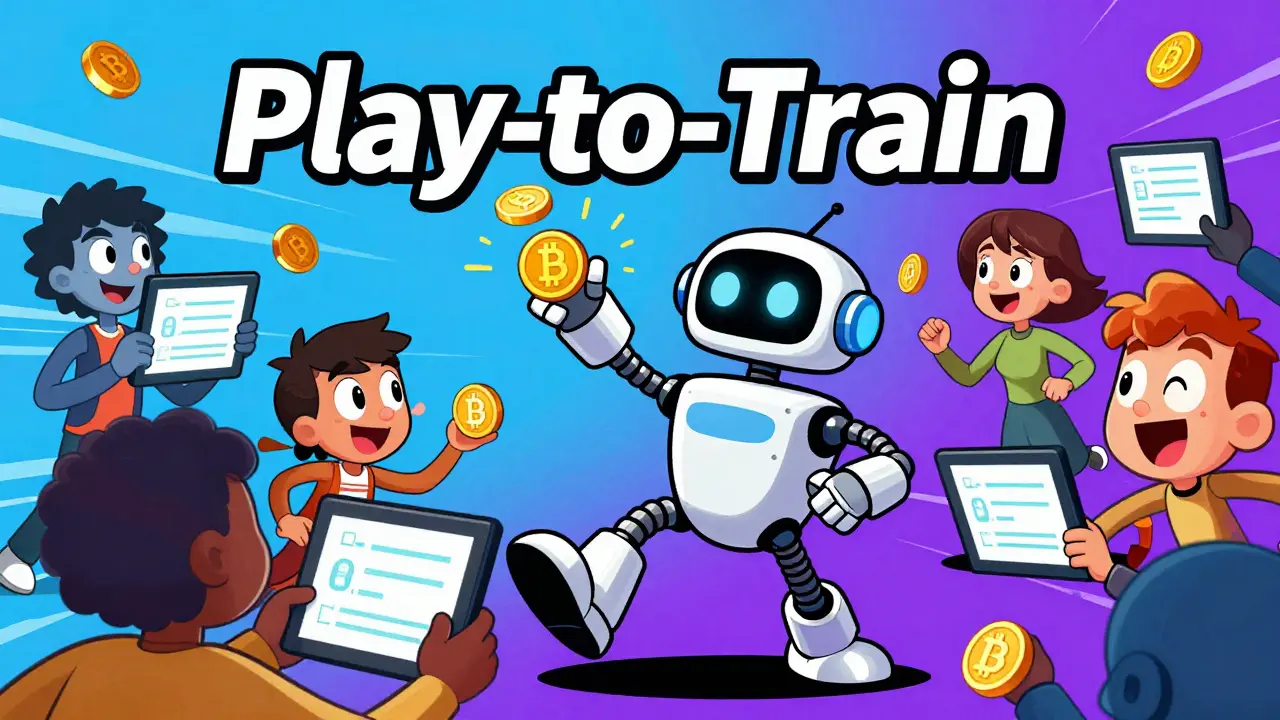
To understand Glades, you first have to separate the concept from the execution. At its core, Glades is a cryptocurrency project designed to incentivize users to participate in the training of artificial intelligence models through a gamified interface. The term they use is "Play-to-Train." Think of it like the popular "Play-to-Earn" games, but instead of shooting monsters or farming land, you are helping to label data, verify outputs, or run tasks that improve AI algorithms.
The idea is straightforward: AI needs massive amounts of human-curated data to learn. Instead of paying people hourly wages, Glades offers them cryptocurrency tokens. In theory, this creates a decentralized workforce for AI development. However, looking at the official documentation and public records, the specific mechanics of *how* this training happens remain vague. There are no detailed whitepapers or open-source code repositories publicly linked that explain the technical architecture of their AI training platform.
This lack of technical transparency is a red flag for many seasoned investors. While the concept of decentralized AI data labeling is valid (and used by larger projects), Glades hasn't demonstrated a working product that generates real value. As of late 2023, the project existed mostly as a token with a website, rather than a fully functional application with active users contributing to AI models.
Technical Foundation: Built on Solana
One clear fact about GLDS is where it lives. It operates on the Solana blockchain. This is important because Solana is known for high speed and very low transaction fees compared to older networks like Ethereum. For a micro-transaction-heavy model like gaming or AI task completion, Solana is a logical choice. If every time you completed a small AI training task cost $5 in gas fees, the model would collapse. On Solana, those fees are fractions of a cent.
To interact with Glades, you need a wallet that supports Solana. The most common options are Phantom and Solflare. These wallets allow you to store SOL tokens and swap them for other assets on the network. Since GLDS is not listed on major centralized exchanges like Coinbase or Binance, you cannot simply buy it with a credit card. You have to go through the decentralized finance (DeFi) route.
The primary way to track GLDS transactions is via Solscan, the official block explorer for Solana. If you want to see if a transaction went through or check the contract address, that’s where you’ll look. However, finding the actual smart contract details for Glades can be tricky, as the project doesn’t prominently display its GitHub repository or audit reports. This opacity makes it harder to verify if the code is secure or if there are any backdoors.
| Feature | Glades (GLDS) | Bittensor (TAO) | Fetch.ai (FET) |
|---|---|---|---|
| Blockchain | Solana | Bittensor Network | Ethereum / Multi-chain |
| Market Cap (Late 2023) | ~$320,000 | ~$1.1 Billion | ~$430 Million |
| 24h Trading Volume | ~$3,000 | ~$167 Million | High (Multi-exchange) |
| Exchange Listings | 1 (Decentralized) | 30+ (Centralized & DeFi) | Major Global Exchanges |
| Primary Use Case | Gamified AI Training | Decentralized Machine Learning | AI Agents & Automation |
The Reality of Liquidity and Market Data
Here is where things get complicated for potential buyers. When you look at the numbers, Glades is classified as an "ultra-small-cap" cryptocurrency. According to data from CoinGecko and CoinPaprika in late 2023, the total market capitalization was roughly $320,000. To put that in perspective, Bittensor (TAO) had a market cap over 3,000 times larger.
Why does market cap matter? It dictates liquidity. Liquidity is how easily you can buy or sell a token without crashing its price. Glades had a 24-hour trading volume of only about $3,000. That means all the buying and selling happening across the entire world for that token amounted to less than the price of a decent laptop in a single day.
If you were to try to buy $1,000 worth of GLDS, you might slip the price significantly because there aren’t enough sellers waiting on the order books. Conversely, if you wanted to sell, you might find no one wanting to buy, leaving you stuck holding tokens you can’t exit. This is a classic characteristic of illiquid assets. The token trades primarily on Raydium, a decentralized exchange on Solana. Raydium is great for accessing new tokens, but it also exposes you to higher risks if the pool depth is shallow.
The price itself is negligible, often hovering around $0.0003 per token. Don’t let the low price trick you into thinking it’s "cheap." With a circulating supply of 950 million tokens, the total value is still tiny. A penny stock costing $0.01 can be more valuable than a token costing $0.0001 if the market cap and demand support it. In GLDS’s case, the demand is virtually non-existent.
Risks and Red Flags
We need to talk about risk openly. Investing in tokens like Glades is not investing; it’s speculation bordering on gambling. Here are the specific dangers:
- Lack of Community: Healthy crypto projects have loud communities on Twitter, Discord, and Reddit. For Glades, these spaces are silent. There are no dedicated threads, no user testimonials, and no organic discussion. This suggests either the team is inactive or early adopters have already left.
- No Transparent Development: A generic link to "github.com" without a specific repository is a major warning sign. Open-source projects thrive on visibility. If you can’t see the code being updated, you can’t trust the technology is evolving.
- Regulatory Uncertainty: The SEC and other global regulators are cracking down on AI-crypto hybrids. Projects that don’t have clear utility or legal structure are prime targets for enforcement actions. Glades lacks any mention of legal compliance or partnerships.
- Failure Rate Statistics: Research firms like Messari have noted that tokens with market caps below $500,000 have a failure rate of over 90% within 18 months. They simply run out of resources, lose interest, or get abandoned. Glades fits squarely into this danger zone.
Another issue is the "vaporware" risk. Vaporware refers to products that are announced but never released. Without a working app where you can actually "play to train" AI, GLDS is just a number on a screen. Until the utility is proven, the token has no intrinsic value beyond speculative hope.
How to Buy GLDS (If You Still Want To)
If you understand the risks and still want to acquire some GLDS tokens, here is the step-by-step process. Remember, this involves interacting with smart contracts on a decentralized exchange, so proceed with caution.
- Set Up a Wallet: Download Phantom or Solflare. Create a new wallet and securely store your seed phrase offline. Never share this phrase with anyone.
- Fund Your Wallet: Buy SOL (Solana) from a reputable exchange like Coinbase, Kraken, or Binance. Transfer the SOL to your Phantom wallet address.
- Connect to Raydium: Go to the Raydium website and connect your wallet. Ensure you are on the correct Solana network.
- Find the Pair: Search for the GLDS/SOL trading pair. Warning: Always double-check the contract address against official sources to avoid fake tokens. Scammers often create copycat tokens with similar names.
- Swap: Enter the amount of SOL you wish to spend. Set your slippage tolerance appropriately (often 1-3% for low-liquidity pools). Confirm the transaction.
Once you have the tokens, they will appear in your wallet. To sell, you reverse the process. Be aware that due to low liquidity, you may not get the exact price shown when you initiate the trade.
Future Outlook: Can Glades Survive?
The AI-crypto sector is growing. Delphi Digital reported a 37% growth in AI-related crypto projects in Q3 2023. However, growth in the sector doesn’t mean every token benefits. The market is consolidating around leaders like TAO, FET, and AGIX. These projects have millions in funding, active developers, and real-world partnerships.
For Glades to survive, it needs three things: liquidity, users, and transparency. Without more exchange listings, the liquidity trap remains. Without users actually performing AI training tasks, the value proposition is hollow. And without transparent code and roadmaps, trust cannot be built.
As of mid-2026, unless there have been massive, undocumented developments since late 2023, Glades remains a marginal project. It serves as a cautionary tale of the thousands of tokens launched during the bull markets that offer exciting concepts but fail to deliver execution. For most investors, the opportunity cost of tying up capital in GLDS is too high compared to established alternatives.
Is Glades (GLDS) a scam?
There is no definitive proof that Glades is a scam in the traditional sense of stealing funds directly. However, it exhibits many characteristics of failed or abandoned projects, including extreme illiquidity, lack of transparent development, and zero community engagement. Investing in such tokens carries a near-total risk of loss.
Where can I buy GLDS tokens?
GLDS is not available on major centralized exchanges. You can attempt to buy it on decentralized exchanges like Raydium on the Solana network. You will need a Solana-compatible wallet (like Phantom) and SOL tokens to perform the swap.
What is the "Play-to-Train" model?
Play-to-Train is a concept where users complete tasks related to AI data labeling or model verification in a gamified environment. In return, they earn cryptocurrency tokens. Unlike Play-to-Earn games which focus on entertainment, Play-to-Train focuses on contributing labor to AI development.
Why is the GLDS price so low?
The low price reflects the token's extremely low market capitalization and lack of demand. With a market cap under $1 million and minimal trading volume, there are few buyers willing to pay higher prices. The low price does not indicate potential for growth; it indicates a lack of market confidence.
Is Glades better than other AI crypto coins?
No. Compared to established projects like Bittensor (TAO), Fetch.ai (FET), or SingularityNET (AGIX), Glades lacks liquidity, exchange listings, community support, and transparent development. It is considered a high-risk, ultra-small-cap asset with limited prospects.
Does Glades have a whitepaper?
Publicly available information does not include a detailed, accessible whitepaper or technical documentation. The project’s website provides basic marketing claims but lacks the technical depth expected from credible blockchain projects.
Tobias Gjerlufsen
May 20, 2026 AT 17:18you people are asleep at the wheel. glades is a textbook rug pull waiting to happen. no whitepaper, no code, just vibes and promises. i've seen this script a thousand times since 2017. they launch on solana because its cheap, pump it for a week, then vanish into the ether leaving you with dust. do not touch it. seriously. stop pretending its innovation when its just greed wrapped in ai buzzwords.
Samara McCallum
May 21, 2026 AT 11:18i mean... isn't all crypto just a collective hallucination anyway? we're betting on numbers that don't exist based on trust in strangers who might be bots. so why is glades any different than bitcoin except for the liquidity? maybe the lack of community is just them being humble about their genius. or maybe im just tired today. hard to say really.
Sheldon Friesen
May 23, 2026 AT 01:42Oh, look at us! We’re playing detective again! 🕵️♂️ It’s quite fascinating how everyone rushes to judge without even checking the contract address first! But sure, let’s all agree it’s a scam before reading the fine print! Isn’t that just wonderful?! I suppose if you want to throw your money into a black hole, who am I to stop you?! Just don’t come crying to me when the pool dries up! 😂
Jerry CUNNINGHAM SR
May 23, 2026 AT 17:36I appreciate the detailed breakdown provided in the original post. It is important to approach these micro-cap assets with extreme caution and respect for one's own financial boundaries. The lack of transparency mentioned here is indeed concerning for any prudent investor. We should encourage more open dialogue about risk management rather than dismissing projects outright without understanding the broader context of market volatility.
Ruben Michel
May 23, 2026 AT 21:05The sheer audacity of comparing Glades to Bittensor is laughable. One is a sophisticated decentralized machine learning network with institutional backing; the other is a digital ghost town built on hopes and prayers. The disparity in market capitalization-$320,000 versus $1.1 billion-is not merely a difference in scale but a chasm in legitimacy. To suggest they are comparable is an insult to the intelligence of anyone familiar with blockchain fundamentals.
Gavin Wonnacott
May 24, 2026 AT 10:32I actually bought some GLDS last month because I felt a connection to the project's vision. It was my money, none of your business. You elitists hate fun. I like the idea of training AI while playing games. Who cares about liquidity? If it goes to zero, I’ll just buy more next time. Stop trying to control what I do with my wallet.
Tricia Alach
May 26, 2026 AT 01:26honestly i think the whole play-to-train thing sounds kinda cool if it actually worked. but yeah the silence from the team is sus. im always worried about scams too. hope someone checks the code soon cause i dont know how to read solidity or whatever solana uses. fingers crossed it turns out ok though!
robert Whitehead
May 27, 2026 AT 01:52This is exactly why the crypto space is filled with losers. People ignore basic due diligence. No GitHub repo means no audit. No audit means potential backdoors. It is morally reprehensible to promote such a token without screaming the risks from the rooftops. I have lost friends to these vaporware schemes. Do not be a victim. Educate yourself or get out of the market.
Caique Muniz
May 28, 2026 AT 20:20lol another day another coin promising to change the world with ai. bro just make a memecoin next time it would be honest. the liquidity is basically non-existent. u cant sell even if u wanted to. classic honeypot setup probably. save urself the headache and stick to btc or eth.
Jan Gilmore
May 30, 2026 AT 08:53Let me tell you something about Solana tokens. They move fast. If there is no volume, it is dead. I have tracked thousands of these small caps. The ones that survive usually have a strong marketing push within the first 48 hours. Glades has neither. It is sitting on Raydium gathering dust. The smart money is already out. Only the retail buyers are left holding the bag.
Mike S
June 1, 2026 AT 05:01Absolutely pathetic. A 'Play-to-Train' model with zero users? That is not a business model; that is a fantasy. The fact that they are trading on DEXs with less volume than a single cup of coffee is embarrassing. This article should be titled 'How to Lose Money Quickly.' The author is doing the community a favor by exposing this trash. Burn it.
H F
June 2, 2026 AT 01:39Wow, what a comprehensive analysis! It really highlights the importance of looking beyond the hype. While it might seem daunting, understanding these mechanics helps us become smarter investors. I’m optimistic that clearer standards will emerge for these niche projects. Great read!
Michael Berggren
June 2, 2026 AT 06:54Great points raised here! 🌟 Always remember to DYOR (Do Your Own Research). The comparison table is super helpful for visualizing the gap between established projects and new entrants. Stay safe out there and keep learning! 🚀📈
Bradley Geldenhuys
June 2, 2026 AT 18:41look man i get the fear mongering but sometimes early adopters take risks. thats how we got rich in 2013. yeah glades looks sketchy af right now but if they drop a working app tomorrow it could moon. i prefer to see the potential not just the red flags. keep an open mind folks. maybe ill try buying a tiny bit just to support the dream.
Shelby Cantu
June 3, 2026 AT 18:55Thanks for sharing this info. It helps clarify things.