
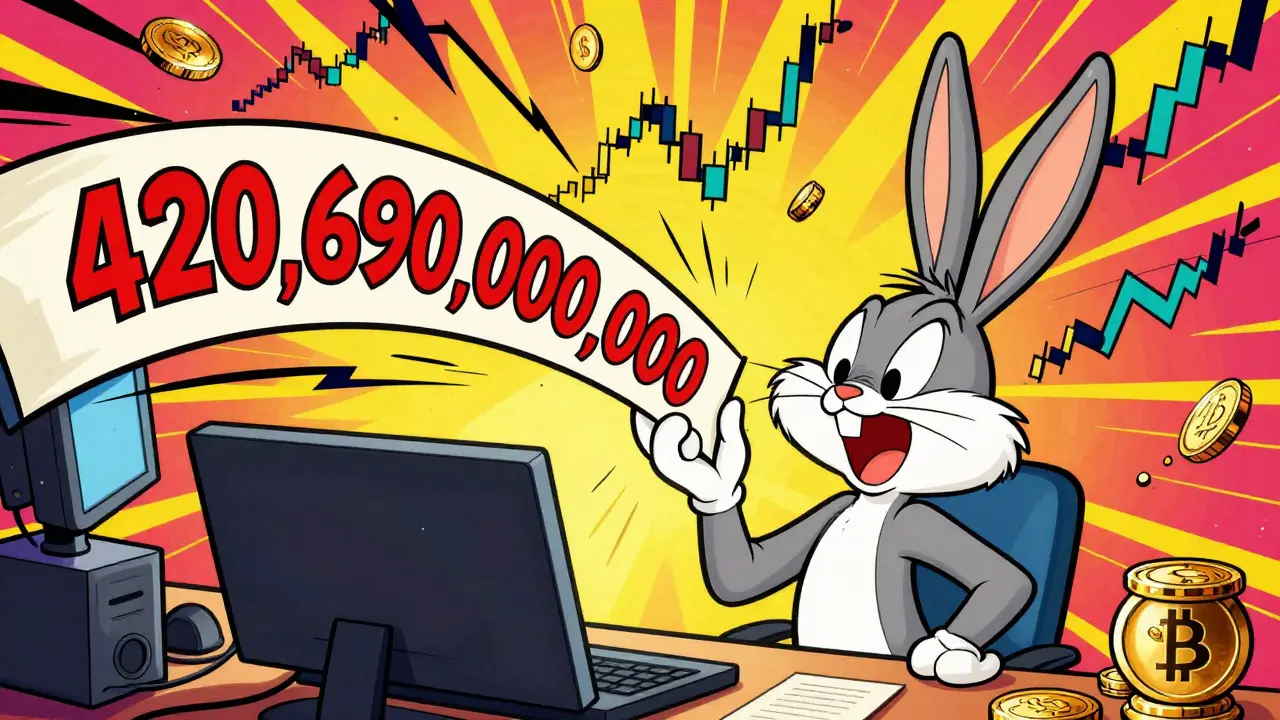
You’ve likely seen it pop up on a ticker screen or heard about it in a chaotic Telegram group: FUSAKA is a highly speculative cryptocurrency token characterized by extreme volatility, contradictory technical claims, and a massive circulating supply rooted in internet meme culture. It trades at fractions of a cent, moves wildly within hours, and sits deep in the rankings of global crypto trackers. But what exactly is it? Is it the next big thing, or just another digital ghost town?
If you are looking for a solid investment with a clear roadmap, FUSAKA might not be the answer. If you are curious about how the wild west of low-cap meme coins operates, this guide breaks down the facts, the fiction, and the significant red flags surrounding this specific asset.
The Core Identity: What Actually Is FUSAKA?
At its most basic level, FUSAKA is a cryptocurrency token. However, defining it precisely is tricky because the information available online is often conflicting. This confusion is a hallmark of many micro-cap assets.
Here are the hard numbers that define the token’s current state:
- Circulating Supply: Exactly 420,690,000,000 (420.69 billion) tokens.
- Market Cap: Approximately $1.2 million to $1.4 million USD.
- Price Point: Typically hovering around $0.00000288.
- Ranking: Often ranked below #3,700 on major aggregators like CoinGecko.
The most telling detail here is the supply number: 420,690,000,000. In internet culture, "420" and "69" are well-known meme references. When a project chooses a supply based entirely on these numbers rather than economic modeling, it signals that the token is designed as a meme coin is a type of cryptocurrency created primarily for humor, community engagement, or viral marketing, often lacking intrinsic utility or technological innovation. It is built for hype, not for infrastructure.
The Blockchain Confusion: Solana or Ethereum?
One of the biggest issues facing anyone trying to understand FUSAKA is the contradictory data regarding which blockchain it lives on. This isn’t just a minor detail; it changes everything about how you interact with the token.
Some sources, including certain exchange listings, describe FUSAKA as a Solana-based token is a digital asset operating on the Solana blockchain, known for high transaction speeds and low fees compared to older networks. Solana is popular for meme coins because transactions are fast and cheap. Other sources, specifically some automated descriptions on large aggregators, claim it is an "Ethereum upgrade" or related to Layer 2 scaling.
Let’s be clear: An Ethereum upgrade cannot be a tradeable token.
Ethereum upgrades-like the London Hard Fork or the Merge-are protocol-level changes implemented by developers through code updates. They are not assets you can buy, sell, or hold in a wallet. Technical experts and Ethereum core developers have explicitly stated that no such upgrade named "Fusaka" exists. This suggests that any description linking FUSAKA to Ethereum scalability is either a copy-paste error by data scrapers or deliberate misinformation intended to lure investors looking for serious tech projects.
| Claim Found Online | Technical Reality | Risk Level |
|---|---|---|
| "It is an Ethereum Upgrade" | Technically impossible. Upgrades are protocol changes, not tokens. | High (Misinformation) |
| "Built on Solana" | Plausible. Many low-cap meme coins use Solana for speed/cost. | Medium (Requires Contract Verification) |
| "Has Utility/Use Case" | No verifiable whitepaper, GitHub, or product exists. | Very High (Scam Potential) |
| "Team is Anonymous" | Confirmed. No public identities or professional backgrounds. | High (Accountability Risk) |
Why the Price Moves So Wildly
If you look at the chart for FUSAKA, it looks like a heart monitor during a panic attack. Prices can swing 50% in a week or more. Why does this happen?
It comes down to liquidity depth is the amount of an asset that can be traded without causing significant price changes; low liquidity leads to high volatility. With a market cap of only ~$1.3 million, there is very little money in the pool. A single buyer spending $10,000 can push the price up significantly. Conversely, a seller dumping $5,000 worth of tokens can crash the price instantly.
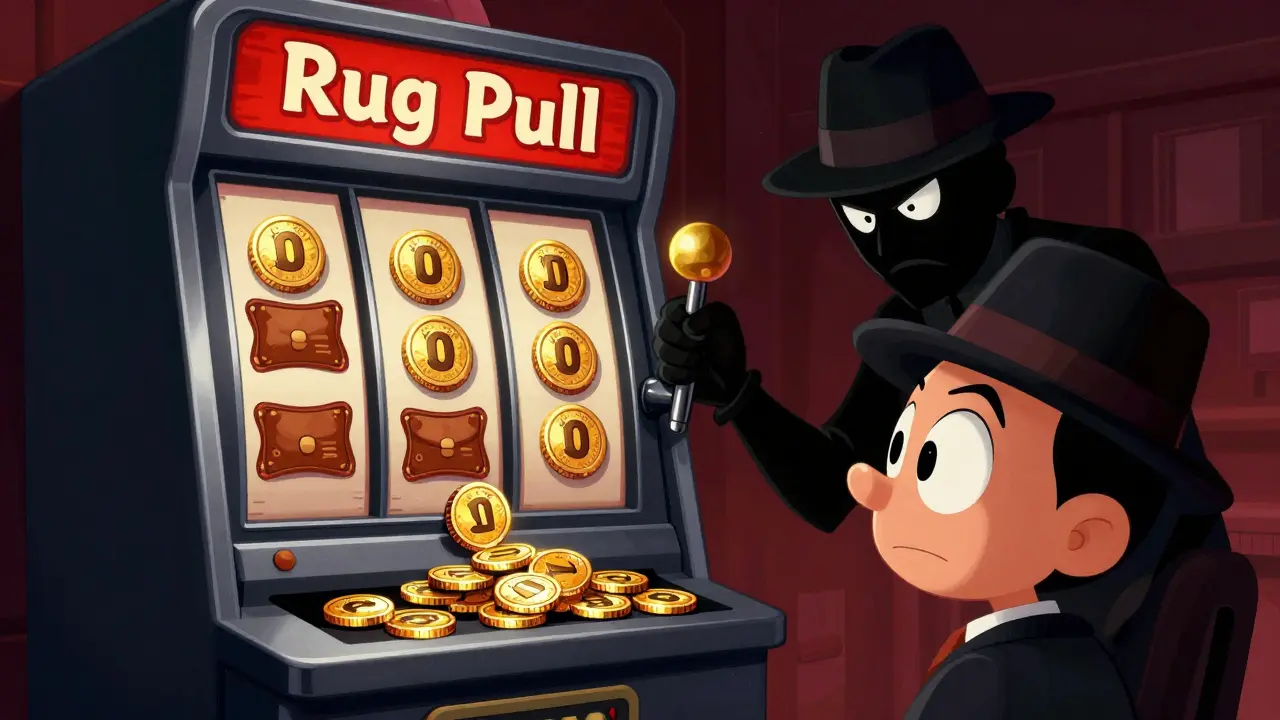
This environment creates a perfect storm for pump-and-dump schemes are illegal manipulative practices where promoters artificially inflate the price of an asset before selling their holdings, leaving other investors with losses. Without locked liquidity or audits, the creators of the token could theoretically withdraw all the funds from the trading pool at any moment, rendering the token worthless. This is known as a "rug pull."

Red Flags You Should Not Ignore
When evaluating any crypto asset, especially one with a name like FUSAKA, you need to apply strict due diligence. Here are the critical warning signs associated with this specific token:
- No Verifiable Team: Legitimate projects list their founders, developers, and advisors. FUSAKA has none. An anonymous team means zero accountability if things go wrong.
- Missing Documentation: There is no whitepaper, no technical audit from firms like CertiK, and no active GitHub repository showing code development.
- Meme-Driven Supply: The 420,690,000,000 supply indicates the project prioritizes internet humor over economic sustainability.
- Contradictory Data: As mentioned, the conflict between Solana and Ethereum descriptions shows a lack of professional oversight in how the project is presented.
- Negative Community Sentiment: On forums like Reddit and specialized crypto Telegram groups, experienced traders frequently warn against FUSAKA, citing it as a typical "copy-paste" token with no future.
Experts in blockchain security note that tokens with these characteristics have a statistically high probability of becoming worthless within 18 months. Messari’s risk frameworks classify such assets as extremely high-risk due to the lack of fundamental value drivers.
How to Buy FUSAKA (If You Still Want To)
I am not recommending you buy this token. I am explaining the mechanics so you understand the process and the risks. If you decide to proceed with speculative trading, you must follow these steps carefully to avoid scams.
- Find the Correct Contract Address: Because the token name is generic, scammers may create fake FUSAKA tokens. You must find the verified contract address on a trusted aggregator like CoinGecko or DexScreener. Never trust a link sent via DM or email.
- Set Up a Compatible Wallet: If the token is on Solana, you need a wallet like Phantom or Solflare. If it is somehow on Ethereum (less likely given the evidence), you would need MetaMask.
- Acquire Native Currency: You will need SOL (for Solana) or ETH (for Ethereum) to pay for gas fees and swap for the token.
- Use a Decentralized Exchange (DEX): Centralized exchanges like Coinbase or Binance do not list FUSAKA due to its low volume and risk profile. You will likely need to use Raydium (for Solana) or Uniswap (for Ethereum).
- Verify Liquidity Locks: Check if the liquidity pool is locked using tools like Unicrypt or Team.Finance. If it is not locked, the developers can steal the funds at any time.
FUSAKA vs. Established Meme Coins
To put FUSAKA in perspective, let’s compare it to established players in the meme coin space.
| Feature | Dogecoin (DOGE) | Shiba Inu (SHIB) | FUSAKA |
|---|---|---|---|
| Market Cap | $10B+ | $5B+ | ~$1.3M |
| Blockchain | Dogecoin (Native) | Ethereum (ERC-20) | Unclear (Likely Solana) |
| Utility/Ecosystem | Payments, Merchandise | Shibarium L2, Charity | None Verified |
| Liquidity | High (Easy to Sell) | High (Easy to Sell) | Low (Hard to Sell Large Amounts) |
| Risk Profile | Medium-High | Medium-High | Extreme |
The difference is stark. Dogecoin and Shiba Inu have massive communities, real-world adoption, and deep liquidity. FUSAKA has none of these. It is a microscopic fraction of the market size, meaning your ability to exit the position quickly without losing half your value is severely limited.
The Regulatory Landscape
As governments tighten regulations on cryptocurrencies, tokens like FUSAKA face increasing scrutiny. Under the U.S. Securities and Exchange Commission’s (SEC) Howey Test, assets sold with the expectation of profit derived from the efforts of others are considered securities. Since FUSAKA has no working product and relies on hype, it could easily be classified as an unregistered security.
In Europe, the Markets in Crypto-Assets (MiCA) regulation requires transparency regarding the issuer and the underlying technology. FUSAKA fails both criteria. This regulatory pressure means that even if the token survives, it may be delisted from compliant platforms, further trapping investor capital.
Final Thoughts on FUSAKA
FUSAKA is not an investment; it is a gamble. It lacks the technical foundation, team transparency, and community strength required for long-term viability. The contradictory information surrounding its blockchain foundation serves as a major warning sign. While the allure of buying millions of tokens for pennies is strong, the reality is that the vast majority of low-cap meme coins fail.
If you choose to interact with FUSAKA, treat the money as entertainment expenses-money you are fully prepared to lose. Never invest funds you need for rent, bills, or savings. Always verify contract addresses, check for liquidity locks, and be skeptical of any promises of guaranteed returns.
Is FUSAKA a scam?
While we cannot legally label it a scam without proof of intent, FUSAKA exhibits nearly all the characteristics of a high-risk speculative asset or potential rug pull. These include an anonymous team, no verifiable utility, contradictory technical claims, and a meme-based supply number. Investors should exercise extreme caution.
Which blockchain is FUSAKA on?
There is conflicting information. Some sources claim it is on Solana, while others incorrectly describe it as an Ethereum upgrade. Technical experts suggest it is likely a Solana-based meme token, but you must verify the specific contract address on a decentralized exchange before attempting to buy.
Can I buy FUSAKA on Coinbase or Binance?
No. Major centralized exchanges like Coinbase, Binance, and Kraken do not list FUSAKA due to its low market cap and high risk profile. Trading typically occurs on decentralized exchanges (DEXs) like Raydium or Uniswap.
What is the total supply of FUSAKA?
The total circulating supply is fixed at 420,690,000,000 (420.69 billion) tokens. This number is chosen for its association with internet meme culture rather than economic reasoning.
Is FUSAKA an Ethereum upgrade?
No. This claim found on some aggregator sites is technically incorrect. Ethereum upgrades are protocol-level changes managed by developers, not tradeable tokens. This appears to be misinformation or a data scraping error.
What is the risk of investing in FUSAKA?
The risk is extremely high. Factors include low liquidity (making it hard to sell), potential for rug pulls (developers stealing funds), lack of audits, and extreme price volatility. Most analysts predict tokens with these traits have a high probability of becoming worthless.