
Imagine buying a coin that promises total financial freedom, only to find out you can’t sell it. Or worse, the data says it doesn’t exist, yet people are trading it. That is the confusing reality of Freedom God DAO (FGD), a cryptocurrency token that has raised more eyebrows than enthusiasm in the crypto community.
If you have stumbled upon FGD on a price tracker or a social media feed, you probably want to know one thing: is this a legitimate investment opportunity or a trap? The short answer is that FGD carries extremely high risk. It lacks major exchange listings, suffers from contradictory technical data, and shows several warning signs typical of low-quality or fraudulent projects.
The Core Concept: What Is Freedom God DAO?
Freedom God DAO is marketed as a decentralized autonomous organization token focused on governance and community decision-making. In theory, a DAO allows token holders to vote on proposals, manage funds, and steer the project’s direction without a central boss. This model has been successfully used by giants like MakerDAO and Aave.
However, FGD operates in a very different league. Launched around 2021 or 2022 (sources disagree), the project claims to be built by "blockchain enthusiasts." But unlike established DAOs that have clear whitepapers, active developer teams, and real-world utility, FGD’s roadmap is vague. Promises of a "decentralized voting system" and "new utility features" have appeared in descriptions for years without concrete implementation dates or visible progress.
Technical Confusion: Ethereum or BNB Chain?
One of the biggest red flags with FGD is the lack of clarity about where it lives. Blockchain technology requires precision; a token must exist on a specific network.
- Ethereum Claim: Some data aggregators list FGD as an ERC-20 token on the Ethereum blockchain.
- BNB Smart Chain Reality: Other sources, including trading data from PancakeSwap, show FGD operating as a BEP-20 token on the BNB Smart Chain.
This contradiction matters. If you try to send FGD from an Ethereum wallet to a BNB wallet, your coins could vanish forever. The fact that major platforms cannot agree on the basic infrastructure suggests poor documentation or deliberate obfuscation by the developers.
Market Data Anomalies: Does FGD Even Exist?
When you look at the market statistics for FGD, things get weird. Here is what the data shows as of late 2023 and early 2024 trends:
| Metric | Reported Value | Implication |
|---|---|---|
| Circulating Supply | 0 FGD | Data error or hidden supply |
| Market Cap | $0 | No measurable value despite trading |
| All-Time High | $28.80 | Extreme volatility (99.7% drop) |
| 24h Volume | <$10,000 | Very low liquidity |
A circulating supply of zero usually means no tokens are in public hands. Yet, there is trading activity. This mismatch often indicates that the token’s contract is not properly indexed by trackers, or that the supply is locked in a way that hides true ownership. For a retail investor, this makes valuation impossible. You don’t know if you’re buying a fraction of a pie or the whole thing.
Liquidity and Trading: Where Can You Buy FGD?
You won’t find FGD on major centralized exchanges like Binance, Coinbase, or Kraken. These platforms perform rigorous audits before listing assets. Their absence of FGD is a strong signal that the token does not meet standard security or legitimacy criteria.
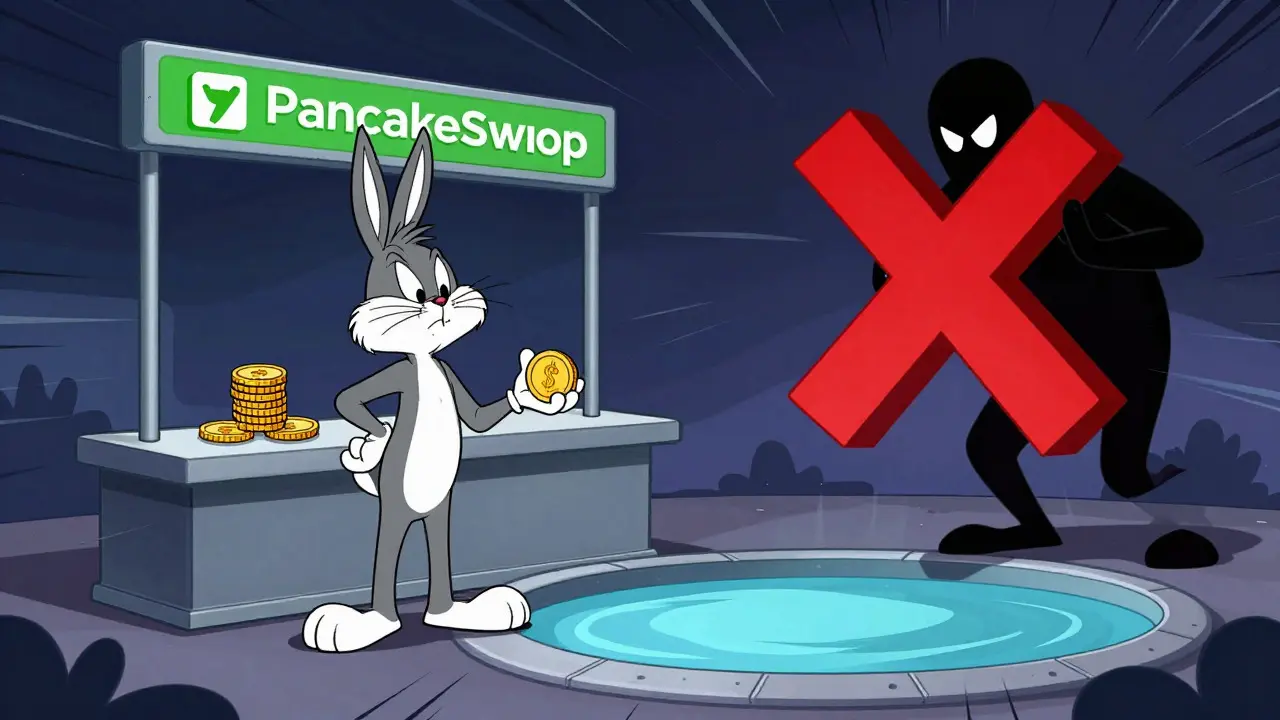
Instead, FGD trades exclusively on decentralized exchanges (DEXs) like PancakeSwap, specifically on the BNB Chain. While DEXs offer freedom, they also remove buyer protections. When you trade on PancakeSwap, you are swapping directly with a liquidity pool. If the pool is small (which it is for FGD), you face two major risks:
- Slippage: Your buy order might push the price up significantly, meaning you pay much more than the listed price.
- Honeypot Risk: Some malicious contracts allow you to buy but block you from selling. Several users have reported inability to sell FGD after purchasing it.
Community Sentiment and Expert Warnings
In the crypto world, community feedback is often the first line of defense. For FGD, the sentiment is overwhelmingly negative. On Reddit and Twitter, users have flagged the token for having "mint functions" and "owner privileges" in its smart contract code. These features allow the creators to print infinite new tokens or freeze user accounts at will-features rarely seen in reputable DAOs.
Charles Yang, Chief Analyst at the Blockchain Transparency Institute, has warned that tokens showing "zero market cap with trading activity" often indicate market manipulation schemes. Academic research firms like Messari and Delphi Digital have published zero reports on FGD, further isolating it from credible analysis.
Comparison: FGD vs. Legitimate DAO Tokens
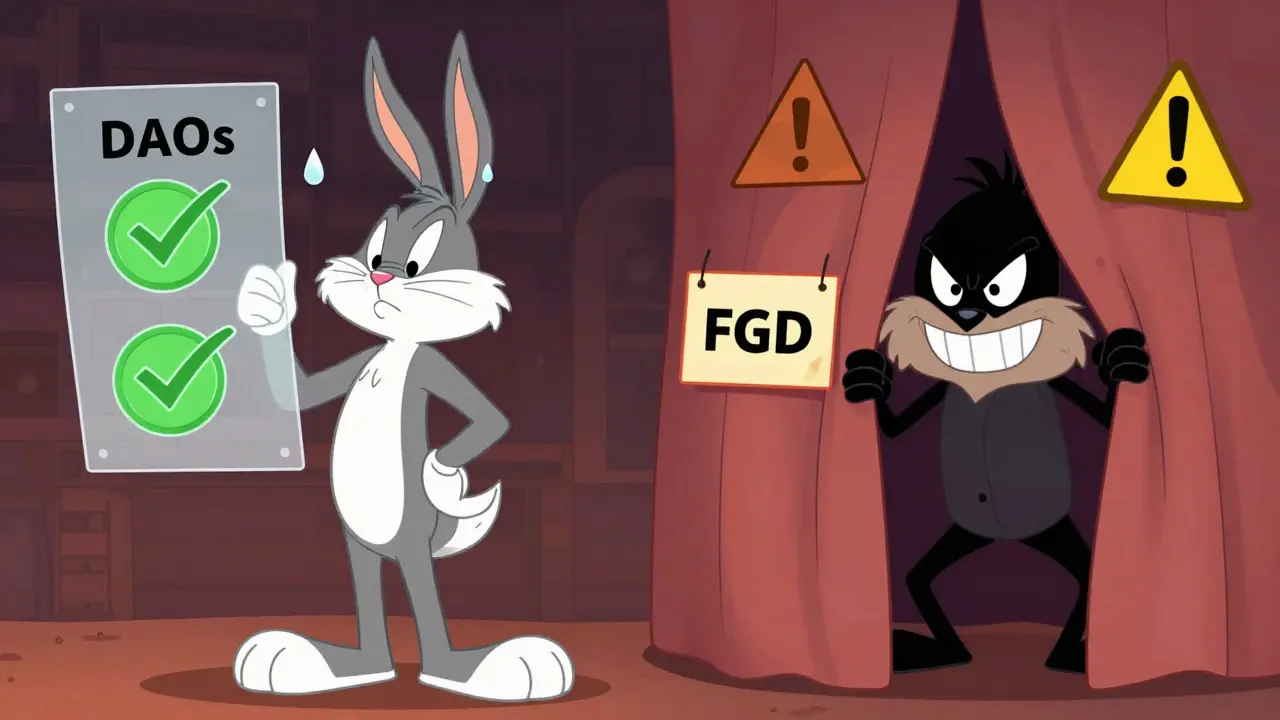
To understand why FGD stands out negatively, compare it to established governance tokens. Established projects have transparent teams, audited code, and real utility.
| Feature | Freedom God DAO (FGD) | Maker (MKR) | Aave (AAVE) |
|---|---|---|---|
| Primary Network | Conflicting (ETH/BNB) | Ethereum | Ethereum |
| Major Exchange Listing | No | Yes (Binance, Coinbase) | Yes (Binance, Coinbase) |
| Code Audit | None Publicly Available | Multiple Audits | Multiple Audits |
| Governance Utility | Vague/Unproven | Manages $10B+ Stablecoins | Manages Lending Protocol |
| Risk Level | Extreme | Moderate | Moderate |
Should You Invest in FGD?
If you are looking for a safe place to park crypto, FGD is likely not it. The combination of low liquidity, missing documentation, and negative community signals places it in the "highest risk" category. Most analysts suggest avoiding tokens that do not appear on CoinGecko’s top 5,000 list or those with unverified contracts.
However, if you are a seasoned trader who understands how to read smart contracts on Etherscan or BscScan, you might see speculative opportunities. Just remember: money put into illiquid, unlisted tokens should be considered lost until proven otherwise. Never invest more than you can afford to lose entirely.
How to Check a Token Before Buying
Whether you look at FGD or any other new coin, follow these steps to protect yourself:
- Verify the Contract Address: Copy the address from official channels, not search results. Paste it into a block explorer.
- Check Liquidity Locks: Ensure the liquidity pool is locked for a significant time (e.g., 1 year). Unlocked liquidity can be pulled by devs instantly (a "rug pull").
- Look for Renounced Ownership: If the contract owner still has control, they can change rules or pause trading.
- Read Community Discussions: Search Reddit and Twitter for complaints about selling issues.
Is Freedom God DAO (FGD) a scam?
While not officially labeled a scam by regulators, FGD exhibits many characteristics of high-risk or fraudulent tokens, including contradictory blockchain data, zero reported market cap, lack of major exchange listings, and user reports of being unable to sell. Proceed with extreme caution.
Which blockchain does FGD use?
Data is conflicting. Some sources say Ethereum, but trading pairs on PancakeSwap indicate it operates on the BNB Smart Chain (BEP-20). Always verify the network before connecting your wallet to avoid sending funds to the wrong chain.
Can I buy FGD on Binance or Coinbase?
No. Both Binance and Coinbase explicitly state that FGD is not listed on their platforms. You can only trade it on decentralized exchanges like PancakeSwap, which requires higher technical knowledge.
Why is the market cap of FGD listed as $0?
This is likely due to data reporting errors or a circulating supply of zero in tracking databases. It indicates that reliable financial metrics for the token are unavailable, making it difficult to assess its true value.
What is the all-time high of FGD?
The all-time high is reported as $28.80. Current prices are significantly lower, representing a drop of over 99%, which highlights the extreme volatility and potential loss of value for early buyers.
Does FGD have a working DAO governance system?
There is no evidence of a functional, active governance system. Roadmap mentions of voting systems have not been accompanied by verifiable implementation or usage data, unlike established DAOs like Maker or Aave.