

You’ve heard the buzzwords. Decentralization. Trustless ledgers. Smart contracts. But when you try to actually build a blockchain application for your business, reality hits hard. You need servers. You need nodes. You need engineers who understand consensus mechanisms better than they understand your product roadmap. This is where Blockchain-as-a-Service (BaaS) changes the game. It’s not magic, but it feels like it if you’re trying to avoid building infrastructure from scratch.
Think of BaaS as the Airbnb of blockchain infrastructure. Instead of buying a house (building your own blockchain network), maintaining the plumbing, and hiring a landlord, you just book a room that’s already clean, secure, and connected. In this guide, we’ll break down exactly what BaaS is, how it works under the hood, and whether it’s the right move for your company in 2026.
The Core Concept: Why BaaS Exists
Blockchain-as-a-Service is a third-party cloud-based service model that enables organizations to build, deploy, and manage blockchain applications without handling the underlying infrastructure. It solves a massive problem: blockchain is technically heavy. Running a full node requires constant uptime, security patching, and significant bandwidth. For most businesses, this is a distraction from their core mission.
BaaS providers handle the messy backend stuff. They install the software, manage the hardware, secure the data, and keep the network running. You pay for the service-usually via subscription or usage fees-and focus on writing smart contracts or integrating the API into your app. It’s similar to how Software-as-a-Service (SaaS) removed the need for companies to host their own email servers. BaaS does the same for distributed ledgers.
How BaaS Architecture Works
Under the hood, a BaaS provider acts as the host for your blockchain environment. Here’s the typical flow:
- Infrastructure Provisioning: The provider sets up virtual machines or containers in a cloud environment (like AWS, Azure, or IBM Cloud).
- Node Management: They run the actual blockchain nodes. These nodes validate transactions and maintain the ledger.
- API Layer: The provider exposes simple APIs so your developers can send transactions or query the ledger without touching the raw code.
- Security & Compliance: They handle encryption keys, access controls, and often help with regulatory compliance requirements.
This architecture allows you to choose between public blockchains (like Ethereum or Bitcoin testnets) or private consortium chains (like Hyperledger Fabric). The provider manages the complexity of consensus mechanisms-whether it’s Proof-of-Work, Proof-of-Stake, or something more efficient like Raft-so you don’t have to.
Key Benefits vs. Traditional Implementation
Why would you rent blockchain instead of owning it? The math usually favors renting, especially for startups or enterprises testing new ideas.
| Feature | Self-Hosted Blockchain | Blockchain-as-a-Service (BaaS) |
|---|---|---|
| Upfront Cost | High (Hardware, DevOps team) | Low (Subscription/Pay-per-use) |
| Time to Deploy | Weeks to Months | Hours to Days |
| Maintenance | Your responsibility (Patching, Uptime) | Provider’s responsibility |
| Scalability | Manual (Buy more servers) | Automatic (Cloud scaling) |
| Control | Total control over code and nodes | Limited control; dependent on provider |
The biggest win here is speed. If you want to launch a supply chain tracking pilot next month, BaaS gets you there. Building your own network might take until next year. Plus, you avoid the "bus factor" risk-if your one blockchain engineer quits, your self-hosted network might stall. With BaaS, the provider keeps things running.

The Centralization Trade-Off
Here’s the catch. Blockchain’s holy grail is decentralization. No single point of failure. No single entity controlling the truth. When you use BaaS, you introduce a middleman. Your transactions go through the provider’s infrastructure. While the ledger itself might be decentralized across multiple nodes, the entry point is centralized at the service provider.
Does this matter? It depends. For internal enterprise audits or supply chain transparency among known partners, probably not. You trust the provider to keep the lights on. But for a truly permissionless cryptocurrency project where trustlessness is the entire value prop, BaaS might feel like cheating. You’re trading some philosophical purity for operational ease.
Real-World Use Cases in 2026
Who is actually using this tech? Not just crypto bros. We see three main sectors dominating BaaS adoption:
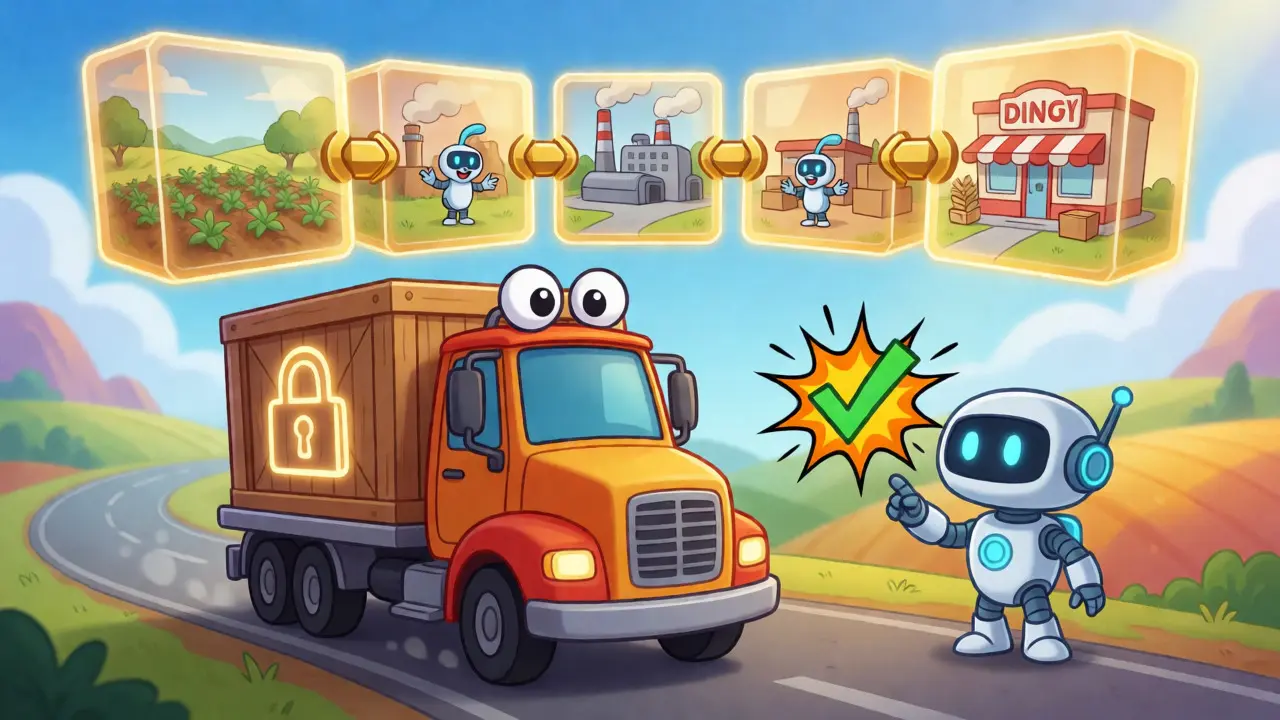
- Supply Chain Logistics: Companies use BaaS to track goods from factory to shelf. Walmart and Maersk have long used blockchain pilots, but now smaller logistics firms use BaaS to verify provenance without hiring a dev team.
- Digital Identity: Banks are exploring BaaS to create self-sovereign identity solutions. Imagine logging into a bank app with a verified credential stored on a managed blockchain, rather than a password database.
- Healthcare Records: Hospitals use private BaaS networks to share patient data securely. The provider ensures HIPAA-compliant storage while the hospital focuses on care, not server maintenance.
In New Zealand, we’re seeing local agri-tech startups use BaaS to verify organic certification. It’s cheaper than building a custom solution, and customers can scan a QR code to see the immutable history of their milk or meat.
Choosing the Right Provider
Not all BaaS platforms are created equal. When shopping around, look for these specific attributes:
- Supported Protocols: Does it support Hyperledger, Ethereum, Corda, or others? Choose based on your industry standards.
- Data Privacy: Can you keep sensitive data off-chain? Good BaaS solutions offer hybrid models where only hashes go on-chain.
- Integration Tools: Look for SDKs for JavaScript, Python, or Go. If your team doesn’t know Solidity, can they still build?
- Exit Strategy: What happens if you leave? Can you export your ledger data easily? Avoid vendor lock-in traps.
Major players include Microsoft Azure Blockchain Service, Amazon Managed Blockchain, and IBM Food Trust. Each has different pricing models and ecosystem strengths. Test them with a small proof-of-concept before committing.
Implementation Checklist
Ready to try BaaS? Follow these steps to avoid common pitfalls:
- Define the Problem: Do you really need a blockchain? Or would a SQL database do? If you don’t need multi-party trust, skip BaaS.
- Pick the Network Type: Public (open to anyone) or Private (permissioned)? Most enterprises start private.
- Design the Data Model: Decide what goes on-chain. Storing large files directly on blockchain is expensive. Store hashes instead.
- Set Up Monitoring: Even though the provider manages nodes, you need alerts for transaction failures or latency spikes.
- Plan for Governance: Who updates the smart contracts? How do you add new members to the network? Write this down before you code.
Frequently Asked Questions
Is Blockchain-as-a-Service secure?
Yes, generally very secure. Providers invest heavily in enterprise-grade security, including DDoS protection, encrypted key management, and regular auditing. However, security is a shared responsibility. You must manage your own API keys and smart contract logic correctly.
Can I switch BaaS providers later?
It depends on the provider's data export policies. Standardized protocols like Hyperledger make migration easier, but proprietary features can cause lock-in. Always check the terms of service for data portability guarantees before signing up.
Is BaaS cheaper than building my own blockchain?
For most businesses, yes. Building in-house requires specialized DevOps talent, hardware costs, and ongoing maintenance. BaaS converts these fixed costs into variable operating expenses, which is often more financially predictable and lower risk for new projects.
Do I need to know coding to use BaaS?
You need technical skills, but not necessarily deep blockchain expertise. You’ll likely need developers who can work with APIs and write basic smart contracts. Many BaaS platforms offer low-code interfaces for simpler use cases, but complex applications still require programming.
What is the difference between BaaS and SaaS?
SaaS delivers a complete software application (like Salesforce). BaaS provides the underlying infrastructure platform upon which you build your own blockchain application. BaaS is closer to PaaS (Platform-as-a-Service) but specifically tailored for distributed ledger technology.