
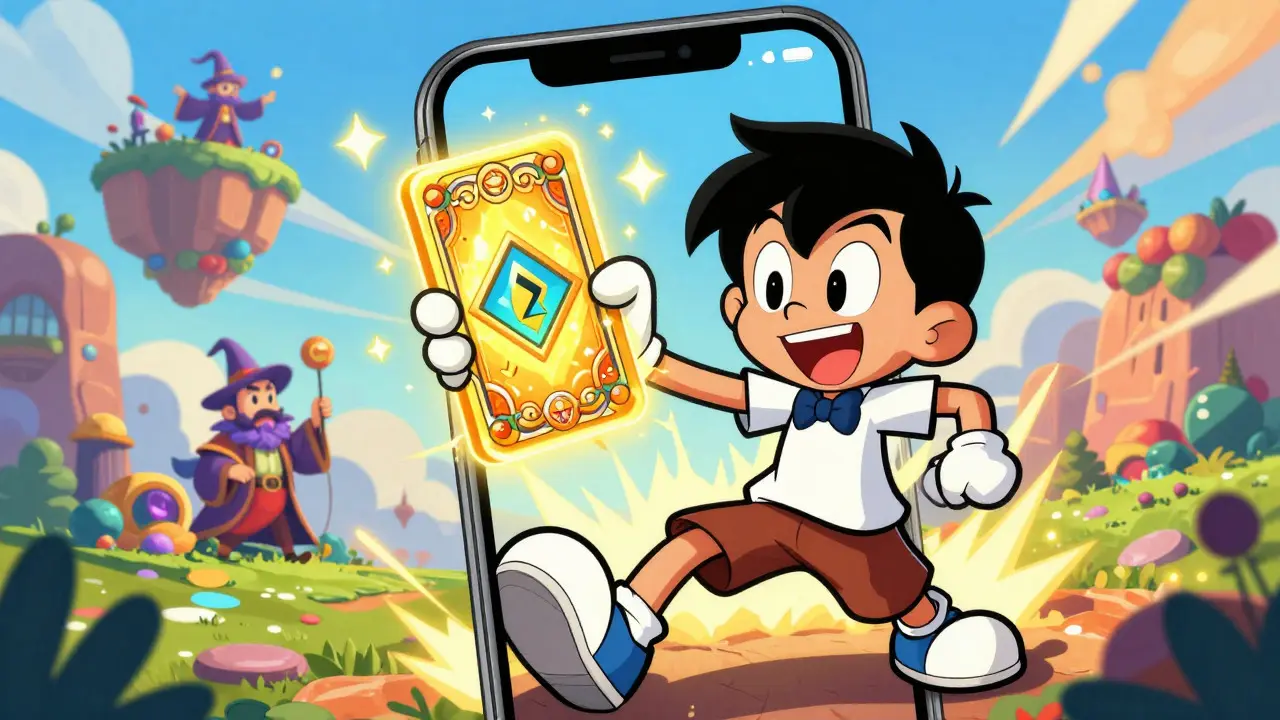
Remember when every blockchain game promised to make you rich just by logging in? The "play-to-earn" boom of 2021 left a trail of abandoned projects and broken promises. ASPO World is one such project that survived the initial hype but struggled to maintain relevance as the market cooled. If you stumbled upon the ticker symbol ASPO on a decentralized exchange or saw it mentioned in an old forum thread, you might be wondering what exactly this token is and whether it still has any value today.
This article breaks down the reality behind ASPO World. We will look at its origins as a mobile strategy game, how its token works on the blockchain, and why its price performance tells a cautionary tale about the sustainability of early play-to-earn models. By the end, you’ll know if ASPO is a hidden gem or a relic of a past crypto cycle.
The Origin Story: A Game Built on Blockchain
To understand the ASPO token, you first have to understand the product it supports. ASPO World launched not just as a currency, but as a digital card collection strategy game available on Android and iOS devices. The premise was simple yet ambitious: combine traditional tactical gameplay with NFT ownership.
The game’s narrative takes place in a mythical world set roughly 500 years in the past, populated by spirits and sorcerers. Players join a group of high school students preparing for a competitive tournament, only to face disruption from an antagonist named Asakura Hao who aims to dethrone a weakened king. While the storyline provides context, the core mechanic revolves around collecting and battling with spirit cards.
Here is where the blockchain element comes in. These cards are Non-Fungible Tokens (NFTs). This means players truly own their in-game assets. You can trade them, sell them, or use them to earn rewards. The ASPO token serves as the primary in-game currency, used for transactions, upgrades, and participating in the game's economy. It was designed to bridge the gap between casual mobile gaming and the emerging metaverse ecosystem.
Technical Specifications: How ASPO Works
From a technical standpoint, ASPO operates on the BNB Chain (formerly known as Binance Smart Chain). Choosing this network was a strategic move during the 2021 bull run because it offered low transaction fees and fast processing times compared to Ethereum. This made micro-transactions within the game economically viable for users.
The token follows the BEP-20 standard (compatible with ERC-20), which ensures it works seamlessly with popular wallets like Trust Wallet and MetaMask, as well as decentralized exchanges. Here are the key technical attributes of the ASPO token:
- Contract Address: 0x1a9b49e9f075c37fe5f86c916bac9deb33556d7e
- Total Supply: 500,000,000 ASPO tokens
- Max Supply Cap: 500,000,000 ASPO tokens
- Circulating Supply: Approximately 79.94 million ASPO
- Mining Status: Non-mineable (all tokens created at genesis)
Because the supply is fixed at 500 million tokens, there is no inflation mechanism to dilute holdings over time. However, the distribution model is critical. Since it is non-premined and non-mineable, all tokens were allocated at launch. This means the initial allocation to developers, investors, and the community sets the stage for long-term price dynamics. With only about 16% of the total supply currently in circulation, the potential entry of the remaining tokens could impact market stability if they are released without corresponding demand.
Market Performance: From Hype to Reality
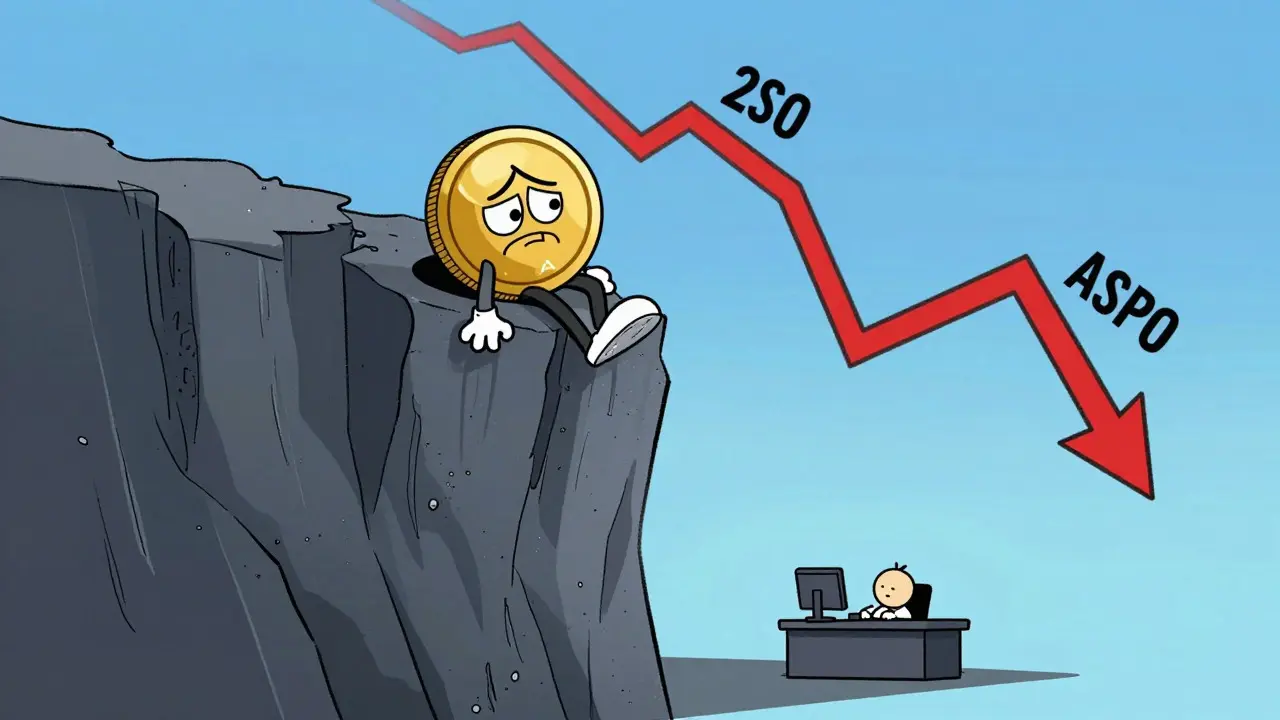
If you look at the price chart for ASPO, it looks like a cliff. The token experienced a classic speculative bubble followed by a prolonged bearish trend. Understanding this history is crucial for anyone considering interacting with the asset today.
| Metric | Value | Date/Context |
|---|---|---|
| All-Time High (ATH) | $1.72 | November 15, 2021 |
| All-Time Low (ATL) | $0.001102 | July 7, 2025 |
| Public Offering Price | $0.05 | Launch Phase |
| Private Investor Price | $0.035 | Pre-Launch |
| Current Price Range | $0.00045 - $0.0011 | Recent Trading Sessions |
The decline from $1.72 to fractions of a cent represents a loss of nearly 99.9% from its peak. This drastic drop highlights the volatility inherent in gaming tokens that rely heavily on user growth. When the hype faded and new players stopped joining, the demand for the token collapsed. Without fresh capital entering the ecosystem to buy cards and pay for in-game services, the token price naturally drifted downward.
As of mid-2026, the market capitalization sits around $415,000 USD. To put that in perspective, the fully diluted market cap (if all 500 million tokens were circulating) would be approximately $572,000. Compare this to the initial fully diluted valuation of $25 million at launch. The difference illustrates how much value has been destroyed since the project began.
Liquidity and Trading Activity
One of the biggest challenges for small-cap tokens like ASPO is liquidity. Liquidity refers to how easily you can buy or sell the token without causing a massive price swing. For ASPO, liquidity is extremely thin.
Trading is primarily concentrated on PancakeSwap v2, a decentralized exchange on the BNB Chain. The main trading pair is ASPO/BUSD (Binance USD). Daily trading volumes are often minimal, sometimes ranging from just $1.14 to $3,340 USD in a 24-hour period.
Why does this matter? Imagine trying to sell $1,000 worth of ASPO. In a liquid market like Bitcoin, your sale wouldn't move the needle. In ASPO's market, a single large sell order could crash the price by 10% or more because there aren't enough buyers waiting in the order book. This makes holding the token risky for anyone looking to exit quickly. On March 3, 2026, for example, the price dropped 43.34% in a single day, swinging from a high of $0.000832 to a low of $0.000471. Such volatility is typical for low-volume assets.
Is ASPO World Still Active?
A common question is whether the project is dead. Technically, no. The Android and iOS applications remain operational, and the smart contracts are active on the blockchain. However, activity levels tell a different story. The token ranks between #4037 and #8933 globally by market cap, placing it far outside the top tier of cryptocurrencies.
The broader play-to-earn sector has faced significant headwinds. Regulatory scrutiny increased, and gamers grew skeptical of economic models that prioritized token appreciation over fun gameplay. ASPO World, like many of its peers, struggled to retain users once the financial incentive diminished. The lack of recent major updates or marketing campaigns suggests the development team may have shifted focus or scaled back operations.
For the token to recover, several things need to happen:
- New player acquisition must outpace churn.
- In-game economics need rebalancing to prevent token dumping.
- The project must differentiate itself from thousands of other blockchain games.
Risks and Considerations for Investors
If you are considering buying ASPO, you need to weigh the risks carefully. This is not an investment for the faint of heart. Here are the primary concerns:
- Low Liquidity: You may struggle to sell your tokens at a fair price due to low trading volume.
- High Volatility: Prices can swing wildly based on small trades.
- Regulatory Uncertainty: NFT gaming projects face evolving regulations regarding securities laws and consumer protection.
- Project Longevity: There is no guarantee the game will continue to receive updates or support in the coming years.
Conversely, the potential upside exists only if the project experiences a resurgence in popularity. Given the fixed supply, any increase in demand would theoretically drive up the price. However, relying on a revival of a 2021-era play-to-earn game is a high-risk bet.
Conclusion: What Should You Do?
ASPO World serves as a fascinating case study in the lifecycle of blockchain gaming tokens. It started with promise, leveraging the hot trends of NFTs and play-to-earn mechanics on the efficient BNB Chain. Yet, it ultimately succumbed to the harsh realities of user retention and market saturation.
For most investors, ASPO is likely too risky to consider as a core holding. It lacks the liquidity, brand recognition, and active development momentum seen in leading crypto projects. However, for those interested in the history of Web3 gaming or willing to take a gamble on undervalued assets, understanding its mechanics and current state is essential. Always do your own research, check the latest contract addresses, and never invest more than you can afford to lose.
What is the current price of ASPO World token?
As of mid-2026, the ASPO token trades in a range between $0.00045 and $0.0011 USD. Prices fluctuate daily based on low trading volumes on decentralized exchanges like PancakeSwap.
Which blockchain does ASPO operate on?
ASPO operates on the BNB Chain (formerly Binance Smart Chain). It uses the BEP-20 token standard, making it compatible with wallets like Trust Wallet and exchanges like PancakeSwap.
Is ASPO World a scam?
There is no evidence suggesting ASPO World is a scam in the traditional sense. The game exists, the smart contracts are verified, and the token is tradable. However, it has suffered from poor market performance and low user engagement, which are common risks in the volatile play-to-earn sector.
What is the total supply of ASPO tokens?
The total supply of ASPO tokens is fixed at 500,000,000. Approximately 79.94 million tokens are currently in circulation, meaning the majority of the supply is held off-market or locked.
How can I buy ASPO tokens?
You can buy ASPO tokens on decentralized exchanges (DEXs) like PancakeSwap. You will need a wallet that supports BNB Chain tokens, such as Trust Wallet or MetaMask, and some BNB to pay for transaction fees.
What happened to ASPO's price after 2021?
After reaching an all-time high of $1.72 in November 2021, ASPO's price declined significantly due to decreased interest in play-to-earn games and low liquidity. By 2025, it had fallen by nearly 99.9% from its peak.
Dave Kjendal
August 14, 2026 AT 10:05Another day, another dead coin. The play-to-earn model was always a house of cards waiting for the wind to blow it down. People forgot that games need to be fun first and profitable second. When you flip that script, you get zombies like ASPO.
Don Fizy
August 15, 2026 AT 09:42Hey there! It's actually interesting to see how these projects evolve over time. While ASPO might not be the next big thing, it serves as a great case study for blockchain gaming economics. Keep learning!
Patrick Pat
August 17, 2026 AT 04:08The liquidity situation described here is frankly terrifying. Selling $1000 worth of tokens could crash the price by double digits? That’s not an investment, that’s a hostage situation with your own money. I’d rather throw my crypto into a volcano than try to exit this trap.
Claudio Perrone
August 18, 2026 AT 13:27so basically its a scam right?? i mean look at that chart go straight down like a rock falling off a cliff. why did anyone buy this in the first place. stupid people. total waste of time and energy. the devs are probably laughing at us all from their yachts while we hold the bag. typical crypto bro behavior. makes me sick to my stomach honestly.
Aaron Morrissey
August 19, 2026 AT 10:38One must consider the broader philosophical implications of such economic decay. The token represents not merely digital currency, but the ephemeral nature of human attention spans in the digital age. It is a tragedy, truly, to witness the collapse of such ambition so swiftly.
Patrick Quairoli
August 20, 2026 AT 08:14they locked the supply to control the narrative. classic manipulation tactic. the insiders know exactly when to dump on the retail idiots who think they found a gem. its all rigged by the central banks and bnb team working together to keep us poor. wake up sheeple. the contract address is just a front for a larger ponzi scheme.
Dominic Greco
August 21, 2026 AT 00:10This is literally what happens when you trust decentralized exchanges without checking the code yourself 🚨📉 The smart contracts are likely filled with backdoors that allow the devs to rug pull at any moment. Stay safe out there folks or get rekt 😈💀
Sean Rowland
August 21, 2026 AT 02:24The fundamental flaw lies in the misalignment of incentive structures within the BEP-20 ecosystem. Furthermore, the lack of rigorous academic peer review for such speculative assets renders them intellectually bankrupt. One must question the very premise of 'play-to-earn' as a viable economic paradigm.
Sus Sawyer
August 22, 2026 AT 06:23Let's cut through the noise! This article hits the nail on the head regarding liquidity risks. If you're holding, watch those volume numbers closely. Don't let FOMO drive your decisions. Knowledge is power, so stay sharp and DYOR! 🔥
Aryan MISHRA
August 23, 2026 AT 12:52Technical analysis reveals bearish divergence. Volume is negligible. Market cap is irrelevant. Sell. Immediately. Do not hesitate. The trend is your friend until the end. Then sell.
Ryan Robinson
August 24, 2026 AT 06:58i guess thats life in crypto huh. some win some lose. imma stick to btc and eth cause at least those have history. this stuff looks like a gamble more than an investment. thanks for the info tho.
Earl Kott65
August 26, 2026 AT 05:48Ah, the sweet taste of regret 🍷 So many people lost everything chasing that 2021 hype train. But hey, isn't that the beauty of risk? You either catch the wave or drown in the foam. Fascinating read though! 👏📚
Linda Hilliard
August 27, 2026 AT 21:57It is quite amusing to observe the sheer ignorance displayed by those still clinging to these failed experiments in pseudo-economics. The market has spoken, clearly and decisively. These tokens are nothing more than digital confetti from a party that ended years ago. One should simply accept the reality of their obsolescence.
Winston Lacewing
August 28, 2026 AT 14:31It breaks my heart to see so much potential wasted on such trivial pursuits 💔 We should be using blockchain for real social good, not gambling on spirit cards! Let's focus on community building and ethical investing instead of these toxic charts 🙏✨