
Imagine a smart contract that automatically pays out insurance when a flight is delayed. Or one that releases payment to a farmer as soon as weather sensors confirm a drought. These aren’t sci-fi ideas-they’re real, and they work because of blockchain oracles. But what exactly are they? And why do they matter so much?
Why Smart Contracts Need Oracles
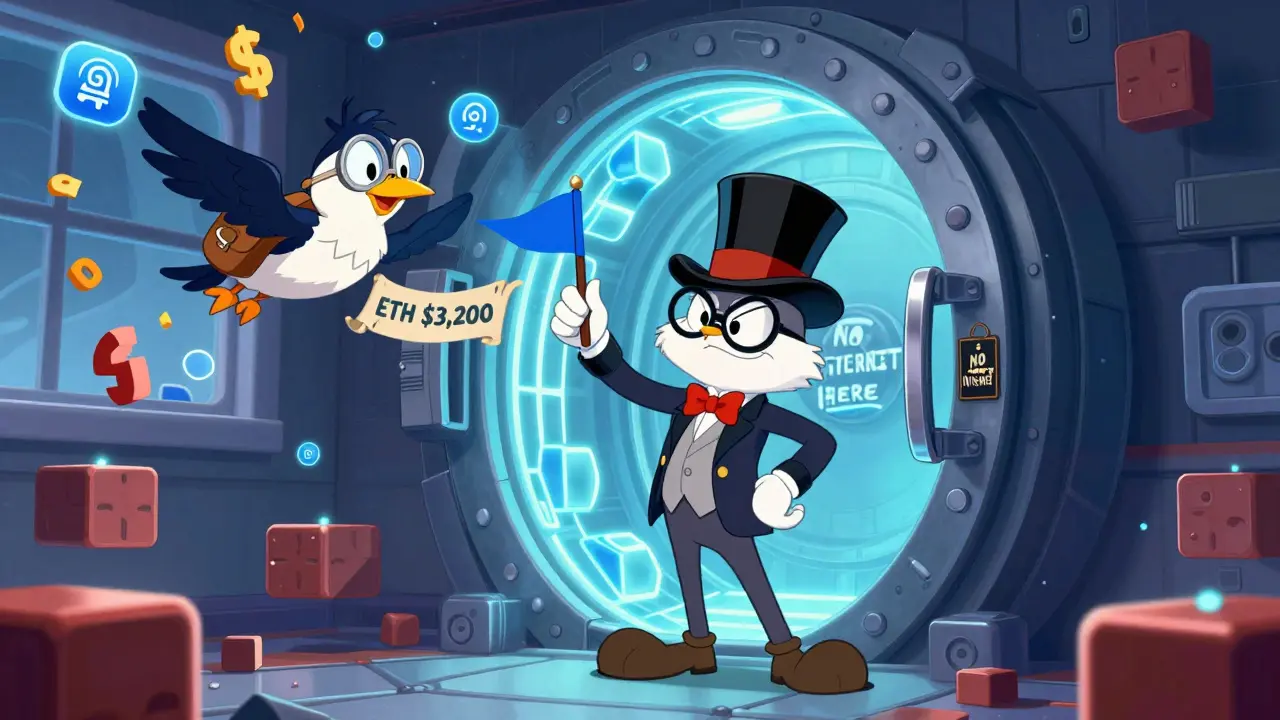
Blockchain networks are isolated by design. They’re like sealed vaults: everything inside must be verifiable and identical across all nodes. That’s great for security, but it means a smart contract can’t just reach out and check the weather, stock prices, or a bank balance. It doesn’t have internet access. It doesn’t know what’s happening outside its own chain. This is the oracle problem. It’s the biggest bottleneck holding back real-world use of smart contracts. Without an oracle, a contract can only act on data already on the blockchain-like a previous transaction or a timestamp. That’s not enough for most practical applications. Enter blockchain oracles. They’re not data sources themselves. They’re messengers. They go out, collect real-world info from APIs, sensors, or databases, verify it’s accurate, and bring it back inside the blockchain so the smart contract can act on it.How Blockchain Oracles Work
Think of an oracle as a two-part system:- On-chain component: A smart contract on the blockchain that asks for data. It says, “Give me the current price of ETH in USD.”
- Off-chain component: An oracle node-a server outside the blockchain-that fetches that price from a financial API, checks it against other sources, and sends it back.
Types of Blockchain Oracles
Not all oracles are the same. Here are the main types you’ll run into:- Inbound oracles: Bring data into the blockchain. Think: flight status, stock prices, temperature readings. These are the most common.
- Outbound oracles: Send data out from the blockchain. Example: triggering a bank transfer after a smart contract confirms payment.
- Cross-chain oracles: Move data between different blockchains. Chainlink’s CCIP protocol lets an Ethereum contract trigger an action on Solana or Polygon.
- Compute-enabled oracles: Do complex calculations off-chain (like verifying a ZK proof) and return the result. Useful for Layer 2 scaling.
- Centralized oracles: One company, one server, one point of failure. Fast and cheap, but risky. If that server goes down or gets hacked, the smart contract breaks.
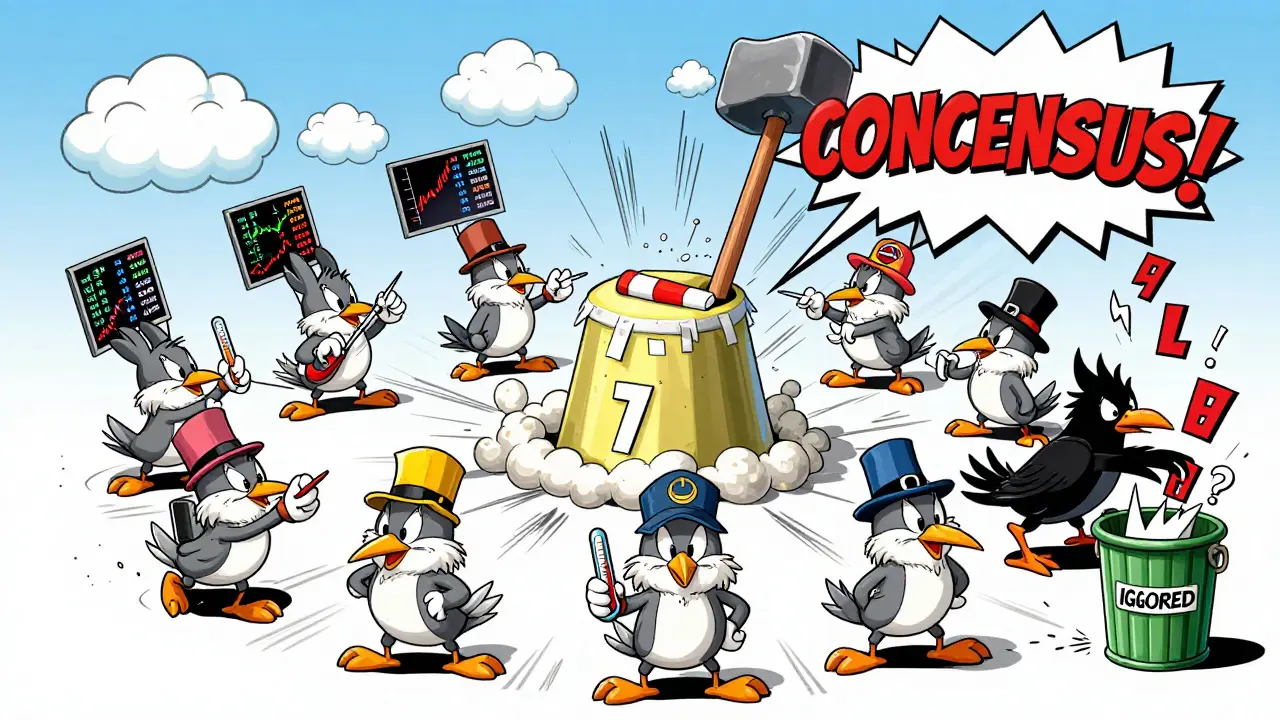
- Decentralized oracle networks (DONs): Many independent nodes, multiple data sources, consensus-based. Slower and more complex, but far more secure. This is where the industry is headed.
Chainlink Dominates the Market
When people talk about blockchain oracles today, they’re mostly talking about Chainlink. It’s not just popular-it’s the standard. As of 2023, Chainlink secured over $10 billion in value across 1,400+ projects. It powers price feeds for Aave, Synthetix, and Compound. It’s integrated into Ethereum, Polygon, BNB Chain, and more. Why? Because it’s reliable. Chainlink uses over 1,000 independent node operators pulling data from 50+ sources. Its uptime in 2023 was 99.98%. Developers love its documentation-it’s rated 4.7/5 on GitHub. Other players exist: API3, Pyth Network, Band Protocol. But together, they make up only about 30% of the market. Chainlink holds 70%.Real-World Use Cases
Oracles aren’t theoretical. They’re already changing how finance and logistics work.- DeFi lending: Aave and Compound use Chainlink to get real-time asset prices. If the value of your collateral drops too low, the system automatically liquidates it.
- Insurance: Flight delay insurance pays out automatically when flight data from aviation authorities is confirmed.
- Supply chain: Smart contracts release payment when IoT sensors confirm a shipment reached a warehouse at the right temperature.
- Sports betting: Oracles verify match outcomes from official APIs before settling bets.
Problems and Risks
Oracles aren’t perfect. They’ve been exploited. In November 2022, a price oracle on Euler Finance was manipulated. Attackers spoofed the price of a token, borrowed massive amounts, and drained $197,000. It wasn’t a blockchain hack-it was an oracle hack. Overall, oracle failures caused $146 million in losses across DeFi in 2022, according to Chainalysis. That’s 12% of all exploit losses that year. The biggest risk? Trust. As UC Berkeley’s Dr. David Wagner pointed out: “No oracle solves the trust problem-it just moves it.” You’re trusting the oracle provider, not just the blockchain. Good oracles mitigate this with decentralization, redundancy, and economic incentives. Node operators stake tokens (like LINK) and lose them if they feed bad data. That aligns their incentives with the network’s integrity.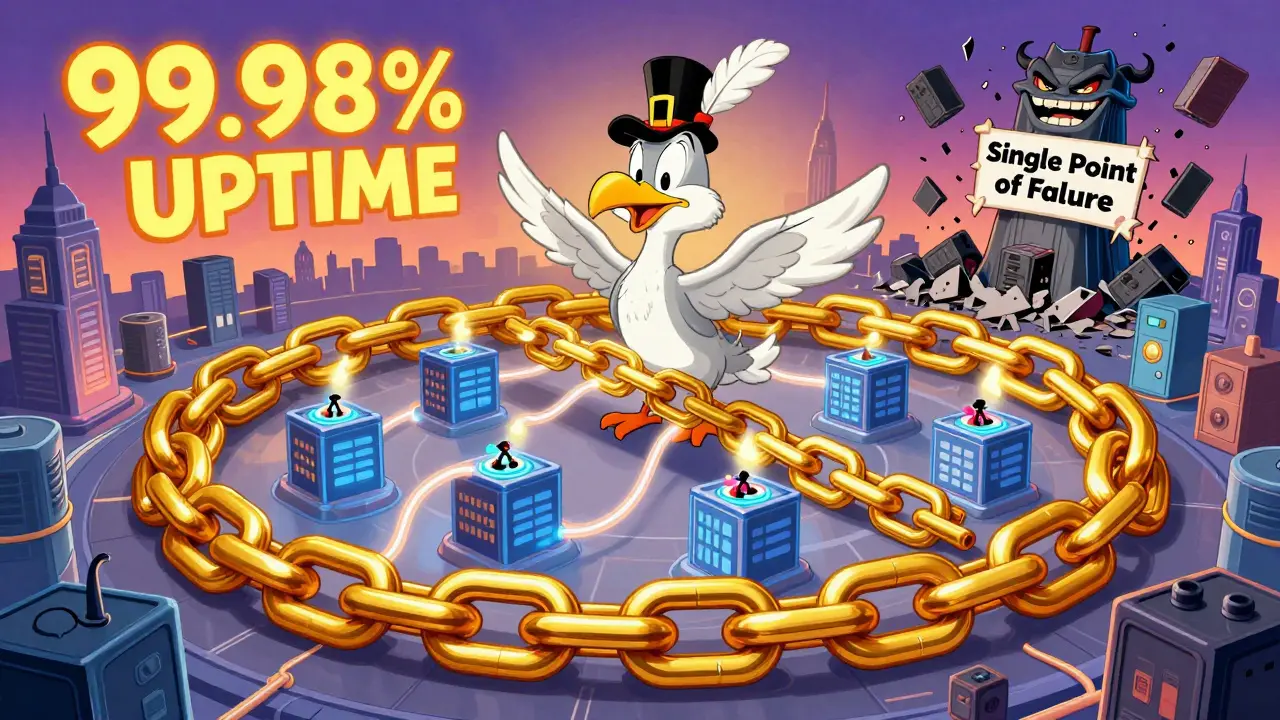
Getting Started with Oracles
If you’re a developer, here’s how to begin:- Use Chainlink’s testnet. No real money needed.
- Deploy a basic smart contract that requests ETH/USD price data.
- Fund it with LINK tokens (the native currency of Chainlink).
- Configure the data request-what source, how often, what format.
The Future of Oracles
The market for decentralized oracles is growing fast. It was worth $385 million in 2022 and is projected to hit $1.2 billion by 2025. New tech is emerging:- DECO: Chainlink’s privacy protocol lets oracles fetch data from HTTPS websites (like bank portals) without revealing your login details.
- CCIP 1.0: Now live, enabling secure cross-chain communication across 11 blockchains.
- Standardization: The Oracle Improvement Proposal (OIP) framework is gaining traction, helping different projects speak the same language.
Abdulahi Oluwasegun Fagbayi
January 24, 2026 AT 15:46Oracles are the unsung heroes of DeFi. Without them, smart contracts are just fancy calculators with no eyes or ears. The fact that Chainlink can pull data from 50+ sources and still stay reliable is mind-blowing. Real-world adoption is happening faster than most people realize.
Darrell Cole
January 26, 2026 AT 07:35Let's be honest the whole oracle concept is just a bandaid on a broken system blockchains were never meant to interact with the outside world if you want real trust you need to build everything on chain not outsource it to some third party API
Adam Fularz
January 27, 2026 AT 23:05chainlink is not the only option but its the only one people talk about because marketing > tech. pyth is faster api3 is cheaper and nobody cares. also why does everyone act like 99.98% uptime is magic? my wifi drops more often than that
Barbara Rousseau-Osborn
January 28, 2026 AT 08:25Oh great another crypto bro worshiping Chainlink like its a deity. You think decentralization matters until your oracle gets hacked and you lose your life savings. And yes I know about staking and incentives-those are just fancy words for ‘we hope the bad guys don’t get bored’.
Kevin Pivko
January 30, 2026 AT 06:02Oracles are the ultimate crypto scam. You’re trusting a centralized service to verify data on a decentralized network. That’s like using a locksmith to guard your vault while he holds the only key. And don’t even get me started on cross-chain oracles-this is just building a house on quicksand and calling it innovation 🤡
Julene Soria Marqués
January 30, 2026 AT 07:02So I read this whole thing and I’m just wondering why no one talks about how oracles are basically glorified web scrapers? Like yeah they use ‘cryptographic proofs’ but at the end of the day they’re just fetching data from CoinGecko or Bloomberg. If that’s the future of finance we’re all doomed 😭
MOHAN KUMAR
January 31, 2026 AT 05:05Simple truth: oracles make blockchain useful. Without them, smart contracts are like phones without internet. Chainlink is the best because it has many nodes. Others are trying but still behind. Start with testnet, learn, then build. Easy.
katie gibson
February 1, 2026 AT 07:18Okay but what if the oracle is compromised by a government? Or a billionaire? Or a rogue AI? What if the data is just… wrong? Like what if ETH is $3200 but it’s actually $320 because someone hacked the feed? We’re all just pretending this is safe. It’s not. It’s a house of cards made of glitter 🎭
Ashok Sharma
February 1, 2026 AT 13:34For beginners, the best way to understand oracles is to try one. Use Chainlink testnet, request a simple price feed, and see how it works. The documentation is clear. The community is helpful. Do not overthink it. Just start.
Margaret Roberts
February 1, 2026 AT 22:21Everyone acts like oracles are new but they’re just centralized data feeds repackaged as Web3. The real question is why are we letting private companies control the truth of our financial contracts? This isn’t innovation-it’s outsourcing trust to Wall Street with a blockchain logo.
Jonny Lindva
February 3, 2026 AT 04:19Honestly I used to be skeptical but after setting up my first oracle-fed contract I was blown away. It just worked. No drama. No crashes. Chainlink’s docs are a godsend. If you’re building something real, use them. Don’t overcomplicate it.
Athena Mantle
February 4, 2026 AT 12:16Oracles are the emotional core of Web3. They’re the bridge between cold code and warm reality. The fact that we can now tie blockchain to weather, flights, and bank balances… it’s poetic. Like digital soulmates 🌧️💸🔗
Paru Somashekar
February 4, 2026 AT 14:59It is important to note that decentralized oracle networks reduce single points of failure. The use of multiple independent node operators ensures data integrity. Developers should always prioritize redundancy and economic incentives when selecting an oracle solution.
Steve Fennell
February 5, 2026 AT 11:29As someone from the U.S. who’s worked with blockchain in Nigeria and India, I’ve seen how oracles enable real financial inclusion. Farmers in Kenya get paid when rains come. Small businesses in India get loans backed by real inventory data. This isn’t crypto hype-it’s economic justice.
Darrell Cole
February 5, 2026 AT 12:48Jonny, you say it 'just worked' but that’s because you didn’t dig deep. Chainlink’s 99.98% uptime ignores the fact that 90% of its data comes from just three exchanges. That’s not decentralization, that’s groupthink with a blockchain sticker. And when the market moves, the oracle moves with it-no matter how wrong it is. You’re not building trust-you’re outsourcing it to a cartel.