

For years, Vietnam was the place you didn't want to be if you wanted to trade Bitcoin legally. The rules were strict: no payments, no banking support, and a constant shadow of uncertainty. But that changed dramatically in late 2025. Today, in June 2026, we are living through the first year of what is arguably the most significant shift in Asian crypto regulation. Vietnam has launched a five-year pilot crypto program that runs until September 2030.
This isn't just a small tweak to old laws. It is a complete overhaul. For the first time, virtual assets are recognized as legitimate property under the Civil Code. You can own them. You can trade them. But there is a catch. The government hasn't opened the floodgates; it has built a very specific, tightly controlled channel for water to flow through. If you are an investor, a trader, or a business looking at the Vietnamese market, understanding these new restrictions is the difference between participating and getting sanctioned.
The Legal Foundation: How We Got Here
To understand where things stand today, you have to look at the two pillars holding this framework up. This isn't some vague guideline from a central bank committee. It is written into law.
The foundation is Law No. 71/2025/QH15 on Digital Technology Industry. Passed by the National Assembly in June 2025, this law provided the broad definition of digital assets. Then came the operational engine: Resolution 05/2025/NQ-CP. Signed by Deputy Prime Minister Ho Duc Phoc on September 9, 2025, this resolution kicked off the actual pilot program.
Here is the timeline you need to keep in mind:
- September 9, 2025: The pilot program officially begins.
- January 1, 2026: The full legal framework takes effect.
- September 8, 2030: The pilot program concludes, after which the government will decide whether to make the regulations permanent, adjust them, or scrap them.
Why a pilot? Because the government wants data. They want to see how much capital flows in, how well they can prevent money laundering, and whether the tech infrastructure holds up before committing to a permanent regime. For us, right now, this means the rules are set, but the fine details-like exact tax rates-are still being hammered out.
What Counts as a "Crypto Asset"?
You might think all digital tokens are the same, but Vietnamese law draws sharp lines. The legislation classifies virtual assets into three distinct buckets. Knowing which bucket your asset falls into determines how you can use it.
- Virtual Assets: These are electronic assets used for exchange or investment. Crucially, this category excludes securities and digital forms of legal currency (like stablecoins pegged to the Dong).
- Crypto Assets: A specialized subset of virtual assets. These use encryption technology to authenticate creation, issuance, storage, and transfer. Think Bitcoin, Ethereum, and similar proof-of-work or proof-of-stake coins.
- Other Virtual Assets: Anything digital that doesn't fit neatly into the first two categories.
This classification matters because the pilot program specifically targets crypto assets for regulated trading. If you are dealing with tokenized securities or digital Dong equivalents, different financial rules apply. The goal here is to separate speculative investment assets from payment instruments.
The Big Restriction: No Payments Allowed
This is the part that catches people off guard. Just because crypto is legal doesn't mean you can buy coffee with it. In fact, the opposite is true.
The State Bank of Vietnam maintains a hard ban on using cryptocurrency as a payment method. You cannot use Bitcoin to pay for goods or services. Furthermore, traditional financial institutions-banks, credit card companies, and payment processors-are barred from processing crypto-related transactions directly.
So, how do you move money? You have to go through the new licensed channels. The system is designed for investment and exchange only. You buy crypto to hold it or trade it for profit, not to spend it at the grocery store. This restriction aligns Vietnam more closely with European Union approaches than with the wild west of early-stage crypto adoption. It keeps the fiat currency (the Dong) supreme while allowing citizens to participate in the global digital asset economy.

Licensing: The Gatekeepers
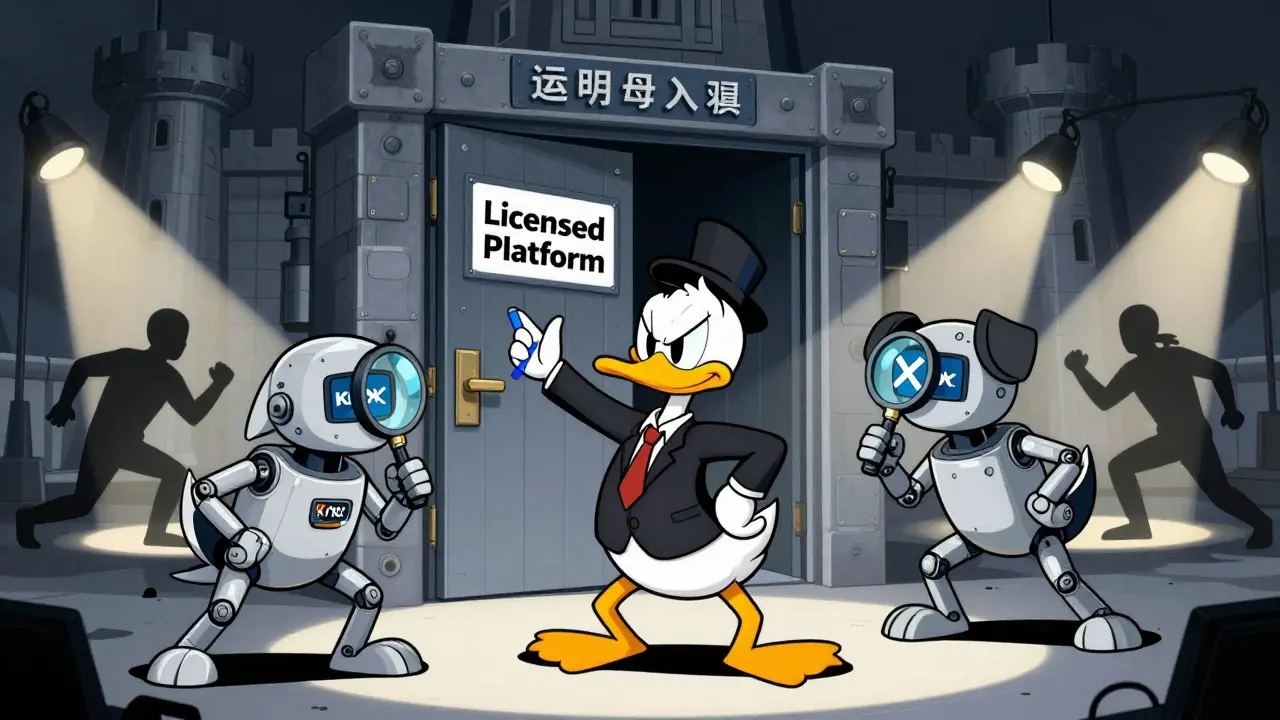
If you want to operate in this space, you need permission. The Ministry of Finance is the primary regulatory authority. They are responsible for licensing crypto asset service providers.
Here is how the rollout works:
- Licensed Providers Only: After a six-month transition period following the grant of the first license, all domestic transactions must occur through these licensed entities.
- No More Offshore Exchanges: If you were using unregulated offshore platforms to trade, those days are numbered. The law requires migration to domestic, licensed platforms.
- Strict Compliance: Licensees must adhere to rigorous anti-money laundering (AML) protocols, terrorism financing prevention measures, and cybersecurity standards.
For businesses, this creates a high barrier to entry. You aren't just building an app; you are navigating a complex web of reporting obligations and security audits. For users, it means your identity is tied to your trades. Anonymity is effectively dead in the formal Vietnamese market.
| Feature | Pre-2025 Status | Current Pilot Program (2026) |
|---|---|---|
| Ownership | Legally ambiguous | Recognized as legitimate asset |
| Trading | Unregulated/Offshore | Licensed domestic platforms only |
| Payments | Banned | Still banned |
| Banking Support | Prohibited | Indirect via licensed intermediaries |
| Taxation | Unclear | Temporary securities tax rules apply |
Who Can Participate?
The good news is that the door is open to almost everyone, provided they follow the rules. Both domestic and foreign investors can participate in the market. Issuers of crypto assets can also list their tokens, subject to approval.
However, "participation" comes with strings attached. Every participant must comply with Vietnam’s comprehensive legal requirements. This includes:
- KYC/AML Checks: Know Your Customer and Anti-Money Laundering checks are mandatory. Expect thorough identity verification.
- Cybersecurity Protocols: Service providers must meet strict information security standards to protect user data.
- Reporting Obligations: Regular reporting to the Ministry of Finance is required to track market activity.
If you are a foreign investor, you don't need to be based in Vietnam to trade, but you must use a licensed Vietnamese provider or a platform that meets the cross-border compliance standards set by the Ministry of Finance. This opens the market to global capital but ensures the government retains oversight.
The Gray Areas: Mining and Taxes
While the core framework is clear, two major areas remain fuzzy. If you are running a mining rig or wondering about your tax bill, pay close attention.
Mining: The legality of crypto mining is currently in limbo. The initial resolutions did not explicitly ban it, nor did they create a clear licensing path for miners. As the Ministry of Finance develops sector-specific rules, expect guidance to emerge soon. Until then, operating large-scale mining farms carries regulatory risk. Small-scale hobbyist mining might fly under the radar, but commercial operations should proceed with caution.
Taxation: There is no dedicated "crypto tax" yet. Instead, the government is temporarily applying existing securities taxation rules. This means profits from trading may be treated similarly to gains from selling stocks. However, the specifics-such as capital gains rates, withholding taxes, and reporting thresholds-are still being defined. Industry experts advise keeping meticulous records of every transaction, as retroactive clarification could impact your liabilities.
How Vietnam Compares to Its Neighbors
Vietnam’s approach is unique in Southeast Asia. Let’s look at the landscape:
- China: Maintains a complete ban on cryptocurrency activities, including trading and mining. Vietnam is moving in the exact opposite direction.
- India: Imposes heavy taxation on crypto gains without a clear regulatory framework for exchanges. Vietnam offers clarity alongside its taxes.
- Singapore & Thailand: Have established regulatory frameworks, but Vietnam’s five-year pilot structure is more experimental and comprehensive in its initial rollout.
This positions Vietnam as a potential regional hub for digital asset innovation. By creating a "controlled runway," as Dr. Tran Quy of the Vietnam Institute for Digital Economy Development put it, the country aims to capture the energy of its tech-savvy population while preventing the chaos seen in less regulated markets.
Risks and Challenges for Users
It’s not all smooth sailing. The transition has been bumpy. Early adopters report confusion over compliance requirements. The learning curve is steep, especially for small businesses trying to navigate AML protocols and cybersecurity standards.
There is also the issue of enforcement. Administrative sanctions for non-compliance can be severe, ranging from fines to criminal liability for serious violations. If you continue to use unlicensed offshore exchanges after the transition period ends, you are taking a significant legal risk. The government has made it clear that the era of spontaneous, unregulated crypto flows is over.
Additionally, documentation is primarily available in Vietnamese. While English translations exist, they are often unofficial or lag behind the latest updates. Relying on local legal counsel is highly recommended for anyone making substantial investments or launching a service.
Looking Ahead: 2026 and Beyond
We are currently in the early stages of this pilot. Daily trading volumes in Vietnam already exceed $600 million, showing strong domestic demand. The next few months will be critical. Watch for:
- Detailed Tax Guidance: Specific crypto tax regulations are expected to replace temporary securities rules.
- Mining Clarification: Explicit rules for mining operations will likely be issued.
- Expansion of Scope: Depending on initial performance, the government may expand the pilot to include decentralized finance (DeFi) or NFTs.
The long-term viability of this program looks strong. The government is committed to the five-year timeline, and the infrastructure is being built. Success depends on effective enforcement and industry compliance. If Vietnam pulls this off, it could become a model for other emerging economies balancing innovation with control.
Is cryptocurrency legal in Vietnam in 2026?
Yes, owning and trading cryptocurrency is legal under the five-year pilot program that started in September 2025. However, using crypto as a payment method remains illegal, and all trading must occur through licensed service providers approved by the Ministry of Finance.
When does the Vietnam crypto pilot program end?
The pilot program is scheduled to run until September 8, 2030. After this date, the government will evaluate the results and decide whether to implement permanent regulations, modify the current framework, or discontinue the program.
Can I use Bitcoin to buy goods in Vietnam?
No. The State Bank of Vietnam strictly prohibits the use of cryptocurrency as a means of payment for goods or services. Crypto is recognized only as an investment asset, not as legal tender.
Who regulates cryptocurrency in Vietnam?
The Ministry of Finance is the primary regulatory authority. They are responsible for licensing crypto asset service providers, enforcing anti-money laundering rules, and overseeing market compliance during the pilot phase.
Is crypto mining legal in Vietnam?
The status of crypto mining is currently unclear. While not explicitly banned in the initial resolutions, there is no specific licensing framework for miners yet. The Ministry of Finance is expected to issue detailed guidance on mining legality and regulations in the near future.
Do I need to pay taxes on crypto profits in Vietnam?
Yes. Currently, temporary securities taxation rules apply to crypto gains. However, specific crypto tax regulations are still being developed. Investors should keep detailed records of all transactions to ensure compliance once final tax guidelines are released.