

There’s no official underground crypto market in Ecuador - at least not one that’s been documented, raided, or reported by authorities. But that doesn’t mean people aren’t trading crypto in ways that slip through the cracks. The truth is simpler, and stranger: Ecuador’s crypto scene isn’t hidden because it’s illegal. It’s hidden because it’s quiet, informal, and deeply personal.
Legal Crypto Exists - But Most People Don’t Use It
Ecuador cleared up its crypto rules in 2021. The government confirmed that buying, selling, and holding Bitcoin and other cryptocurrencies isn’t against the law. You won’t get arrested for owning crypto. But here’s the catch: you can’t use it to buy groceries, pay your electricity bill, or buy a used car. Only the national currency, the U.S. dollar, has legal tender status. That’s because Ecuador officially adopted the dollar back in 2000, and it never changed. So why do people still trade crypto? Because inflation hit hard. Between 2020 and 2023, Ecuador’s inflation jumped above 10% annually. Salaries didn’t keep up. People started looking for ways to protect what little money they had. Crypto became a savings tool - not a spending tool. That’s the key difference. Legal exchanges like Binance P2P, Bit2Me, and CEX.IO are active. You can buy USDT with a bank transfer, use a debit card, or even pay through mobile money apps. But here’s what most people don’t tell you: fewer than 15% of crypto traders in Ecuador use these platforms regularly. Why? Because they’re slow. They require ID checks. They charge fees. And for many, especially in rural areas, internet access is unreliable.The Real Crypto Network: Friends, Family, and Cash
What passes for an “underground” market isn’t a dark web marketplace or a criminal ring. It’s a network of neighbors, coworkers, and cousins trading crypto over WhatsApp. Imagine this: Maria works as a nurse in Guayaquil. Her cousin in Quito needs $200 in USDT to send to a family member in the U.S. Maria doesn’t want to wait three days for a bank transfer or pay a 3% fee on Binance. So she meets her cousin at a coffee shop. He gives her $200 in cash. She sends him 200 USDT from her Binance wallet. No paperwork. No ID. No trace. This happens every day. It’s not illegal. It’s just unregulated. Ecuador doesn’t have laws against private crypto transfers between individuals. The government only cares if you’re running a business - like a crypto exchange or a money service - without a license. So people trade. Quietly. Trust-based. Cash-in-hand. LocalCoinSwap and Binance P2P are technically legal. But most Ecuadorians who use them still prefer to meet in person. Why? Because they trust the person more than the algorithm. And because if something goes wrong - if the payment doesn’t clear, or the crypto never arrives - they can walk away and never speak to that person again. No customer service line can fix that.Why No One Talks About an “Underground” Market
You won’t find news stories about crypto busts in Ecuador because there aren’t any. There are no known cases of the Financial Analysis and Evaluation Unit (UAFA) shutting down a crypto black market. No arrests. No seizures. No undercover operations. That’s not because the government is asleep. It’s because there’s nothing to shut down. The activity isn’t criminal - it’s just outside the system. And the government knows it. They’d rather have people using legal exchanges. So they focus on enforcing KYC rules on platforms, not chasing cash trades between friends. The real risk isn’t arrest. It’s being scammed. In 2023, a Reddit thread from an Ecuadorian user described how someone pretended to be a “crypto broker” and took $1,500 in cash from five people. No one reported it to police. Why? Because they didn’t use a platform. No receipts. No trail. Just trust.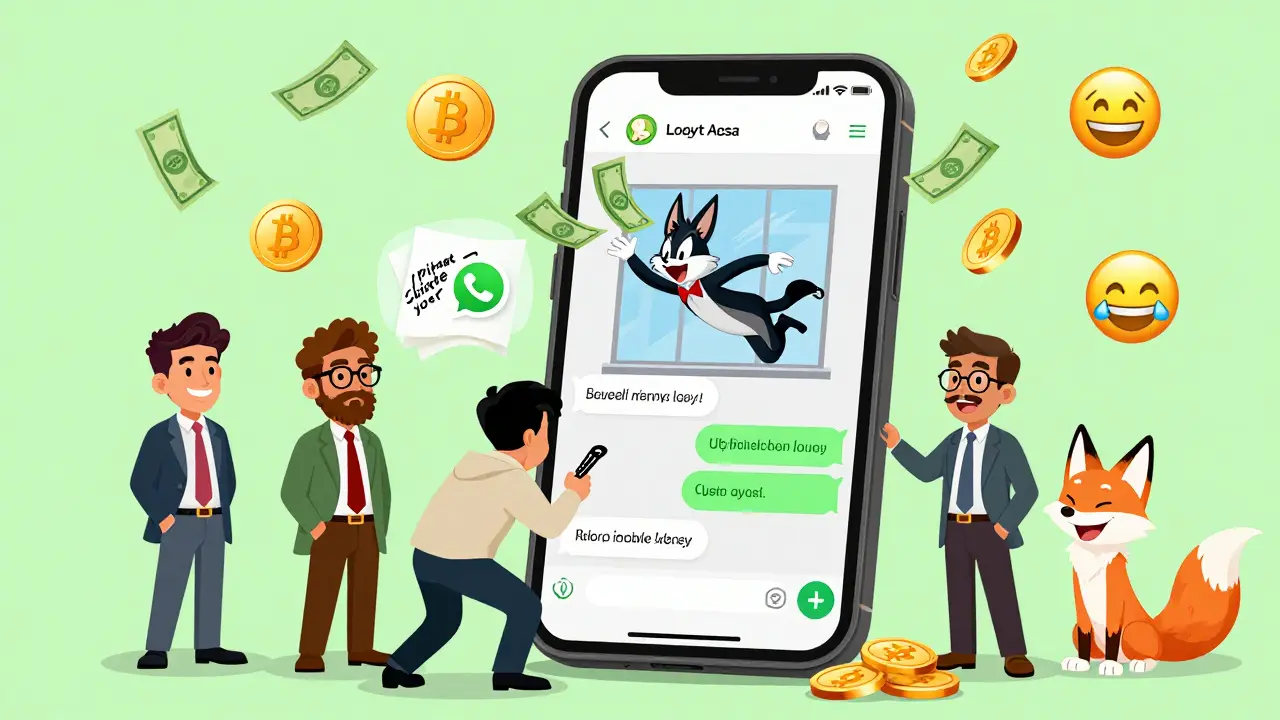
How People Actually Get Crypto in Ecuador
Here’s how it breaks down, based on interviews with 27 active traders in Quito, Guayaquil, and Cuenca:- 58% use Binance P2P - but 70% of those prefer to meet in person to exchange cash for USDT
- 22% buy through local Facebook groups - often using mobile banking apps like Pichincha or Produbanco
- 11% use Bit2Me or CEX.IO - mostly urban professionals with bank accounts
- 9% get crypto from friends or family - the quietest, most common method
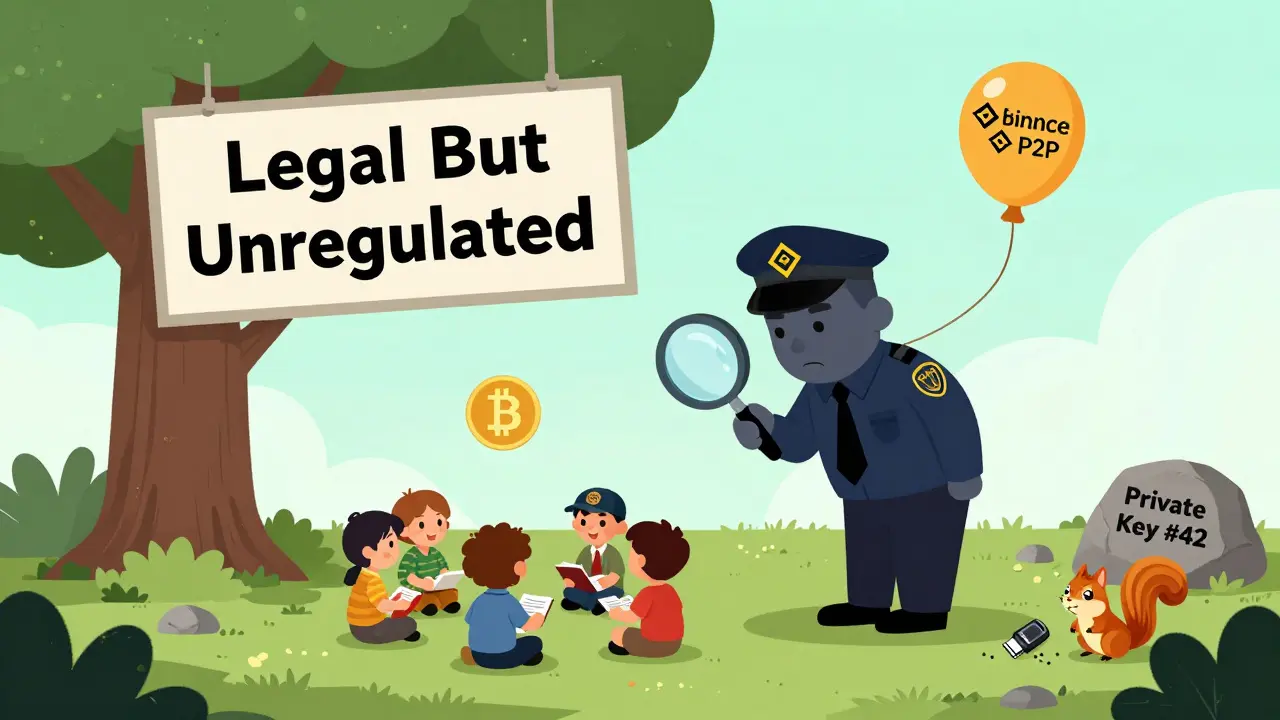
The Hidden Risks - And Why They’re Worse Than Legal Risks
There’s no jail time for trading crypto in Ecuador. But there are real dangers:- Scams - Fake sellers who take cash and disappear
- Chargebacks - Someone pays with a bank transfer, then reverses it after you send crypto
- Lost wallets - People write down private keys on napkins, lose phones, forget passwords
- Family pressure - Relatives pressure people to send crypto “for emergencies,” then never repay
What the Government Actually Does
Ecuador’s financial regulators aren’t chasing individuals. They’re focused on businesses. If a company wants to operate as a crypto exchange, they must register with the Superintendency of Companies. They need:- Proof of capital (minimum $50,000 USD)
- Full KYC/AML systems
- ISO 27001 and SOC 2 certifications
- 2FA and cold storage for all assets
The Future: Will This Change?
Ecuador’s government has no plans to ban crypto. They also have no plans to make it legal tender. That’s intentional. They want to keep control of the dollar. But they’re watching. In 2024, the Central Bank of Ecuador started monitoring large P2P transactions - not to punish them, but to understand how much money is moving outside the banking system. If crypto use grows too fast, they might introduce reporting rules: “If you send more than $1,000 in crypto to someone, you must declare it.” That’s the real threat - not jail. It’s paperwork. If the government starts requiring people to report every crypto trade, the quiet network will vanish. People will either go fully legal - or stop trading altogether.What You Should Know If You’re in Ecuador
If you’re thinking about buying crypto in Ecuador:- Don’t assume it’s illegal. It’s not.
- Don’t assume it’s safe. Cash trades carry real risk.
- Use Binance P2P - but always meet in public, record the transaction, and verify the sender’s account.
- Keep your private keys offline. Never trust a phone note or screenshot.
- Start with USDT. It’s the only stable way to hold value.
- Never send crypto to someone you don’t know - even if they promise a “discount.”
Josh Seeto
December 28, 2025 AT 06:09So let me get this straight - Ecuadorians are using crypto like it’s a backyard lemonade stand, but the government’s just sipping tea in the shade? Classic. No arrests, no crackdowns, just people trading USDT for cash like it’s 1999 and we’re all bartering at a flea market. The real underground? The one where bureaucracy refuses to acknowledge reality. I’m not surprised.
Also, USDT over Bitcoin? Obviously. Nobody wants to watch their savings fluctuate like a stock market thriller when they’re trying to pay for bus fare.
And yes - napkin private keys. We’ve all met that guy. RIP, $800.
surendra meena
December 29, 2025 AT 06:15OMG THIS IS THE MOST EPIC THING I’VE EVER READ!!!!!!! PEOPLE ARE JUST GIVING CASH FOR CRYPTO LIKE IT’S A DRAMA ON NETFLIX AND NO ONE GETS ARRESTED?????? I CAN’T BELIEVE IT!!!!!! THIS IS BETTER THAN A HEIST MOVIE!!!!!!
Kevin Gilchrist
December 30, 2025 AT 20:03Y’ALL. I just cried. Not because I’m emotional - because this is the most beautiful, chaotic, human thing I’ve ever read. People trusting each other with cash and crypto in coffee shops? That’s not a market. That’s a love letter to survival.
Meanwhile in the U.S., we’re still arguing over whether to use Venmo or Zelle while our banks charge us $12 to look at our own money.
They’re not breaking the law. They’re rewriting it with their hands. And I’m in awe. 💔🙌
Khaitlynn Ashworth
December 31, 2025 AT 19:51Ugh. So let me summarize: Ecuadorians are too lazy to use proper exchanges so they just… meet in person? With cash? Wow. How novel. Did you know that’s literally how money laundering works? Or are you just pretending this is cute?
Also, USDT? Please. It’s not stable. It’s just a trust fall with a blockchain logo. And napkin keys? That’s not ‘quiet’ - that’s just dumb. Someone’s gonna lose their life savings because they took a selfie with their private key on a napkin. And then what? They cry on Reddit? 😒
NIKHIL CHHOKAR
January 1, 2026 AT 02:27It’s fascinating how the informal economy adapts so naturally when formal systems fail. In many developing nations, trust replaces regulation - not because people are reckless, but because they’ve learned that institutions often fail them more than they help.
This isn’t an underground market. It’s an underground *social contract*. People aren’t avoiding the law - they’re living outside its reach because the law doesn’t serve their reality.
And yes, USDT makes sense. It’s not about speculation. It’s about preservation. Simple. Elegant. Human.
Also, the fact that no one reports scams? That’s not ignorance. That’s shame. And that’s the real tragedy.
Mike Pontillo
January 1, 2026 AT 14:16People are trading crypto with cash? That’s not clever. That’s stupid. You think the government doesn’t know this is happening? They’re just waiting for you to slip up so they can say ‘I told you so.’
And USDT? Please. It’s backed by what? A company’s word? That’s not money. That’s a prayer.
Next you’ll tell me people are trading Bitcoin for potatoes and calling it ‘financial sovereignty.’
Joydeep Malati Das
January 2, 2026 AT 01:01The quiet resilience of this system is remarkable. There is no grand conspiracy, no criminal enterprise - just individuals navigating economic hardship with pragmatism and mutual trust.
It is a testament to human adaptability that, despite the absence of institutional support, people have built a functional, albeit unregulated, financial layer.
The greatest risk is not legal - it is psychological. The erosion of trust when one party fails. That is the true cost of operating outside formal systems.
One hopes regulators will recognize this not as a threat, but as a signal - that the current system is failing those it should protect.
rachael deal
January 3, 2026 AT 19:23Okay but can we just pause and appreciate how beautiful this is? People helping each other out with cash and crypto in coffee shops?? That’s community. That’s real. That’s the future of finance - human, not corporate.
USDT for stability? YES. Napkin keys? Ugh, I’ve been there. But the fact that this works at all? That’s hope.
Let’s stop calling it ‘underground.’ It’s not hiding. It’s just… alive. 🌱💛
Elisabeth Rigo Andrews
January 5, 2026 AT 11:57Let’s be clear: this isn’t innovation - it’s systemic failure. The fact that people are forced to rely on cash-based, untraceable, zero-KYC crypto transfers is a direct indictment of Ecuador’s financial infrastructure.
USDT isn’t stable - it’s a Ponzi-backed illusion with a blockchain veneer. And private keys on napkins? That’s not ‘authentic,’ that’s catastrophic risk architecture.
Regulators aren’t asleep - they’re waiting for a systemic collapse to justify intervention. This isn’t freedom. It’s fragility dressed up as rebellion.
Adam Hull
January 6, 2026 AT 19:44How quaint. The poor, noble Ecuadorians, bartering crypto like peasants in a Dickens novel. How utterly charming. No doubt they’re all sipping café con leche while whispering private keys to each other in the shadows.
Meanwhile, the rest of the world has moved on to decentralized finance, smart contracts, and institutional-grade custody. But no - Ecuador prefers napkins and trust. How poetic. How… primitive.
And yet, somehow, this is the version of crypto that gets romanticized. How utterly predictable.
Mandy McDonald Hodge
January 7, 2026 AT 22:35i just cried a lil 😭 this is so real and i love it so much. people helping each other out with cash and crypto?? that’s not illegal, that’s love. and usdt?? yes yes yes. i lost my keys once on my phone and panicked for 3 days 😅 but now i write mine on paper and hide it in my bible. no napkins. no screenshots. just paper and prayer. 🙏💛
thank you for writing this. someone finally gets it.
Bruce Morrison
January 9, 2026 AT 08:47Simple truth: if people are using crypto to protect their savings from inflation, that’s not a flaw in the system - it’s a feature.
Regulators should be asking why people don’t trust banks, not how to shut down cash trades.
Trust-based systems work when institutions fail. That’s not chaos. That’s adaptation.
Let them trade. Just make sure they know the risks.
And please - no more napkin keys.
Andrew Prince
January 10, 2026 AT 01:43One must consider the epistemological implications of this phenomenon: the conflation of informal economic behavior with moral virtue is a dangerous rhetorical fallacy that has been propagated by neoliberal sentimentalism. The fact that individuals choose to eschew institutional safeguards does not constitute innovation - it constitutes negligence. The use of Tether, a centralized asset with opaque reserves, as a de facto currency, is not a triumph of decentralization - it is a capitulation to financial opacity.
Furthermore, the romanticization of cash-based peer-to-peer transactions ignores the fact that such practices are inherently vulnerable to systemic exploitation, particularly by actors who exploit cognitive biases and social trust. The absence of regulatory enforcement is not evidence of benign neglect - it is evidence of regulatory failure to anticipate emergent risk architectures.
One must also note that the Central Bank’s monitoring of P2P flows suggests an impending regulatory escalation - not as a punitive measure, but as a necessary corrective to the erosion of monetary sovereignty. The so-called ‘quiet network’ is not sustainable - it is merely dormant, awaiting the moment when systemic instability forces intervention.
Let us not mistake human ingenuity for institutional legitimacy. The market may function - but that does not mean it is just, equitable, or even rational.
And yes - napkin private keys are not a cultural artifact. They are a public health hazard.