

You’ve likely seen the buzz about The HUSL a cryptocurrency project claiming to offer free tokens through an airdrop program. In the fast-moving world of crypto, promises of free money are everywhere. But here is the hard truth: information regarding The HUSL airdrop is currently extremely scarce. As of June 2026, there are no verified official announcements from major financial news outlets or reputable blockchain analytics firms detailing the mechanics, eligibility, or distribution schedule for this specific event.
This silence is not normal for a legitimate, high-profile token launch. Major projects like Jupiter or Optimism publish detailed whitepapers and roadmaps months in advance. When you cannot find clear answers to basic questions-like who is running the project or how the tokens will be distributed-it is time to pause and look closer. This guide breaks down what little data exists, highlights the red flags you need to watch for, and teaches you how to protect your digital assets from potential scams disguised as free rewards.
Current Status of The HUSL Token
To understand the airdrop claims, we first need to look at the asset itself. The HUSL token does have a presence on tracking platforms like CoinMarketCap. However, its metrics paint a picture of a very small, illiquid project rather than a mainstream contender.
| Metric | Value | Context |
|---|---|---|
| CoinMarketCap Rank | #3445 | Low visibility; top projects rank under #100 |
| Market Cap | $10,574 USD | Extremely low liquidity; high volatility risk |
| 24h Price Change | +0.11% | Minimal trading volume indicates lack of interest |
A market capitalization of roughly $10,000 means that only a few thousand dollars of trading activity could drastically swing the price. For context, established Layer-2 solutions or DeFi protocols often have market caps in the billions. The HUSL’s tiny footprint suggests it lacks the infrastructure, security audits, and community support typical of safe airdrop candidates. If you are considering participating based solely on social media hype, remember that low-market-cap tokens are prime targets for "rug pulls," where developers abandon the project and take the remaining funds.
Red Flags in Crypto Airdrops
Not every airdrop is a scam, but many use similar tactics to lure inexperienced users. Since official details for The HUSL are missing, you must evaluate any website or message claiming to represent them against these common warning signs.
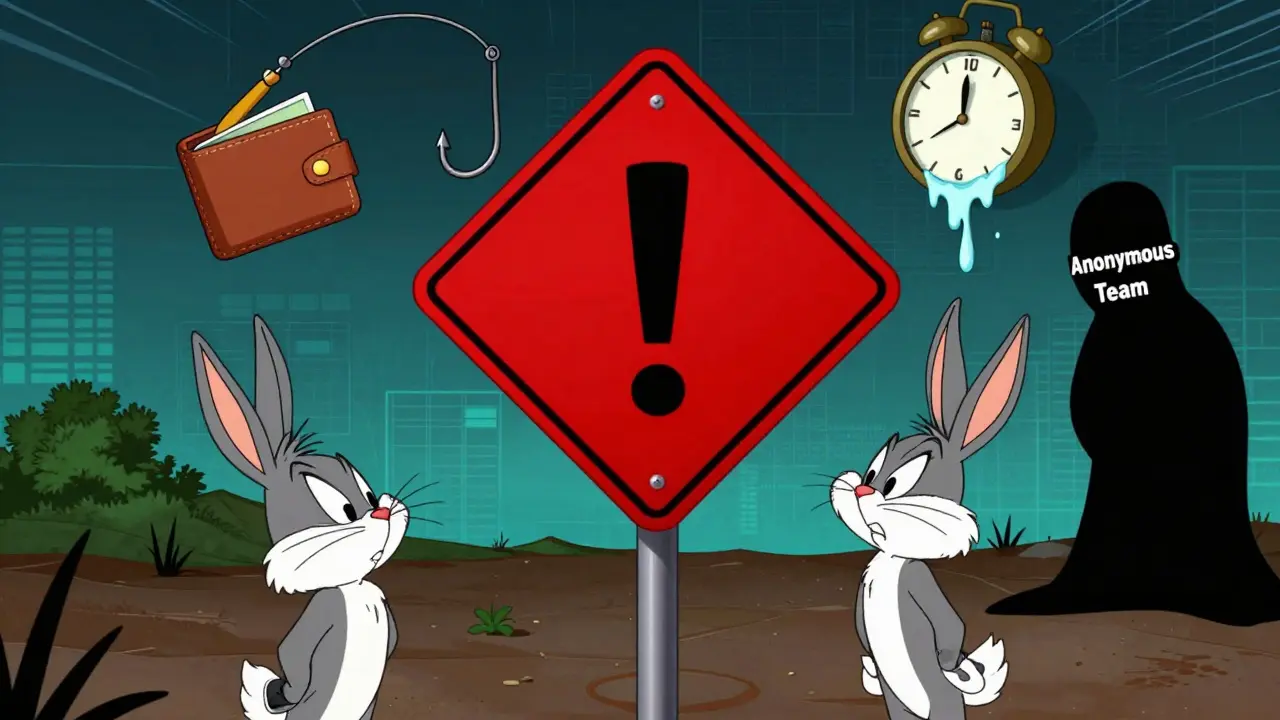
- Lack of Official Documentation: Legitimate projects publish a whitepaper or litepaper explaining their technology, team, and tokenomics. If The HUSL has no GitHub repository, no audit reports from firms like CertiK or Hacken, and no clear roadmap, treat it with extreme caution.
- Vague Eligibility Criteria: Real airdrops require specific actions, such as bridging assets, providing liquidity, or holding another token. If the instruction is simply "connect your wallet to claim," it may be a phishing attempt designed to drain your funds.
- Pressure Tactics: Scammers often create artificial urgency with phrases like "Claim ends in 2 hours" or "Only 100 spots left." Genuine blockchain distributions are transparent and do not rely on fear of missing out (FOMO) to drive participation.
- Unverified Social Channels: Check the Twitter/X account or Discord server. Are the followers real? Do the posts contain broken English or generic stock images? Impersonators often buy fake engagement to appear credible.
In 2025 and 2026, the rise of AI-generated content has made it easier for scammers to create convincing-looking websites and deepfake videos of founders. Always cross-reference links with official sources listed on trusted aggregators like CoinGecko or DefiLlama, not just search engine results.
How to Verify Airdrop Legitimacy
Before connecting your wallet to any site associated with The HUSL, follow this step-by-step verification process. This routine takes five minutes but can save you thousands of dollars.
- Check Contract Addresses: Find the official smart contract address for the HUSL token on Etherscan, BscScan, or Solscan. Compare it with the address provided by the airdrop site. Mismatches indicate a fake token.
- Analyze Token Holdings: Look at the holder distribution. If one or two wallets hold more than 50% of the supply, the creators can dump all tokens at once, crashing the price to zero. Tools like Etherscan’s "Token Holders" tab reveal this instantly.
- Review Security Audits: Search for independent security audits. If none exist, assume the code contains vulnerabilities. Even if an audit exists, check if it was performed by a reputable firm and if critical issues were resolved.
- Use a Burner Wallet: Never connect your main wallet containing significant assets to unverified sites. Use a secondary wallet with minimal funds. Better yet, use a hardware wallet like Ledger or Trezor and disable automatic transaction approvals.
- Search for Community Feedback: Visit Reddit, Bitcointalk, or specialized Discord communities. Search for "The HUSL scam" or "The HUSL review." Real user experiences often surface quickly when something is wrong.
If you cannot verify any of these points, the safest action is to walk away. The cost of lost time is far lower than the cost of stolen funds.
Comparison: Legitimate vs. Suspicious Airdrops
To help you distinguish between genuine opportunities and potential traps, consider this comparison table. It contrasts the characteristics of well-known, successful airdrops with those of dubious projects like the rumored The HUSL campaign.
| Feature | Legitimate Airdrop (e.g., Arbitrum, Immutable X) | Suspicious Airdrop (Potential Scam) |
|---|---|---|
| Transparency | Public snapshot criteria and dates | Vague rules or changing requirements |
| Team Identity | Doxxed founders with LinkedIn profiles | Anonymous team or fake personas |
| Security | Audited contracts and bug bounties | No audits or unverified code |
| Cost to Participate | Free or gas fees only | Requests payment for "verification" or "taxes" |
| Community | Active, moderated forums | Bots spamming positive comments |
Notice the key difference: legitimate projects build trust through transparency and security. Suspicious projects rely on secrecy and urgency. The HUSL project currently lacks the transparency markers found in the left column, placing it firmly in the high-risk category until proven otherwise.
Safe Alternatives for Airdrop Hunters
If your goal is to earn crypto rewards safely, focus on ecosystems with proven track records. Instead of chasing obscure tokens, consider interacting with established protocols that have announced future incentive programs.
- Jupiter (JUP): The leading DEX aggregator on Solana has a structured distribution plan for its JUP token, rewarding active traders and stakers. This is a transparent, verifiable process.
- Optimism (OP): As a major Ethereum Layer-2 solution, Optimism reserves a portion of its supply for community incentives. Engaging with their ecosystem involves using real applications, not just clicking buttons.
- Hyperliquid: A high-performance perpetual exchange that has rewarded early users fairly. Their model focuses on actual usage and liquidity provision.
These projects operate in the open. You can read their governance proposals, see their treasury balances, and interact with their communities without fear of hidden agendas. Building a history of genuine interaction with reputable chains like Ethereum, Solana, or Polygon positions you better for future legitimate airdrops than gambling on unknown tokens.
Protecting Your Digital Identity
Beyond losing funds, participating in shady airdrops exposes your personal data. Many fake airdrop sites harvest email addresses, phone numbers, and even private keys if you accidentally sign a malicious transaction.
Once your data is leaked, you become a target for targeted phishing attacks. Scammers know which wallets you own and what coins you hold. They may send you personalized emails pretending to be from Coinbase or Binance, asking you to "verify" your account to receive the supposed HUSL tokens. These emails contain links to clone sites that steal your login credentials.
To mitigate this risk:
- Enable two-factor authentication (2FA) on all exchanges and wallets. Use an authenticator app, not SMS.
- Never share your seed phrase or private key with anyone, including "support agents."
- Use a dedicated email address for crypto activities, separate from your banking and personal accounts.
- Regularly revoke unused wallet permissions using tools like Revoke.cash.
Your digital hygiene is your best defense. In the crypto space, paranoia is a feature, not a bug.
Conclusion: Wait for Verification
The promise of free tokens is powerful, but it is also the most common hook used by cybercriminals. The HUSL token’s low market cap, lack of official documentation, and absence from reputable news sources make it a high-risk proposition. Until you see a verified announcement from a trusted source, complete security audits, and clear community consensus, the rational choice is to stay away.
Crypto investing requires patience. Missing out on a potentially fraudulent airdrop is not a loss; it is a win. Focus on building knowledge, securing your assets, and engaging with established ecosystems. The real rewards in blockchain come from understanding the technology, not from chasing shortcuts.
Is The HUSL airdrop legitimate?
There is currently no verified evidence that The HUSL airdrop is legitimate. The project lacks official announcements, security audits, and transparent tokenomics. Its low market capitalization and absence from major news outlets suggest it is either a very small project or a potential scam. Proceed with extreme caution.
How can I tell if a crypto airdrop is a scam?
Look for red flags such as anonymous teams, lack of security audits, pressure to act quickly, and requests for upfront payments. Legitimate airdrops provide clear documentation, public contract addresses, and engage with their community transparently. Always verify information through multiple independent sources.
What should I do if I already connected my wallet to a suspicious site?
Immediately disconnect your wallet from the site. Transfer any remaining funds to a new, secure wallet with a fresh seed phrase. Revoke all permissions granted to the suspicious site using tools like Revoke.cash. Monitor your transaction history for unauthorized transfers and report any theft to relevant authorities.
Are there any safe alternatives to The HUSL airdrop?
Yes, consider engaging with established protocols like Jupiter, Optimism, or Hyperliquid, which have transparent reward structures and strong security records. These projects offer genuine value through their services and have proven track records of fair token distribution.
Why is The HUSL token's market cap so low?
A low market cap indicates low trading volume and limited investor interest. For The HUSL, a cap around $10,000 suggests it is not widely traded or trusted. This makes the token highly volatile and susceptible to manipulation, increasing the risk for any participant.
JEVON HALL
June 4, 2026 AT 14:57Hey everyone, just wanted to drop a quick note here because this info is super important for staying safe out there in the wild west of crypto 🛡️. I see so many folks getting wrecked by these low cap gems that look shiny but are actually hollow inside. The HUSL situation is a textbook example of why you gotta check the contract address on Etherscan before you even think about connecting your wallet. It’s not paranoia, it’s survival. If the team is anon and the market cap is ten grand, run fast don’t look back 🏃♂️💨.
Sylvia Mossman
June 6, 2026 AT 02:06You people are absolutely clueless if you think every obscure token is a scam just because it doesn't have a billion dollar backing immediately. Innovation happens in the shadows sometimes. I've seen projects start with less than $10k market cap and moon later. This article is fear-mongering garbage designed to keep you from taking risks. Stop being such sheep and do your own research instead of listening to some scaredy-cat blogger telling you what to do.
Alexander DeVries
June 7, 2026 AT 17:43I have to disagree with the previous comment entirely because safety is paramount in this industry especially when dealing with unverified assets. While early entry can be lucrative the lack of transparency here is a massive red flag that cannot be ignored. We need to prioritize our capital preservation over the FOMO driven desire to chase potential gains from unknown entities. Let's stay disciplined and wait for verifiable data before engaging with any project that lacks proper documentation or security audits. Your financial well-being depends on making informed decisions rather than impulsive ones based on hype alone.
Sylvia Mossman
June 9, 2026 AT 02:24Wow talk about a buzzkill. You sound like a bank manager trying to sell me a CD. Crypto is about risk and reward. If you can't handle a little uncertainty maybe you should stick to savings accounts. I'm not interested in waiting for permission from some imaginary authority figure to participate in the future of finance. The HUSL team might be building something revolutionary and your 'discipline' is just another word for cowardice. Grow up and take some calculated risks.
Steven Jacobowitz
June 9, 2026 AT 22:43I get where both sides are coming from but let's look at the technical side for a second. The liquidity is practically non-existent which means slippage would eat you alive if you tried to sell even if it went up. Also checking the holder distribution is key. If one wallet holds 50% of the supply they can rug pull at any moment. It's not just about being brave it's about understanding the mechanics of how these tokens work. Simple as that really. Don't get played by basic smart contract vulnerabilities.
Mark Corpuz
June 11, 2026 AT 17:35This is a very balanced perspective and I appreciate the focus on technical metrics rather than just emotional reactions. It is crucial to examine the tokenomics closely before committing any resources. The absence of a whitepaper or clear roadmap is indeed concerning for any serious investor. We should encourage a culture of due diligence within our community to protect newcomers from falling victim to sophisticated phishing schemes. Thank you for highlighting the importance of verifying contract addresses and audit reports.
Yogendra Dwivedi
June 13, 2026 AT 06:22I am curious about the specific tools mentioned for verification. Can someone elaborate on how to use Revoke.cash effectively? I want to make sure I am protecting my digital identity properly. It seems like a good practice to regularly check permissions granted to various dApps. I would like to learn more about securing my wallet without hindering my ability to interact with legitimate DeFi protocols. Any detailed guides or tips would be greatly appreciated by the community here.
Greg Lewis
June 15, 2026 AT 04:09the concept of ownership in crypto is an illusion we tell ourselves to feel secure but in reality you never truly own anything until the network agrees you do and even then its just code executing on servers owned by corporations or miners who could censor you at any time so why worry about this tiny token when the whole system is built on trust in mathematics that can be broken by quantum computing eventually
Alexis Abster
June 16, 2026 AT 18:42Oh wow that is such a dark way to look at things! But honestly I think most of us just want to feel empowered by having control over our own money without banks breathing down our necks. Yes there are risks everywhere but ignoring them doesn't make them go away. Let's focus on the positive aspects of decentralization and how it gives voice to the unheard. We can build a better future together if we stay optimistic and support each other through the ups and downs of this volatile market!
verna kennedy
June 18, 2026 AT 14:16It is quite amusing how people defend scams with such passion. Clearly this individual has been brainwashed by influencer marketing campaigns. Real experts know better than to touch a token with no audit. Stay away from this nonsense.
Kelly Tenney
June 19, 2026 AT 14:39Let's keep the conversation respectful and helpful for everyone involved. It is important to remember that many new users are still learning the ropes and need guidance rather than judgment. We can all benefit from sharing knowledge about security best practices like using burner wallets and enabling 2FA. By supporting each other we create a stronger and safer community for all participants in the blockchain ecosystem. Let's continue to educate ourselves and others.
Caralee Robertson
June 20, 2026 AT 23:11i totally agree with the need for education but sometimes the advice feels overwhelming for beginners. like revoking permissions sounds scary if u dont know how to do it right. maybe we can share simpler steps for those who are just starting out? i made a mistake once connecting my main wallet and lost some funds so i know how painful it is. lets help each other avoid those mistakes.
Narendra Kulkarni
June 21, 2026 AT 14:48its gud advice guys. i always use a separate wallet for testing new stuff. keeps my main stash safe. thanks for sharing.