
Are you looking for a decentralized exchange that actually rewards you for trading? Or are you specifically trying to find where SushiSwap fits into the Gnosis Chain (formerly xDAI) ecosystem?
If you clicked here because of the title "SushiSwap (Gnosis)," you might be confused. SushiSwap isn't *owned* by Gnosis, nor is it exclusive to it. Instead, SushiSwap is a massive multi-chain protocol that operates on Ethereum, Arbitrum, Polygon, and yes, Gnosis Chain. This review cuts through the noise to tell you if this platform is safe, how much it costs, and whether it’s worth your time in 2026.
What Is SushiSwap?
SushiSwap is a decentralized exchange (DEX) and automated market maker (AMM) built primarily on the Ethereum blockchain that facilitates cryptocurrency trading, yield farming, staking, and lending services. It launched in August 2020 as a fork of Uniswap but quickly evolved into something different. While Uniswap focused on being a pure trading engine, SushiSwap aimed to build a full DeFi ecosystem.
The platform was originally created by an anonymous developer known as Chef Nomi. After some controversial early events involving fund withdrawals and leadership changes, the project transitioned to a community-governed model. Today, it is one of the few decentralized exchanges with enough liquidity to compete with centralized crypto trading platforms like Coinbase or Binance.
As of mid-2026, SushiSwap operates across multiple blockchains, including:
- Ethereum (Mainnet)
- Arbitrum
- Polygon
- Avalanche
- Fantom
- Gnosis Chain (xDai)
- Binance Smart Chain
Is SushiSwap Safe and Legit?
Safety is the biggest concern for anyone entering DeFi. Unlike centralized exchanges, you don’t give your money to a company; you interact directly with smart contracts. So, who holds the keys?
SushiSwap uses a multi-signature governance structure. This means no single person can drain the funds. Decisions are made by holders of the SUSHI token. However, trust in code is paramount. The platform has undergone numerous security audits since its inception. Early days were rocky, with some initial lack of independent security auditing before its first release causing user concerns. But today, the core protocols are heavily scrutinized by third-party firms.
That said, you must understand the risks yourself. If you connect a compromised wallet, or if you approve a malicious contract, SushiSwap cannot protect you. The platform provides the infrastructure, but you are the custodian of your assets.
Trading on SushiSwap: How It Works
Using SushiSwap is straightforward if you have a Web3 wallet like MetaMask or Rabby. Here is the typical flow:
- Connect Wallet: Link your wallet to the SushiSwap interface.
- Select Network: Choose the chain you want to trade on (e.g., Ethereum or Gnosis).
- Choose Tokens: Pick the token you want to sell and the one you want to buy.
- Set Slippage: Adjust for price volatility if needed.
- Approve & Swap: Confirm the transaction in your wallet.
The learning curve typically ranges from 1-2 hours for experienced DeFi users to several days for cryptocurrency newcomers. The interface is intuitive, receiving praise from both new and experienced traders for its clean design.
Fees and Costs: What Will You Pay?
Costs in DeFi come from two sources: the platform fee and the network gas fee.
| Fee Type | Standard Rate | Notes |
|---|---|---|
| Trading Fee | 0.3% | Applied to most standard swaps |
| Stablecoin Fee | 0.05% - 0.08% | Lower fees for stable pairs like USDC/USDT |
| Network Gas | Variable | Depends on chain congestion (ETH vs Gnosis) |
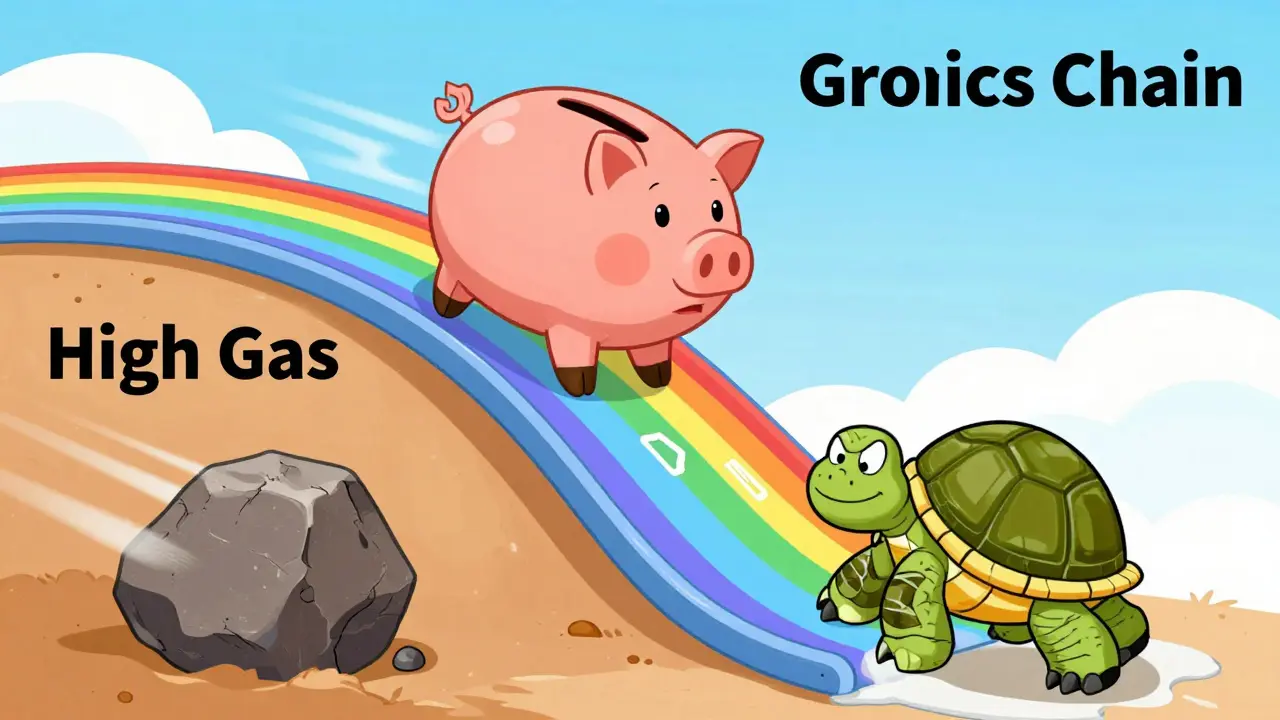
On Ethereum, gas fees can spike during high traffic, making small trades expensive. This is why SushiSwap expanded to chains like Gnosis and Arbitrum. On Gnosis Chain, transactions are incredibly cheap-often less than $0.01-and fast. This makes it ideal for smaller trades or frequent swapping without worrying about draining your ETH balance.
SushiSwap on Gnosis Chain: Why It Matters
You mentioned Gnosis in the title, so let’s address that specifically. SushiSwap has deep integration with the Gnosis ecosystem. Gnosis Chain is known for its stability and low fees, making it a favorite for stablecoin trading.
When you use SushiSwap on Gnosis, you benefit from:
- Near-Zero Gas Fees: No more waiting for Ethereum confirmation times or paying $10+ per swap.
- High Liquidity Pools: Major pairs like GNO/WETH and DAI/USDC have deep liquidity, meaning less slippage.
- Yield Opportunities: You can provide liquidity on Gnosis and earn SUSHI rewards plus trading fees.
This cross-chain compatibility gives SushiSwap advantages over single-blockchain DEXs. It allows you to keep assets on cheaper networks while still accessing a top-tier trading interface.

Earning Rewards: Yield Farming and Staking
SushiSwap distinguishes itself from Uniswap through enhanced community rewards. You aren’t just a trader; you can be a participant in the economy.
Liquidity Providing (LP): When you add tokens to a pool (e.g., ETH/USDC), you earn a share of the trading fees. Additionally, you may receive SUSHI tokens as an incentive. Note that LPs face impermanent loss risk, which occurs when the price of deposited assets changes compared to when they were deposited.
SushiBar Staking: This mechanism receives positive feedback for providing additional SUSHI rewards to token holders. By locking your SUSHI in the SushiBar, you increase your voting power and earn more rewards. It fosters what sources describe as a "vibrant and engaged community."
Pros and Cons Summary
No platform is perfect. Here is the honest breakdown based on current performance and user feedback.
| Pros | Cons |
|---|---|
| Multi-chain support (including Gnosis) | Smaller token selection than Uniswap |
| Low fees on L2s and sidechains | Complex UI for absolute beginners |
| Strong community governance | Impermanent loss risk for LPs |
| Yield farming opportunities | Historical controversy around launch |
Who Should Use SushiSwap?
SushiSwap is best for intermediate crypto users who understand wallets and gas fees. It is particularly strong for:
- Traders on Gnosis/Arbitrum: Those wanting cheap, fast swaps.
- Yield Farmers: Users looking to maximize returns via SUSHI incentives.
- DeFi Enthusiasts: People who want to vote on protocol upgrades.
If you are a complete beginner who just wants to buy Bitcoin with a credit card, stick to a centralized exchange like Coinbase. SushiSwap requires you to manage your own keys and understand the technology.
Is SushiSwap available on Gnosis Chain?
Yes, SushiSwap supports Gnosis Chain (formerly xDai). It is one of the primary DEXs on the network, offering low-cost trading and liquidity provision opportunities.
How do I start using SushiSwap?
You need a Web3 wallet like MetaMask. Fund it with ETH (for Ethereum mainnet) orxDAI (for Gnosis Chain). Connect your wallet to the SushiSwap website, select the correct network, and you can begin swapping tokens.
What are the fees on SushiSwap?
Standard trading fees are 0.3%. Stablecoin pairs often have lower fees around 0.05-0.08%. Additionally, you pay network gas fees, which vary by blockchain. Gnosis Chain fees are negligible.
Is SushiSwap safer than Uniswap?
Both platforms are highly secure and audited. Safety depends largely on user behavior. SushiSwap offers more complex features like yield farming, which introduces additional risks like impermanent loss. Uniswap is simpler and may be slightly safer for basic swaps due to fewer moving parts.
Can I earn passive income on SushiSwap?
Yes, by providing liquidity to pools or staking SUSHI tokens in the SushiBar. You earn trading fees and potentially extra SUSHI rewards. However, always research impermanent loss before providing liquidity.