

Imagine finding a Simex that promised US-level security but explicitly banned American users. That was the paradox of this platform for years. Launched in 2015, it carved out a niche by serving international investors from Russia, China, and India who wanted access to regulated-grade infrastructure without the regulatory headaches of their home countries. But does it still make sense to look at Simex today? If you are digging through old forums or considering legacy accounts, you need the full picture.
This review breaks down what made Simex unique, why its user base was so specific, and where it stands now. We will look at the fees, the security protocols, and the glaring contradictions in its regulatory claims. Whether you are a historian of crypto markets or an investor with dormant funds, understanding Simex’s trajectory helps you spot similar risks in newer exchanges.
The Core Concept and Target Audience
Simex is a cryptocurrency exchange and equity investment platform registered in the United States that launched on July 3, 2015. Its founding premise was clever but restrictive. It targeted "whale" investors-large-scale traders-from regions with uncertain cryptocurrency regulations. Specifically, it catered to users in Russia, China, and India. These traders often faced banking restrictions or legal ambiguity when trying to move fiat currency into digital assets locally.
By registering in the US, Simex offered a veneer of stability and compliance. However, here is the twist: despite being US-registered, Simex prohibited US citizens from using the platform. This allowed them to avoid strict SEC enforcement against retail US traders while still leveraging the reputation of a US-based entity. It was a strategic loophole. They served foreign clients seeking safety, not domestic ones seeking convenience.
The platform wasn't just about trading Bitcoin and Ethereum. It positioned itself as a multi-functional hub. It offered crowdfunding services for startups and small businesses. This blended traditional equity investment concepts with crypto liquidity. For investors in emerging markets, this dual utility was a major draw. You could trade tokens and back early-stage companies in one interface.
Fees, Liquidity, and Trading Options
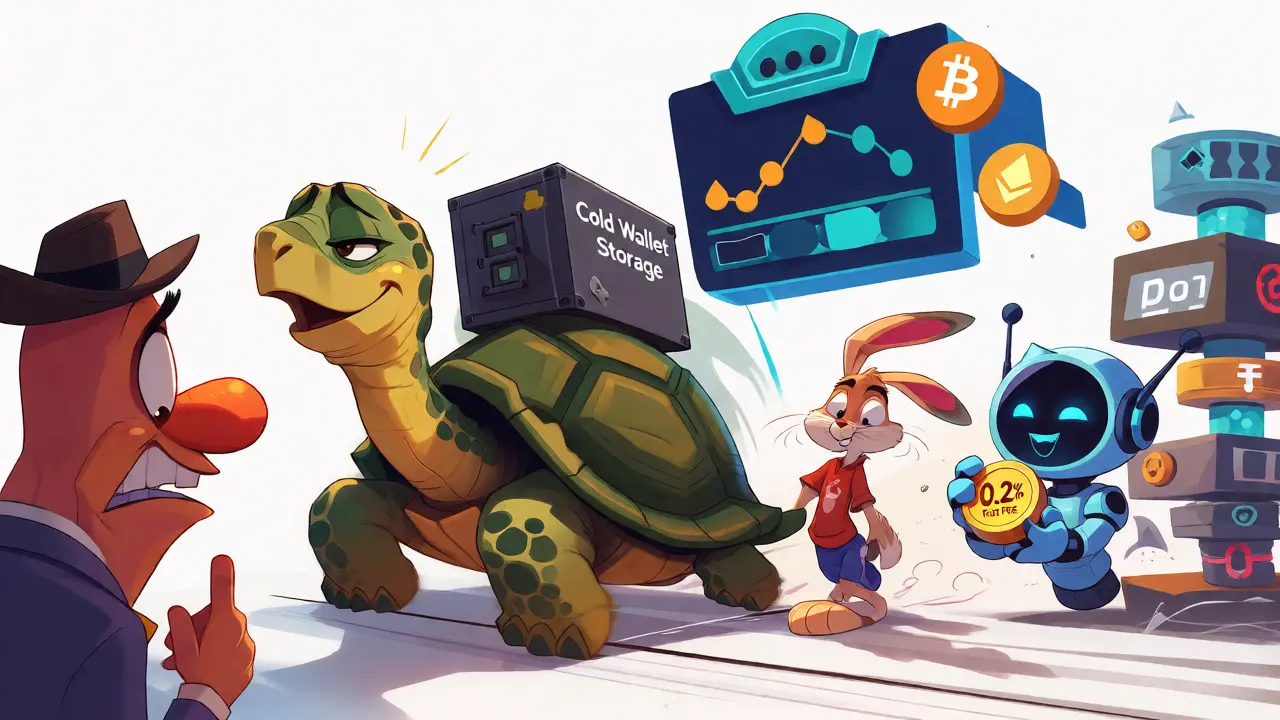
If you care about costs, Simex had a straightforward approach. The platform implemented a flat trading fee structure of 0.2% for both market takers and makers. In the volatile market conditions of 2018-2020, this was competitive. Many competitors charged tiered fees that penalized smaller traders. A flat rate simplified calculations for high-volume users.
Liquidity was another selling point. At its peak around 2018, Coinmarketcap data showed Simex ranking within the top 20 exchanges by volume. Daily volumes hit approximately $150 million during peak periods. While this lagged behind giants like Binance (which saw $1.2 billion daily) or Coinbase ($500 million), it provided sufficient depth for mid-tier traders. You could execute large orders without massive slippage, which mattered for the "whales" they targeted.
However, the asset selection was limited compared to modern standards. It supported Bitcoin, Ethereum, and several ERC-20 tokens like OmiseGo, EOS, Augur, and Revain. Crucially, it lacked leveraged trading options. Competitors like BitMEX attracted traders wanting derivatives; Simex stuck to spot trading. This limited its appeal to aggressive speculators but suited conservative investors looking for long-term holds.
| Feature | Simex | Binance | Coinbase |
|---|---|---|---|
| Daily Volume (Peak) | ~$150 Million | ~$1.2 Billion | ~$500 Million |
| Trading Fee | 0.2% Flat | Tiered (0.1%-0.5%) | Variable/Spread-based |
| Fiat Support | USD, RUB | Multiple Global Currencies | USD, EUR, GBP, etc. |
| US User Access | Prohibited | Restricted (Binance.US) | Allowed |
| Leveraged Trading | No | Yes | Limited/None (Spot focus) |
Security Protocols and Asset Storage
Security was Simex's primary marketing angle. They claimed to use blockchain-based private key encryption and cold wallet technology. Two-factor authentication (2FA) was mandatory for withdrawals. For the time, these were standard best practices, but Simex emphasized them heavily to reassure nervous foreign investors.
A critical detail often overlooked is how they stored keys. According to their User Agreement, private keys were held in a combination of online and offline storage systems. This hybrid model sounds secure, but it introduced operational friction. Retrieving information from offline storage could cause transaction delays of 48 hours or more. For active traders, this latency was a dealbreaker. It signaled that the backend infrastructure wasn't fully optimized for real-time velocity.
Industry experts rated their security as "above average" for 2018-2019. Wikibit’s review highlighted their cold wallet usage as a competitive advantage. However, no exchange is immune to risk. Simex explicitly stated in its terms that it was "not a regulated financial services provider." Users assumed all risks. This disclaimer protected Simex legally but left investors exposed if things went wrong.
Regulatory Ambiguity and Controversies
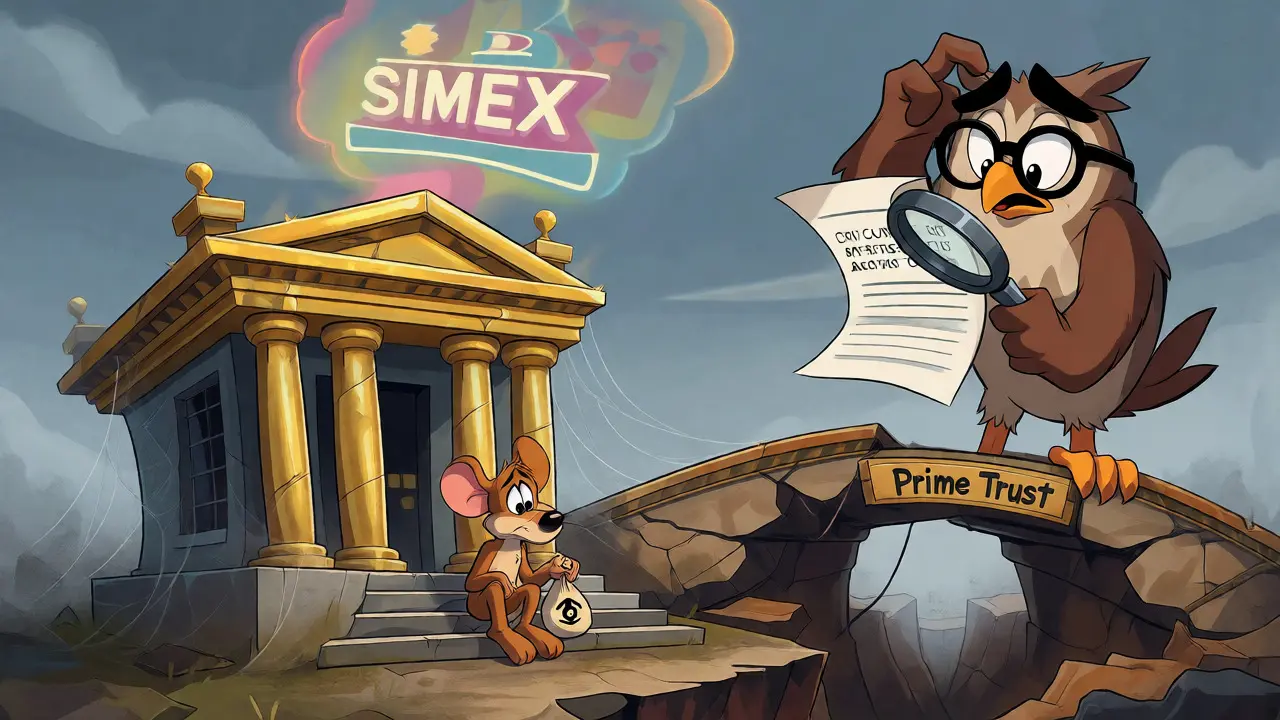
Here is where the story gets messy. Simex claimed registration with the SEC for its public offerings. Blockchain expert David Gerard criticized this claim, noting that such registrations often mean little more than filing paperwork with a custodian like Prime Trust. He argued that "just means Prime Trust don't break the rules," highlighting the loose interpretation of regulatory compliance in the early crypto era.
The confusion extended to user eligibility. Official documentation said US investors were banned. Yet, some third-party review platforms like Revain claimed Simex allowed US trading. This contradiction likely stemmed from lax initial KYC checks versus strict policy statements. For many users, this ambiguity was a red flag. Did they actually enforce the ban, or was it just on paper?
Furthermore, Simex relied on Prime Trust for its US compliance backbone. When Prime Trust collapsed in 2023, any exchange dependent on it faced existential threats. Although Simex’s volume had already dwindled, this dependency illustrates the fragility of their business model. They outsourced their regulatory shield, leaving them vulnerable when that shield cracked.
User Experience and Customer Support
Let’s talk about the day-to-day experience. The interface complexity was rated "moderate" by CryptoSlate. Charting tools were comparable to early versions of TradingView but lacked the sophistication of Binance’s advanced terminals. For beginners, the learning curve was manageable. For pros, it felt dated quickly.
Language support was a double-edged sword. The platform excelled in Russian language integration. Withdrawals to Russian banks like Sberbank were praised for speed, sometimes taking only 12 hours. This localized efficiency won over the CIS region. However, English-language documentation was described as "comprehensive but outdated." Support forums were predominantly Russian, leaving English speakers feeling isolated.
Customer support response times drew criticism. Users reported waiting up to 72 hours for non-urgent inquiries. During technical incidents, like the October 2018 Bitcoin Cash hard fork, operations were suspended for 72 hours. Approximately 12,000 users were affected. These delays frustrated traders who needed immediate access to their funds.
Current Status and Viability
So, where is Simex now? As of September 2026, its operational viability has significantly diminished. Coinmarketcap removed Simex from its rankings in Q3 2020 after daily volumes fell below $5 million. This drop-off suggests the platform lost relevance as global exchanges expanded fiat rails and improved liquidity.
The lack of updates to their User Agreement since 2019 and sparse recent reviews indicate stagnation. Regulatory pressures mounted globally. China banned crypto exchanges entirely in 2021, wiping out a huge chunk of their target market. Russia tightened controls, further squeezing their niche. Mid-tier exchanges without clear regulatory pathways faced high failure rates. Simex fit this profile perfectly.
If you have funds stuck on Simex, act cautiously. Check current withdrawal processing times immediately. The platform may still exist technically, but liquidity and support levels are likely far below historical peaks. Don’t assume the old 12-hour withdrawal speeds apply today.
Key Takeaways
- Niche Focus: Simex targeted non-US investors from Russia, China, and India, offering US-registered security without US retail access.
- Fee Structure: A simple 0.2% flat fee was attractive for consistent traders but lacked the depth of tiered models.
- Security vs. Speed: Cold storage enhanced security but caused transaction delays of up to 48 hours due to offline key retrieval.
- Regulatory Risks: Claims of SEC registration were ambiguous, and reliance on Prime Trust created significant counterparty risk.
- Current State: Volume collapse post-2020 and regulatory shifts in key markets suggest minimal ongoing activity.
Is Simex still operating in 2026?
Simex's operational status is questionable. Trading volumes dropped significantly after 2020, leading to its removal from major aggregators like Coinmarketcap. While the website may still be accessible, active trading and customer support levels are likely very low compared to its peak years.
Why did Simex prohibit US investors?
Simex aimed to serve international investors while avoiding the strict regulatory scrutiny applied to US retail exchanges. By banning US persons, they could operate under a US registration framework without triggering the same level of SEC enforcement actions that plagued other platforms.
What were Simex's trading fees?
Simex used a flat trading fee of 0.2% for both makers and takers. This was competitive during its active period, though it lacked the volume-discount tiers found on larger exchanges like Binance.
Did Simex support leveraged trading?
No, Simex focused on spot trading. It did not offer leveraged products or derivatives, which put it at a disadvantage against competitors like BitMEX that catered to speculative traders.
How secure was Simex?
Simex employed cold wallet storage, two-factor authentication, and blockchain-based encryption. Experts rated its security above average for its time, though the hybrid online/offline key storage caused occasional transaction delays.