
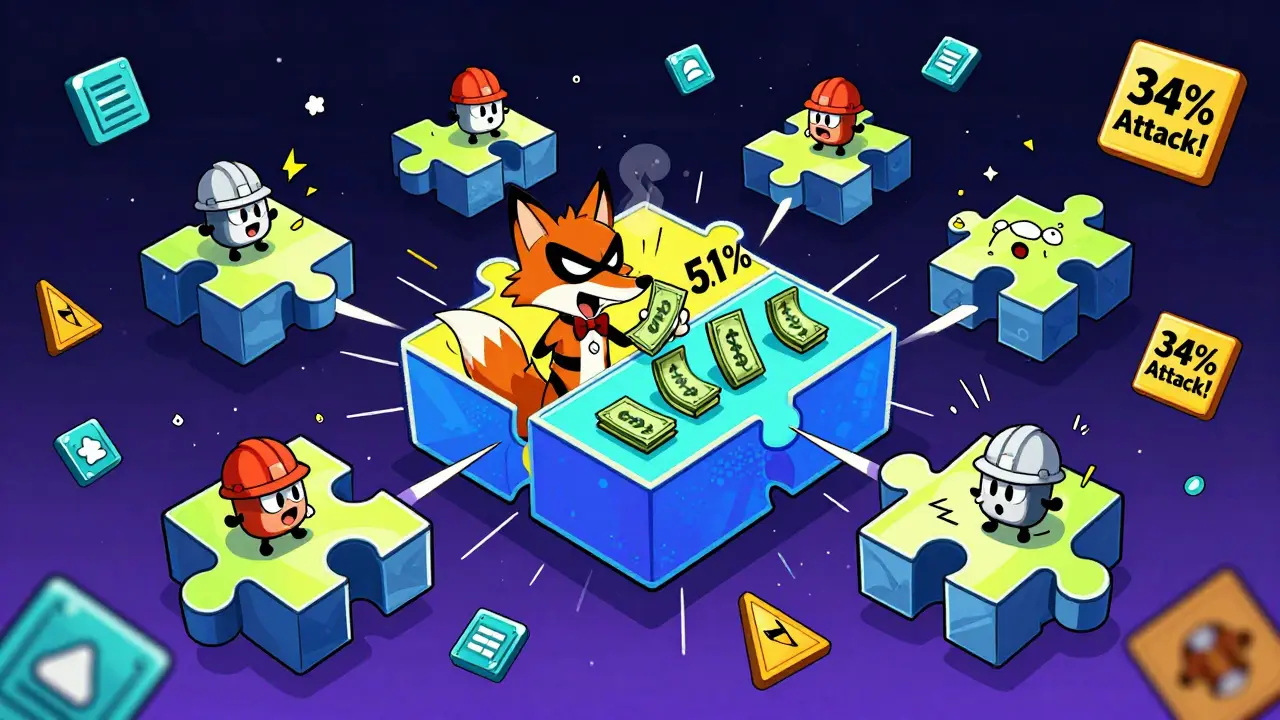
When blockchain networks grow, they slow down. Ethereum used to take minutes to confirm a transaction. Bitcoin? Even longer. That’s why developers turned to sharding-splitting the network into smaller pieces called shards, each handling its own transactions. It sounds simple: more shards, more speed. But here’s the catch: breaking a blockchain into pieces doesn’t just make it faster. It makes it riskier.
Why Sharding Changes Everything
Sharding isn’t just a performance tweak. It’s a structural rewrite of how trust works in a blockchain. In a traditional blockchain, every node validates every transaction. That’s secure-but slow. Sharding breaks that model. Now, only a subset of nodes (a shard) validates a portion of transactions. That’s where speed comes from. But it also means if one shard gets compromised, the whole network isn’t automatically safe. The math behind this is brutal. For a shard to stay secure, it needs at least two-thirds of its validators to be honest. If even 34% of a shard’s nodes are malicious, they can collude to approve fake transactions, block real ones, or double-spend. And because shards are smaller than the full network, hitting that 34% threshold is easier than attacking the whole chain. This isn’t theoretical. In 2023, a major sharded blockchain experienced a shard takeover when an attacker bought enough staked tokens to control over 50% of a single shard. The shard processed 12,000 fraudulent transactions before the network detected the anomaly. Recovery took six hours. That’s the cost of scaling without rethinking security.Cross-Shard Transactions: The Hidden Weak Point
Most blockchains don’t just need shards to work independently-they need them to talk to each other. When you send ETH from one shard to another, that’s a cross-shard transaction. It sounds like a simple transfer. But under the hood, it’s a coordination nightmare. Imagine two shards: Shard A sends a transaction to Shard B. Shard A says, “I’ve sent this,” and Shard B says, “I’ll receive it.” But what if Shard A lies? Or if Shard B never gets the message? Or worse-what if both shards are controlled by the same attacker? That’s when double-spending becomes possible. Studies show cross-shard transactions increase security complexity by 300%. Every cross-shard transfer requires cryptographic proofs, synchronized timestamps, and verification across multiple shards. Even small delays can cause disputes. In one test environment, 17-22% more time was needed just to verify cross-shard actions. And that’s before you add in the risk of message loss, network partitioning, or malicious relayers. The solution? Fraud proofs and zero-knowledge proofs. Newer protocols like DynaShard use ZK-SNARKs to compress cross-shard verification into a single, cryptographically verifiable proof. That cuts down the overhead. But it also means you’re trusting a new kind of math-one that’s still being tested in real-world conditions.Validator Reshuffling: When the Guard Changes Shifts
To prevent attackers from targeting one shard for too long, most sharded blockchains rotate validators between shards every few hours or days. This is called reshuffling. It sounds smart. And it is-if it’s done right. But reshuffling is where most sharding exploits happen. Why? Because during the transition, validators are in limbo. They’re not fully assigned to a shard yet. Their keys are being redistributed. Messages are being passed. And in that window, a clever attacker can inject fake validator identities, hijack communication channels, or trigger a split-brain scenario where two groups of validators think they’re in charge of the same shard. Reddit’s r/ethereumdev has over 40 threads from developers who’ve found critical flaws in reshuffling logic. One user reported 12 high-severity bugs across five major protocols-all tied to how validators were reassigned. The fix? More randomness, longer transition windows, and economic penalties. DynaShard, for example, forces a 3.2-second recovery window after any reshuffle anomaly. That’s fast. But it also means the network must be able to detect attacks in real time. And here’s the kicker: reshuffling requires constant monitoring. In a 50-shard network with 500 validators, it takes 22 minutes per epoch just to reassign nodes securely. That’s not trivial. Most teams underestimate how much infrastructure and expertise it takes to run this smoothly.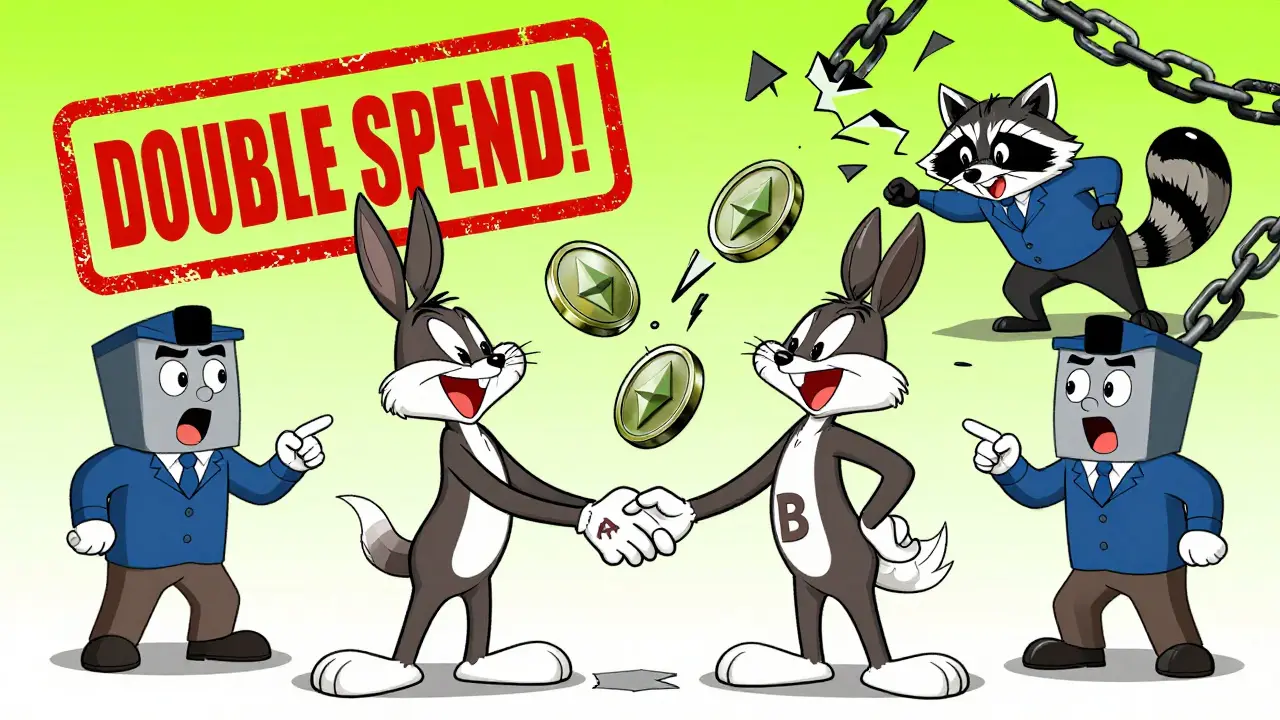
Shard Takeovers: The Single Point of Failure
The biggest fear in sharding isn’t the whole network going down. It’s one shard getting taken over. In a non-sharded blockchain, you need to control 51% of the entire network to launch a 51% attack. That’s expensive. In a sharded system, you only need to control 51% of one shard. If each shard has 100 validators, you need to bribe or compromise just 51 of them. That’s 1/50th the cost. This is why random validator assignment is dangerous. If the algorithm that assigns validators to shards isn’t perfectly unpredictable, attackers can target shards with weaker node distributions. In 2024, a research team simulated 10,000 shard assignments and found that in 8% of cases, malicious nodes clustered in a single shard-despite randomization. That’s not a bug. That’s a mathematical inevitability in small groups. Newer protocols like DynaShard and Ethereum’s proto-danksharding now use “adaptive security.” This means if a shard shows signs of being under attack-say, a sudden drop in validator participation-the system automatically increases the number of validators assigned to that shard or temporarily freezes it. It’s like putting a shard in lockdown. But adaptive security requires real-time threat detection. And that’s not easy. Most sharded networks still rely on manual alerts or slow off-chain monitoring. That’s why 40% of enterprise sharding implementations are expected to have a security incident by 2026, according to Gartner.What Happens When the Network Gets Attacked?
Security isn’t just about preventing attacks. It’s about surviving them. When a shard is compromised, what’s the response? Do you roll back transactions? Do you slash staked tokens? Do you pause the whole network? Each choice has trade-offs. Ethereum’s approach is to use fraud proofs. If a shard produces a bad block, any honest validator can submit a proof to the main chain, triggering a rollback. But that requires someone to notice the fraud-and that someone has to be online and willing to pay gas fees to report it. In practice, that doesn’t always happen. DynaShard’s model is different. It uses penalty mechanisms. Malicious validators lose their staked tokens automatically. The system also requires threshold signatures-meaning no single validator can act alone. A group of 67% must sign off on any action. That’s harder to manipulate. But even these systems have limits. If an attacker controls just under 33% of a shard, they can still cause chaos-delaying blocks, creating forks, or forcing expensive rescues. The system doesn’t collapse. But it doesn’t run smoothly either.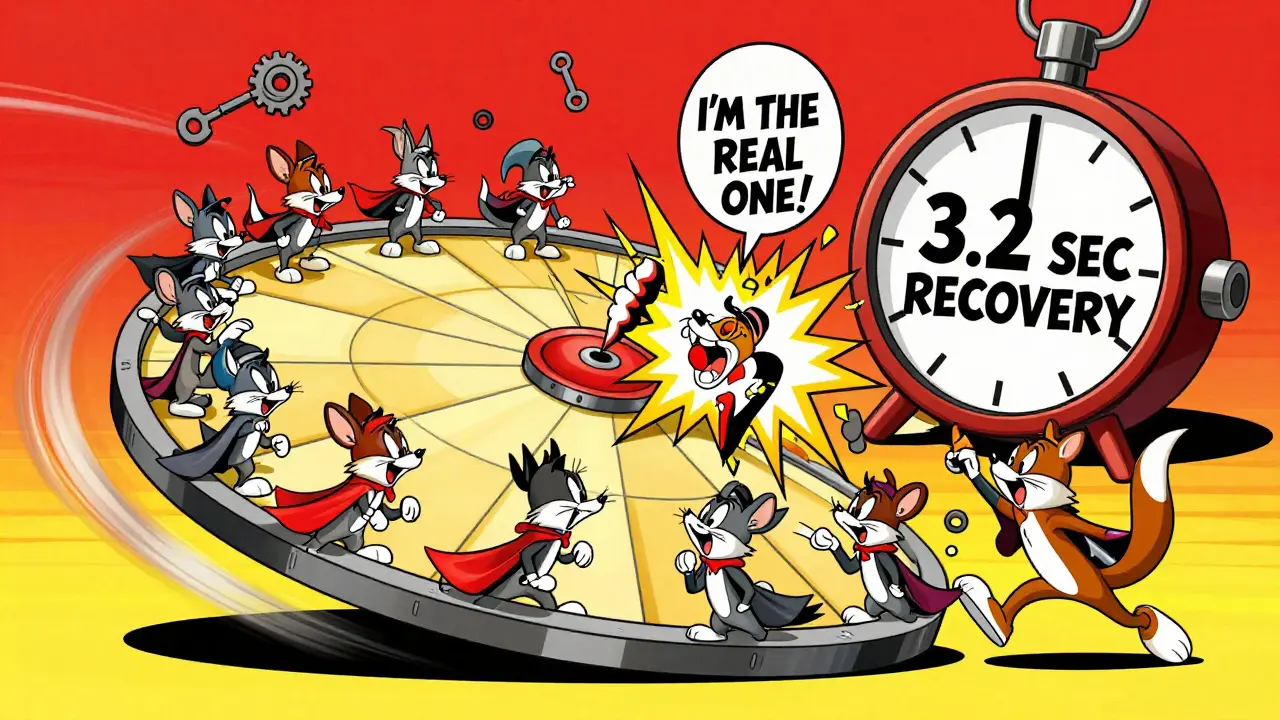
Who Should Use Sharding?
Sharding isn’t for everyone. It’s not a plug-and-play upgrade. It’s a full architectural overhaul. Enterprise users-banks, supply chains, healthcare systems-are the main adopters. Why? Because they need to process hundreds of transactions per second. A traditional blockchain can’t keep up. Sharding lets them scale without giving up decentralization. But here’s the reality: 63% of enterprises implementing sharding don’t have a dedicated blockchain security team. They’re relying on third-party vendors or open-source code they barely understand. That’s why 28% of sharded systems had a security incident in 2023. The average cost? $2.4 million. Public blockchains like Ethereum are moving slowly because they can’t afford mistakes. Their sharding rollout has been delayed multiple times-not because of tech limits, but because of security risks. The goal isn’t just to go faster. It’s to go safely.The Road Ahead: What’s Changing
The next wave of sharding isn’t about more shards. It’s about smarter security. Ethereum’s upcoming proto-danksharding introduces data availability sampling. Instead of requiring 50% of nodes to verify a shard’s data, now only 1% need to check it. That’s a game-changer. It reduces bandwidth needs and makes attacks exponentially harder. Zero-knowledge proofs are also getting integrated. By 2026, zk-sharding could cut cross-shard verification costs by 90%. That means faster, cheaper, and more secure transfers between shards. The biggest shift? From static to dynamic security. Systems will no longer rely on fixed thresholds. They’ll adapt. If a shard starts acting weird, it gets more validators. If an attack is detected, it gets isolated. If a validator misbehaves, it gets slashed instantly. But none of this matters if the people building these systems don’t understand the risks. Sharding isn’t just code. It’s cryptography, economics, and human behavior-all wrapped into one fragile system.Final Thoughts: Security First, Speed Second
Sharding gives blockchains the speed they need to compete with traditional systems. But speed without security is just a faster way to lose money. If you’re considering sharding for your project, ask yourself: Do you have the expertise to audit the reshuffling logic? Do you understand threshold signatures? Can you detect a shard takeover within seconds? If the answer is no, don’t rush it. The best sharded blockchains aren’t the ones with the most shards. They’re the ones that never got hacked.Sharding isn’t the future of blockchain. It’s the present. And the present demands more than optimism. It demands rigor.
Rishav Ranjan
December 22, 2025 AT 01:47This whole sharding thing is just putting more eggs in fewer baskets and calling it innovation.
Amit Kumar
December 22, 2025 AT 11:42Bro, you think this is bad? I saw a shard get owned in Mumbai last year because some dev used a weak RNG for validator rotation. 12k fake txs, 6 hours down, and the team just shrugged like ‘oops’. We’re not building a bank-we’re building a casino with blockchain-shaped chips. And guess what? The house always wins when the dice are loaded.
Sharding isn’t the future. It’s a 3am panic attack dressed up as a whitepaper. You want speed? Fine. But don’t pretend you’re not trading security for latency. That 34% threshold? That’s not a bug-it’s a feature designed by optimists who’ve never seen a real attack.
I’ve watched devs in Bangalore deploy sharded chains with 200 validators per shard and zero real-time monitoring. They think ‘randomness’ is a magic spell. It’s not. Math doesn’t care if you’re Indian, American, or Martian. If you have small groups, attackers will cluster. It’s not if-it’s when.
And don’t even get me started on cross-shard. It’s like handing your house keys to five strangers and asking them to coordinate who lets in the pizza guy. One of them is lying. You just don’t know which one.
Zero-knowledge proofs? Cool. But they’re not magic. They’re just math you can’t audit unless you’re a cryptographer with a PhD and a caffeine IV. Most teams don’t even understand what a SNARK is. They just copy-paste from GitHub and pray.
And reshuffling? Oh man. That’s the real horror show. Validators in limbo? Keys being redistributed? That’s not a system-that’s a nervous breakdown in code form. I’ve seen three protocols collapse during epoch transitions because someone forgot to validate the signature chain.
Enterprise users? They’re the worst. Paying millions for a ‘blockchain solution’ while their CTO thinks ‘decentralized’ means ‘not my problem’. 63% don’t have a security team? That’s not innovation. That’s corporate suicide with extra steps.
Don’t get me wrong-I want sharding to work. But we’re not ready. We’re not even close. The math is hard. The human factor is worse. And until we stop treating security like an afterthought, we’re just building faster ways to lose everything.
Cathy Bounchareune
December 23, 2025 AT 14:58I love how everyone’s acting like sharding is some newfangled invention. It’s just distributed systems 101-except now we’re pretending cryptography can fix bad architecture. The real issue isn’t the tech-it’s the culture. We’ve trained an entire generation of devs to ship first, think later. Sharding didn’t create this problem. It just exposed it.
Remember when we all thought microservices were the answer? Then came the network partitions, the cascading failures, the debugging nightmares. We’re repeating the same mistake. We’re so obsessed with throughput that we forgot to ask: ‘Who’s watching the watchers?’
And honestly? The ‘adaptive security’ hype is just a fancy way of saying ‘we’ll fix it after it breaks.’ That’s not engineering. That’s wishful thinking with a whitepaper.
Sophia Wade
December 24, 2025 AT 08:33The elegance of blockchain lies in its simplicity: a single, immutable ledger validated by all. Sharding, in its current form, is an architectural compromise that trades ontological clarity for computational expediency. One cannot simply fracture trust without fracturing the epistemological foundation upon which consensus rests.
The notion that ‘more shards equal more speed’ is a seductive fallacy, akin to believing that dividing a cathedral into smaller chapels will make worship more efficient-ignoring that the sacred space, the shared witness, is what renders the act meaningful. When validation becomes localized, the very notion of collective truth erodes into probabilistic approximation.
And yet-perhaps this is the necessary evolution. Perhaps we must accept that decentralization, like democracy, requires constant vigilance, not static structure. The challenge is not to abandon sharding, but to reimagine its guardianship: not as a technical puzzle, but as a sociotechnical covenant.
Brian Martitsch
December 25, 2025 AT 16:43LMAO. So you’re telling me we need 67% signatures now? 😂 Like that’s gonna stop a whale with $200M. This isn’t security. It’s theater. 🤡
Jake Mepham
December 27, 2025 AT 07:59Sharding is the only way forward-but only if we stop treating it like a plugin. You can’t slap on ZK proofs and call it secure. You need to rebuild the whole trust model from the ground up.
Here’s what’s missing: real-time anomaly detection that doesn’t rely on humans clicking a button. We need AI-driven watchdogs that can spot a shard going rogue in under a second-not six hours.
Also, validator reshuffling needs to be *deterministically* random. Not ‘we ran a hash function once and called it good.’ We need entropy from multiple sources: blockchain timestamps, atmospheric noise, even user behavior patterns. If you’re relying on one RNG, you’re already compromised.
And enterprises? They need to hire actual blockchain security engineers, not outsourced devs from Upwork who learned Solidity last weekend. This isn’t React. One typo can cost millions.
Bottom line: Sharding isn’t the problem. Complacency is. Let’s stop pretending we’re ready. We’re not. But we can be-if we stop celebrating speed and start honoring safety.
Jacob Lawrenson
December 28, 2025 AT 17:04Bro, I just deployed a 10-shard testnet and the cross-shard latency killed me. 😅 22% slower than expected? Yeah, that’s not a bug-that’s reality. We need better relayers. Like, seriously, who designed this? 😭
Also, ZK-SNARKs are wild. But if your prover crashes mid-transaction? You’re stuck. No rollback. No retry. Just… gone. 💀
Sharding is cool. But it’s not magic. We need better tooling. And more sleep. 😴
Janet Combs
December 29, 2025 AT 04:08i read this whole thing and my brain is like… huh? so shards are like… smaller blockchains? and if one gets hacked, the whole thing kinda… breaks? but they say it’s faster? so… is it worth it? 🤔
Dan Dellechiaie
December 29, 2025 AT 13:01Let’s be real-sharding is just distributed systems with extra steps and a crypto buzzword coating. The real bottleneck isn’t the shard size-it’s the coordination overhead. You’re trading O(n) validation for O(k×n/k²) cross-shard sync, where k is shards. That’s not scaling. That’s complexity inflation.
And ‘adaptive security’? Sounds like a PR term for ‘we didn’t fix the bug, we just made it harder to exploit.’
Also, zero-knowledge proofs are cool, but if your verifier is centralized, you’re not decentralized-you’re just encrypted.
And yes, 40% of enterprise sharding systems will have incidents by 2026. Because nobody reads the spec. They just click ‘deploy’ and pray to the blockchain gods.
Jordan Renaud
December 29, 2025 AT 19:09It’s easy to get caught up in the speed. But the real win isn’t in processing 10,000 txs per second-it’s in knowing that even if one shard fails, the network survives with integrity intact.
Sharding forces us to think differently about trust. Not as a binary ‘secure or not’ but as a dynamic, layered system where failure is expected, detected, and contained.
That’s the real innovation-not the tech, but the mindset. We’re moving from ‘never break’ to ‘break, but recover cleanly.’ That’s maturity.
Let’s not rush. Let’s build with care. The blockchain’s future doesn’t need more shards-it needs more wisdom.
Luke Steven
December 31, 2025 AT 09:38Sharding is like giving 50 people a key to your house… but only 2 of them know how to lock it.
The real problem isn’t the math. It’s the people. We’ve got devs who think ‘random’ means ‘I rolled a dice in my head.’ We’ve got teams that skip audits because ‘it’s just a testnet.’ And we’ve got investors screaming for ROI before the code even compiles.
Security isn’t a feature you add at the end. It’s the foundation you build *before* you lay the first brick.
Sharding isn’t the future. It’s a mirror. And right now, we’re all ugly in it.
Ellen Sales
January 2, 2026 AT 08:50so like… sharding = faster but also… easier to hack? and we’re just gonna… trust math now? 😭
also why is everyone so serious? it’s just crypto. we’re all gonna be rich or broke. chilllllllllllll
Sheila Ayu
January 3, 2026 AT 01:12Wait-so you’re saying that if you control 51% of ONE shard, you can break the whole network? But you also said that shards are supposed to be independent? So… which is it? Are they independent or not? Because if they’re not, then you didn’t shard-you just made a bigger, more complicated mess.
And ‘adaptive security’? That’s just a fancy way of saying ‘we don’t know how to fix this, so we’ll make it change until it works.’
Also, why are you using ‘ZK-SNARKs’ like it’s a magic wand? It’s not. It’s math. Math that’s still being broken by grad students.
And ‘reshuffling’? You’re moving keys around? Like… in real time? With no lock? That’s not a protocol. That’s a hostage situation.
Steve B
January 4, 2026 AT 08:11The discourse surrounding sharding reveals a deeper epistemological crisis within the blockchain community: the substitution of technical spectacle for ontological rigor. The allure of throughput has supplanted the imperative of verifiable truth.
One must ask: Is the decentralization achieved through sharding truly decentralization, or merely a reconfiguration of centralization into smaller, more vulnerable nodes? The mathematical probability of shard takeover is not a bug-it is the inevitable consequence of entropy in distributed systems governed by imperfect randomness.
Furthermore, the reliance on cryptographic proofs as panaceas reflects a dangerous technocratic faith: the belief that complexity, when wrapped in mathematical formalism, confers moral or systemic legitimacy. This is not engineering. It is ritualism.
Until the community returns to first principles-truth, accountability, and the irreducible necessity of full-node verification-we are not building a blockchain. We are constructing a cathedral of illusions.
Dan Dellechiaie
January 4, 2026 AT 23:18^ this guy gets it. The whole ‘adaptive security’ thing is just a Band-Aid on a hemorrhage. You can’t patch a broken trust model with more math. You need to rebuild the trust model.
And honestly? The biggest risk isn’t the code. It’s the people who think they understand it. We’ve got VCs funding teams who can’t explain what a threshold signature is. That’s not innovation. That’s a Ponzi with better PR.