
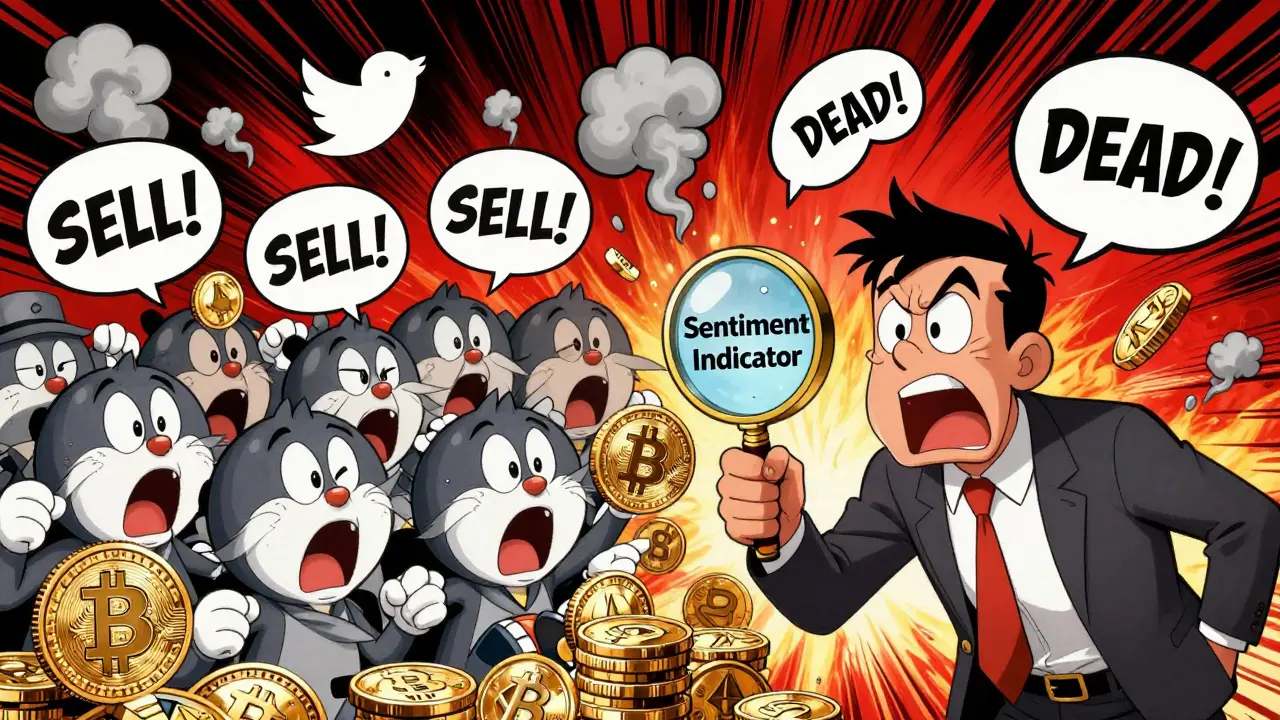
When trading or investing in blockchain assets, knowing what the crowd feels is just as important as knowing the price. A coin can drop 20% not because of a hack or bad news, but because everyone suddenly starts panicking on Twitter. Or it can surge because a few influential voices on Discord start hyping it up-even if nothing technical has changed. That’s where sentiment indicators come in. They don’t predict the future, but they tell you what the market is feeling right now-and that’s often enough to make smarter moves.
What Are Sentiment Indicators in Blockchain?
Sentiment indicators measure the emotional tone behind online conversations about cryptocurrencies and blockchain projects. They scan social media, forums, news sites, and even Telegram groups to detect whether people are excited, scared, confused, or indifferent. Unlike price charts or volume data, sentiment tells you the why behind the movement.
Early tools just counted mentions of a coin like Bitcoin or Solana. Today’s systems use AI to understand context. For example, the phrase “Bitcoin is dead” could mean panic-or sarcasm. Advanced tools now detect sarcasm, urgency, and even subtle frustration in tweets or Reddit posts. Some can even analyze voice tone from YouTube reviews or Discord voice chats.
According to a 2025 report from MarketsandMarkets, the global sentiment analysis market is projected to hit $11.89 billion by 2029. In crypto alone, over 72% of top trading firms now use sentiment tools to inform their strategies. It’s not just for retail traders anymore.
How Sentiment Tools Work in Crypto
These tools don’t guess-they analyze. Here’s how:
- They collect data from hundreds of sources: Twitter, Reddit, CoinMarketCap forums, crypto news sites, Telegram channels, and even YouTube comments.
- Using natural language processing (NLP), they break down each piece of text into emotional signals-anger, joy, fear, surprise, etc.
- Machine learning models compare the language to past patterns. If a phrase like “This is the next 100x” appeared before a 40% pump, the system learns to flag similar language as bullish.
- The results are turned into scores: -100 (extremely negative) to +100 (extremely positive). Some tools even show heat maps of sentiment across regions or platforms.
For example, when Ethereum’s Layer 2 fees spiked in late 2024, sentiment on Twitter dropped to -68 within hours. Traders who saw that spike and acted fast avoided buying into the panic. Others waited for the sentiment to rebound-around +52-and entered at a better price.
Top Sentiment Tools for Blockchain
Not all tools are built the same. Here are the most reliable ones used by crypto traders and analysts in 2026:
| Tool | Accuracy | Supported Languages | Integration | Price (Monthly) | Best For |
|---|---|---|---|---|---|
| IBM Watson NLU | 89.1% | 50+ | API, Slack, Discord | $0.003 per 1,000 characters | Enterprise analysts |
| Level AI | 91.4% | 12 | Telegram, Twitter, Discord | $1,200 | Emotion detection |
| SentiSum | 84.3% | 25 | Zendesk, Discord, Reddit | $1,000 | Community sentiment |
| Meltwater | 87.6% | 242 | Custom dashboards | $2,500+ | Global sentiment trends |
| CryptoSentiment.io | 82.9% | 15 | TradingView, Telegram | $99 | Retail traders |
Most retail traders use CryptoSentiment.io-it’s affordable, simple, and connects directly to TradingView. Enterprise teams use Level AI or Meltwater for deeper insights. IBM Watson is popular among hedge funds because of its multilingual strength, especially for tracking sentiment in Asian markets where English isn’t the main language.

What Sentiment Can’t Tell You
Sentiment tools are powerful, but they’re not magic. Here’s what they miss:
- On-chain data: If a whale is dumping 500 BTC, sentiment won’t catch it until the sell-off hits Twitter.
- Regulatory news: A sudden SEC announcement isn’t reflected in sentiment until someone posts about it.
- Technical breakdowns: A broken smart contract or a failed upgrade won’t show up in sentiment until users start complaining.
That’s why the best traders combine sentiment with on-chain metrics (like wallet activity or exchange inflows) and technical indicators. Sentiment tells you how people feel. On-chain data tells you what they’re actually doing.
Common Pitfalls
Many traders get burned by sentiment tools because they misunderstand them.
- False positives: A tweet saying “I’m so excited for $SHIB” might be sarcasm. Tools get this wrong 35-40% of the time, especially with meme coins.
- Overreliance: Seeing a +90 sentiment score doesn’t mean you should buy. It might mean everyone’s already in, and a dump is coming.
- Ignoring noise: Bot accounts and paid promoters inflate sentiment. Tools that don’t filter bots give misleading signals.
- Delayed updates: Some tools update sentiment every 15 minutes. In crypto, that’s an eternity. Real-time tools like Level AI update every 30 seconds.
The most successful users treat sentiment as a warning system, not a buy signal. A sentiment spike above +80 often means the market is overbought. A drop below -70 often means fear is peaking-and that’s when contrarian buyers step in.
How to Use Sentiment in Real Time
Here’s a simple strategy used by traders in Wellington, Tokyo, and New York:
- Set alerts for when a coin’s sentiment crosses +80 or -70.
- Check if volume is rising at the same time. If sentiment is high but volume is flat, it’s likely noise.
- Look at the source. Is the sentiment coming from a few influencers, or is it widespread across Reddit, Twitter, and Telegram?
- If sentiment is extremely positive and you see large sell orders on the order book, consider taking profits.
- If sentiment is extremely negative but on-chain activity is steady or rising, it might be a buying opportunity.
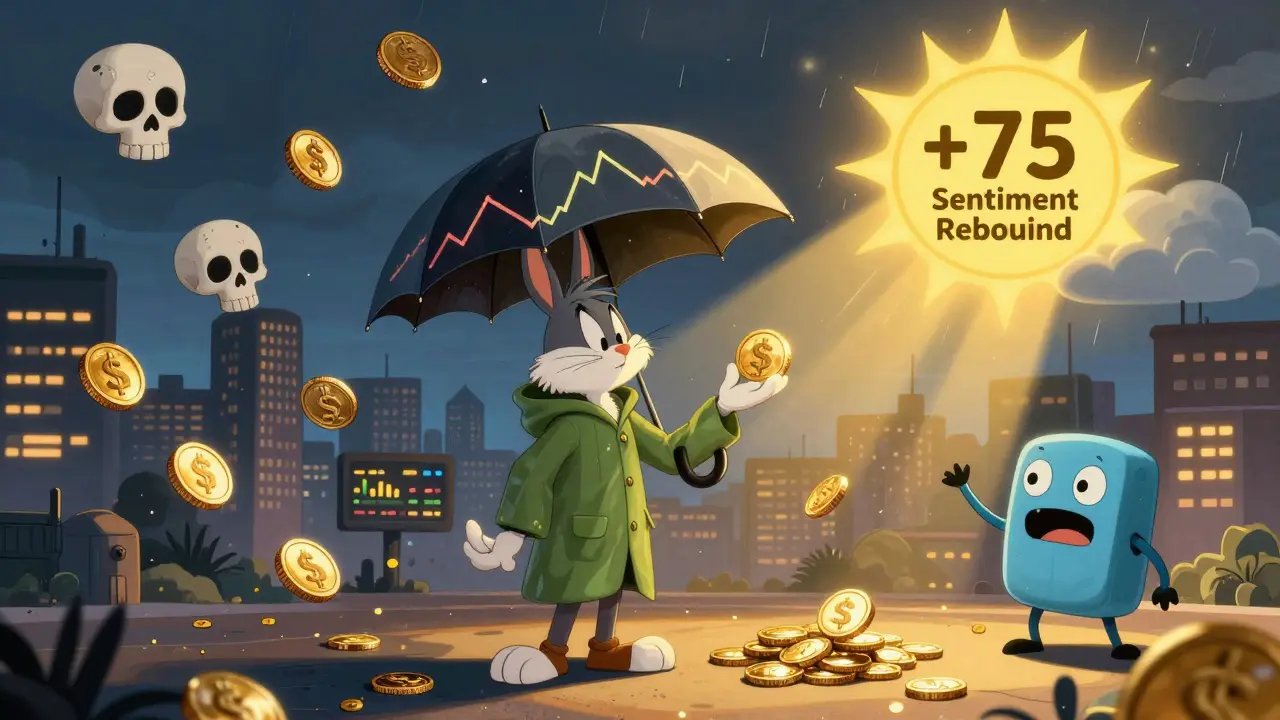
One trader in Wellington used this method during the Solana crash in November 2024. Sentiment hit -82, but daily active wallets stayed flat. He bought at $98 and sold two weeks later at $142 after sentiment rebounded to +75.
The Future of Sentiment in Crypto
The next wave of sentiment tools won’t just read text-they’ll predict behavior.
MIT Technology Review reported in April 2025 that AI models now predict price movements based on sentiment with 82.4% accuracy in early trials. Tools like Balto are already coaching traders in real time: “This tweet cluster shows rising fear. Consider reducing exposure.”
Regulation is catching up too. By Q3 2025, EU-based crypto platforms must comply with GDPR rules for sentiment analysis-meaning they can’t track private messages without consent. That’s pushing developers to build more ethical, transparent tools.
Open-source models like Stanford NLP’s sentiment analyzer are getting better, but most traders still avoid them. Why? Maintaining them takes a full-time data scientist. For most, paying $100 a month for a ready-to-use tool is smarter.
Final Thoughts
Sentiment indicators won’t make you rich overnight. But they give you an edge. In a market driven by fear and greed, knowing what the crowd is thinking-before they act-is priceless.
Start simple. Pick one tool. Watch how sentiment shifts around major announcements. Compare it to price action. Over time, you’ll start seeing patterns. You’ll learn when to trust it-and when to ignore it.
Don’t chase signals. Chase understanding.
Are sentiment indicators reliable for crypto trading?
Yes, but only when used with other data. Sentiment shows how people feel, not what they’re doing. Combine it with on-chain metrics, volume, and technical indicators for better decisions. Tools with 85%+ accuracy and real-time updates, like Level AI or CryptoSentiment.io, work best.
Can sentiment analysis predict a crypto pump or dump?
Not exactly. But it can signal when a move is likely. A sudden spike in positive sentiment often precedes a pump, especially if volume increases. A sharp drop in sentiment, especially with low volume, can signal a bottom. The key is timing-sentiment is a leading indicator, not a guarantee.
What’s the best free sentiment tool for crypto?
There’s no truly reliable free tool. Some Chrome extensions track Twitter mentions, but they lack NLP and often include bots. For accurate sentiment, even basic tools like CryptoSentiment.io cost $99/month. Free tools are useful for learning, but not for serious trading.
How do sentiment tools handle sarcasm in crypto tweets?
Top tools like Zonka Feedback and Level AI use contextual AI trained on thousands of sarcastic crypto posts. They look at word patterns, emojis, and tone. For example, “Oh great, another $SHIB pump 🙄” is flagged as negative. Accuracy is around 88% on the best platforms, but it’s still imperfect-always cross-check with other data.
Do I need to use sentiment tools if I’m a long-term HODLer?
Not strictly, but it helps. Even long-term investors benefit from knowing when the market is overheated or in panic. It can help you avoid selling in fear or buying at the top. Sentiment is a compass, not a map-it gives you context, not direction.
Is sentiment analysis legal in crypto markets?
Yes, as long as you’re analyzing publicly available data. But by Q3 2025, GDPR rules in the EU will require explicit consent if you’re tracking private messages or personal data. Most platforms already comply. Always check the tool’s privacy policy before connecting your accounts.
Don Grissett
January 12, 2026 AT 20:40Veronica Mead
January 13, 2026 AT 00:26Mollie Williams
January 13, 2026 AT 15:51Surendra Chopde
January 13, 2026 AT 18:59Tiffani Frey
January 14, 2026 AT 13:35Tre Smith
January 16, 2026 AT 06:56Ritu Singh
January 17, 2026 AT 19:06kris serafin
January 17, 2026 AT 23:26Rahul Sharma
January 19, 2026 AT 21:40Gideon Kavali
January 21, 2026 AT 11:53Allen Dometita
January 22, 2026 AT 23:42Brittany Slick
January 24, 2026 AT 01:58greg greg
January 25, 2026 AT 21:59