
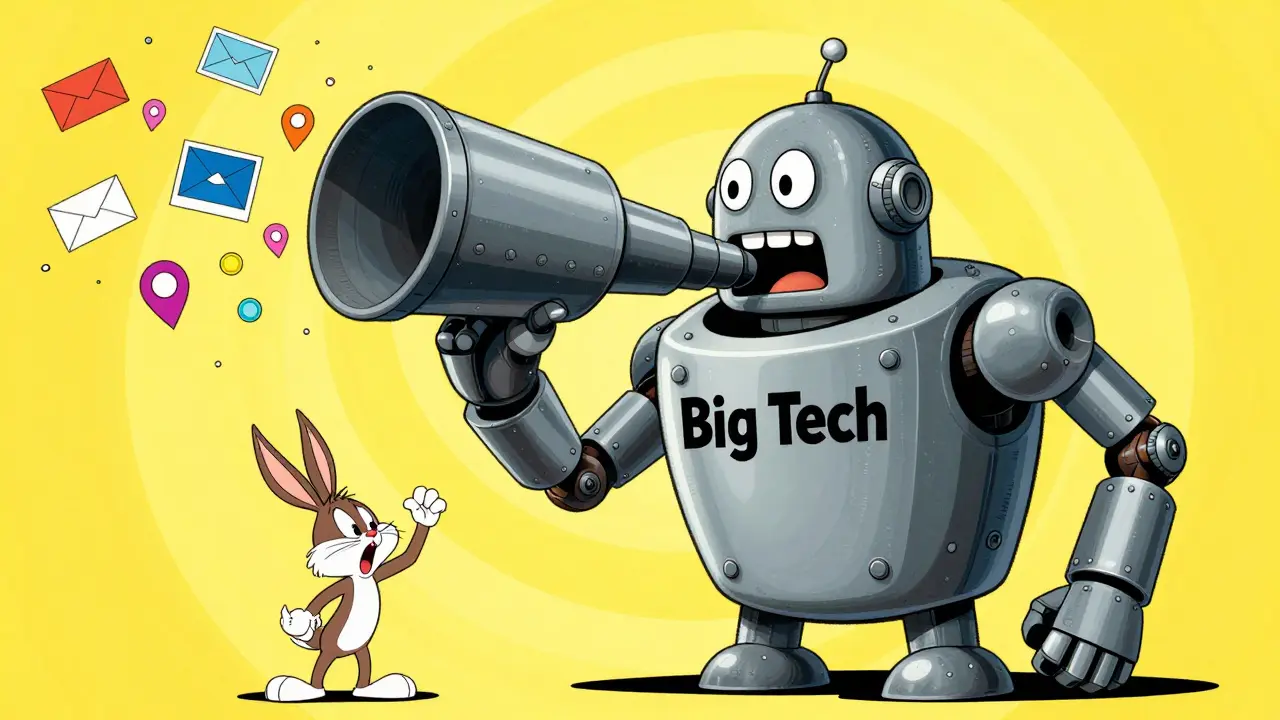
Ever feel like you're just a collection of data points for big tech companies? Every time you "Sign in with Google" or use a government portal, you're handing over your personal life to a central server. The problem is that these central honeypots are magnets for hackers. When one database leaks, millions of people lose their privacy instantly. But what if you owned your identity like you own your physical wallet, instead of renting it from a corporation? Decentralized Identity is a framework that allows individuals to control their own digital identifiers and personal data without relying on a central authority. It moves the power from the company to the person, ensuring that you only share what is absolutely necessary to get a job done.
The Problem with the Old Way of Doing Things
In the traditional model, your identity is fragmented. Your bank has one version of you, your employer has another, and your social media profiles have a third. These entities act as the gatekeepers. If you want to prove you're over 21 to enter a venue or buy a product, you usually hand over a driver's license. The problem? That license also tells the person your full name, your home address, and your exact date of birth. That's way too much information for a simple age check.
This centralized approach creates a massive security risk. Because the data is aggregated in one place, it represents a single point of failure. If a government database or a corporate server is breached, your identity can be stolen and sold on the dark web before you even know there was a leak. We need a system where the data doesn't live in a giant vault, but stays with the owner.
How Decentralized Identity Actually Works
To understand how this fixes privacy, you have to look at the three main players in the ecosystem: the issuer, the holder, and the verifier. Imagine you're graduating from college. The university (the issuer) gives you a digital diploma. Instead of the university keeping that diploma on their server and letting employers call them to verify it, they give it to you. You store it in a Digital Wallet, which is a secure software application on your device that stores cryptographically signed credentials. Now, you are the holder. When you apply for a job, you show the employer (the verifier) a proof of that diploma directly from your wallet.
The magic happens during the verification. The employer doesn't need to call the university or log into a university portal. They simply check the cryptographic signature on the credential using a public ledger. This means the issuer is completely removed from the transaction once the credential is given to you. They don't even know who you're showing your diploma to, which stops them from tracking your behavior.
| Feature | Centralized Identity (Web2) | Decentralized Identity (Web3) |
|---|---|---|
| Data Storage | Centralized Servers | User's Local Device (Wallet) |
| Control | Managed by Provider | Self-Sovereign Control |
| Privacy | Full Profile Disclosure | Selective Disclosure |
| Security Risk | Single Point of Failure | Distributed Risk |
| Verification | API call to Provider | Cryptographic Proof check |
The Secret Sauce: DIDs and Verifiable Credentials
You might be wondering how you can have an identity without a username or an email address. This is where Decentralized Identifiers (also known as DIDs) come in. A DID is a unique alphanumeric string that doesn't contain any personal info. It's essentially a pointer. Think of it as a permanent digital address that you own. Unlike an email address, which can be deleted by Google or Yahoo, a DID is created using a private key that only you possess. This ensures that no one can take your identity away from you.
Then we have Verifiable Credentials, which are digitally signed claims about a person or entity that can be proven without a central authority. These are the actual "cards" in your digital wallet-like your passport, your degree, or your professional license. Because they are signed with cryptography, they are tamper-proof. If someone tried to change the date of birth on a digital credential, the signature would break, and the verifier would know immediately that it's a fake.
Self-Sovereign Identity and the Power of Zero-Knowledge Proofs
The gold standard for privacy in this space is Self-Sovereign Identity (or SSI). This is the philosophy that you should have total ownership over your digital existence. In an SSI model, you don't just control who sees your data; you control how that data is represented. This leads us to one of the coolest tools in cryptography: Zero-Knowledge Proofs (ZKPs). A ZKP allows you to prove that a statement is true without revealing the information itself.
Let's use a real-world example. Imagine you're trying to rent a car. The rental agency needs to know you have a valid license and that you're over 25. In the old world, you give them your license, and they see your exact birthdate, your address, and your organ donor status. With ZKPs, your wallet sends a cryptographic "Yes" to the question "Is this person over 25?" and a "Yes" to "Is this license valid?" The rental agency gets the confirmation they need, but they never actually see your birthday or your home address. You've proven the attribute without revealing the data.
The Role of Blockchain: Not Just for Money
Many people confuse decentralized identity with cryptocurrency, but Blockchain serves a very different purpose here. The blockchain isn't used to store your personal data-that would be a disaster because blockchains are immutable (meaning data can't be deleted). Instead, the blockchain acts as a public directory for the DIDs and the public keys of the issuers.
When a verifier wants to check your credential, they go to the blockchain to find the issuer's public key. They use that key to verify the digital signature on the credential you presented. The blockchain provides the trust layer. It proves that the credential was signed by a legitimate authority (like a university or government) without the verifier ever needing to talk to that authority directly. This removes the need for a "phone home" verification process, which is where most privacy leaks happen in traditional systems.
Common Pitfalls and Current Challenges
While the tech is promising, it isn't perfect yet. The biggest hurdle is interoperability. If your government issues a credential in one format and your bank's wallet uses another, they can't talk to each other. It's like trying to put a square peg in a round hole. We need global standards so that a DID created in New Zealand works perfectly in the UK or Japan.
There is also the "key management" problem. In the centralized world, if you forget your password, you click "Forgot Password" and an admin resets it. In a truly decentralized system, you are the only one with the private key. If you lose that key and don't have a backup, you lose your identity. We're seeing a shift toward "social recovery" methods, where a few trusted friends can help you recover your account, but it's still a steep learning curve for the average person.
Is my personal data actually stored on the blockchain?
No. Storing personal data on a blockchain would be a privacy nightmare because it's permanent. Instead, your actual data stays in your private digital wallet. Only the Decentralized Identifier (DID) and the public keys used for verification are stored on the ledger.
How is this different from just having a PDF of my ID on my phone?
A PDF is just a picture; it can be easily photoshopped. Verifiable Credentials use cryptographic signatures. A verifier can prove the document was signed by a trusted issuer and hasn't been altered since, without needing to trust the person holding the file.
What happens if my digital wallet is stolen?
If someone steals your device and gets your private keys, they could impersonate you. However, most modern wallets use biometric locks (face/fingerprint) and encryption. Furthermore, some systems allow issuers to revoke a credential or use recovery networks to regain access to your identity.
Can governments still track me if I use decentralized identity?
It's much harder. Since the issuer doesn't need to be contacted for every verification, they don't know who you are interacting with. However, if you use a single DID for everything, a very determined analyst might be able to correlate your activities. Using different DIDs for different purposes (pairwise DIDs) solves this problem.
Will this replace passports and driver's licenses?
Eventually, yes. Many countries are already testing "mDL" (mobile Driver's Licenses). The goal is to move the legal validity of the physical card into a cryptographically secure digital format that gives the user more privacy and control.
Next Steps: How to Start Your Privacy Journey
If you're tired of being the product for data brokers, start by looking into the tools you already use. Check if your identity provider offers any export options or granular privacy settings. While a fully decentralized web (Web3) is still being built, you can start using password managers that support encrypted vaults and exploring early-stage digital identity wallets that follow W3C standards.
For those in the tech space, look into the W3C DID specifications. Understanding the difference between a public key and a private key is the first step toward understanding how to protect your digital self. The transition from "centralized trust" to "cryptographic trust" is the biggest shift in privacy since the invention of the internet; it's time we all take a seat at the table.
Artavius Edmond
April 13, 2026 AT 08:10This is such a cool way to look at the internet! I love the idea of actually owning our data instead of just leasing it from some giant corp. Definitely feels like a step in the right direction for everyone. ✌️
Tracie and Matthew Hartley
April 15, 2026 AT 02:12idk why everyone is so hyped about this... sounds like just another way to lose your stuff. like if i lose my keys im just locked out forever?? sounds like a nightmare lol
Jason Davis
April 15, 2026 AT 06:46Actually, the social recovery part is pretty robust if you set it up right. You basiclly assign a few 'guardians' who can help you get back in without actually having access to your private data. It's a bit like a joint bank account but for your digital key. Most peopel don't realize that these protocols are designed to handle human error, not just assume we're robots who never lose things. Also, the W3C standards are making it way easier for different wallets to talk to each other, so we aren't stuck in one ecosystem forever. It's all about the transition from trust-based systems to math-based systems. Just gotta get the onboarding right so the average person doesn't feel overwhelmed by the jargon. Definitely worth diving deeper into the spec if you're curious about how the cryptography actually handles the handshakes.
ssjuul z
April 17, 2026 AT 03:07Spot on! The transition to cryptographic trust is the only way forward. Let's get after it! 🚀
jennelle williams
April 18, 2026 AT 23:48peace of mind is everything
Jonathan Chamma
April 19, 2026 AT 14:14It is truly a beautiful shift in how we perceive our digital footprints. Instead of being a product, we become the curators of our own existence. It is a bit like gardening your own identity, pruning what you share and keeping the roots secure. I think this will open so many doors for people who have been marginalized by traditional systems of verification. It is a gentle way to bring power back to the individual without creating more chaos. We are finally moving toward a web that treats us like humans rather than just rows in a database. It is just a matter of time before this becomes the norm for everyone, regardless of their tech skill level.
Samson Selleck
April 20, 2026 AT 08:05The naive optimism here is staggering. You fail to account for the systemic inertia of state-sponsored actors who derive power from the very centralization you despise. The utility of ZKPs is academically interesting, but the implementation within the current legacy infrastructure will inevitably lead to a fragmented set of proprietary "standards" that merely shift the honeypot from a corporate server to a vendor-locked wallet provider. It is simply a reconfiguration of the same power dynamics disguised as liberation through cryptography. One must analyze the socio-political appetite for true sovereignty before claiming a technological fix will magically resolve systemic distrust. The friction of key management isn't a "hurdle," it's a fundamental incompatibility between human cognitive limitations and the rigid requirements of asymmetric encryption.
Terrance Hausmann
April 21, 2026 AT 02:29I totally hear where the skeptics are coming from, but we should keep an open mind because the potential for privacy is just too good to ignore. I've spent some time mentoring a few folks on this and while it's a steep climb, the view from the top is worth it. We just need to be patient and help each other through the learning curve together.
Lane Montgomery
April 22, 2026 AT 23:40Who's using this now?
Carroll Foster
April 23, 2026 AT 20:21Oh great, another "revolutionary" Web3 solution that requires me to hold a 64-character string of gibberish in my brain or lose my entire life's history. I'm sure the UX will be absolutely seamless, just like every other "disruptive" tech from the last decade. I can't wait for the first mass-scale phishing attack that drains every "self-sovereign" wallet in existence because someone clicked a link for a free NFT. Truly a paradise of efficiency!
Chidinma Sandra okafor
April 24, 2026 AT 08:52Imagine thinking the government will actually let you hide your data from them just because you have a fancy digital wallet. That is some top tier delusion right there. They'll just make a law saying you have to provide a backdoor or you're a criminal. Good luck with your little privacy bubble.
Stanly Hayes
April 25, 2026 AT 05:21Listen, if we can't implement this in the US immediately, we're just letting other countries beat us to the punch on the next era of the internet. We need to stop whining about the 'learning curve' and just get the infrastructure built properly. This is about national competitiveness and security, not just some niche privacy hobby!
logan bates
April 26, 2026 AT 04:27Whatever. As long as it keeps foreign influence out of our systems, I don't care how it works.
Rebecca Violette
April 26, 2026 AT 05:21i just feel like this is all so overhwelming and its kinda scary that we even have to worry about this stuff... like why is everything so complicated now?? i just want to be safe without needing a degree in math
Akshay Gorad
April 27, 2026 AT 06:46The concept of selective disclosure is quite valuable for professional use cases. It allows for a level of discretion that was previously impossible in digital formats.
Lauren Abrams
April 27, 2026 AT 19:46The ZKP part is the most interesting here. It's wild to think you can prove something without actually showing the data.
Will Dixon
April 29, 2026 AT 00:39hope more peopel start usin this soon. its just better for everyone in the long run