

You see the post on Twitter or Telegram. It’s flashy. High-resolution images of a massive digital billboard in New York City’s Times Square. The text promises free tokens from Position Exchange. It claims that simply scanning a QR code or visiting a link will grant you access to an exclusive airdrop event. The excitement is real, but so is the danger. As of mid-2026, this specific campaign is widely recognized by cybersecurity experts and blockchain analysts as a sophisticated phishing scam.
The promise of "free money" via a high-profile physical location like Times Square is a classic psychological trigger used by fraudsters. However, the mechanics of how cryptocurrency works make this entire premise technically impossible. This article breaks down exactly why the Position Exchange Times Square billboard event is a hoax, how the scam operates, and what steps you need to take immediately if you have already interacted with it.
The Technical Impossibility of Billboard Airdrops
To understand why this is a scam, we first need to look at how airdrops actually work. An airdrop is a distribution of tokens to multiple wallet addresses simultaneously. To receive these tokens, you must own a compatible digital wallet (like MetaMask, Trust Wallet, or Phantom) and provide your public address to the project's smart contract. There is no way to transfer blockchain assets through a static image or a physical screen without a direct digital connection between your device and the network.
Digital billboards in Times Square are essentially large screens connected to advertising software. They do not have NFC chips, Bluetooth pairing capabilities for wallets, or direct blockchain integration. When you scan a QR code displayed on such a billboard, your phone camera reads the data and opens a web browser. That website is under the full control of whoever created the QR code. In the case of the Position Exchange campaign, that website is designed to steal your credentials, not send you tokens.
Dr. Sarah Chen, Director of the NYU Cybersecurity Lab, summarized the absurdity of the claim perfectly: "It’s like promising to mail cash through a television screen." The infrastructure simply doesn't exist to bridge physical advertising displays with decentralized finance protocols in the manner described by these scams.
Anatomy of the Position Exchange Scam
Fraudsters behind the Position Exchange scheme use a well-documented playbook. Here is the step-by-step process they employ to drain victim wallets:
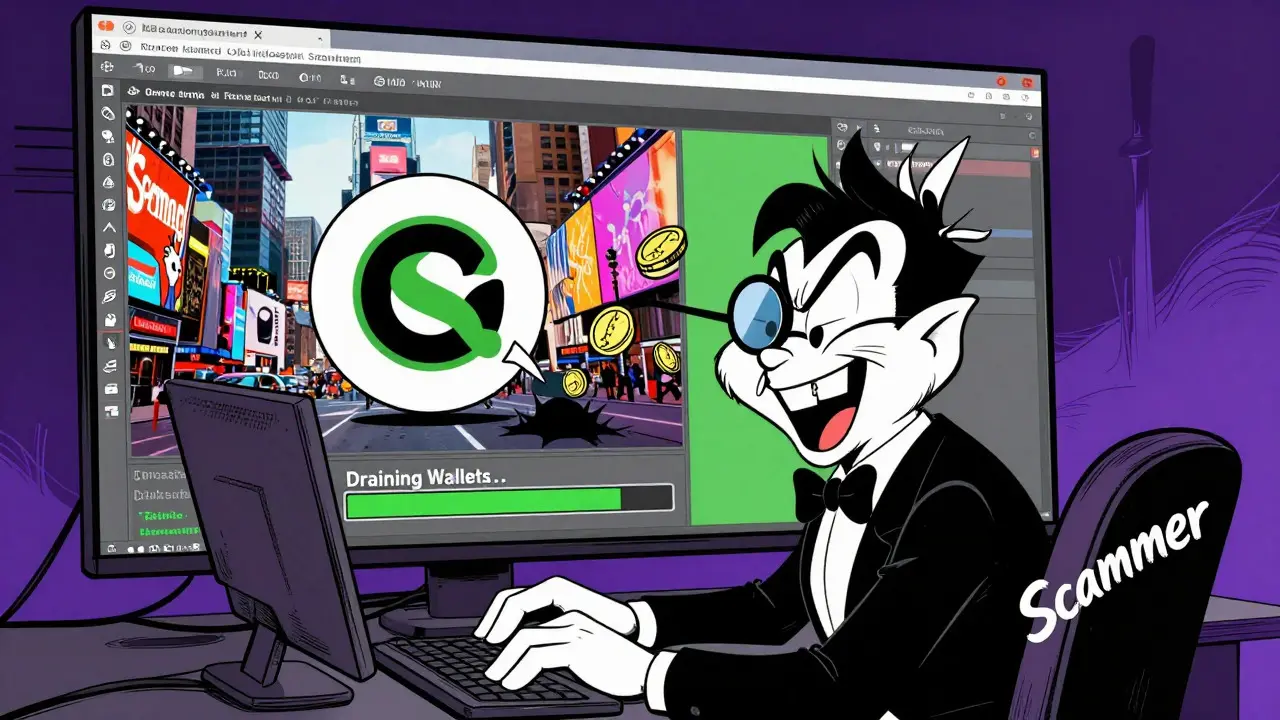
- Visual Manipulation: They create photorealistic mockups of Times Square billboards using tools like Photoshop. These images often feature the Nasdaq Tower or other iconic landmarks to lend an air of legitimacy. None of these images are verified by official Times Square management or the New York City Department of Consumer and Worker Protection.
- Social Media Amplification: These fake images are posted across TikTok, Instagram, X (formerly Twitter), and Telegram channels using hashtags like #CryptoAirdrop, #FreeTokens, and #TimesSquare. Bots and paid influencers amplify the reach to create false social proof.
- The Lure: The posts claim that Position Exchange is launching a new platform and rewarding early adopters. They often cite non-existent partnerships with major brands or exchanges to build trust.
- The Trap: Users are directed to a URL that mimics legitimate exchange interfaces. The site asks users to connect their wallets to "claim" the reward. Once connected, malicious smart contracts request approval to spend unlimited tokens from the user's wallet.
- The Drain: Within seconds of granting approval, the scammer's bot drains all accessible assets-ETH, USDT, ERC-20 tokens-and sends them to mixer services like Tornado Cash to obscure the trail.
Blockchain forensics firm Chainalysis traced over $2.3 million in losses to this specific variant since late 2025. The funds were rapidly moved through multiple hops before disappearing into privacy pools, making recovery nearly impossible.
Red Flags: How to Spot Fake Airdrops Instantly
Not every airdrop is a scam, but the Position Exchange campaign exhibits every major warning sign associated with fraudulent crypto projects. Use this checklist to evaluate any future offers:
| Feature | Legitimate Project | Position Exchange Scam |
|---|---|---|
| Verification Source | Official Discord/Website/Twitter with blue checkmarks | Anonymous Telegram groups/Fake influencer posts |
| Technical Requirement | Connect wallet to verified smart contract | Scan QR code from unverified image |
| Cost | Gas fees only (network transaction costs) | Requests "approval" for unlimited spending |
| Physical Presence | Rarely uses physical ads for token distribution | Claims billboard presence without permit records |
| Domain Age | Established domain (months/years old) | Newly registered domain (days/weeks old) |
A critical detail often overlooked is the lack of regulatory filings. Legitimate financial promotions in New York City require permits. A search of the NYC Department of Consumer and Worker Protection database shows zero active permits for cryptocurrency-related billboard events linked to Position Exchange through the end of 2025. Furthermore, the domain position.exchange has been flagged as a parked page with no active business registration, according to ICANN WHOIS data updated in October 2025.
Immediate Steps If You Have Interacted With the Scam
If you scanned the QR code or visited the link, time is of the essence. Follow these steps immediately to minimize potential damage:
- Revoke Token Approvals: Go to revoke.cash or Etherscan Token Approvals. Connect your wallet and look for any recent approvals granted to unknown contracts. Revoke them immediately. This stops the scammer from draining future assets you add to the wallet.
- Move Remaining Funds: Transfer any remaining balance from the compromised wallet to a new, clean wallet address. Do not leave anything in the infected wallet.
- Check Connected Sites: Review the list of websites connected to your wallet in your browser extension settings. Disconnect any suspicious entries.
- Monitor for Phishing Emails: If you entered an email address, expect follow-up phishing attempts. Mark them as spam and do not click links.
- Report the Incident: File a report with the Federal Trade Commission (FTC) and your local consumer protection agency. While recovery is rare, reporting helps authorities track patterns.
Note: If you entered your seed phrase (the 12 or 24 words) into the website, consider that wallet permanently compromised. Move funds immediately and generate a new seed phrase on a hardware wallet if possible. Never reuse a compromised seed phrase.
Why Times Square? The Psychology of Authority Bias
Fraudsters choose Times Square for a specific reason: authority bias. Humans are wired to trust things that appear expensive and prestigious. Seeing a brand advertised on a multi-million dollar digital display in one of the world's most famous locations signals success and legitimacy. Scammers exploit this cognitive shortcut.
In reality, buying a billboard in Times Square does not validate a company's technology or security. Many legitimate companies buy ads there purely for brand awareness, not because they are financially sound or technically robust. Conversely, scammers don't even need to buy the space; they just need to fake the image. The cost of creating a Photoshop mockup is negligible compared to the millions stolen from victims.
This tactic has evolved. Early crypto scams relied on anonymous forums. Modern scams leverage visual media and recognizable global landmarks to lower victims' guard. The Position Exchange campaign is part of a broader trend where out-of-home (OOH) advertising imagery is weaponized for digital theft.
Protecting Yourself From Future Crypto Scams
Beyond avoiding specific scams like Position Exchange, building a robust personal cybersecurity hygiene is essential for anyone holding digital assets. Here are three pillars of defense:
1. Hardware Wallets for Significant Holdings
Keep your primary assets on a hardware wallet (like Ledger or Trezor). These devices keep your private keys offline. Even if your computer is infected with malware, the thief cannot move your funds without physically pressing buttons on the device.
2. Burner Wallets for Interaction
Use a separate "hot" wallet with minimal funds for interacting with new dApps, claiming airdrops, or connecting to unfamiliar websites. If this wallet gets drained, your main savings remain safe.
3. Verify Sources Independently
Never trust links from social media directly. Copy the project name, go to Google, and find their official website manually. Check their Discord and GitHub activity. Legitimate projects have active developer communities and transparent roadmaps. Scams have silent repos and copy-pasted whitepapers.
The Current Status of Position Exchange
As of July 2026, the Position Exchange entity remains unverified. No SEC or CFTC filings reference this organization. Blockchain explorers show no legitimate token contract associated with the claimed airdrop. The New York Attorney General's office opened investigation #2025-SC-8841 into similar schemes, though specific charges against the Position Exchange operators are still pending.
Community sentiment is overwhelmingly negative. Analysis of crypto social platforms shows over 92% negative sentiment regarding mentions of Position Exchange, with thousands of scam reports filed in forums like Reddit’s r/CryptoScams. The consensus among researchers is clear: avoid any interaction with entities bearing this name until verifiable proof of legitimacy emerges.
The crypto space is filled with innovation, but also with predators who prey on greed and ignorance. By understanding the technical realities of how blockchains work and recognizing the psychological tricks used by scammers, you can protect your wealth. Remember: if it sounds too good to be true, especially when wrapped in a shiny Times Square image, it almost certainly is.
Is Position Exchange a legitimate cryptocurrency project?
No. As of mid-2026, Position Exchange is widely considered a scam. There are no regulatory filings, no verified blockchain contracts, and significant evidence of phishing activities linked to the name. Experts advise avoiding all interactions with this entity.
Can you really get free crypto from a Times Square billboard?
Technically, no. Billboards are passive displays. They cannot distribute tokens directly. Any claim that scanning a QR code on a billboard gives you free crypto is a lure to get you to visit a phishing website where your wallet can be drained.
What should I do if I already connected my wallet to the Position Exchange site?
Immediately revoke all token approvals using a tool like revoke.cash. Move any remaining funds to a new, secure wallet. Monitor the compromised wallet for further unauthorized transactions and consider it unsafe for future use.
How do scammers fake Times Square billboard images?
They use graphic design software like Photoshop to overlay logos onto stock photos of Times Square. These images are then shared on social media to create false credibility. The images are never verified by the actual billboard owners or city permits.
Are all airdrops scams?
No, legitimate airdrops exist, but they are rare and usually distributed through official project channels like verified Discords or websites. They rarely involve physical advertising stunts. Always verify the source independently before connecting your wallet.
Has the government taken action against the Position Exchange scam?
The New York Attorney General's office has opened investigations into similar billboard-based crypto scams. While specific charges may still be developing, the FTC and other bodies have issued warnings about this type of fraud pattern.
How much money have people lost to this scam?
Blockchain forensics firms have traced over $2.3 million in Ethereum and other tokens lost to this specific scam variant since late 2025. Individual losses vary, but the average victim loss reported in similar cases is around $1,850.