

Everyone loves a free bag of tokens. The phrase "airdrop" triggers a dopamine hit for crypto traders, promising easy money just for holding a specific coin or interacting with a protocol. But when you search for PolkaBridge (PBR) and expect a windfall, the reality is often much quieter than the hype suggests. If you are eyeing this project on CoinMarketCap, you need to separate confirmed distribution events from general protocol milestones.
As of late August 2026, there is no active, widely publicized airdrop campaign directly distributing new PBR tokens to existing holders in the manner of major Layer-1 launches. Instead, the value proposition of PolkaBridge lies in its utility as a cross-chain bridge connecting Polkadot with other networks like Ethereum. This article breaks down what the data actually says about PBR, why the airdrop narrative might be misleading, and where the real opportunities lie within the ecosystem.
The Current State of PolkaBridge on CoinMarketCap
To understand if an airdrop is likely, you first have to look at the market health. PolkaBridge isn't a ghost town, but it’s not exactly the main stage either. On CoinMarketCap, PBR typically hovers around rank #3213. That’s a niche position. The live market cap sits near $55,000 USD, which is tiny compared to giants like Ethereum or even mid-tier altcoins. With a circulating supply of roughly 74.92 million out of a max 100 million, most of the supply is already out in the wild.
Why does this matter for airdrops? Usually, projects do big airdrops to bootstrap liquidity or reward early testers before a mainnet launch. PolkaBridge has been operational for a while, primarily as an ERC-20 token on Ethereum with plans to migrate fully to Polkadot. Since the initial distribution phase is long past, any future "airdrops" would likely be smaller, targeted rewards for specific actions-like staking or providing liquidity-rather than a broad snapshot-based giveaway.
| Metric | Value | Context |
|---|---|---|
| Price | $0.00074 - $0.00081 | Highly volatile; low absolute price point. |
| Market Cap | ~$55,000 USD | Micro-cap asset; high risk/reward potential. |
| Circulating Supply | 74.92 Million PBR | 75% of total supply is active. |
| Trading Volume | $199 - $200 (24h) | Very low liquidity; spreads can be wide. |
Airdrop vs. Protocol Milestones: Clearing the Confusion
Here is where things get tricky. When you check event calendars on sites like CoinCarp or Bitget, you might see entries labeled "Airdrop." For example, some calendars list events like "Lombard's logo Airdrop" alongside PolkaBridge updates. It is crucial to read the fine print. Often, these are third-party projects using the same calendar platform, or they refer to community governance votes rather than free token distributions.
For PolkaBridge specifically, recent "events" have focused on technical readiness:
- Mainnet Launch Readiness: A community vote showing 89% approval for moving forward with full mainnet integration.
- P2P Testnet Launch: Scheduled testing phases that may offer small incentives, but not massive airdrops.
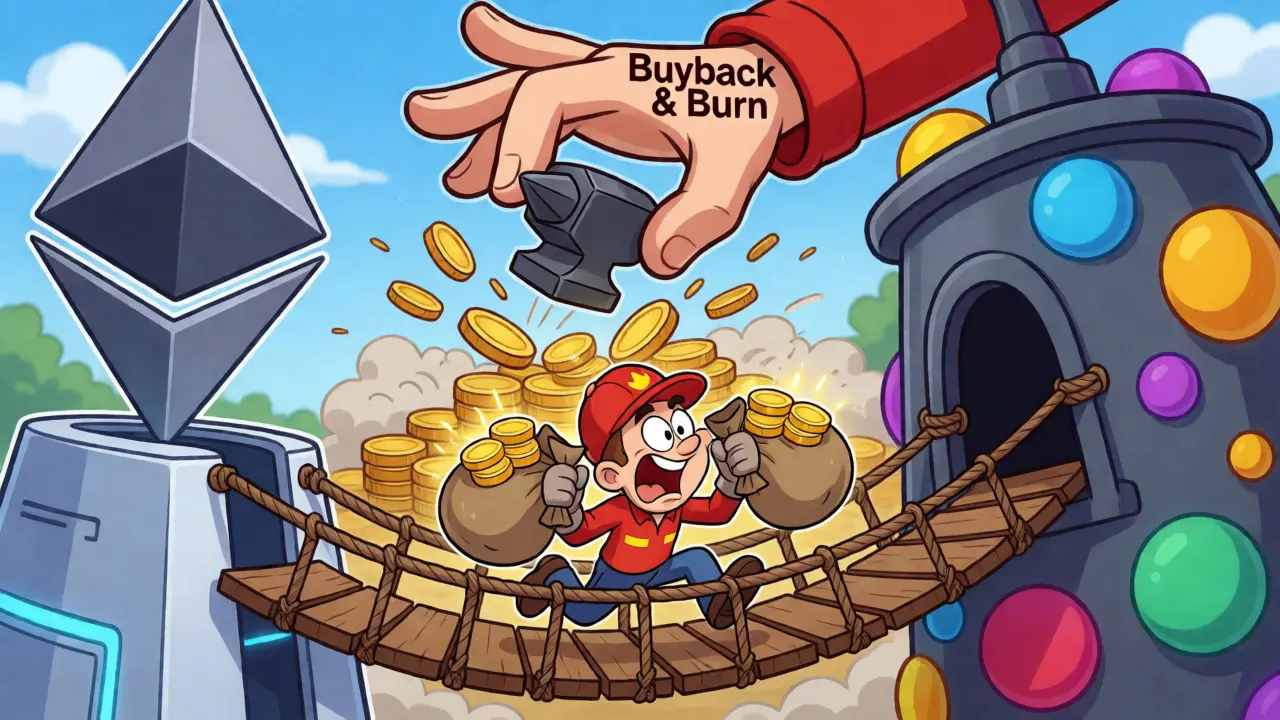
- Buyback & Burn: A mechanism where the team buys back 1 million PBR tokens from the open market and burns them. This reduces supply and can theoretically push the price up, acting more like a dividend or value accrual tool than an airdrop.
If you were expecting a wallet-to-wallet transfer of free PBR simply for holding your coins last month, you will likely be disappointed. The project’s strategy leans heavily on deflationary mechanics and utility rewards rather than marketing giveaways.
How You Can Actually Earn PBR Rewards
Just because there isn't a traditional airdrop doesn't mean you can't earn tokens. PolkaBridge integrates several DeFi features that reward active users. Think of these as "working airdrops"-you have to do something to get paid.
1. Deflationary Farming
This is the core engine of their economy. Unlike many farms that print new tokens (causing inflation), PolkaBridge uses transaction fees to fund rewards. Every time someone swaps or bridges assets, a portion of that fee goes into a pool for stakers, and another portion is burned. If you stake your PBR here, you earn a share of those fees. It’s sustainable, but yields depend entirely on network usage.
2. Launchpad IDOs
The PolkaBridge Launchpad allows PBR holders to participate in Initial Decentralized Offerings (IDOs). By holding or staking PBR, you get whitelist spots or priority access to new projects launching on the bridge. Sometimes, these new projects distribute their own native tokens to PBR holders. This is effectively a secondary airdrop stream-you hold PBR, and you receive tokens from *other* projects.
3. Cross-Chain Swaps and Lending
Using the bridge itself for lending or prediction markets can sometimes trigger incentive campaigns. While not guaranteed, protocols often run temporary promotions to boost volume during migration periods, such as the ongoing shift from Ethereum to Polkadot infrastructure.
Price Predictions: Is PBR Worth Holding?
If you are holding PBR hoping for an airdrop to save a stagnant portfolio, you should look at the broader price outlook. Analysts are split, which is typical for micro-cap projects. Platforms like TradingBeast suggest a bullish trend, forecasting prices above $0.0016 by late 2026 if adoption grows. Others, like WalletInvestor, remain bearish, predicting declines due to low trading volume.
The key variable here is the migration to Polkadot. If PolkaBridge successfully positions itself as the primary gateway for DOT users wanting to access Ethereum DeFi, demand could spike. Conversely, if competitors like Moonbeam or Astar Network capture that traffic, PBR could stagnate. The current weekly performance shows a 14% increase, outperforming the broader market, which hints that some accumulation is happening despite the low daily volume.

Risks and Red Flags
Before you buy in expecting a payout, consider the risks:
- Liquidity Crunch: With daily volumes under $200 on some exchanges, selling a large amount of PBR could crash the price temporarily. Slippage is real.
- Migration Complexity: Moving from Ethereum to Polkadot is technically difficult. Bugs or delays could stall development and erode trust.
- Competition: The cross-chain space is crowded. PolkaBridge needs a unique hook to survive against well-funded rivals.
Next Steps for PBR Holders
Don’t sit idle waiting for a surprise deposit. Here is how to maximize your position:
- Check Your Wallet: Ensure your PBR is in a compatible wallet that supports the PolkaBridge interface. If you are on Ethereum, keep an eye on gas costs for claiming rewards.
- Stake Actively: Move idle tokens into the farming pools to earn transaction fee shares.
- Monitor Official Channels: Follow PolkaBridge’s official Discord and Twitter. Any legitimate airdrop or incentive program will be announced there first, not via random DMs.
- Diversify: Given the micro-cap status, don’t overexpose yourself. Treat PBR as a speculative bet on Polkadot’s interoperability growth.
Is there a confirmed PolkaBridge airdrop for 2026?
No major, widespread airdrop for existing PBR holders has been officially announced by the core team for 2026. Most recent events listed on aggregators refer to governance votes, testnet launches, or third-party projects sharing the calendar. Users should focus on earning rewards through staking and farming rather than expecting passive distributions.
Why is PolkaBridge trading volume so low?
PolkaBridge is a micro-cap asset with a market cap around $55,000. Low volume is common for niche DeFi protocols that haven't achieved mass retail adoption yet. Additionally, the transition from Ethereum to Polkadot may cause some holders to wait for clearer technical signals before trading actively.
What is the benefit of the Buyback and Burn event?
The buyback and burn mechanism removes tokens from circulation permanently. By reducing the total supply while demand remains constant or grows, this deflationary pressure can theoretically increase the price per token. It benefits long-term holders by increasing scarcity, unlike inflationary rewards that dilute value.
Can I still farm PBR on Ethereum?
Yes, currently PBR operates as an ERC-20 token on Ethereum, and farming mechanisms are active there. However, you should monitor official announcements regarding the timeline for full migration to Polkadot, as smart contract addresses and interfaces may change during the transition.
Where can I verify PBR contract details?
You can verify the contract address (0x298d492e8c1d909d3f63bc4a36c66c64acb3d695) on Etherscan for Ethereum transactions or via Polkadot block explorers once the migration is complete. Always double-check addresses on CoinMarketCap or CoinGecko to avoid scams.