
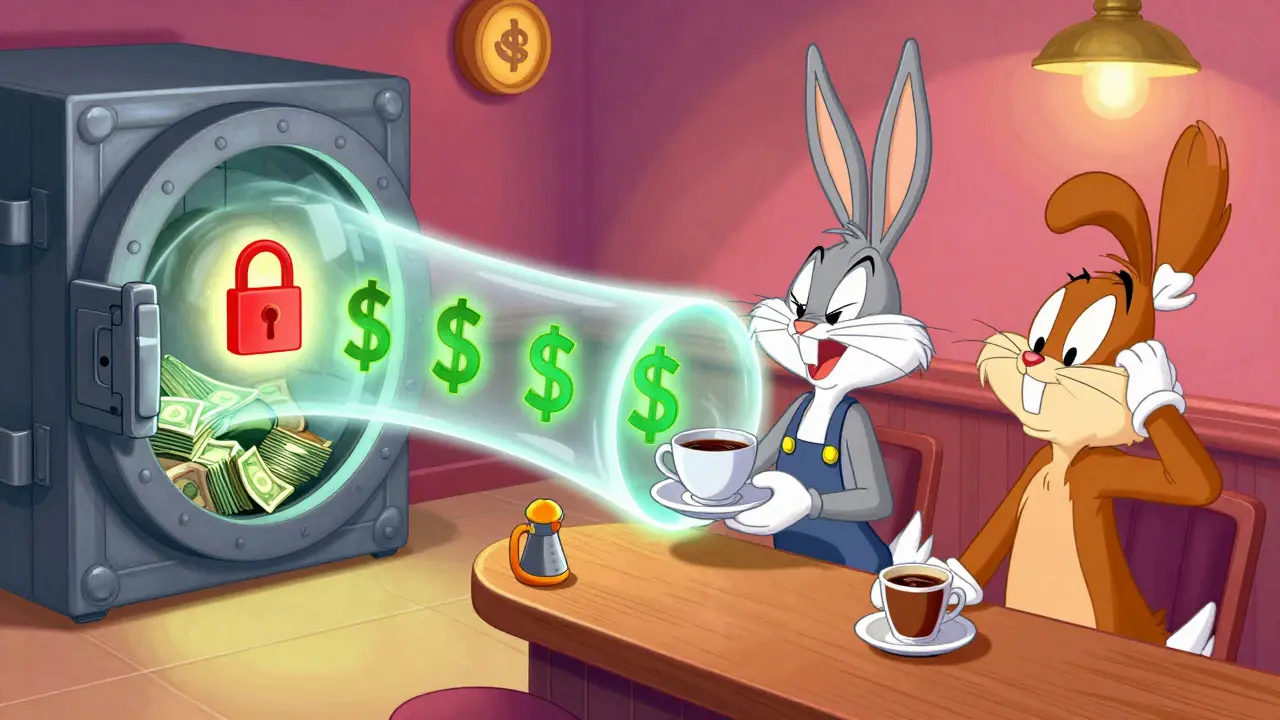
As of early 2026, Bitcoin transactions on-chain cost over $5 per transaction during peak times. That’s why developers built layer 2 solutions off-chain systems that handle transactions without burdening the main blockchain like payment channels and state channels. These tools let users transact quickly and cheaply while keeping blockchain security intact. But what’s the difference between them? Let’s break it down with real-world examples.
What Are Payment Channels?
Payment channels are off-chain transaction pathways for sending money between two parties without recording every transfer on the blockchain. Think of them like a private line between you and a friend where you can exchange cash multiple times before settling the final balance. They’re built on multi-signature contracts that lock funds temporarily on the blockchain. The most famous example is Bitcoin’s Lightning Network a payment channel network processing over 60,000 daily transactions across 100,000 active channels.
Here’s how they work in practice. Say you run a coffee shop and want to accept Bitcoin tips. Instead of paying $5 in fees for each small payment, you open a payment channel with a customer. You both lock $10 into a shared wallet on-chain. Then you can send dozens of coffee payments off-chain-each update signed by both parties but never broadcasted. When done, you close the channel and settle the final $10 balance on-chain. No extra fees, no waiting for confirmations.
How Payment Channels Work
Payment channels follow three clear steps. First, you create an on-chain transaction to lock funds in a multi-signature wallet. For example, you and a business might each deposit 0.5 BTC into a 2-of-2 wallet. Second, you exchange signed transaction updates off-chain. Each update shows the current balance, like a digital IOU. These updates can happen thousands of times per second without touching the blockchain. Third, when finished, you close the channel by submitting the final signed transaction to the blockchain.
The magic happens through Hashed Timelock Contracts (HTLCs) cryptographic locks ensuring payments are secure and reversible if not claimed on time. If you send $1 to a friend, they must prove they received it before a deadline. If they don’t, the funds return to you. This stops fraud without needing a third party. Payment channels can be unidirectional (like a one-way toll road) or bidirectional (like a two-lane highway), making them perfect for recurring payments or small purchases.
What Are State Channels?
State channels extend payment channels to handle any blockchain data-not just money. They’re like payment channels on steroids. Instead of locking only Bitcoin or ETH, they can secure game states, NFT ownership, or even smart contract interactions. For instance, a multiplayer blockchain game could use a state channel to track player moves without flooding the main chain with every action.
State channels lock a portion of blockchain state into a multi-signature contract. This might include Ether, ERC20 tokens, CryptoKitties, or ENS domain names. Participants exchange signed updates off-chain, just like payment channels, but the updates can change complex data structures. A game’s state channel might record 50,000 player moves per second, while the main blockchain only sees the final score. This is why platforms like Ethereum-based gaming apps use state channels for smooth, real-time interactions.

How State Channels Work
State channels work similarly to payment channels but with extra flexibility. They start with an on-chain transaction that locks the initial state-like a game’s starting position or a smart contract’s current data. Participants then sign and exchange state updates off-chain. Each new update replaces the old one, creating a chain of signed changes. If someone tries to cheat by submitting an outdated state, the honest party has a dispute window to prove fraud using recent updates.
For example, imagine a chess game on Ethereum. Players open a state channel where the board state is locked. Each move is signed off-chain, updating the board instantly. After 10 moves, they close the channel and submit the final position to the blockchain. No gas fees for each move, no waiting for blocks. The dispute resolution system ensures fairness by slashing deposits from cheaters. This makes state channels ideal for anything requiring frequent state changes beyond simple payments.
Key Differences Between Payment and State Channels
Here’s how they compare in practice:
| Feature | Payment Channels | State Channels |
|---|---|---|
| Primary Purpose | Monetary transactions only | Any blockchain state updates (money, data, assets) |
| Typical Use Cases | Micropayments, recurring billing, retail transactions | Gaming, NFT trading, complex smart contracts |
| Technical Requirements | Multi-signature wallets, HTLCs | Advanced smart contracts, state management protocols |
| Transaction Speed | 1,000+ transactions per second | 10,000+ transactions per second |
| Liquidity Requirements | Funds locked for specific currency | Assets locked for various tokens or NFTs |
| Complexity | Simpler setup | More complex development |
Payment channels are like specialized tools for money transfers. They’re great for everyday use cases like paying for coffee or streaming content. State channels, however, are like Swiss Army knives-they handle money and complex data. For example, a decentralized marketplace might use payment channels for payments but state channels to track item listings and bids in real time.
Real-World Applications Today
Payment channels shine in scenarios where speed and low fees matter most. The Lightning Network processes over 60,000 Bitcoin transactions daily for micropayments. Content creators use it to earn tips instantly, while businesses like online retailers settle payments without waiting for blockchain confirmations. Even utility companies use payment channels for monthly billing-imagine your electricity bill being paid in seconds with near-zero fees.
State channels power more advanced applications. Games like Ethereum-based digital collectibles use state channels for seamless player interactions. In one example, a blockchain game tracks 50,000 moves per second during tournaments, with only the final score recorded on-chain. Similarly, NFT marketplaces use state channels to update ownership without paying gas fees for every trade. Enterprise solutions also leverage them for private supply chain tracking or internal payments between companies.

Challenges and Limitations
Both solutions have trade-offs. Payment channels require locking funds upfront, which ties up capital. If a channel closes unexpectedly, you might lose access to those funds until settlement. Routing payments through multiple channels also adds complexity-like needing a series of connections to reach someone you don’t directly know.
State channels face steeper hurdles. Developing the smart contracts is harder, and managing different types of state (like NFTs and tokens together) requires expertise. Both need participants to stay online during transactions. If one party goes offline, the other must monitor the channel to prevent fraud. During dispute periods, you might need to act quickly to submit proof of cheating. This isn’t ideal for casual users who don’t want to babysit their channels.
Still, these challenges are being solved. New tools automate channel management, and protocols like multi-hop routing allow payments to travel through networks without direct connections. As adoption grows, user experience improves-making these solutions more accessible.
Which Should You Use?
Choose payment channels if you’re focused on simple money transfers. They’re perfect for micropayments, recurring bills, or retail transactions where speed and low fees are critical. If you’re a developer building a payment system for a small business, payment channels offer the easiest path to scalability.
Go with state channels for anything beyond money. If you’re creating a game, NFT platform, or complex smart contract application, state channels handle the broader data needs. For example, a decentralized social media app might use state channels to update user profiles and content feeds without on-chain costs. They’re also ideal for enterprise use cases where privacy and high-speed state updates matter.
Remember: payment channels are a subset of state channels. All payment channels work like state channels but are limited to monetary transactions. So if your project might expand beyond payments later, starting with state channels could save rework.
Frequently Asked Questions
Can payment channels handle non-monetary transactions?
No. Payment channels are strictly for monetary transfers. They’re designed to move currency between parties without recording each transaction on-chain. For anything beyond money-like game states, NFTs, or smart contract data-you need state channels. These extend the concept to handle any blockchain state, not just payments.
What happens if one party goes offline in a channel?
Both payment and state channels have dispute mechanisms. If one party disappears, the other can submit the latest signed state to the blockchain before a deadline. For payment channels, this settles the final balance. For state channels, it updates the game state or asset ownership. If fraud is detected, the cheating party loses their deposited funds. This ensures security even when someone isn’t online.
Are payment channels safer than on-chain transactions?
Yes, but with caveats. Payment channels inherit blockchain security because funds are locked on-chain initially and settled there at the end. Off-chain transactions are signed cryptographically, preventing fraud. However, if you don’t monitor the channel during dispute windows, someone could try to cheat. Overall, they’re safer for small transactions since on-chain fees make micropayments impractical.
Do state channels work on Bitcoin?
Not natively. Bitcoin’s scripting language limits state channels to payment-focused use cases. Most state channel implementations run on Ethereum or compatible chains like Polygon, which support complex smart contracts. Bitcoin’s Lightning Network is a payment channel system, but it doesn’t handle general state updates like games or NFTs. For broader applications, you’d need a chain with more flexible smart contract capabilities.
How do payment channels reduce transaction costs?
They eliminate per-transaction fees and confirmation times. Instead of paying $5 for each Bitcoin transaction on-chain, payment channels only require two on-chain transactions: one to open and one to close the channel. All in-between transactions happen off-chain with near-zero costs. For example, a business processing 1,000 daily payments would save over $5,000 in fees using payment channels versus on-chain transfers.
orville matibag
February 6, 2026 AT 03:51As someone who's traveled a bit, it's interesting how different regions approach blockchain scaling. In some places, payment channels are all about micropayments for daily transactions, while others use state channels for complex applications. This post really highlights the diversity in use cases. Love the real-world examples!
Kieren Hagan
February 6, 2026 AT 10:27Let's be clear: payment channels are limited to monetary transactions, while state channels handle broader state updates. The article mentions this, but it's important to emphasize that for anything beyond payments, state channels are necessary. For example, NFT marketplaces need state channels to handle ownership transfers without on-chain fees.
Michelle Anderson
February 6, 2026 AT 20:50State channels? More like state chaos. Payment channels are the only practical solution for real-world use. Everything else is just over-engineered nonsense.
Robin Ødis
February 7, 2026 AT 20:13Okay, so I've been thinking about this a lot, and I think I need to clarify some misconceptions. Payment channels and state channels are often confused, but they're actually quite different. Payment channels are for money transfers only, like the Lightning Network. But state channels can handle any kind of state-like game data or NFT ownership. However, I've seen some people say that state channels are just payment channels on steroids, but that's not quite right. State channels are more complex because they deal with multiple types of data, not just money. For example, a blockchain game would use state channels to track player moves without clogging the main chain. But wait, is that accurate? Maybe I'm mixing things up. Let me check... Oh right, yes, payment channels are for payments, state channels for anything else. But I'm not sure if that's entirely correct. Maybe I should read more. Anyway, the point is, state channels are more versatile but harder to set up. Payment channels are simpler but limited. So if you're building a payment system, use payment channels. For anything else, state channels. But I'm not entirely sure. Maybe I'm wrong. I think I need to do more research.
Brittany Novak
February 9, 2026 AT 17:12These 'layer 2 solutions' are just a front for centralized control. The real purpose is to give tech giants more power over the blockchain. Remember, the whole point of blockchain is decentralization, but this is just another way to centralize everything. I've done my research, and this is a clear sign of what's coming.
Joshua Herder
February 10, 2026 AT 09:23Oh wow, this post really got me thinking. I mean, payment channels vs state channels-people are always arguing about this, but nobody seems to get the big picture. It's like, sure, payment channels are great for coffee shop transactions, but what about when you need to do something more complex? Like, imagine a game where every move is recorded on-chain-total nightmare! But state channels fix that, right? Wait, no, maybe not. I'm not sure. I think there's a lot more to it than this post is saying. Like, what about security? What about the risks of offline participants? I mean, if one person goes offline, does the whole channel collapse? I don't know. I think we need to talk more about this. It's not as simple as the article makes it seem. There's so much more nuance here.
laura mundy
February 10, 2026 AT 17:23Payment channels are fine for small stuff but state channels are the real deal. Anything else is just pretending to be useful. Seriously, this post is too basic. Need more depth.
Mendy H
February 12, 2026 AT 04:21It's amusing how this article oversimplifies such a complex topic. Payment channels are trivial compared to the nuanced capabilities of state channels. For anyone serious about blockchain development, this explanation is woefully inadequate.
Molly Andrejko
February 13, 2026 AT 08:24Wow, this is such a helpful breakdown! I really appreciate how the post explains the differences between payment channels and state channels with real-world examples. It's so important to understand that payment channels are perfect for micropayments, while state channels handle more complex scenarios like gaming and NFTs! This is exactly the kind of clear explanation we need in the blockchain space! Thank you for sharing this information!
Paul Gariepy
February 14, 2026 AT 16:33Hey everyone! This is awesome! Payment channels like Lightning Network are great for small transactions, but state channels are the future for complex apps! For example, a decentralized game can use state channels to update player states without on-chain fees! This is so cool! Keep up the good work! Let's all learn more about this!
Jim Laurie
February 15, 2026 AT 10:09This is a fantastic overview! Payment channels are like the Lightning Network for Bitcoin, handling tons of small transactions off-chain. State channels take it further for any blockchain state-like gaming or NFTs. This is exactly the clarity I needed to understand scaling solutions!
Alex Garnett
February 16, 2026 AT 21:46State channels are clearly superior for any serious application. Payment channels are outdated. This article barely scratches the surface. Americans need to stop focusing on trivialities and embrace the true potential of blockchain technology.
Ryan Chandler
February 17, 2026 AT 08:28Oh my goodness! This post is absolutely brilliant! I've never seen such a clear explanation of payment channels versus state channels! The coffee shop example is perfect-it makes it so relatable. And the gaming example? Pure genius! This is exactly the kind of content that bridges the gap between tech and everyday life. I'm so inspired!
Olivette Petersen
February 18, 2026 AT 21:28This is such a great breakdown! I love how it explains payment channels for micropayments and state channels for complex applications. It's fascinating to see how these solutions address different scaling needs. Real-world examples like blockchain gaming and NFT marketplaces really show the power of state channels!
David Bain
February 20, 2026 AT 05:14The fundamental distinction between payment channels and state channels lies in their scope of application. While payment channels are optimized for monetary transactions, state channels extend this paradigm to encompass arbitrary state transitions, thereby enabling more complex decentralized applications. This ontological shift is critical for understanding the broader implications of layer two scaling solutions.
Freddie Palmer
February 22, 2026 AT 04:14This is such a helpful explanation! I really appreciate the clear examples of payment channels for coffee shops and state channels for gaming. It's fascinating how these solutions address different scaling needs. The technical requirements for state channels involve advanced smart contracts and state management protocols, which are more complex than payment channels but offer greater flexibility.
Michael Sullivan
February 22, 2026 AT 04:24State channels are the only way forward. Payment channels are outdated. This article barely scratches the surface. 🚀