
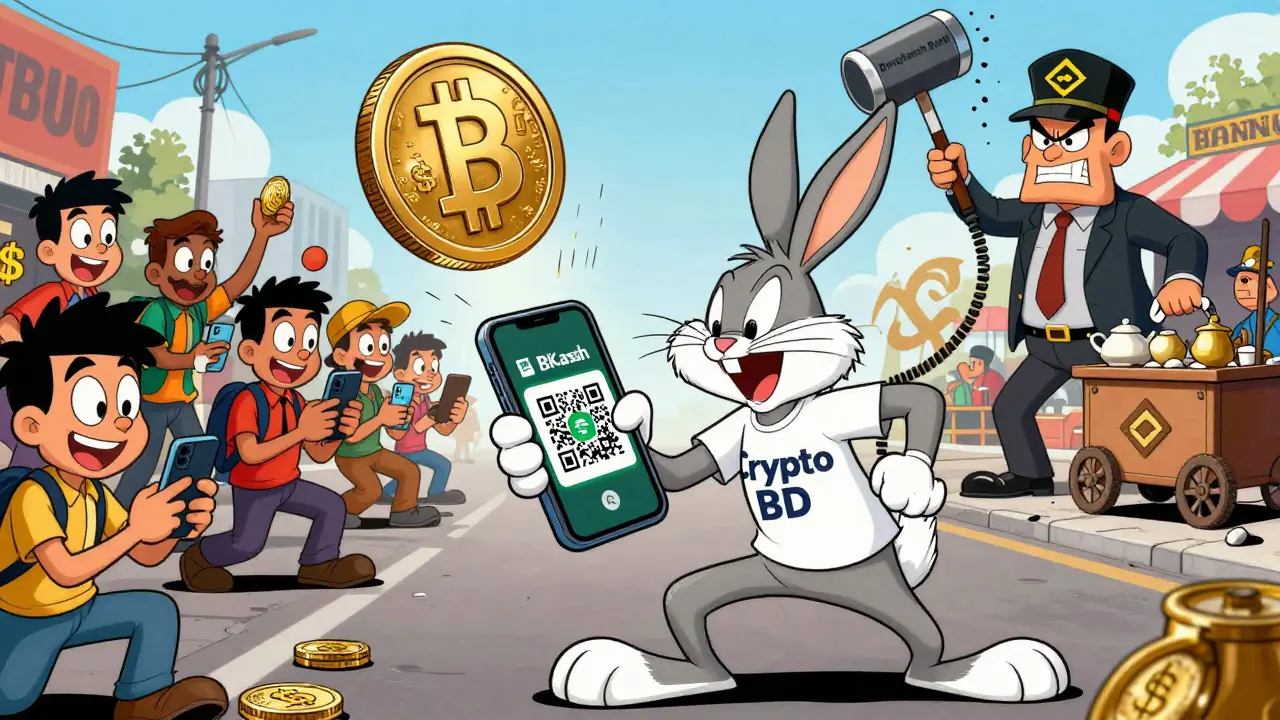
In Bangladesh, buying and selling cryptocurrency isn't just risky-it’s technically illegal. The central bank, Bangladesh Bank, has banned crypto since 2014, calling it a violation of the Foreign Exchange Regulation Act. Yet, over 3.5 million people are trading crypto anyway. How? Through peer-to-peer (P2P) methods that bypass banks, evade surveillance, and use mobile money apps like bKash and Nagad to move value across borders. This isn’t a fringe activity. It’s a $417 million market in Q1 2025, growing fast, and driven by real needs: remittances, financial freedom, and cheaper alternatives to expensive wire transfers.
Why P2P Crypto Is the Only Way Forward in Bangladesh
Traditional banks won’t touch crypto. They’re legally required to block any transaction tied to Bitcoin, USDT, or Ethereum. But millions of Bangladeshis work overseas-especially in the Middle East, Malaysia, and the U.S.-and send money home. Traditional remittance services like Western Union or MoneyGram charge 3% to 8% in fees. With P2P crypto, those same workers pay just 0.5% to 2%. A $5,000 remittance can save over $200. That’s life-changing money for families in Sylhet or Chittagong. The key is that crypto doesn’t move through banks. It moves through apps. A worker in Dubai buys USDT on Binance using crypto, then sends it to a friend or agent in Dhaka. That person cashes it out via bKash. No bank account. No paperwork. Just a QR code scan and a notification saying “Payment received.”How P2P Trading Actually Works: The 3 Main Methods
There are three ways people trade crypto in Bangladesh. Each has trade-offs in speed, safety, and complexity.- Exchange-based P2P (Binance, Bybit, KuCoin) - This is what 73% of traders use. You sign up on Binance, go to the P2P section, and find someone selling USDT for bKash. The platform holds the crypto in escrow until you send the taka. Once they confirm the payment, the crypto is released. It’s fast, secure, and supports 18 local payment methods. Binance alone processes 1.2 million trades per month from Bangladesh.
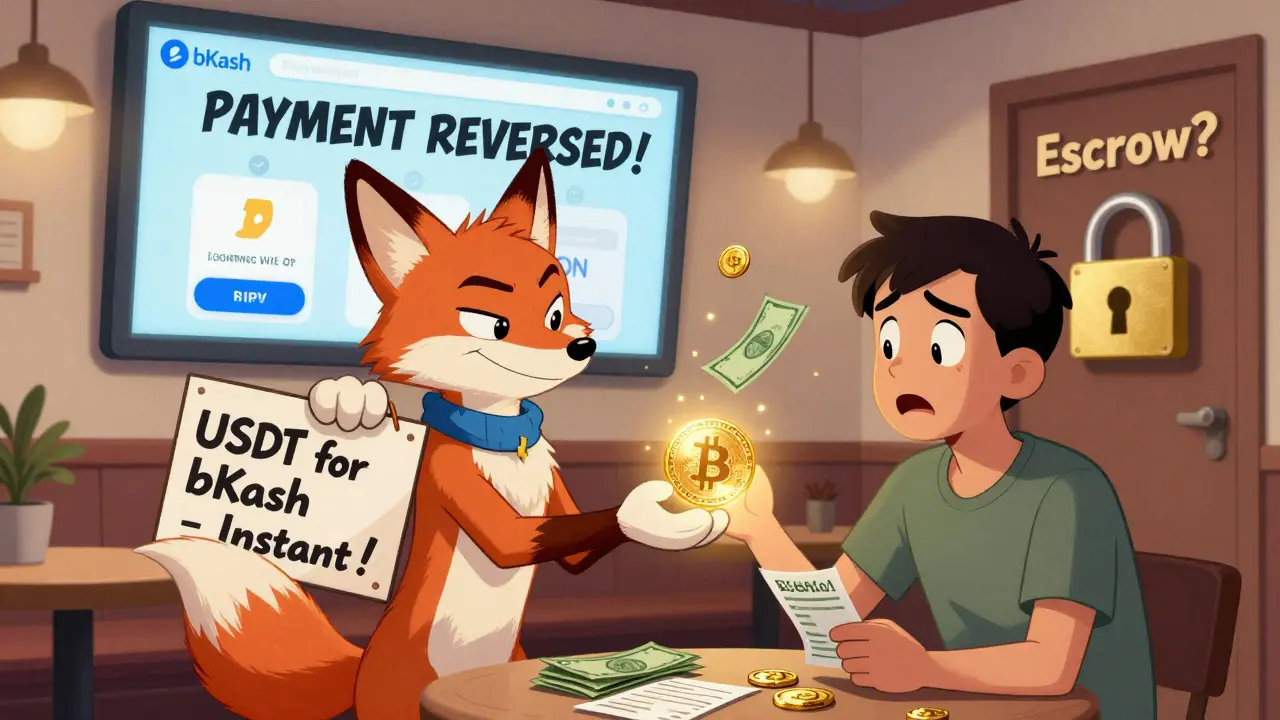
- Informal agent networks - These are local dealers-often mobile financial service agents-who buy and sell crypto in person. You meet them at a café or shop, hand over cash or send bKash, and they send you crypto. Spreads are higher (4%-8%), but you get instant cash. Over 12,000 such agents operate in Dhaka alone. The risk? No escrow. No recourse. If they vanish after you send money, you’re out of luck.
- Decentralized exchanges (DEX) like PancakeSwap - For tech-savvy users, MetaMask on Binance Smart Chain lets you swap crypto directly without intermediaries. No KYC. No identity checks. But you need to pay gas fees in BNB (around $0.15 per trade), understand wallet addresses, and handle your own security. Only 8% of traders use this method. It’s private but fragile: network congestion can delay trades, and mistakes cost money.
What You Need to Get Started
If you’re new to this, here’s the reality: it’s not as simple as downloading an app. You need four things:- An international exchange account - Binance is the default. It’s the only one with Bangla language support, local payment integrations, and enough liquidity to handle your trades. Sign-ups hit 8,200 per day in 2024. You’ll need ID verification for trades over $1,000.
- A mobile money app - bKash (72.5 million users) or Nagad (45 million) are mandatory. Most P2P trades use bKash. You must understand how to send money via QR code or mobile number. Many beginners fail because they use “Cash In” instead of “Send Money.”
- A smartphone - Android 8.0 or higher is recommended. But 42% of users still run older phones (Android 7 or below). The apps run, but they lag. Don’t expect smooth performance on a 2018 model.
- A trusted contact - Don’t go it alone. Join the “Crypto BD Guide” Telegram channel with 47,300 members. They track and blacklist fraudulent agents. Since 2023, they’ve exposed 217 scammers. You’ll save yourself thousands.
The Hidden Risks Nobody Talks About
P2P crypto in Bangladesh isn’t just illegal-it’s dangerous. The government doesn’t arrest traders for owning crypto. They arrest them for “possessing stolen property.” That’s the charge used in 2022 when 17 people in Dhaka were detained. No trial. No explanation. Just seized phones and laptops. Fraud is rampant. In 2023, 214 fraud cases totaled ৳1.2 billion ($11 million). One trader lost ৳250,000 when an agent reversed a bKash payment after receiving Bitcoin. bKash’s fraud system flagged the transaction as “suspicious” and auto-reversed it. The agent disappeared. The trader had no proof of the crypto transfer. No recourse. Even legitimate trades face delays. During Eid, mobile money systems crash. Transaction times jump from 8 minutes to 47 minutes. Traders waiting for funds miss deadlines. Some lose deals. Others panic-sell at a loss. And then there’s the legal fog. Bangladesh Bank says crypto is illegal. But they haven’t shut down Binance. The app still works. Why? Because it’s too big to block. Over 68% of traders use it. Shutting it down would anger millions. So they monitor. They freeze accounts. They threaten. But they don’t stop.Who’s Using This System-and Why It Won’t Disappear
The typical crypto trader in Bangladesh is under 35, lives in Dhaka or Chittagong, and has family overseas. 54% are overseas workers sending remittances. 68% use crypto because it’s cheaper. 21% because they can’t access traditional banking. 15% because they want to invest in Bitcoin. USDT dominates. Why? Because it’s pegged to the U.S. dollar. The Bangladeshi taka loses value every year. Crypto isn’t about speculation-it’s about survival. Holding USDT is like holding cash in a stable currency. The market is growing. P2P volume jumped 38% in 2024. Binance added dedicated BDT liquidity pools. Bybit offers 50x leverage for traders who want to gamble. KuCoin lists 700+ altcoins for those chasing returns. But none of this matters if the government decides to crack down.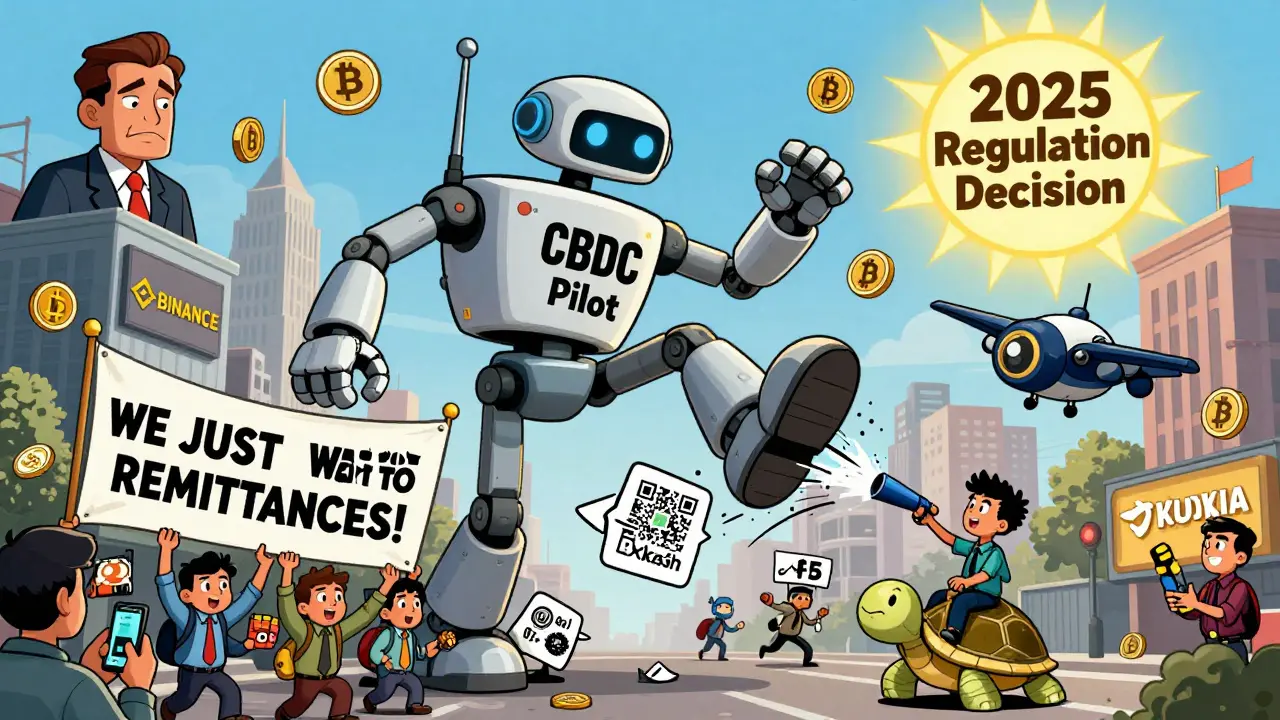
What’s Next? The Regulatory Crossroads
In February 2025, Bangladesh Bank formed a 12-member Crypto Asset Task Force. Their job? To recommend a legal framework by December 2025. Will they ban it completely? Regulate it? Or create a central bank digital currency (CBDC) that replaces crypto entirely? Experts are split. One side says regulation is inevitable-crypto is too embedded in the economy to ignore. The other says enforcement will tighten. Bangladesh Bank has already frozen 1,842 accounts in Q4 2024 for “suspicious mobile transactions.” They’ve raided trading hubs. Seized equipment. Warned banks to monitor all transactions over ৳50,000. The real turning point? The CBDC pilot expected in Q3 2025. If it works, the government may push everyone into a state-controlled digital taka. If it fails, they might be forced to accept P2P crypto as a necessary evil. Until then, traders are in a waiting game. They use Binance. They send bKash. They trust the escrow. They hope.What You Should Do Right Now
If you’re thinking about starting:- Use Binance P2P-not a random agent.
- Start small. First trade: ৳7,500 (about $70). Learn the flow.
- Always use two-factor authentication. 98% of users do. Don’t be the 2% who get hacked.
- Never trust someone who asks you to send money before they release crypto.
- Join the “Crypto BD Guide” Telegram channel. It’s your lifeline.
Is P2P crypto trading legal in Bangladesh?
No, it’s not legal. Bangladesh Bank has banned all cryptocurrency transactions since 2014 under the Foreign Exchange Regulation Act. Trading crypto violates Section 33 of the law, and authorities have arrested traders under charges like “possessing stolen property.” However, enforcement is inconsistent. While banks block crypto-related transactions, international platforms like Binance remain accessible, and millions continue trading using mobile money apps like bKash and Nagad.
How do people send crypto in Bangladesh without a bank account?
They use mobile money apps. bKash and Nagad are the primary tools. Traders on Binance P2P find sellers who accept payments via QR code or mobile number. After buying crypto, the buyer sends taka directly to the seller’s bKash or Nagad account. The platform holds the crypto in escrow until payment is confirmed. This bypasses banks entirely, which is why it works despite the ban.
Which platform is best for P2P crypto trading in Bangladesh?
Binance is the most popular, used by 68% of traders. It supports bKash, Nagad, and bank transfers, has a Bangla interface, and offers escrow protection. Bybit is second for margin trading with 50x leverage. KuCoin offers more altcoins. Smaller platforms like Gate.io have slower support. For beginners, Binance P2P is the safest and most reliable option.
What’s the risk of using informal crypto agents in Bangladesh?
Very high. Informal agents operate without escrow, contracts, or oversight. If you send bKash and they don’t release crypto, you have no recourse. In 2023, over 214 fraud cases were reported, totaling ৳1.2 billion. Many traders lose money because mobile banking systems auto-reverse transactions flagged as suspicious. Always use exchange-based P2P (like Binance) instead of meeting agents in person.
Can Bangladesh Bank shut down Binance P2P?
Technically, yes-but they haven’t. Binance processes over 1.2 million trades monthly from Bangladesh. Shutting it down would disrupt millions of remittance flows and trigger public backlash. Instead, Bangladesh Bank monitors transactions, freezes accounts, and warns banks. They’ve raided trading hubs and seized equipment, but they’ve not blocked the app. The government is waiting to see if its own CBDC pilot succeeds before deciding on crypto regulation.
Why is USDT the most traded crypto in Bangladesh?
USDT (Tether) is pegged 1:1 to the U.S. dollar, making it a stable store of value in a country where the taka loses purchasing power yearly. Unlike Bitcoin, which is volatile, USDT acts like digital cash. It’s used for remittances, savings, and trading because it doesn’t fluctuate. In Q1 2025, 72% of all P2P trades in Bangladesh involved USDT.
Heather James
March 18, 2026 AT 03:54Also, bKash QR codes are magic. 🤯
shreya gupta
March 18, 2026 AT 18:56Shreya Baid
March 20, 2026 AT 15:09And yes, the risks are terrifying. But when your government leaves you no choice, you build your own system. With QR codes. With trust. With sheer will.
Christopher Hoar
March 21, 2026 AT 18:04Yall crying about legality? Try crying when your family eats rice and salt because the 'legal' option costs 8%.
Robert Kunze
March 22, 2026 AT 07:31iam jacob
March 24, 2026 AT 04:40He cried. He didn't even know what blockchain meant. Just wanted to send money to his mom.
They took his laptop. His phone. His dreams.
And now I'm just... sitting here. Wondering.
Jesse Pals
March 24, 2026 AT 11:19People aren't trading crypto because they want to get rich. They're doing it because the system broke. And they didn't wait for permission. They just... built a bridge. With QR codes. With trust. With bKash.
Respect. 100%. You're not breaking the law - you're rewriting it.
Graham Smith
March 24, 2026 AT 21:00And yet, the behavioral economics here are fascinating. A 3.5M-person network of informal arbitrageurs, exploiting regulatory arbitrage with mobile wallets. It’s a Hayekian spontaneous order in a post-colonial context. I’m simultaneously appalled and impressed.
Katrina Smith
March 25, 2026 AT 14:54cool. so the real crime is being poor and smart. got it.
Anastasia Danavath
March 26, 2026 AT 23:31anshika garg
March 27, 2026 AT 23:21This isn't about finance. It's about love. It's about the invisible threads that stitch families together when the state refuses to hold them.
The government fears crypto. But they should fear what happens when people stop trusting them.
Bruce Doucette
March 29, 2026 AT 16:46And you call this freedom? Pathetic. You're not rebels. You're tenants.
Marie Vernon
March 30, 2026 AT 12:02These people? They’re not traders. They’re engineers of survival.
They built a financial system from WhatsApp, bKash, and trust. No bank. No lawyer. No government. Just people.
That’s not illegal. That’s human.
Ross McLeod
April 1, 2026 AT 04:03And yet, the absence of legal recourse, the reliance on Telegram groups to blacklist scammers, the fact that a single bKash reversal can erase a life’s savings - this is not a system. It’s a fragile, beautiful, terrifying improvisation.
It will not last. But while it does, it is the most honest financial ecosystem I’ve ever witnessed.
rajan gupta
April 1, 2026 AT 09:48we're not talking about 'crypto' here. we're talking about people who would rather risk jail than watch their kids go hungry.
the real villain isn't the trader. it's the guy in Dhaka who wrote the law while sipping espresso in a 5-star hotel. 🤡
Billy Karna
April 2, 2026 AT 10:26But here’s what nobody tells you: the real innovation isn’t the app. It’s the culture. The Telegram groups. The vetted agents. The word-of-mouth blacklists. The fact that a 19-year-old in Sylhet knows 7 people who’ve been scammed - and won’t trust anyone who doesn’t have a verified history.
That’s the real crypto: human reputation. Built on a mobile phone. In a country that says you shouldn’t exist.
Cheri Farnsworth
April 4, 2026 AT 05:52Over 68% of the population uses Binance P2P. Shutting it down would trigger a liquidity crisis in remittances, which account for 7% of GDP.
The government is not powerless. It is calculating. And that is far more dangerous than outright prohibition.
Gene Inoue
April 4, 2026 AT 20:25And don't act like you're some oppressed hero. You're using an app owned by a Chinese company that logs your IP, your device ID, your phone number. You think you're free? You're just a data point in a surveillance matrix.
Wake up. This isn't freedom. It's a trap with better UX.
Ricky Fairlamb
April 6, 2026 AT 01:08You think you're fighting the system? You're training it. You're the experiment. And you're too naive to realize it.
Arlene Miles
April 7, 2026 AT 02:45But this? This is different.
People aren’t here for speculation. They’re here because the system failed them. And instead of giving up, they built something better - not with laws or banks, but with trust, QR codes, and WhatsApp groups.
This isn’t crypto. It’s community. And it’s working.
Don’t call it illegal. Call it necessary.
Anastasia Thyroff
April 8, 2026 AT 21:30These people aren't trading crypto.
They're trading hope.
Jerry Panson
April 10, 2026 AT 03:50Furthermore, the reliance on bKash as a settlement layer introduces a critical vulnerability: the centralized control of mobile money infrastructure by a single corporate entity. This is not financial sovereignty. It is dependency repackaged.
Jesse Pals
April 11, 2026 AT 10:32You think Binance owns this? Nah.
They just gave us the tool. The real power? The 47,300 people on that Telegram channel. The 12,000 agents who risk jail to help strangers. The moms who teach their kids how to scan a QR code before they learn to ride a bike.
That’s the real platform. And it’s not for sale.