
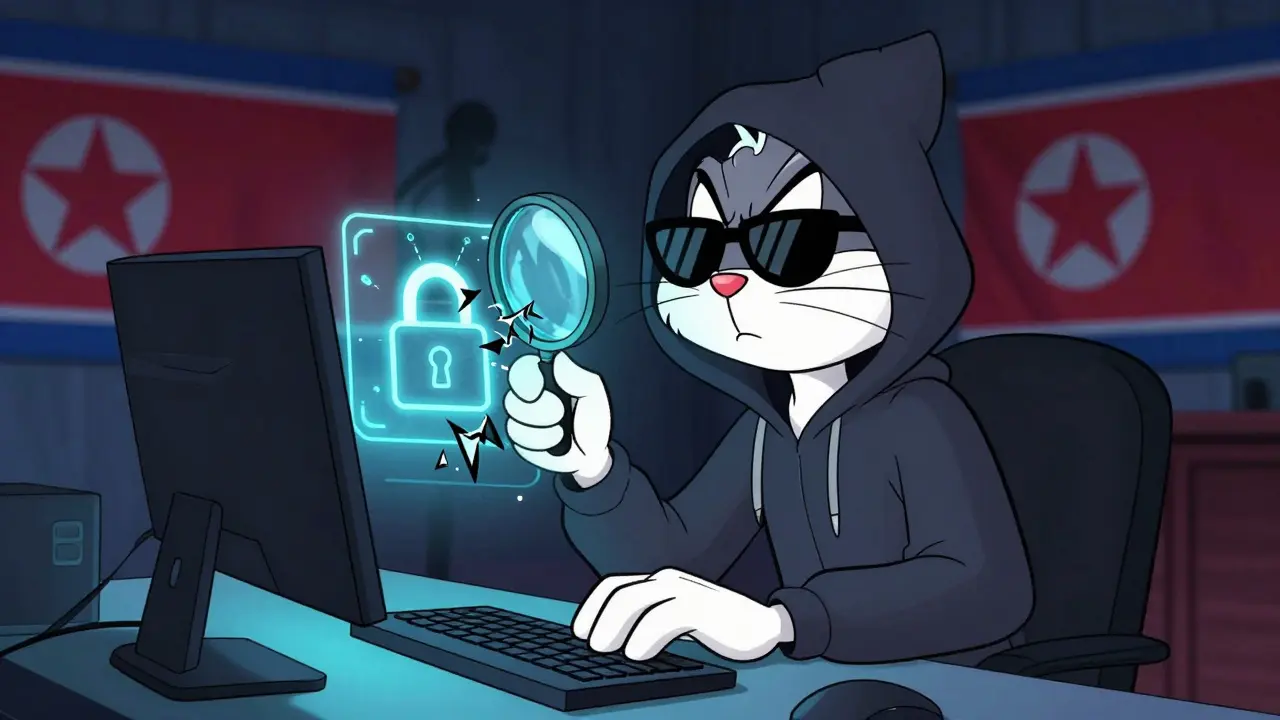
Imagine hiring a brilliant remote developer. They have a perfect GitHub profile, fluent English, and they deliver code faster than anyone else. But behind that screen, they aren't just building your app-they are mapping your company’s security flaws to steal millions in cryptocurrency. This isn’t a scene from a spy thriller; it is the daily reality of North Korean IT worker scams, which have become one of the most sophisticated threats to global cybersecurity.
In 2025 and early 2026, the U.S. Department of the Treasury’s Office of Foreign Assets Control (OFAC) has ramped up its war against these networks. The goal? To cut off the funding for the Democratic People's Republic of Korea (DPRK) weapons programs by targeting the digital pipelines that move stolen crypto. If you run a Web3 company, hire remote staff, or hold significant digital assets, understanding these sanctions is no longer optional-it is survival.
The Scale of the Theft: $2.1 Billion and Counting
The numbers are staggering. According to analysis by TRM Labs, North Korean threat actors stole over $2.1 billion in cryptocurrency during the first half of 2025 alone. That is not a typo. This dramatic spike highlights how deeply embedded these actors have become in the global tech ecosystem.
These aren't lone hackers working from basements. They are state-sponsored operations, directly affiliated with the Workers' Party of Korea. The revenue generated doesn't go into personal pockets; it flows straight into ballistic missile and nuclear weapons programs. When OFAC imposes sanctions, they are trying to stop a geopolitical threat by freezing financial channels.
- Total Stolen (H1 2025): Over $2.1 billion
- Primary Method: Embedded IT workers and phishing schemes
- Key Enablers: Front companies in China, Russia, and Southeast Asia
How the "IT Worker" Scheme Works
The beauty of this scam lies in its patience. These operatives don't break in through a firewall vulnerability immediately. They walk in through the front door as employees. Here is the typical playbook used by groups tracked under names like Famous Chollima, Jasper Sleet, and UNC5267:
- Fake Identities: They create curated personas using stolen identities. You might see them on platforms like GitHub, CodeSandbox, or freelance sites like Freelancer. Their profiles look legitimate, often featuring years of consistent activity.
- The Hire: They target companies with remote-first cultures, especially in the cryptocurrency and Web3 sectors. These industries often prioritize speed and technical skill over rigorous background checks.
- The Reconnaissance: Once hired, they do their job well. This builds trust. Simultaneously, they map internal networks, identify high-value wallets, and locate security weaknesses.
- The Heist: After months or even years of preparation, they execute the theft. This might involve stealing private keys, deploying malware to drain exchange hot wallets, or demanding ransom after encrypting company data.
The key takeaway? A "perfect" candidate who appears out of nowhere, speaks flawless English but lacks verifiable local history, should raise red flags.

Major OFAC Designations in 2025
The U.S. government has been aggressive in naming and shaming these networks. On August 27, 2025, OFAC designated several key figures and entities, marking a significant escalation. Let’s look at who was targeted and why.
| Name / Entity | Role in Network | Connection to DPRK |
|---|---|---|
| Vitaliy Sergeyevich Andreyev | Russian national facilitating transactions | Assisted in moving funds for DPRK IT workers |
| Kim Ung Sun | Financial facilitator | Converted ~$600k crypto to cash USD |
| Shenyang Geumpungri Network Technology Co., Ltd | Front Company | Housed and managed overseas IT workers |
| Korea Sinjin Trading Corporation | Trading Entity | Involved in sanctions evasion and revenue generation |
| Chinyong Information Technology Cooperation Company | IT Provider | Deployed workers globally (sanctioned May 2023) |
Under Secretary of the Treasury John K. Hurley emphasized that these actions protect American businesses from fraud schemes where workers "steal data and demand ransom." The designation of Russian nationals and entities highlights the cross-border nature of these crimes. It’s not just about North Korea; it’s about the global infrastructure that enables them.
The Money Trail: From Stablecoins to Ballistic Missiles
How does a hacker in Pyongyang get paid without triggering alarms? They use stablecoins and complex laundering techniques. In June 2025, the Department of Justice filed a civil forfeiture complaint seeking over $7.7 million in digital assets tied to a specific laundering network.
Here is how the money moves:
- Payment Collection: Employers pay salaries in stablecoins like USDC or ETH to self-hosted wallets controlled by the fake identities (e.g., "Joshua Palmer" or "Alex Hong").
- Fragmentation: The funds are split across multiple wallets to obscure the source. This makes it harder for blockchain analysts to trace the total value.
- Mixing and Swapping: Funds may pass through decentralized exchanges or privacy-focused protocols to break the on-chain link.
- Cash-Out: Finally, the crypto is converted to fiat currency via Over-The-Counter (OTC) brokers, some of whom have also been sanctioned. Cash is then physically moved or wired to senior DPRK operatives like Kim Sang Man.
The FBI has successfully seized high-value NFTs and digital assets in these cases, proving that while the tech is advanced, it leaves a trail. However, the sheer volume of transactions makes complete prevention difficult without proactive screening.
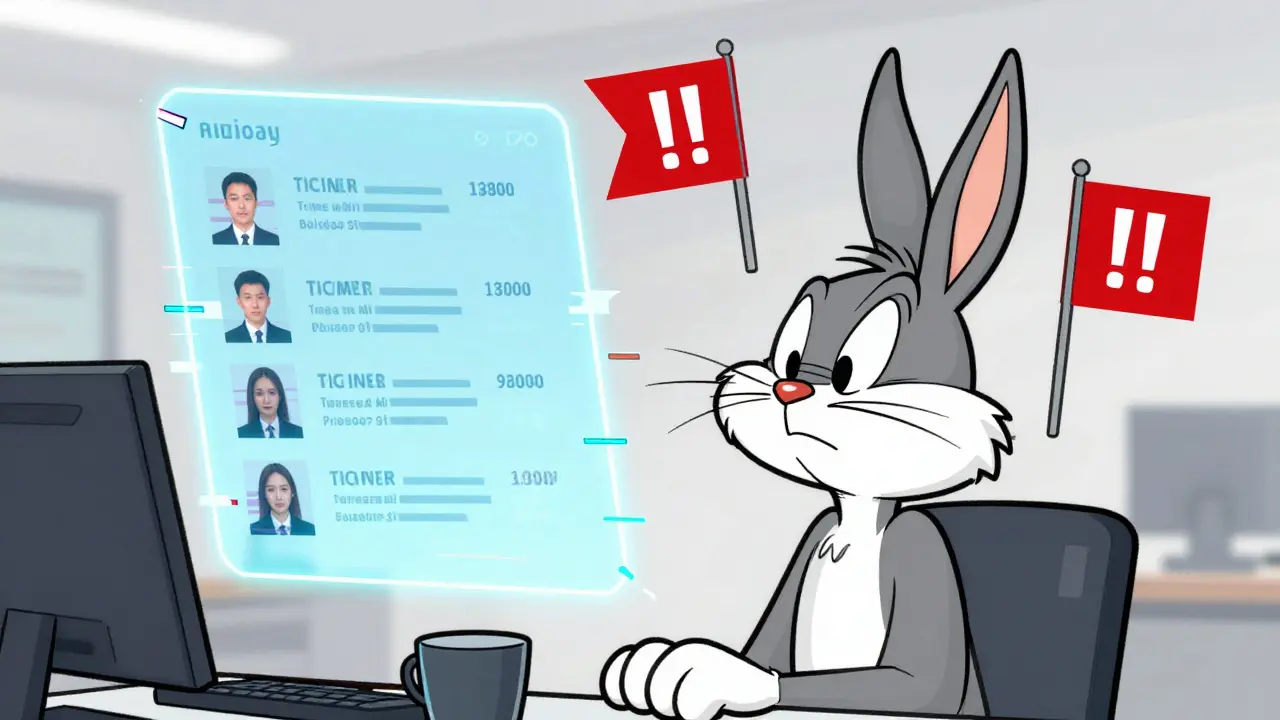
Red Flags for Remote Hiring Managers
If you are hiring remotely, especially in tech or crypto, you need to tighten your vetting process. OFAC sanctions provide a list of bad actors, but many operate under new aliases before they are caught. Look for these behavioral and technical signs:
- Generic Online Presence: Does their LinkedIn or GitHub profile lack personal details, photos, or interaction with other developers? Many DPRK workers reuse fake identities across different platforms.
- Time Zone Anomalies: Are they always available at odd hours, claiming to be in a different region than their IP address suggests?
- Requests for Crypto Payments: Legitimate freelancers usually prefer bank transfers or established payment processors. Insisting on direct wallet payments is a major warning sign.
- Lack of Verification: Be wary if they refuse video interviews or provide documentation that looks stock-photo generic.
Implement mandatory identity verification services that check against global sanction lists. Tools from firms like DTEX can help monitor insider risks and detect anomalous behavior within your network.
Global Coordination and Future Outlook
This is not just a U.S. problem. The Department of State, along with foreign ministries from Japan and South Korea, issued joint statements in August 2025 condemning these threats. The recognition that these networks require multilateral enforcement is critical.
As of late 2025 and into 2026, enforcement agencies are expanding their focus beyond direct hackers to the facilitators. This includes:
- Front Companies: Entities in China, Laos, and Russia that provide cover for IT workers.
- OTC Brokers: Unregulated dealers who convert crypto to cash without proper Know Your Customer (KYC) checks.
- Platform Providers: Freelance sites and cloud hosting providers that fail to screen users adequately.
For businesses, the message is clear: Compliance is your best defense. Regularly audit your vendor and employee databases against the SDN (Specially Designated Nationals) list maintained by OFAC. If you suspect exposure, report it immediately to the Financial Crimes Enforcement Network (FinCEN).
The cat-and-mouse game continues. As sanctions tighten, we expect DPRK actors to adopt more sophisticated obfuscation techniques, potentially leveraging AI to generate more convincing fake identities. Staying vigilant is the only way to stay safe.
What exactly does OFAC do regarding North Korean crypto theft?
OFAC (Office of Foreign Assets Control) enforces economic sanctions by designating individuals, entities, and assets linked to North Korean illicit activities. When an entity is designated, all property under U.S. jurisdiction is frozen, and U.S. persons are prohibited from dealing with them. This cuts off the flow of funds to the DPRK government.
How can I tell if a remote developer is part of a North Korean scam ring?
Look for inconsistencies in their online presence, such as reused fake identities on GitHub or LinkedIn. Be cautious if they insist on being paid in cryptocurrency directly to a personal wallet. Always conduct thorough background checks and verify identity through secure video calls. Check their IP address location against their claimed residence.
What are Famous Chollima and UNC5267?
These are aliases used by cybersecurity researchers to track specific North Korean threat actor groups. Famous Chollima, Jasper Sleet, and UNC5267 refer to the same or related networks known for embedding IT workers in legitimate companies to steal data and cryptocurrency.
Why are Russian nationals being sanctioned for North Korean crimes?
Russian nationals and entities are often involved as facilitators. They provide infrastructure, banking connections, or front companies that help North Korean actors launder money and evade sanctions. For example, Vitaliy Sergeyevich Andreyev was sanctioned for assisting in financial transfers for DPRK IT workers.
Is it illegal to hire someone from North Korea?
It depends on the circumstances and applicable laws. Generally, engaging in business with designated North Korean entities or individuals is prohibited for U.S. persons. However, the primary concern highlighted by OFAC is fraudulent schemes where workers use fake identities to infiltrate companies and steal assets, rather than legitimate employment.
Jay Sharma
June 28, 2026 AT 21:31it is all a setup by the deep state to control the blockchain narrative. they want you to think north korea is the only threat so you ignore the real money laundering happening in your own backyard. wake up sheeple.
Carl Hanzel
June 30, 2026 AT 19:53you people are absolutely delusional if you think this is just about north korea. it is about control. i have seen this pattern before and it always ends with more surveillance. stop falling for the propaganda.
Emma Rémond
July 2, 2026 AT 16:09the epistemological framework of this article is fundamentally flawed. one must consider the ontological implications of state-sponsored cyber espionage within the context of global financial hegemony. it is not merely a 'scam' but a sophisticated geopolitical maneuver that requires nuanced analysis beyond the simplistic binary of good versus evil. furthermore, the reliance on trm labs data without critical scrutiny of their methodological biases is intellectually lazy. we must deconstruct the underlying power dynamics at play here rather than accepting the neoliberal narrative of security through sanctions.
Daniel J. Cox
July 3, 2026 AT 17:42interesting read :) i work in tech support and we actually had a guy who fit some of these descriptions. he was great at coding but never wanted to video chat. turned out he was just shy lol. probably not a spy though.
ELNORA JEFFERSON
July 4, 2026 AT 02:06boring
Carol @minaszilda
July 6, 2026 AT 00:45let us remember that behind every headline there are human stories. empathy matters. stay safe everyone.
Trent Erman1
July 6, 2026 AT 23:22great info! 🔥 make sure to check your vendor lists regularly. compliance saves lives! 💪🚀
Fiona Ellis
July 7, 2026 AT 22:46i wonder if any of you have checked your own ip addresses lately 🤔 maybe you are part of the problem without knowing it 😅 just saying.
Rebecca Shoniker
July 9, 2026 AT 04:48the operational security protocols employed by these entities are frankly embarrassing. anyone with basic cybersecurity literacy should be able to detect the anomalies. it is truly disheartening to see how many organizations remain oblivious to such rudimentary threats. the lack of due diligence is staggering. one would assume that hiring managers possess at least a modicum of competence. yet here we are. discussing basic red flags as if they were novel concepts. pathetic.
Sajjad Ghorbani Moghaddam
July 11, 2026 AT 03:31hey folks just sharing some thoughts here. i think we need to be careful not to generalize too much. remote work is hard enough without adding paranoia to the mix. let us just do our best to verify identities properly.
Scott Miller
July 11, 2026 AT 21:43stop making excuses for poor security practices! if you get hacked it is your fault. take responsibility. the world does not owe you safety. fight for it or lose everything. simple as that.
John Curry
July 13, 2026 AT 06:56the irony is palpable when we consider that the very tools used to track these criminals are often built by companies that prioritize profit over privacy. it is a dance of shadows where everyone claims moral superiority while engaging in questionable practices. perhaps the real lesson here is about trust in an age of digital alienation. we are all connected yet utterly alone in our vulnerability.
Jon Milton
July 15, 2026 AT 05:29look i get the concern but let us not turn this into a witch hunt. collaboration between nations is key. aggression solves nothing. we need dialogue not sanctions. peace is possible if we try.
Nicole Woessner
July 17, 2026 AT 01:11honestly i just hope my company checks these things because i dont want to be fired for hiring someone bad. it is scary stuff out there. lets all stay vigilant okay?