
There’s a lot of noise in crypto. Every week, a new project promises free tokens if you just sign up, join a Discord, or tweet a few times. But when you hear about the Mones Campaign airdrop, you should pause. Because right now, there’s no verified information about it.
Let’s be clear: as of February 2026, no official website, whitepaper, social media account, or blockchain explorer shows a project called "Mones" or a token called "MONES". Major crypto tracking sites like CoinGecko, CoinMarketCap, and DeFiLlama don’t list it. No reputable news outlet - not CoinDesk, not The Block, not Cointelegraph - has reported on it. Even blockchain analytics tools like Nansen and Arkham show zero activity tied to any MONES token contract.
This isn’t just a case of "not enough data." This is a case of zero data. And that’s a red flag.
Why You Can’t Find Anything About Mones
Most legitimate airdrops don’t come out of nowhere. They have:
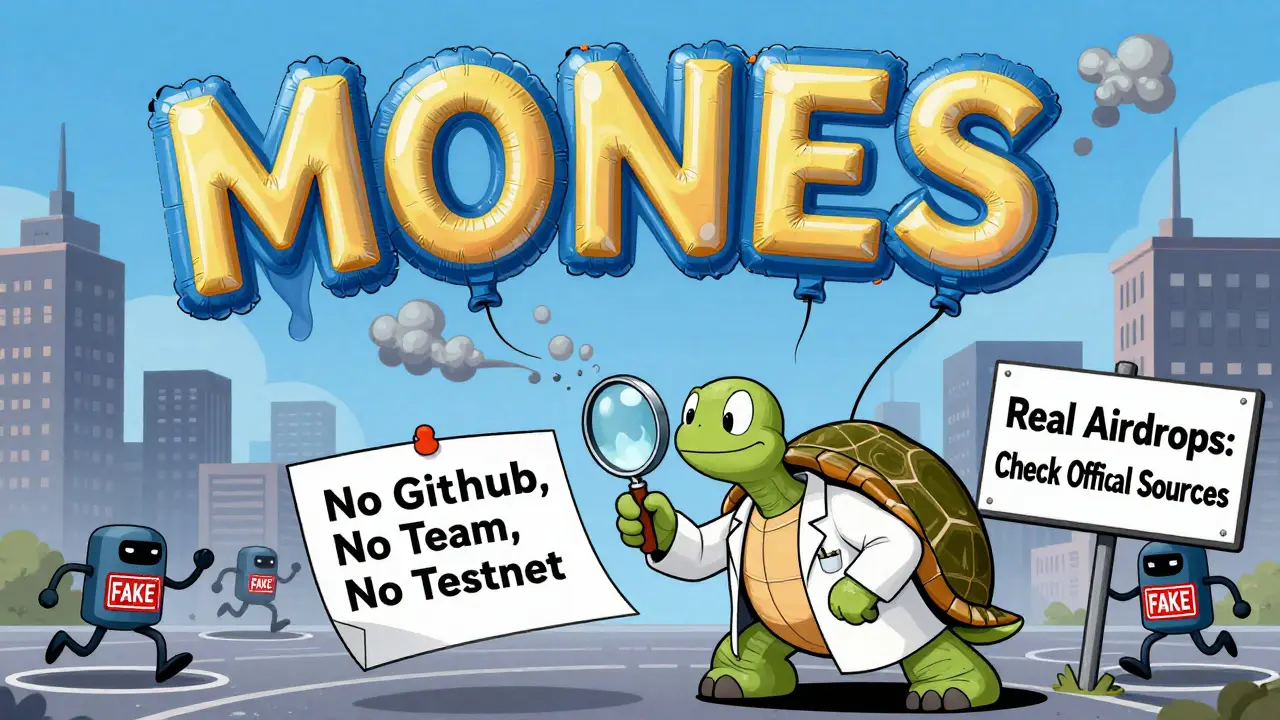
- A public GitHub repo with code
- A team with LinkedIn profiles or verified Twitter accounts
- A testnet you can interact with
- Community discussions on Reddit or Discord
- Tokenomics explained in plain language
Mones has none of these. No GitHub. No team photos. No testnet. No roadmap. No token contract address. No audit report. Nothing.
Compare that to projects like Monad, which launched its Momentum campaign in September 2025 with full documentation, public smart contracts, and a clear eligibility timeline. Or even smaller projects like Berachain or Sui - they had testnets running for months before airdrops. Mones? Silence.
What’s Probably Happening
The most likely explanation? This is a scam.
Scammers love airdrop names that sound like real projects. They pick names that are close to real ones - like "Mones" instead of "Monad" - hoping you’ll type it wrong or confuse it in the heat of excitement. Then they create fake websites that look professional. They use stock photos of "blockchain teams," copy-paste whitepaper snippets from real projects, and post in Telegram groups pretending to be "official admins."
Here’s how it works:
- You find a "Mones Campaign" link on Twitter or Reddit.
- You click it. The site looks real - sleek design, green colors, "official" logos.
- You connect your wallet. Maybe you even approve a small transaction to "verify" your address.
- Within minutes, your funds are gone.
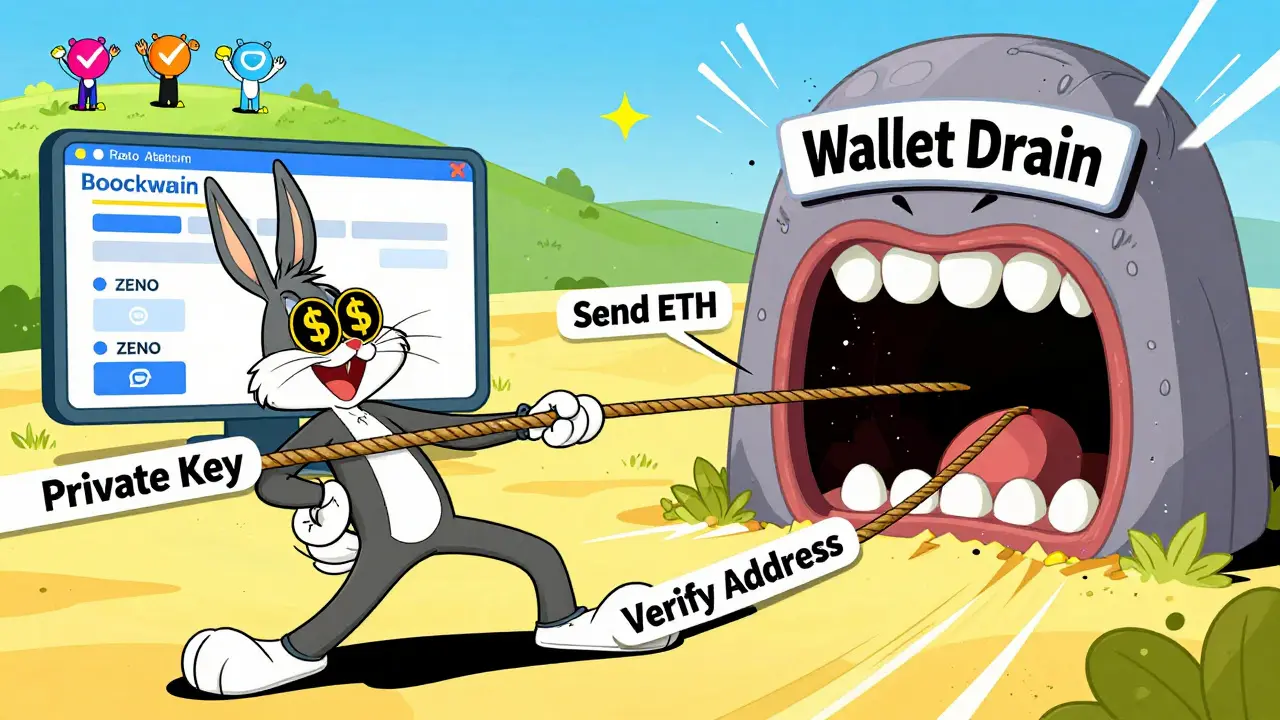
There’s no such thing as a "Mones airdrop." Any site asking you to connect your wallet, send ETH or SOL, or enter your private key is not real. It’s a trap.
How to Spot a Fake Airdrop
You don’t need to be a crypto expert to avoid this. Just follow these three rules:
- No one ever asks for your private key. Ever. Not even "for verification." If they do, walk away.
- No legitimate airdrop asks you to send crypto first. Real airdrops give you tokens. They don’t ask you to pay to get them.
- Check the official sources. If the project has a Twitter account, go to it directly. Don’t click links from DMs or random posts. Look for the blue checkmark - and even then, verify it matches the official website.
Also, check the contract address. If you’re told to connect to a wallet or sign a transaction, paste the address into Etherscan, Solana Explorer, or another blockchain explorer. If it’s a new, empty address with zero transactions, that’s a sign it’s fake.
What You Should Do Instead
If you’re looking for real airdrops, here’s what works:
- Follow established projects like Monad, Sei, or Arbitrum - they have public testnets and documented reward structures.
- Use trusted platforms like AirdropAlert or CoinMarketCap Airdrops - they verify each listing.
- Join official Discord servers and read pinned messages. Real teams don’t hide their details.
- Set up alerts for new blockchain launches. Many airdrops come from Layer 1 networks launching their ecosystems.
There are plenty of real opportunities out there. You don’t need to chase shadows.
Why This Matters
It’s not just about losing money. Fake airdrops erode trust in the whole space. They make people think crypto is just a game of scams. And that’s dangerous. Real innovation - like faster blockchains, better privacy, or decentralized finance - gets buried under noise.
Every time someone loses funds to a fake "Mones" campaign, it makes it harder for real builders to get attention. And that hurts everyone who believes in blockchain’s potential.
Final Warning
If you see "Mones Campaign airdrop" anywhere - on Twitter, Telegram, YouTube, or even a friend’s DM - don’t click. Don’t engage. Don’t even reply. Block it. Report it. Walk away.
There is no Mones airdrop. Not now. Not ever. At least, not one that’s real.
Stay sharp. Stay skeptical. And never send crypto to a stranger.
Is there a real MONES token or airdrop?
No. As of February 2026, there is no verified project, token, or airdrop associated with "Mones" or "MONES." No official website, smart contract, team, or community exists. Any site or message claiming otherwise is a scam.
Can I still claim MONES tokens if I participated in a campaign?
If you think you participated in a "Mones" campaign, you likely already lost funds. Real airdrops don’t require you to send crypto to claim tokens. If you connected your wallet or approved a transaction, your assets may have been drained. Check your wallet history on a blockchain explorer immediately. If you see unfamiliar transactions, assume your funds are gone.
Why do scammers use names like "Mones"?
They use names that sound similar to real projects - like "Mones" instead of "Monad" - to trick people into mistaking them for legitimate campaigns. It’s called typosquatting. If you’re not careful, you might click the wrong link and think you’re joining a real airdrop. Always double-check spelling and official sources.
How can I report a fake Mones airdrop site?
Report it to the platform where you saw it - Twitter, Telegram, Reddit - using their reporting tools. Also, submit the URL to the Phishing Initiative or ScamAdviser. If you lost funds, file a report with your local cybercrime unit. While recovery is unlikely, reporting helps shut down these operations.
Are there any upcoming airdrops I should watch?
Yes. Keep an eye on projects with active testnets and public documentation. Monad’s Momentum campaign is one example. Others include Sei, Arbitrum, and zkSync. Always verify through their official channels. Never trust links from unsolicited messages. Real airdrops announce themselves on their own websites and social accounts - not in random DMs.
Tracy Peterson
February 24, 2026 AT 10:46Finally someone said it loud and clear. This isn't just another scam - it's a predator in a hoodie, waiting for people who think crypto is a lottery ticket. Every time someone falls for this, it makes the whole space look like a circus. And honestly? That’s the worst part.
George Suggs
February 25, 2026 AT 16:51Yeah. Just don’t click. That’s the whole thing. No need to overthink it.
Phillip Marson
February 26, 2026 AT 11:58They’re not even trying anymore. The fake site had a gradient that looked like it was made in Canva by a 14-year-old who just discovered ‘crypto’ on TikTok. I laughed so hard I spilled my coffee. Then I reported it. Then I cried a little because someone’s life savings just got vaporized by a .xyz domain
Amita Pandey
February 28, 2026 AT 04:04It is both alarming and lamentable that so many individuals in the digital age continue to exhibit a profound lack of due diligence when confronted with ostensibly lucrative opportunities. The absence of verifiable documentation - a whitepaper, a GitHub repository, or even a publicly accessible team profile - should, in any rational framework, be sufficient to invalidate the legitimacy of such a proposition. One cannot, with any moral or intellectual integrity, justify participation in an endeavor that refuses to disclose its foundational elements.
It is not merely a matter of financial risk; it is a systemic failure of epistemic responsibility. To engage with an unverified token is to abdicate one’s duty as a rational actor in an information-rich environment.
The proliferation of these fraudulent schemes is not an accident. It is the inevitable consequence of a culture that prioritizes immediacy over verification, excitement over evidence.
Dianna Bethea
March 1, 2026 AT 18:16So many people think airdrops are free money when really they’re free attention. The real ones don’t beg you to join. They build. They test. They let the community find them. Mones? Nah. That’s a ghost town with a fancy logo. If you’re chasing it, you’re already late. And you’re not gonna win.
Stick to the big names with real testnets. Monad. Sei. Arbitrum. They’re out there. You just gotta know where to look.
Felicia Eriksson
March 3, 2026 AT 06:45I saw someone in my Discord group link to a Mones site. I didn’t say anything. Just sent them the link to this post. Hope they read it. We all gotta look out for each other out here.
Tracy Whetsel
March 4, 2026 AT 17:16So true 😔 I had a friend who lost $800 to something like this last year. She still blames herself. But honestly? It’s not her fault. These scams are designed to feel real. The websites look like Apple. The messages sound like your favorite dev. The FOMO is real. We need to talk about this more. Not to shame, but to protect.
Also - if you’re reading this and you’re new? You’re not dumb for being curious. You’re brave. Just stay skeptical. It’s not a flaw. It’s your superpower.
Alyssa Herndon
March 6, 2026 AT 14:38I just think about how many people are scrolling right now, thinking maybe this time it’s real. And I hope they pause. Just for a second. And ask - where’s the contract? Who’s behind it? What’s the point? If the answer is silence… walk away.
Patrick Streeb
March 8, 2026 AT 02:40It is a matter of considerable concern that the cryptocurrency ecosystem continues to be beset by fraudulent entities masquerading as legitimate initiatives. The absence of verifiable infrastructure - including but not limited to publicly accessible smart contracts, audit reports, and transparent governance structures - constitutes a prima facie indicator of malfeasance. One must, therefore, exercise the utmost circumspection when confronted with any purported airdrop lacking such foundational disclosures.
It is my professional opinion that the propagation of such deceptive campaigns not only endangers individual capital but also undermines the broader legitimacy of blockchain innovation.
Jan Czuchaj
March 9, 2026 AT 17:47There’s something quietly tragic about how easily we’re seduced by the idea that something this big - a new blockchain, a new token, a new world - could just appear out of nowhere, with no history, no trail, no fingerprints. We want to believe. We want to be the ones who got in early. But the truth is, real innovation doesn’t whisper. It builds. It iterates. It lets you touch it before it asks for your keys. Mones? It’s not a project. It’s a ghost. And ghosts don’t give away free money. They take it.
aaron marp
March 10, 2026 AT 22:32What’s wild is how many people still think ‘if I just send a little, they’ll send back more’. That’s not how math works. That’s not how crypto works. That’s how your grandma gets scammed on Facebook. The scammers know this. They count on it. And every time someone falls for it, they get to do it again. To someone else. To your cousin. To your aunt. It’s not a game. It’s a machine.
Don’t be a cog. Be the person who says ‘no’ - not because you’re scared, but because you care.
Ifeanyi Uche
March 11, 2026 AT 10:14Man this Mones thing is just another way for rich white guys to make money off dumb Africans. We got people in Lagos sending their whole rent money for this fake airdrop. I seen it. I told em stop. They said ‘but bro it’s real I saw it on Twitter’. Nah. It’s not. It’s just another trap. Crypto ain’t for everyone. It’s for the ones who read the fine print. The rest? They just feed the machine.
KingDesigners &Co
March 11, 2026 AT 14:24LOL. I just got DM’d this Mones link. I replied with a screenshot of the post above. Then I sent them a GIF of a guy running from a zombie. They didn’t reply. Good. 🤡
Jeff French
March 13, 2026 AT 03:28Zero on-chain activity. No contract. No dev activity. No testnet. No liquidity pool. That’s not a project. That’s a null set. The absence of evidence isn’t just evidence of absence - it’s evidence of intent. This is a premeditated extraction vector. Not even a phishing page. A full-spectrum deception engine. And it’s still working.