

Japan doesn’t just regulate cryptocurrency exchanges-it redefines what it means to operate one. If you’re trying to launch a crypto platform in Japan, or even just trade on one, you need to understand the system that’s unlike anywhere else in the world. It’s strict, it’s expensive, and it’s changing fast. As of January 2026, the rules have shifted again, and the stakes have never been higher.
Why Japan’s Crypto Rules Matter
Japan is the third-largest crypto market on Earth, with over 12 million people holding digital assets as of early 2025. That’s nearly 10% of the population. But unlike the U.S., where regulators argue over whether Bitcoin is a commodity or a security, Japan made a clear call back in 2017: virtual currencies are legal property. That single decision created a foundation for everything that followed. The Financial Services Agency (FSA) didn’t just slap on some rules. They built a system designed to stop another Coincheck-style disaster. In 2018, hackers stole $534 million in NEM tokens from one exchange. That wasn’t just a loss-it was a crisis of trust. Japan responded by making security non-negotiable.The Licensing Process: Not for the Faint of Heart
To legally operate a crypto exchange in Japan, you must register with the FSA. It’s not a form you fill out online. It’s a two-year marathon. The average cost? Between $500,000 and $1 million. The average time? 18 to 24 months. You can’t just set up a company in a garage. You need to be a kabushiki-kaisha-a Japanese joint-stock corporation-with a physical office in Japan and a resident manager who takes personal legal responsibility. That’s not a compliance officer you can hire remotely. That’s someone who lives here, answers to Japanese courts, and can be held liable if things go wrong. You also need at least 10 million yen (about $68,000) in capital, plus positive net assets. Most applicants end up with far more. The FSA wants to see that you can survive a market crash, a hack, or a bank freeze.Security: Cold Storage Isn’t Optional
The most famous rule? 95% of customer funds must be stored offline in cold wallets. This isn’t a suggestion. It’s a law. After Coincheck, the FSA made it clear: if you’re holding users’ crypto, you can’t keep it on a server connected to the internet. Exchanges must also use multi-signature wallets, DDoS protection that can handle attacks over 1 terabit per second, and 24/7 monitoring teams ready to respond within 15 minutes of any breach. Third-party security audits are mandatory every year. And you have to prove your systems work during a 6-month shadow operation before you even get your license. Some critics say this is overkill. They point to institutional custodians like Coinbase Custody, which offer similar security with better capital efficiency. But Japan’s regulators aren’t swayed. Their priority isn’t profit-it’s safety. And for retail investors, that matters.The JVCEA: The Secret Enforcer
The FSA sets the baseline. But the real power lies with the Japan Virtual Currency Exchange Association (JVCEA). Eighteen of the 21 licensed exchanges belong to it. And the JVCEA doesn’t just follow the rules-it makes them tighter. Want to list a new token? You need JVCEA approval. Their Token Listing Committee reviewed 147 applications in Q2 2025. Only 28% got through. That’s not because they’re slow. It’s because they’re thorough. Each application requires a full whitepaper, a smart contract audit by a Japanese-certified firm like NCC Group, and a plan to prevent market manipulation. In April 2025, they froze all new token listings for 30 days after a surge in meme coin scams. That’s not something you’d see in Singapore or the U.S. It’s Japan’s way of saying: we won’t let hype override safety.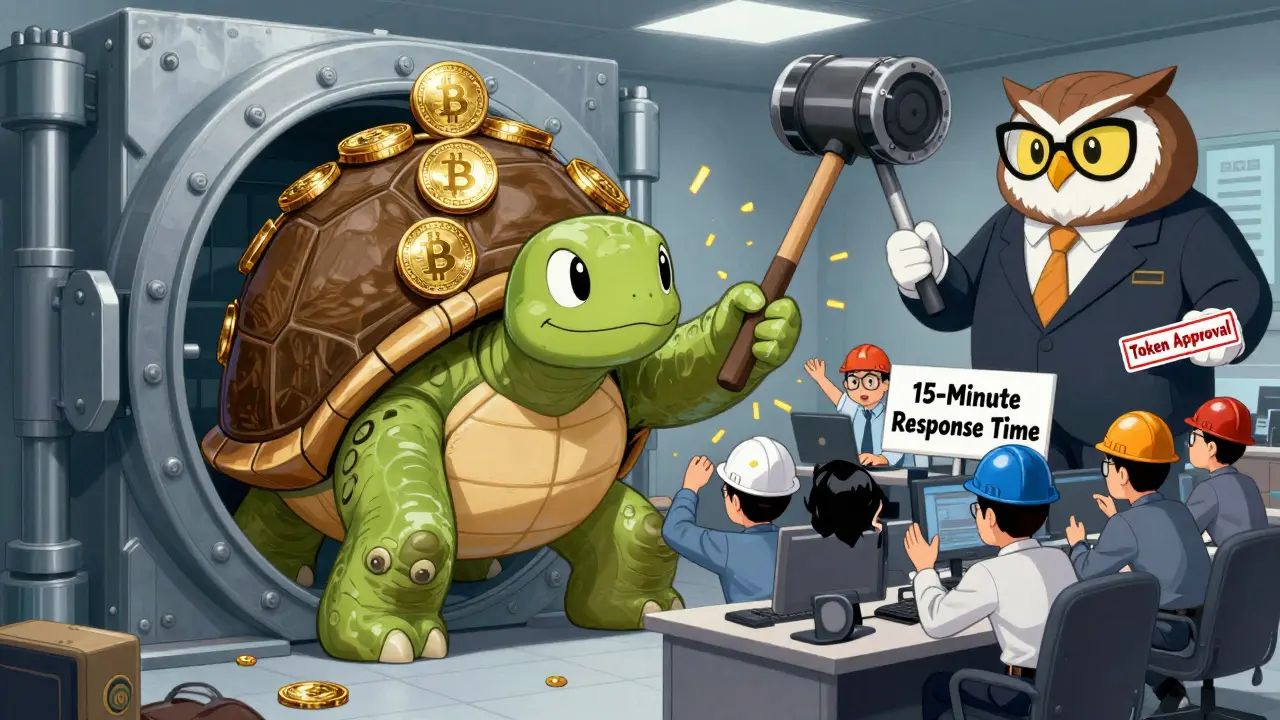
What You Can’t Do (And Why It Hurts)
Japan’s rules aren’t just about security-they’re about control. And that control comes with trade-offs. You can’t offer leverage above 2x. That’s down from 4x in 2023. Compare that to Dubai, where you can trade with 100x leverage. The result? An estimated 15% drop in active day traders on Japanese exchanges since the change. You also can’t trade most new altcoins until they’re approved by JVCEA. That means tokens like SOL or ADA might be available on Binance or Coinbase within hours of launch-but in Japan, it could take months. Users complain. Traders leave. But the FSA says: better late than bankrupt.The Big Shift: FIEA Takes Over
As of September 2025, crypto oversight moved from the Payment Services Act (PSA) to the Financial Instruments and Exchange Act (FIEA). This isn’t a paperwork change. It’s a philosophical one. The PSA treated crypto like digital cash. The FIEA treats it like an investment asset. That means security tokens, tokenized real estate, and other financial products now fall under the same rules as stocks and bonds. The FSA is creating a tiered system: payment tokens get lighter rules; investment tokens get full securities regulation. This change is meant to stop the confusion that’s plagued the U.S. For years, the SEC and CFTC fought over jurisdiction. Japan cut the knot. Now, if a token behaves like a security, it’s regulated like one. No gray zones.What’s Next? Banks Might Join the Game
One of the biggest changes coming is the potential for Japan’s megabanks to enter the crypto space. Mitsubishi UFJ, Sumitomo Mitsui, and others have been blocked since 2020 from holding crypto directly. But in September 2025, the FSA proposed allowing them to register as licensed crypto exchange operators. If this passes, it could be a game-changer. Banks could offer custody, trading, and even crypto-backed loans. But there’s a catch: they’d need to hold 30% capital buffers against crypto holdings (versus 8% for traditional assets) and pass stress tests for 80% price drops. The Bank of Japan is still cautious. They warn that the transition between PSA and FIEA creates loopholes. But the FSA is pushing ahead. Full integration is targeted for March 2026.
Rahul Sharma
January 12, 2026 AT 18:49Japan's approach is a masterclass in responsible regulation. Cold storage at 95%? Mandatory audits? Resident managers with personal liability? This isn't overkill-it's the bare minimum for protecting ordinary people. Other countries are still playing catch-up. India should take notes.
Allen Dometita
January 12, 2026 AT 21:04Bro. Japan’s system is wild but it WORKS. No massive hacks. No rug pulls on retail. No chaos. You want speed? Go to Binance. You want to sleep at night? Japan. End of story. 🤝
Brittany Slick
January 13, 2026 AT 00:26I love how Japan treats crypto like it’s someone’s life savings-not a casino token. The way they prioritize safety over hype? That’s rare. It’s like they actually care about people. 🌸
greg greg
January 13, 2026 AT 00:43It’s fascinating how the shift from PSA to FIEA reclassifies crypto not as currency but as a financial instrument, which fundamentally changes the legal architecture-now tokens are evaluated based on their economic function, not their technological form, meaning if a token offers profit expectations, governance rights, or revenue sharing, it’s automatically classified as a security under the same framework as equities, which eliminates the jurisdictional ambiguity that plagues the U.S., where the SEC and CFTC still argue over semantics while investors get caught in the crossfire.
LeeAnn Herker
January 13, 2026 AT 18:36Oh sure, let’s lock up everyone’s money in cold wallets like it’s 1987. Meanwhile, the FSA is probably sitting in a backroom with a stack of paper forms, laughing while real innovation dies. This isn’t safety-it’s control. And guess who’s paying for it? The little guy. 💸
Calen Adams
January 14, 2026 AT 10:29The JVCEA’s token review process is the real MVP. 28% approval rate? That’s not bureaucracy-that’s integrity. Most exchanges list anything that glows. Japan filters for substance. That’s why their retail confidence is 87%. No other market comes close. 🔥
Valencia Adell
January 14, 2026 AT 14:5187% confidence? That’s a lie. They’re just too scared to leave. The FSA doesn’t protect users-it cages them. You can’t trade SOL? You can’t leverage? You’re not investing-you’re being babysat. This isn’t a system. It’s a prison with a compliance badge.
Emily Hipps
January 15, 2026 AT 20:08For everyone saying Japan is too strict-have you seen what happens in places without rules? People lose everything. Japan’s system isn’t perfect, but it’s the only one that actually puts people before profits. That’s worth waiting for.
Jessie X
January 16, 2026 AT 19:15Japan’s way isn’t flashy but it keeps people safe. I don’t need 100x leverage to sleep well. I need to know my crypto isn’t gonna vanish overnight. Simple. 🤷♀️
Kip Metcalf
January 18, 2026 AT 08:18Look I get the hate but Japan’s got it right. If you wanna trade like a cowboy, go to Dubai. If you wanna keep your cash? Japan. Period.
Frank Heili
January 20, 2026 AT 04:26One thing people miss: the resident manager requirement isn’t just legal theater. It means if an exchange gets hacked, someone with a Japanese passport and a home address can be dragged into court. No offshore shell games. That’s accountability you can’t buy.
Jacob Clark
January 20, 2026 AT 08:30Oh my GOD, Japan is literally the only country that gets it!!! I mean, think about it-95% cold storage? Mandatory DDoS protection at 1 Tbps? A 6-month shadow operation before licensing?!?!? This isn’t regulation-it’s a superhero origin story for financial safety!!! And don’t even get me started on the JVCEA’s token review committee-they’re like the Avengers of crypto ethics!!!
Jon Martín
January 20, 2026 AT 15:25Japan’s rules are the reason I finally feel safe holding crypto. I used to panic every time I saw a headline about an exchange getting hacked. Now? I sleep. No drama. No fear. Just cold wallets and calm. This is what responsible innovation looks like.
Mujibur Rahman
January 20, 2026 AT 18:07As someone who’s worked with Japanese fintech firms, I can tell you the compliance burden is brutal-but the outcomes are unmatched. Banks won’t touch crypto unless they’re forced to. Japan’s forcing them. That’s power. And it’s working.
Jennah Grant
January 22, 2026 AT 14:56The FIEA shift is huge. It’s not just about crypto anymore-it’s about integrating digital assets into the broader financial ecosystem. That’s the future. Other countries are still arguing about definitions. Japan’s building the architecture.
Dennis Mbuthia
January 24, 2026 AT 14:24Japan thinks it’s so superior with its ‘safe’ system-yeah, right. Meanwhile, the U.S. is innovating, creating jobs, and letting people trade how they want. Japan’s just a bureaucratic museum with a blockchain sticker on it. 🇺🇸💪
Dave Lite
January 25, 2026 AT 09:14Let me tell you why this matters: I work with retail investors in rural America. They don’t care about leverage or memecoins. They care about not losing their life savings. Japan’s system gives them that. That’s not boring-that’s beautiful.
Becky Chenier
January 26, 2026 AT 19:04It’s interesting how Japan’s approach reflects its broader cultural values-order, caution, long-term thinking. Not flashy. Not loud. But deeply reliable. Maybe that’s why it works.
Staci Armezzani
January 28, 2026 AT 18:02If you’re thinking of launching a crypto exchange, stop. Go to Japan. Talk to someone who’s been through the process. It’s not for startups. It’s for institutions. And honestly? That’s okay. Safety shouldn’t be a startup experiment.
Tracey Grammer-Porter
January 30, 2026 AT 16:04People say Japan is slow-but slow is better than dead. I’ve seen friends lose everything because an exchange vanished overnight. Japan’s rules don’t stop innovation-they just make sure it doesn’t cost lives.
sathish kumar
February 1, 2026 AT 04:48Japan's regulatory model is a textbook example of prudent governance. The emphasis on resident accountability, institutional integrity, and consumer protection reflects a mature understanding of financial ecosystems. Other nations would benefit from emulating this framework with cultural adaptation.
jim carry
February 1, 2026 AT 21:32Wow, Japan’s system is so strict it’s almost comical. You need a resident manager? Who even IS that? And why should they be personally liable? That’s not regulation-that’s feudalism. And don’t get me started on the 95% cold storage-what if the vault gets flooded? Who’s responsible then? 😂
Mollie Williams
February 3, 2026 AT 20:19There’s something poetic about a society choosing safety over speed. We live in a world that worships growth at all costs. Japan says: maybe some things shouldn’t be rushed. Maybe trust is more valuable than volatility. Maybe the quiet ones are the ones who’ve learned how to survive.