
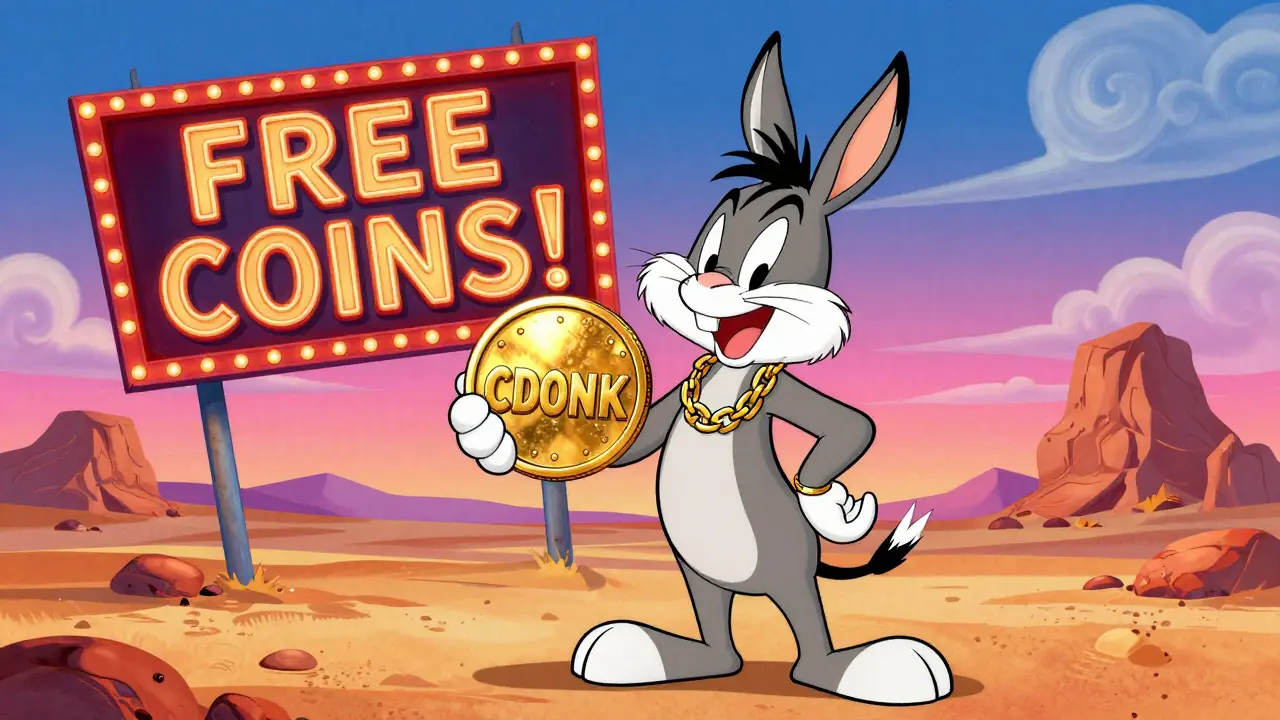
If you've seen a notification about a CDONK airdrop hosted by CoinMarketCap, stop what you are doing immediately. In the fast-moving world of crypto, the promise of free tokens often masks a dangerous trap. The reality is simple: there is no official partnership between Club Donkey and CoinMarketCap, and anyone asking for your private keys to "claim" these tokens is trying to rob you.
| Claim | Reality | Verification Source |
|---|---|---|
| Official CMC Airdrop | No such event exists | CoinMarketCap Airdrops Page |
| Verified Partnership | None documented | @ClubDonkeyBSC X Profile |
| Legit Distribution | Phishing campaign | CertiK Threat Intelligence |
What is Club Donkey (CDONK) exactly?
Club Donkey (CDONK) is a decentralized meme token built on the Binance Smart Chain (BSC). It describes itself as a community-driven experiment and acts as a substrate token for Donkey (DONK). While it's listed on CoinMarketCap, it's essentially a "preview page" with a maximum supply of 20 million tokens, but virtually zero trading volume and no circulating supply. This means the token doesn't have the market activity or liquidity that typically accompanies a major airdrop event.
The red flags of the purported airdrop
Why should you be suspicious? Real airdrops leave a paper trail. If you look at the official CoinMarketCap airdrop calendar, it shows zero current or upcoming events for CDONK. Legitimate platforms like CoinGecko and Airdrops.io also have no record of this distribution. Most professional airdrops require you to interact with a protocol-like making a trade or bridging assets. Instead, the CDONK claims usually lead to fake portals that look like CoinMarketCap but function as phishing sites. These sites don't want to give you money; they want your seed phrase so they can drain your entire wallet in seconds.
Evidence of phishing and scams
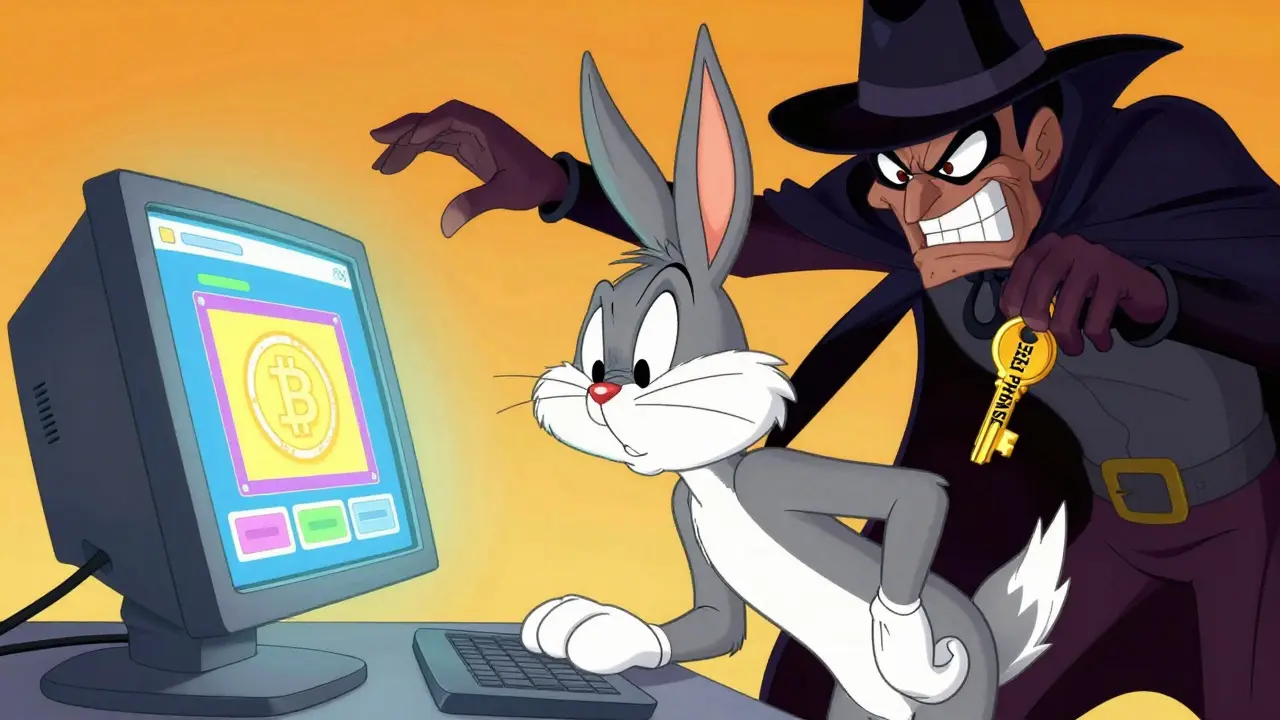
This isn't just a hunch; the data is alarming. The blockchain security firm CertiK identified nearly 50 active phishing domains pretending to be the "CoinMarketCap CDONK Airdrop" portal. These malicious sites were all traced back to a single Ethereum address, which managed to steal roughly $287,400 from over 12,000 victims. On forums like Reddit, users in r/CryptoAirdrops have repeatedly warned about these scams. Security expert ZachXBT highlighted that a staggering 98.7% of these types of "exchange-hosted" notifications are phishing attempts. If you get a DM or an email telling you that you're eligible for a CDONK windfall, it is a scam.
How to spot a fake airdrop in the future
To avoid losing your funds, you need a strict verification process. Legitimate projects follow a predictable pattern: they announce the event on their official, verified X (Twitter) account, link to a dedicated landing page on their official domain, and never, ever ask for your private keys.
- Check the Official Source: Go directly to the project's website or official social media. Don't click links in emails or DMs.
- Verify the Wallet Request: No legitimate airdrop requires you to enter your seed phrase or private key to "authenticate" your account.
- Look for Trading Volume: A token with zero volume and zero circulating supply is unlikely to have a massive, verified distribution partner like CoinMarketCap.
- Consult Aggregators: Check CoinGecko or Airdrops.io to see if the event is listed by a neutral third party.
The reality of meme token airdrops
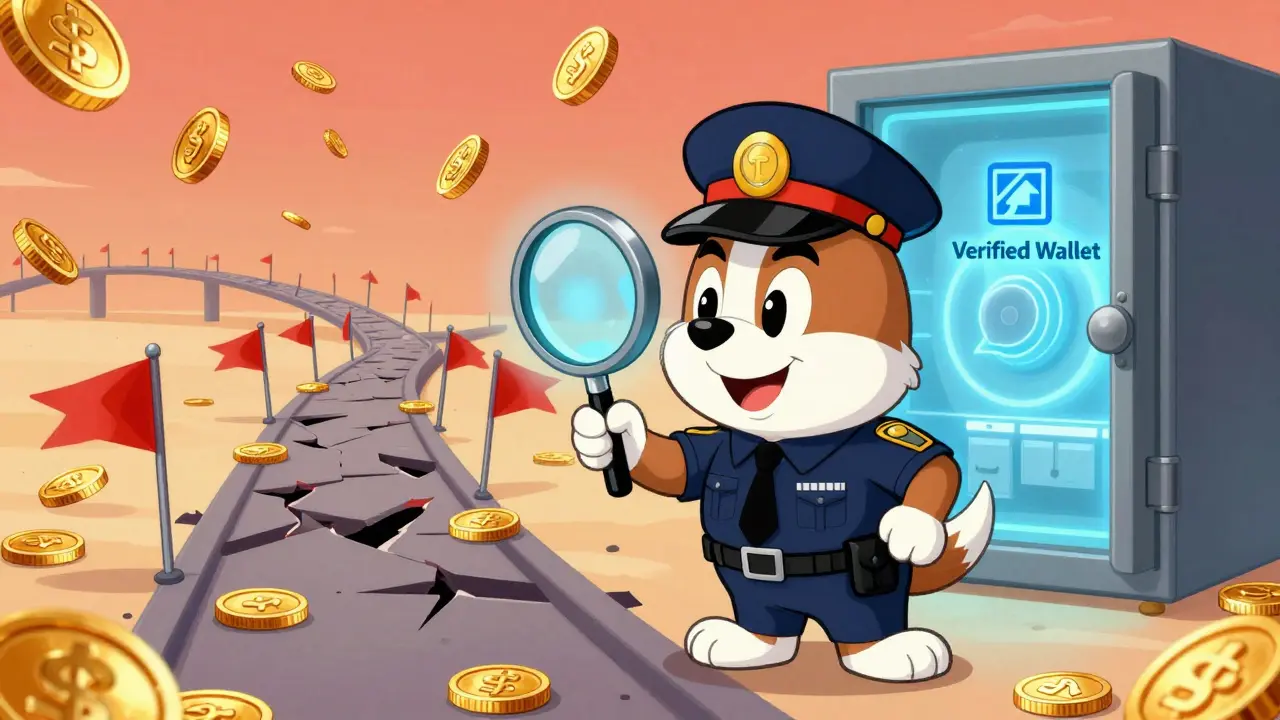
Meme tokens make up a huge chunk of new launches-about 17.3% in late 2025-but they are incredibly risky. Because they are easy to create on Binance Smart Chain, scammers often use the names of real (but obscure) tokens to create fake "airdrop" campaigns. They rely on the "fear of missing out" (FOMO) to make you act quickly without thinking.
For a project to actually be featured in a CoinMarketCap airdrop, it must meet strict listing standards, including a 30-day trading history and liquidity exceeding $500,000. CDONK doesn't even come close to these requirements, making the airdrop claim technically impossible under CMC's own rules.
Is there a real CDONK airdrop on CoinMarketCap?
No. There is no official evidence of any airdrop for Club Donkey (CDONK) hosted by CoinMarketCap. Official CMC channels have specifically warned that such claims are part of phishing campaigns.
What happens if I gave my private key to the CDONK airdrop site?
If you provided your private key or seed phrase, your wallet is compromised. You should immediately move any remaining funds to a brand new wallet with a different seed phrase and never use the old one again.
Does CoinMarketCap ever ask for payments to release airdrops?
No. CoinMarketCap never asks for private keys, seed phrases, or advance payments to release tokens from an airdrop.
How can I tell if a crypto airdrop is legitimate?
A legitimate airdrop will be announced on the project's verified social media, listed on trusted aggregators like CoinGecko, and will only require you to connect your wallet (without asking for keys) or perform specific on-chain tasks.
Is Club Donkey (CDONK) a scam token?
The token itself is a community experiment on BSC, but the "airdrop" campaigns associated with its name are confirmed scams. Always distinguish between the token's existence and the fraudulent schemes using its name.
Next steps for your safety
If you have encountered these phishing links, the best thing to do is report them to the CoinMarketCap support team and the platform where you saw the ad (like X or Telegram). This helps the community identify the scam faster.
For those looking for genuine ways to earn tokens, focus on established ecosystems like Base or MetaMask's verified partners. Stick to airdrops that require actual usage of a product-such as providing liquidity or testing a beta feature-rather than those that simply promise free money in exchange for your wallet's most sensitive information.
Jason Davis
April 15, 2026 AT 03:07Thansk for the warnin. I've seen a few of these phishin sites lately and they're gettin way too good at mimicng the actual UI. Most people dont even realize they're on a fake domain until it's too late and their wallet is empty. Always check the URL before connectin anythin.
Prasanna Shembekar
April 17, 2026 AT 02:54this is just heartbreaking
Amanda Faust
April 19, 2026 AT 02:19obvious scam. if anyone still falls for the seed phrase trick in 2025 they just dont want to be safe
Jessie Tayaban
April 20, 2026 AT 18:37Oh my god I almost clicked one of these last week!!
I was so excited about free coins and almost messed up my whole life savings just for some meme token. Thiz is absolutely terrifyng how fast they can steal everything!
Jonathan Chamma
April 20, 2026 AT 19:29It's a real shame that some people try to take advantage of others like this. Remember that the crypto world can be a wild ride, but keeping your keys safe is the only way to enjoy the journey. Let's look out for each other and share these warnings so no one else gets hurt by these mean tricks.
Scott Fenton
April 21, 2026 AT 09:11I would strongly advise all users to implement a hardware wallet for their long-term holdings. The vulnerability of hot wallets to these types of phishing attacks is significant, and the only way to ensure absolute security is by keeping your private keys offline. It is the only professional standard for asset protection.
daniella davis
April 22, 2026 AT 11:36Literally so basic that someone had to write a guide for this lol. Like, just use a brain cell and realize no one gives away free money for nothing. It's actually embaressing that people still need this explained to them in the age of info.
Swati Sharma
April 23, 2026 AT 08:28Totally agree on the verification process. When we analyze the smart contract and the liquidity pools, the lack of TVL is a massive red flag. Integrating a multi-sig approach for any potential airdrop interaction is the best way to mitigate risk while still exploring the ecosystem.
Emily H
April 23, 2026 AT 14:24It is truly commendable that this information is being disseminated to protect the community. I believe that education is the most effective tool against such fraudulent activities. I appreciate the detailed breakdown of the red flags provided in the text.
Agnessa Dale
April 24, 2026 AT 05:52So glad people are talking about this! It's better to be safe and cautious than to regret it later. Stay positive everyone, the real gems are out there if we just keep learning!
Tracie and Matthew Hartley
April 25, 2026 AT 10:17idk why everyone is so scared lol. i bet some of these airdrops are actually legit and people just like to panic. probly just a glitch in the system or something.
Stanly Hayes
April 25, 2026 AT 16:06Listen up! If you're stupid enough to give away your keys, you deserve to lose your money! This is why we need real security and not these joke tokens taking over the market!
Lane Montgomery
April 27, 2026 AT 15:56How much did you lose?
Rebecca Violette
April 28, 2026 AT 07:58omg my heart actually hurts for the people who lost money. i cant even imagine waking up and seeing your wallet at zero. its just so cruel and mean to do this to people who are just trying to make a better life for themselves
Omotola Balogun
April 28, 2026 AT 08:30Actually, most people forget that the BSC chain is prone to these issues because the cost of deployment is so low. It's almost too easy to spam these fake tokens. I've seen this happen with like ten different projects this month alone.
EDOZIEM MICHAEL
April 28, 2026 AT 21:39money is just a shadow of value and these scammers are just chasing shadows in a digital world we are all just nodes in a larger simulation anyway
Surender Kumar
April 29, 2026 AT 02:16thanks for the heads up. always good to double check things before jumping in. stay safe everyone
logan bates
April 29, 2026 AT 04:33Typical garbage tokens. Only real value comes from things we can actually trust in our own borders, not some random BSC meme coin from nowhere.
Mikayla Murphy
April 29, 2026 AT 22:12It is so important to remember that we are all learning together in this space. If you've been affected, please know that you're not alone and it's okay to feel overwhelmed. Let's just focus on helping each other stay safe from now on.