

You’ve likely stumbled across InfiBTC while scrolling through social media ads or clicking on a pop-up promising massive returns. The name sounds professional, the website looks sleek, and the promises are tempting. But here is the hard truth that most promotional material hides: there is almost zero independent information about this platform.
In the world of cryptocurrency, silence from reputable sources is rarely a good sign. When we look at established giants like Binance the largest crypto exchange by volume or regulated options like Coinbase a publicly traded US-based exchange, you can find thousands of user reviews, security audits, and news articles. For InfiBTC? You’ll mostly find silence or vague claims from affiliates who earn commissions when you sign up.
This article isn’t just another generic review copy-pasted from a press release. It’s a deep dive into what we *do* know, what we *don’t* know, and why that gap matters for your wallet. We will break down the red flags, compare it to safer alternatives, and help you decide if risking your capital on an unknown entity is worth it.
The Mystery Behind InfiBTC
InfiBTC a lesser-known cryptocurrency trading platform positions itself as a modern digital asset exchange. However, unlike major competitors, it lacks a clear digital footprint in the broader financial community. If you search for "InfiBTC legitimacy" or "InfiBTC user experiences," you won’t find threads on Reddit, detailed analyses on CoinMarketCap, or discussions on Twitter among serious traders.
This lack of visibility raises immediate questions:
- Who owns it? Most legitimate exchanges list their team members with LinkedIn profiles or public bios. InfiBTC’s leadership remains largely anonymous or obscured behind corporate jargon.
- Where is it registered? Regulatory compliance is crucial in 2026. Major exchanges operate under licenses from bodies like the Financial Conduct Authority (FCA) UK's financial regulator or the Australian Securities and Investments Commission (ASIC) Australia's financial regulator. Does InfiBTC hold any such license? There is no public record confirming this.
- When was it launched? Established platforms have a history. They survived market crashes, hacks, and regulatory changes. InfiBTC appears to be a recent entrant, which means it hasn’t been tested by time-the ultimate stress test for any financial institution.
When an exchange doesn’t provide these basic details, you are flying blind. In crypto, flying blind often leads to crashing.
Red Flags: What Should Worry You?
If you are considering depositing funds into InfiBTC, pause for a moment. Let’s look at the common warning signs associated with obscure or potentially fraudulent exchanges. These aren’t accusations against InfiBTC specifically, but rather criteria you should apply to *any* platform that lacks transparency.
| Feature | Established Exchanges (e.g., Kraken, Coinbase) | Obscure Platforms (e.g., InfiBTC) |
|---|---|---|
| Regulatory Status | Licensed in multiple jurisdictions; regular audits | Unclear or offshore registration; no public proof of licensing |
| User Reviews | Thousands of verified reviews on Trustpilot, Reddit, etc. | Few to no independent reviews; mostly affiliate content |
| Team Transparency | Publicly known founders with verifiable backgrounds | Anonymous team or stock photos used for profiles |
| Security Audits | Regular third-party security audits published online | No evidence of external security assessments |
| Withdrawal Process | Clear fees, standard processing times | Vague fee structures; potential delays or hidden costs |
One of the biggest risks with newer, less-known exchanges is the withdrawal trap. Many users report being able to deposit money easily but facing endless hurdles when trying to withdraw profits. These hurdles might include "verification delays," "maintenance mode," or unexpected "tax fees." Without a track record, there is no way to know if InfiBTC plays fair.
Fees and Trading Conditions
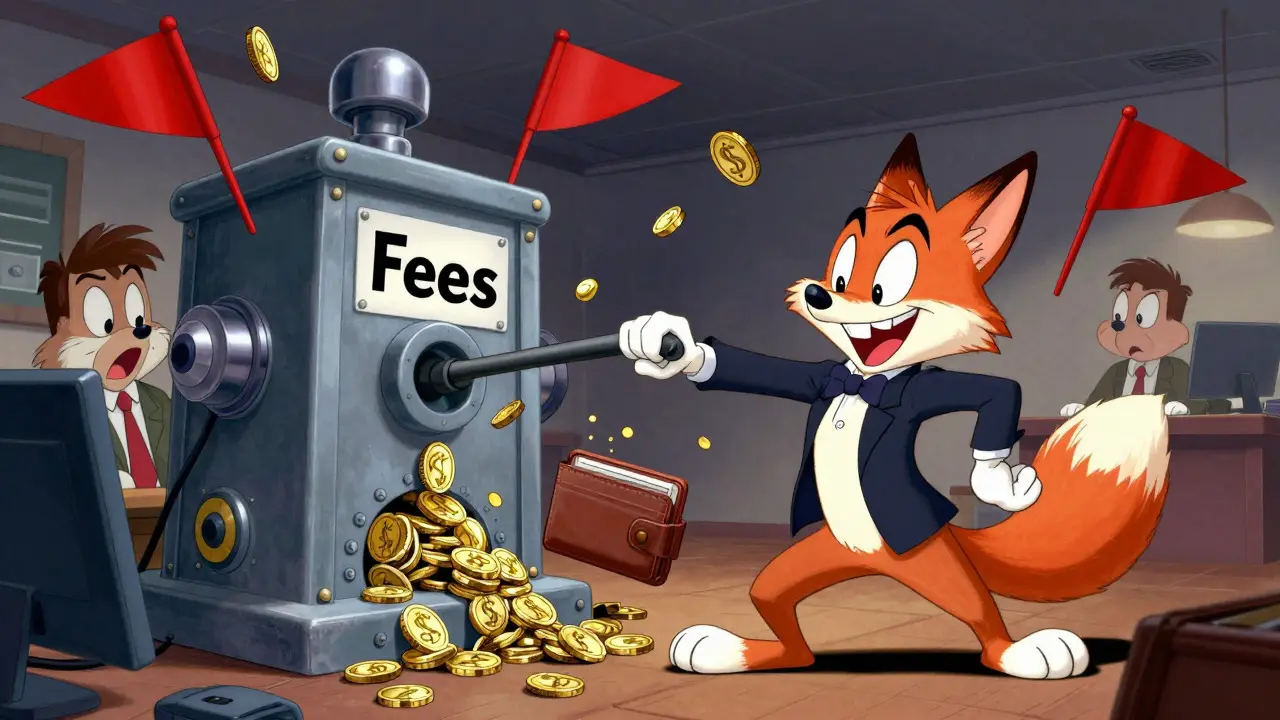
Even if we ignore the trust issues for a second, let’s talk about economics. Why would you choose InfiBTC over a proven alternative? Usually, new exchanges try to lure users with low fees or high leverage. But hidden costs often eat away at those benefits.
Most legitimate exchanges charge a spread (the difference between buy and sell price) plus a commission. On platforms like Kraken a secure, long-standing crypto exchange, fees are transparent and range from 0.16% to 0.26% for makers and takers depending on volume. InfiBTC’s fee structure is often buried in fine print or not clearly stated until you attempt a trade.
Beware of these common fee traps:
- Inactivity Fees: Some shady platforms charge you simply for keeping money in your account.
- High Withdrawal Costs: Depositing might be free, but withdrawing could cost a flat $50 per transaction, regardless of amount.
- Spread Manipulation: The price you see might differ significantly from the actual market rate, meaning you lose value the moment you click "buy."
Without clear, upfront pricing, you cannot calculate your true cost of trading. And in crypto, where margins can be tight, hidden fees are profit killers.
Security: Where Is Your Money Really?
Security is the backbone of any crypto exchange. In 2026, after years of high-profile hacks, users expect more than just "SSL encryption." They expect cold storage solutions, multi-signature wallets, and insurance funds.
Major exchanges like Bitfinex an exchange known for institutional-grade security or OKX a global exchange with advanced security features publish regular Proof of Reserves (PoR) reports. These cryptographic proofs show that they actually hold the assets they claim to hold. Does InfiBTC publish PoR? As of now, there is no evidence of this.
If an exchange doesn’t prove its reserves, you have to ask: Are my funds safe? Or are they being used to pay out other users? This is the classic Ponzi scheme dynamic. Without transparency, you are trusting them with your life savings based on hope, not data.
Better Alternatives for 2026
If you are looking for a reliable place to trade Bitcoin, Ethereum, or altcoins, you don’t need to gamble on an unknown platform. Here are three safer, well-established alternatives that offer better security, transparency, and support.
| Exchange | Best For | Key Security Feature | Regulatory Status |
|---|---|---|---|
| Kraken | Long-term holders & security | Proof of Reserves, 100% cold storage | Licensed in US, EU, UK, Australia |
| Coinbase | Beginners & ease of use | Publicly traded company, insured deposits | Registered with FinCEN, SEC compliant |
| OKX | Advanced traders & DeFi access | Multi-sig cold wallets, monthly audits | Global presence, various local licenses |
Kraken has been around since 2011 and has never been hacked. It’s the gold standard for security-conscious traders. Coinbase is perfect if you want simplicity and regulatory protection, especially if you are in the US. OKX offers a robust suite of tools for those who want to explore derivatives and decentralized finance without sacrificing security.
All three platforms have millions of active users, transparent fee schedules, and responsive customer support. Why risk your capital on InfiBTC when these options exist?

How to Spot a Fake Exchange
Whether you stick with InfiBTC or move to another platform, it’s vital to know how to protect yourself. The crypto industry attracts scammers because it’s borderless and irreversible. Here is a checklist to vet any exchange before you deposit a single cent.
- Check Independent Reviews: Don’t read the reviews on the exchange’s own website. Go to Trustpilot, Reddit (r/CryptoCurrency), or Bitcointalk. Look for patterns in complaints.
- Verify Licensing: Find the regulator mentioned on their site. Then, go to that regulator’s official website and search for the exchange’s name. If they aren’t listed, they aren’t licensed.
- Test Customer Support: Ask a complex question before signing up. If they respond with generic bot answers or take days to reply, imagine how hard it will be to get help during an emergency.
- Start Small: Never deposit your entire portfolio. Start with a small amount, make a trade, and then try to withdraw. If withdrawal is difficult, stop immediately.
- Avoid Pressure Tactics: Legitimate exchanges don’t use countdown timers or "limited-time bonuses" to force you to act quickly. Scams thrive on urgency.
Final Verdict: Proceed with Extreme Caution
After analyzing the available data, the verdict on InfiBTC is clear: proceed with extreme caution. While not definitively proven to be a scam yet, the lack of transparency, absence of regulatory clarity, and minimal independent user feedback make it a high-risk choice.
In 2026, the crypto market is mature enough that you shouldn’t need to rely on obscure platforms. Stick to exchanges with proven track records, clear regulatory standing, and strong security measures. Your peace of mind-and your money-are worth more than a slightly lower fee or a flashy interface.
If you are determined to try InfiBTC, treat it as experimental capital. Only invest what you can afford to lose completely. But for most traders, the safer path is to choose a trusted alternative like Kraken, Coinbase, or OKX.
Is InfiBTC a scam?
There is no definitive proof that InfiBTC is a scam, but there are significant red flags. The lack of independent reviews, unclear regulatory status, and anonymous team members suggest high risk. Until more transparency is provided, it should be treated with suspicion.
What are the safest crypto exchanges in 2026?
The safest exchanges include Kraken, Coinbase, and OKX. These platforms are regulated, have published Proof of Reserves, and have years of operational history without major security breaches.
Does InfiBTC have a mobile app?
Information about an official InfiBTC mobile app is scarce. Be cautious of apps found outside official app stores (Apple App Store or Google Play Store), as fake apps are commonly used to steal login credentials.
Can I withdraw money from InfiBTC easily?
Withdrawal experiences on obscure exchanges vary widely. Some users report smooth withdrawals, while others face delays or hidden fees. Without consistent positive feedback, assume withdrawals may be difficult.
Why is there so little information about InfiBTC?
New or niche exchanges often lack coverage because they haven’t gained traction or trust in the community. Alternatively, some platforms operate briefly to collect deposits before disappearing, leaving little trace.
Is InfiBTC regulated?
As of 2026, there is no public evidence that InfiBTC holds licenses from major financial regulators like the FCA, ASIC, or SEC. Always verify regulatory claims directly with the governing body.
Rodmun Tarnowski
August 6, 2026 AT 20:36It is truly encouraging to see such a thorough analysis of these obscure platforms! The crypto space can be so overwhelming for newcomers, and having clear, factual information like this is incredibly helpful. I always say that transparency is the cornerstone of trust in any financial endeavor. When an exchange hides its team or regulatory status, it raises so many valid questions about their intentions. It is wonderful that you have compiled this list of safer alternatives for those who are hesitant to jump into the unknown. Let us keep supporting each other by sharing knowledge and avoiding scams!
Matthew Smith
August 7, 2026 AT 13:23the silence speaks volumes really does it not? one must consider the moral implications of trusting anonymous entities with one's livelihood. it is a philosophical dilemma wrapped in digital code. we are asked to believe without evidence which goes against every rational principle of existence. perhaps the real scam is our own gullibility
Carl Michaud
August 9, 2026 AT 03:38Amateurs look at UI design while professionals analyze the liquidity depth and order book manipulation tactics employed by these shell companies. InfiBTC is clearly another layer-1 solution for laundering illicit gains through offshore jurisdictions. The lack of KYC isn't a feature; it's a liability vector for your entire portfolio. You're exposing yourself to counterparty risk from unregulated entities that likely don't even hold your assets in cold storage. Wake up sheeple.
Kat Bennett
August 9, 2026 AT 08:27I've been following the crypto scene for a few years now and it always fascinates me how many new exchanges pop up overnight only to disappear just as quickly. It makes you wonder what the actual business model is when there are no users and no reviews. I guess some people are just willing to take the chance hoping they hit the jackpot before the rug pull happens. It’s interesting to compare them to the big names like Kraken which have stood the test of time. Makes me appreciate the stability of established platforms more than ever.
Candice Cornett
August 10, 2026 AT 00:48everyone says stick to the big guys but aren't they just monopolies charging exorbitant fees? maybe infiBTC is trying to disrupt the market. who cares if they are anonymous? results matter not pedigrees. stop being so paranoid
Lance Jantz
August 11, 2026 AT 13:51Oh, the sheer audacity of these digital phantoms dancing in the shadows of the blockchain! It is quite the theatrical performance, isn't it? One might almost think they are conjuring wealth out of thin air, like some sort of modern-day alchemist fooling the masses with glittering promises. But let us not forget that behind every sleek interface lies a void where your money could vanish into the ether. It is a tragic comedy of errors waiting to happen for the unsuspecting investor. Bravo for the detailed breakdown, my friend!
Don Fizy
August 12, 2026 AT 01:44Great read! :D Always good to do your homework before putting money anywhere. I learned the hard way back in 2018. Stick to the regulated ones like Coinbase or Kraken. They have proof of reserves and everything. Stay safe out there folks! :)
Phil Babb
August 13, 2026 AT 22:29LISTEN UP PEOPLE!!! This article is spot on!! Why would you trust a platform with zero history?!? Go to Kraken!! Go to Coinbase!! Stop gambling with your life savings on sketchy sites!! Get educated!! Protect your assets!! #CryptoSafety #DoYourOwnResearch
Dominic Greco
August 14, 2026 AT 02:25The deep state wants you to use centralized exchanges so they can track your movements 🕵️♂️💸 InfiBTC might be the only way to stay truly private. Don't let the FUD get to you. They are silencing the truth about decentralized freedom. Wake up! 👁️🔥
Sean Rowland
August 14, 2026 AT 14:21One must interrogate the very fabric of this narrative. Is it possible that the mainstream media has colluded to suppress legitimate innovation under the guise of consumer protection? The jargon-heavy discourse surrounding 'regulatory compliance' often masks a desire to stifle competition. Perhaps InfiBTC is merely a victim of systemic bias against non-conformist financial instruments. We must question the authority of these so-called experts.
Sus Sawyer
August 15, 2026 AT 14:16hey guys just wanted to chime in cause i feel like ppl r sleeping on the importance of checking withdrawal histories. ive seen too many friends lose cash bc they didnt test the waters first. start small ya hear? dont go all in. kraken is solid tho. keep yerself safe out there!
Joy Kwant
August 17, 2026 AT 13:29I just feel so drained reading all this negativity. Why can't we just support new businesses? Everyone is so quick to judge without giving them a chance. It's exhausting dealing with all this cynicism. Can't we just have a little faith in humanity again?
amy miranda
August 17, 2026 AT 23:37This entire thread is pathetic. Look at the quality of discourse here. People blindly following trends instead of thinking critically. The author did a decent job but most of you are missing the bigger picture. It is dramatic how easily manipulated the masses are. Truly sad.