
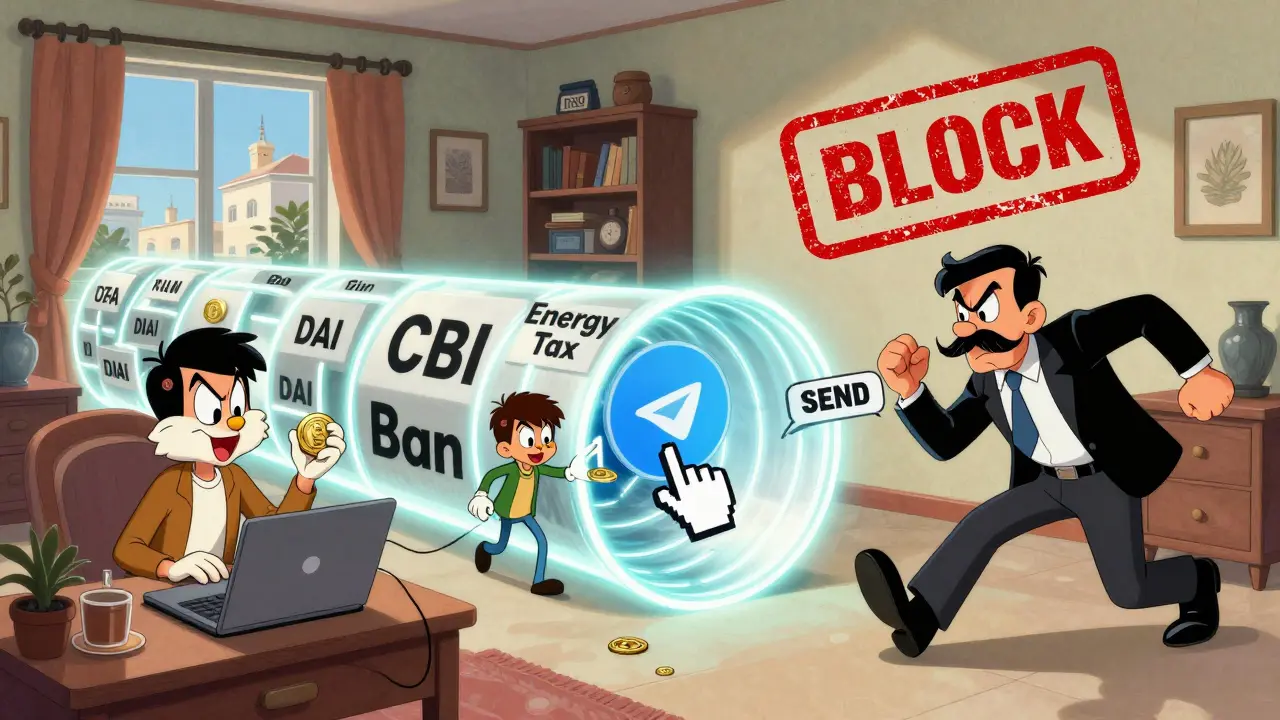
Iran’s government doesn’t want you to use cryptocurrency - but millions of Iranians are doing it anyway. Since early 2025, the Central Bank of Iran (CBI) has banned crypto advertising, blocked payment gateways, and forced all exchanges to hand over user data. They even raised energy tariffs for miners to make legal mining unprofitable. Yet, crypto usage in Iran hasn’t dropped - it’s adapted. In fact, over 14.7 million Iranians now use digital assets regularly, mostly to protect their savings from a currency that lost over 40% of its value in a single year.
Why Iranians Use Crypto Despite the Ban
The rial is collapsing. Inflation hit 42% in 2025. People can’t trust banks. The government controls everything - from bank accounts to foreign currency exchanges. So, when you need to send money abroad, pay for medical supplies, or just keep your savings from vanishing overnight, crypto becomes the only option. It doesn’t matter if the government calls it illegal. What matters is that it works.Unlike other countries where crypto is about speculation, in Iran, it’s survival. People aren’t buying Bitcoin to get rich. They’re using stablecoins to hold value. A family in Mashhad might convert their rials into DAI, send it to a cousin in Turkey, and then cash out in lira. That’s not gambling - that’s how they feed their kids.
The Three Main Ways Iranians Bypass Crypto Restrictions
There’s no single trick. It’s a system. Three tools work together to keep crypto flowing under the radar.- VPNs with Obfuscation - Over 78% of Iranian crypto users rely on encrypted tunnels to reach foreign exchanges like Binance and Bybit. The government blocks known exchange IPs, but tools like Windscribe, NordVPN, and ExpressVPN now use obfuscation - a technique that hides your traffic as regular internet use. Success rates for connecting to Binance jumped from 68% to 89% after this update in September 2025.
- Telegram Bots and P2P Trading - With Nobitex’s trading hours cut to 10 AM-8 PM and its platform still recovering from a $90 million hack, Iranians turned to Telegram. Dozens of private bots now let users swap USDT for DAI, send crypto to wallets, or find buyers/sellers. One popular bot, @IranCryptoBridge, lets you convert USDT to DAI on Polygon in under seven minutes, with no KYC and fees under $0.50.
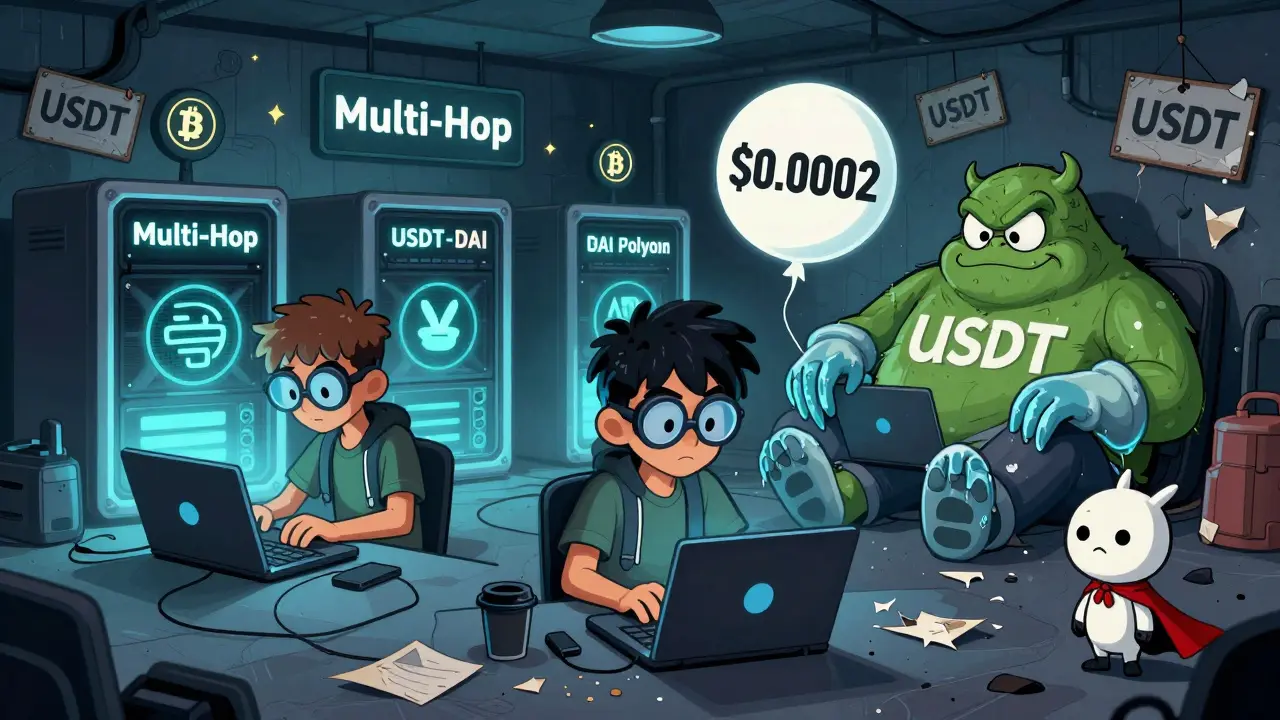
- DAI on Polygon - After Tether froze 42 Iranian wallets in July 2025, the community moved fast. Within 28 days, DAI usage on Polygon surged from 3% to 67% of all stablecoin transactions. Why? Because Polygon transactions cost $0.0002 and settle in 4.3 seconds. Compare that to USDT on TRC-20, which costs $0.10 and takes 13.7 seconds. For people trading small amounts daily, speed and cost matter more than brand recognition.
What Doesn’t Work Anymore
Some methods used to work - until they didn’t.The government’s own digital rial pilot on Kish Island? Only 12,400 people use it. Why? Because it’s tied to your national ID. You can’t send it abroad. You can’t use it outside government-approved apps. It’s not money - it’s a surveillance tool.
Legal mining? Almost gone. The government raised electricity costs from 0.004 cents/kWh to 0.03 cents/kWh. For most miners, that’s a 600% price jump. Now, 65% of Iran’s mining output comes from unlicensed rigs - often hidden in basements or warehouses, running on stolen grid power. If you’re caught, you face fines or jail. But the profits? Still worth the risk.
And don’t count on USDT anymore. Tether’s freeze in July 2025 wiped out over $90 million in Iranian holdings. Since then, users have avoided Tether’s network entirely. Even if you have USDT, you’re better off swapping it for DAI immediately.
Tools You Need to Get Started
If you’re in Iran and want to use crypto without getting blocked, here’s what you actually need:- VPN - Pick one with obfuscation. Windscribe, NordVPN, and Surfshark are the most reliable. Average cost: $7.80/month.
- MetaMask Wallet - Used by 76% of Iranian crypto users. Install the browser extension and set up a secure backup phrase. Never store it online.
- Telegram - Join trusted groups like @IranCryptoHelp or @DAI_Polygon_IR. Avoid public bots - many are scams.
- Tor Browser - For extra privacy when accessing decentralized exchanges. Helps avoid IP tracking.
- Polygon Network - Always choose DAI on Polygon. It’s faster, cheaper, and less monitored than Ethereum-based tokens.
You don’t need fancy gear. A $30 used laptop and a stable internet connection are enough. The real cost isn’t money - it’s time. Most users spend 17-22 hours learning how to set this up. But once it’s working, it’s life-changing.
The Risks Are Real
This isn’t risk-free. The Iranian government monitors internet traffic. They’ve arrested people for using crypto. In 2025, at least 142 people were charged under new cybercrime laws tied to crypto use.Transaction failures are common. Between 4-6 PM local time, the government throttles bandwidth to slow down crypto traffic. That’s when most swaps fail. Users report losing funds during these windows. Always test small amounts first.
Wallet compatibility is another issue. Some DAI contracts on Polygon don’t work with older MetaMask versions. Always update your wallet. And never send crypto to an address you didn’t generate yourself.
And don’t trust anyone who promises “guaranteed access” or “government-approved crypto.” Those are traps.

How the System Keeps Evolving
Iranian users aren’t passive. They’re hackers, coders, and engineers - mostly under 35 - who tweak systems daily.After the CBI demanded real-time transaction monitoring in September 2025, Telegram users built decentralized wallet solutions that don’t store data on servers. Now, transactions happen peer-to-peer, with no central point to shut down.
By October 2025, new Telegram bots introduced multi-hop routing. Instead of connecting directly to Binance, your traffic bounces through three servers before reaching the exchange. This made blocking nearly impossible.
Experts call this the world’s most agile crypto evasion system. While governments in Venezuela or Nigeria struggle to adapt, Iranians change tactics every few days. One user summed it up: “They ban one thing. We build three more.”
What’s Next in 2026?
By Q1 2026, DAI on Polygon will likely handle over 85% of Iranian stablecoin activity. The government’s digital rial? It’ll still be stuck at 0.02% adoption. The CBI can ban ads and block IPs, but they can’t stop people from wanting to protect their money.As long as the rial keeps falling, crypto will rise. Not because it’s trendy - because it’s necessary. The line between illegal and essential is fading. In Tehran, a teenager might use crypto to pay for online courses. A doctor might use it to buy medicine. A factory worker might send it to his sister in Dubai. These aren’t crimes - they’re acts of economic survival.
The government wants control. Iranians want freedom. And right now, crypto is the only thing that gives them both.
Can I use Bitcoin to avoid crypto restrictions in Iran?
Bitcoin is too slow and expensive for daily use in Iran. Transaction fees average $3.50 and take over 10 minutes. Most Iranians use DAI on Polygon instead - it’s 17x cheaper and settles in seconds. Bitcoin is mostly used for long-term savings, not transactions.
Is it safe to use Telegram bots for crypto in Iran?
Only use bots from trusted, community-vetted channels like @IranCryptoBridge or @DAI_Polygon_IR. Avoid bots that ask for your private key or send you links. Scams are common. Always test with small amounts first. Over 89% of successful users rely on bots that require no personal data.
Why DAI on Polygon and not USDT on Ethereum?
USDT on Ethereum costs over $1.75 per transaction and takes 13 seconds. DAI on Polygon costs $0.0002 and settles in 4.3 seconds. After Tether froze Iranian wallets in July 2025, users abandoned USDT entirely. Polygon’s lower security budget is a trade-off most Iranians accept for speed and cost.
Do I need to use a VPN every time I access a crypto exchange?
Yes. Iranian ISPs actively block known exchange IPs. Even if you connect once, the next day the IP might be blocked. Use a VPN with obfuscation enabled. Some users switch between 2-3 different VPNs to stay ahead of blocks. Consistency matters more than brand.
What happens if I get caught using crypto in Iran?
There’s no public record of mass arrests, but enforcement is increasing. Fines range from $1,000 to $10,000, and jail time is possible under cybercrime laws. Most users avoid detection by using non-custodial wallets, avoiding KYC, and never linking crypto to their real identity. The risk is real, but the payoff - protecting your savings - is higher for most.
John Doyle
February 14, 2026 AT 13:59Man, this is wild. I knew crypto was big in Iran, but I had no idea it had turned into a full-on underground economy. The fact that people are using DAI on Polygon to send money to cousins in Turkey? That’s not speculation - that’s family survival. I’ve been using crypto for trading, but this puts it all in perspective. We talk about decentralization like it’s a tech trend. For them, it’s literally how they eat.
kelvin joseph-kanyin
February 16, 2026 AT 06:21DAI on Polygon? 🚀💸 That’s the real MVP. Tether froze wallets? Bro, they just switched to the cheaper, faster, unhackable version. I’m so here for it. Iran’s crypto scene is basically a hacker movie, but real. 👏
Grace Mugambi
February 16, 2026 AT 16:16It’s fascinating how necessity reshapes technology. In most places, crypto is a gamble or a fad. In Iran, it’s infrastructure. People aren’t choosing it because it’s cool - they’re choosing it because the alternative is poverty. The fact that they’ve built decentralized, peer-to-peer systems without central servers? That’s not just clever - it’s revolutionary. Governments can ban things, but they can’t ban human ingenuity when survival’s on the line.
Crystal McCoun
February 18, 2026 AT 00:04I’m so impressed by how organized this is. The three-tool system - VPN with obfuscation, Telegram bots, DAI on Polygon - it’s like a well-oiled machine. And the fact that they’ve moved away from USDT entirely after the freeze? That’s textbook adaptive resilience. Also, please, please, please update your MetaMask. I’ve seen too many people lose funds because they didn’t. Always back up your phrase. Offline. Always.
Beth Trittschuh
February 19, 2026 AT 08:34It’s funny how the government calls it illegal… but everyone’s doing it anyway. Like, they’re not breaking the law because they want to - they’re breaking it because they have to. And honestly? That’s the most powerful kind of rebellion. No flags. No speeches. Just a teenager sending DAI to pay for online classes while the CBI screams into the void.
Also, the 17-22 hours of learning? That’s not a cost - it’s a rite of passage. You don’t just use crypto in Iran. You earn it.
Robbi Hess
February 20, 2026 AT 11:57This article reads like a techno-thriller novel written by someone who’s never left their basement. The notion that ‘crypto is survival’ is a romanticized fantasy. The Iranian regime is not powerless. They have surveillance, military-grade firewalls, and a history of crushing dissent. This isn’t a grassroots revolution - it’s a dangerous game of cat-and-mouse with a state that doesn’t hesitate to imprison people. You’re glorifying risk. That’s irresponsible.
Keturah Hudson
February 21, 2026 AT 14:27I’ve spent time in Tehran, and I can tell you - this isn’t just about money. It’s about dignity. When your savings evaporate overnight, and the state says ‘sorry, we’re in control,’ people don’t just accept it. They adapt. The Telegram bots, the obfuscated VPNs - these aren’t tools. They’re acts of quiet resistance. And honestly? The world should be paying attention. This is what digital autonomy looks like in practice.
SAKTHIVEL A
February 22, 2026 AT 21:47One must interrogate the underlying epistemological framework of this narrative. The conflation of economic pragmatism with moral righteousness is a fallacy of false dichotomy. The Iranian state, despite its regulatory overreach, maintains sovereign authority over monetary policy. To frame crypto adoption as ‘survival’ is to obfuscate the structural causes of inflation - namely, mismanagement, sanctions, and rent-seeking elites. Furthermore, the reliance on Telegram bots introduces non-state actors into a monetary ecosystem, thereby creating vectors for illicit capital flight. This is not liberation - it is deregulated chaos.
krista muzer
February 24, 2026 AT 19:24ok so i read this whole thing and like… i had no idea how bad the rial was? like 40% in one year?? that’s insane. and the part about people using crypto to pay for medicine?? i just cried a little. also the polygon thing is genius, like why would you use usdt when it’s like 17x more expensive?? also i think i’m gonna start using a vpn now lol
Lindsey Elliott
February 25, 2026 AT 15:33Okay but why is everyone acting like this is some genius hack? The government can still track IP addresses. And Telegram bots? Half of them are honeypots. I’ve seen videos of people getting arrested after using ‘trusted’ bots. Also, DAI on Polygon? It’s not unhackable - it’s just less monitored. That’s not security, it’s luck. This whole thing feels like a time bomb.
Santosh kumar
February 25, 2026 AT 18:14This is truly inspiring. People in Iran are not waiting for permission to build a better system. They’re building it. Quietly. Skillfully. Without fanfare. The fact that they’ve moved 67% of stablecoin traffic to Polygon in 28 days? That’s not just technical skill - that’s collective intelligence. We need more of this spirit everywhere.
Claire Sannen
February 25, 2026 AT 18:30Thank you for sharing this. The details about transaction costs and timing are incredibly useful. I’ve been helping friends in Eastern Europe navigate similar restrictions, and this gives me concrete advice to pass along. Always test with small amounts. Always use non-custodial wallets. And never, ever trust a bot that asks for your seed phrase. One mistake can cost you everything.
Christopher Wardle
February 26, 2026 AT 15:16It’s not about bypassing the state. It’s about bypassing scarcity. When your currency is a liability, any alternative becomes a necessity. The real story here isn’t the tech - it’s the human calculus. 17 hours to learn? Worth it. Risk of jail? Still worth it. Because what’s the alternative? Watching your life savings vanish into thin air while the government prints more rials? No. That’s not a choice. That’s surrender.
Andrea Atzori
February 27, 2026 AT 10:09This is the most compelling case for decentralized finance I’ve ever seen. It’s not about wealth creation - it’s about wealth preservation. And the evolution of the system - multi-hop routing, serverless Telegram bots, obfuscated tunnels - it’s a masterclass in adaptive resilience. I’ve studied economic sanctions for decades. This? This is the future. Governments can control borders, but they can’t control code. And in Iran, code is the new constitution.
Joe Osowski
February 27, 2026 AT 20:18Oh great, another ‘crypto is freedom’ cultist post. Let me guess - you’re also the type who thinks Bitcoin will replace the dollar and that the Fed is run by lizard people? Look, Iran has a government. It’s authoritarian. It has power. And if you think a bunch of teens with VPNs are going to outsmart the IRGC’s cyber division, you’re delusional. This isn’t resistance - it’s a suicide mission. And you’re glorifying it.
Jeremy Lim
February 28, 2026 AT 05:16Wait… so you’re telling me… you can send crypto… for $0.0002… and it settles in 4 seconds?? That’s… cheaper than my coffee. And I live in the U.S. What is this magic?? Also, why isn’t everyone doing this?? Also, why is Tether still a thing??
Elizabeth Choe
March 1, 2026 AT 17:44Y’all are talking like this is some high-tech warzone - but honestly? It’s just people being smart. They’re not hackers. They’re moms. Teachers. Doctors. They’re using what works. No fanfare. No hashtags. Just DAI on Polygon and a VPN that doesn’t suck. And honestly? That’s the most beautiful thing about it. It’s not about rebellion. It’s about showing up - every day - and refusing to let the system steal your future.
Benjamin Andrew
March 3, 2026 AT 05:09Let me be clear: this is not innovation. This is desperation. The Iranian state is not failing - it is adapting. The fact that people are using stolen grid power to mine crypto? That’s criminal. The fact that they’re circumventing national financial controls? That’s destabilizing. And the romanticization of this as ‘economic survival’ is dangerously naive. You’re not helping. You’re enabling.
Donna Patters
March 3, 2026 AT 08:51How dare you suggest that cryptocurrency is a moral alternative to state-issued currency? The rial is a sovereign instrument. To undermine it is to undermine the very fabric of national sovereignty. And yet, here you are - a Westerner, sitting in your $3000 laptop, preaching ‘freedom’ to a people who have no right to choose their own economic path. This isn’t empowerment. It’s neo-colonialism with a blockchain.
Michelle Cochran
March 3, 2026 AT 10:50Look - I’m not saying crypto is bad. But let’s not pretend this is some noble uprising. People are using it because they’re scared. Because they’re desperate. Because the system failed them. And that’s tragic. But it’s not heroic. It’s not revolutionary. It’s a symptom. A symptom of a broken economy, a broken government, and a broken promise. We should be fixing the root - not cheering on people who’ve been forced to build a raft out of duct tape.
Peggi shabaaz
March 4, 2026 AT 02:58huh. so they just… use what works. no big drama. no flags. no speeches. just a guy in mashhad sending dais to his sister. that’s kinda beautiful. i like that. no one’s asking for applause. just a way to keep feeding their kids.
bala murali
March 4, 2026 AT 16:49Interesting. The technical architecture is sound. However, one must consider the legal ramifications under Article 15 of Iran’s Cybercrime Law, which criminalizes unauthorized access to financial systems. The use of obfuscated VPNs and non-KYC Telegram bots may constitute a prosecutable offense under Section 7.3. Furthermore, the reliance on Polygon’s DAI introduces smart contract risk - particularly with regard to contract upgradeability and governance centralization. While pragmatic, this system remains vulnerable to regulatory capture. A more sustainable model would involve on-chain identity verification through zero-knowledge proofs - though this remains untested in Iran’s context.
John Doyle
March 4, 2026 AT 17:55Replying to @1868 - I hear you. It’s tragic. But here’s the thing - when the system fails, people don’t wait for permission to fix it. They fix it. And if the only tool left is crypto, then crypto becomes the medicine. You’re right - it’s a symptom. But sometimes, the symptom is the only thing keeping the patient alive. That doesn’t make it heroic. But it makes it real.