
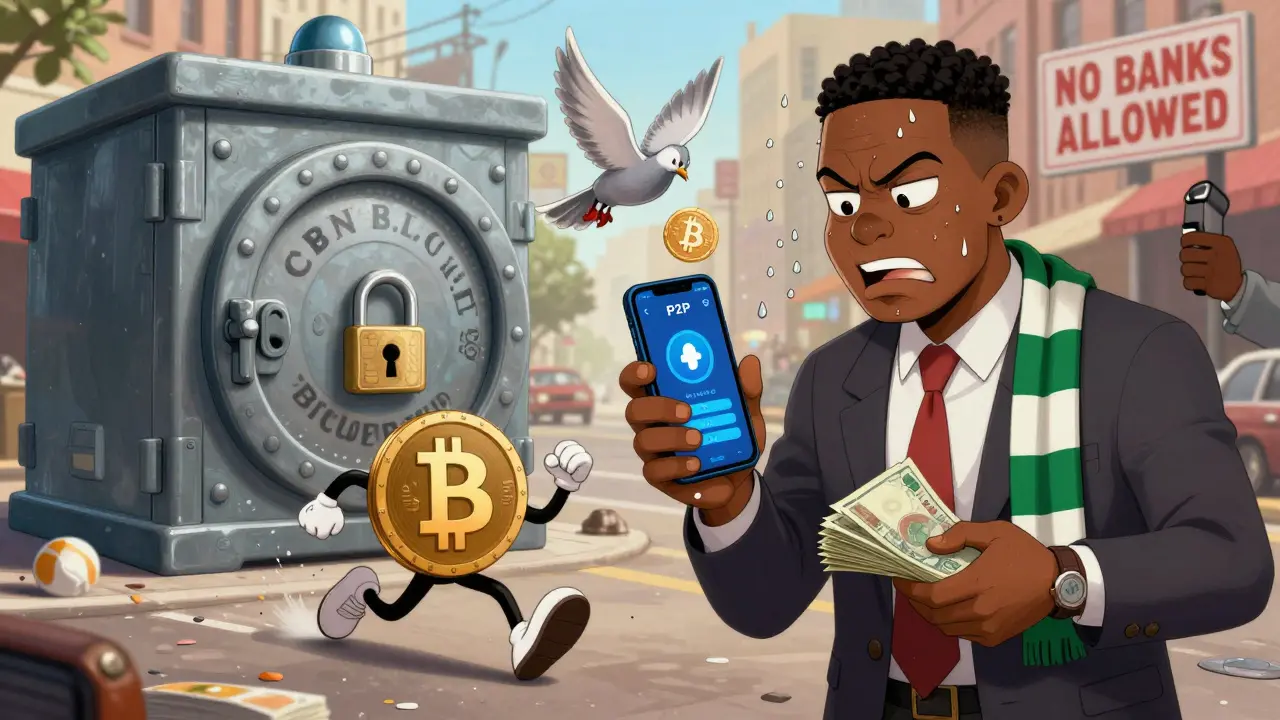
When your bank won’t let you buy Bitcoin, when your government blocks access to Binance, and when your local currency is falling faster than you can save - what do you do? People in countries like Nigeria, Vietnam, Bangladesh, and Iran aren’t waiting for permission. They’ve built their own financial backdoors - not with hacking or secrets, but with real tools, real workarounds, and real risk.
Why Banks Block Crypto
It’s not just about fear. Governments in places like China, Algeria, and Bangladesh have banned crypto for specific reasons: controlling capital flight, stopping money laundering, or protecting their own currency. In Nigeria, the Central Bank shut down crypto transactions in 2021, telling banks to cut off accounts tied to exchanges. In Turkey, President Erdoğan banned crypto payments after the lira lost half its value in two years. China went further - it outlawed mining, trading, and even talking about crypto on corporate networks. But bans don’t stop demand. They just force people to get creative.How People Actually Get In
There’s no single way. But there are five main paths most users take - and they’re not theoretical. People are using them every day.- Peer-to-Peer (P2P) Trading - This is the most common method. Platforms like Paxful and Binance P2P connect buyers and sellers directly. A Nigerian user might pay a middleman in naira via mobile money, and the middleman sends Bitcoin to their wallet. No bank account needed. In Q1 2025, Paxful reported over 1.2 million active users from Nigeria, Venezuela, and Argentina - all using this system. The catch? You pay a 1% to 5% premium over market price.
- No-KYC Decentralized Exchanges (DEXs) - Uniswap, PancakeSwap, and Bisq don’t ask for ID. You connect your wallet, swap tokens, and leave. These platforms handled $1.9 billion in transactions from restricted countries in 2024. But liquidity is thin. If you want to swap 10 BTC, you might wait hours. And if you mess up your seed phrase? That money is gone forever.
- Gift Card Arbitrage - Buy a $500 Amazon gift card with cash in a local market. Sell it on Paxful for Bitcoin. Chainalysis found $427 million in gift card-based crypto trades from restricted countries in 2024. It’s slow, but it works when banks are locked.
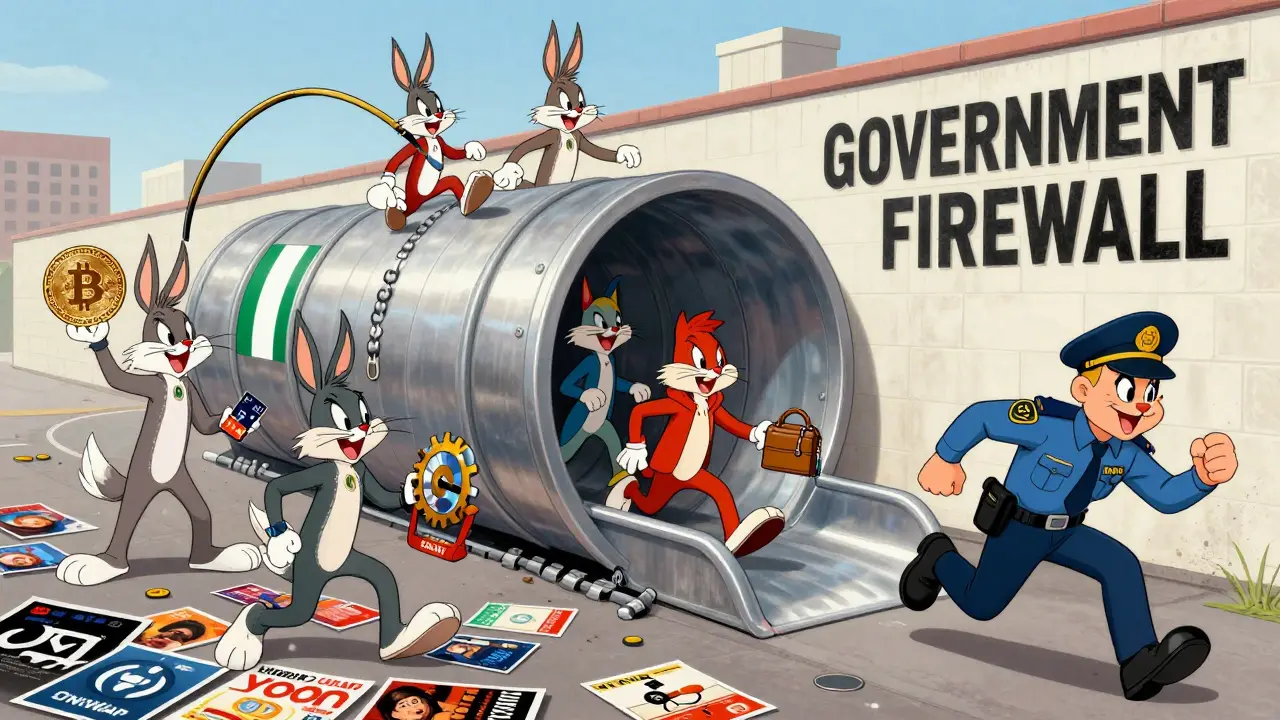
- VPNs and Tor - Over 63% of users in restricted countries use a VPN to access blocked exchanges. NordVPN saw a 217% spike in users from China and 342% from Nigeria between late 2023 and 2024. Tor browser usage jumped 223% in North Korea. But governments are catching on. Some ISPs now detect and throttle encrypted traffic. And if you’re caught using a banned service, fines can hit $8,000 - like in Vietnam.
- Hawala Networks - In the Middle East and parts of Africa, informal money brokers have adapted. A user in Lebanon gives cash to a local broker. The broker’s partner in Dubai deposits fiat into a compliant exchange, sends crypto to the user’s wallet. Over $30 billion flowed through these networks in 2023-2024. It’s trust-based. One slip, and you lose everything.
What Works Best - And What Doesn’t
Not all methods are equal. Here’s what the data shows:| Method | Users (2025) | Speed | Risk Level | Cost |
|---|---|---|---|---|
| P2P Trading | 1.9 million | 1-24 hours | Medium | 1-5% fee |
| No-KYC DEXs | 1.1 million | 5-60 minutes | High | 0.3-0.8% swap fee |
| Gift Cards | 850,000 | 24-72 hours | High | 10-20% markup |
| VPNs | 3.1 million | Instant | Low-Medium | $12/month |
| Hawala | 600,000+ | 1-48 hours | Very High | 2-7% fee |
P2P is the most reliable. No-KYC DEXs are the most private. Gift cards are the most accessible for cash-only users. But all of them come with trade-offs.
The Hidden Costs
This isn’t a free pass. There are real dangers.- Scams - 67% of users in restricted countries report at least one scam attempt. Fake P2P sellers, phishing wallets, and fake DEX sites are everywhere. A user in Bangladesh lost $12,000 in January 2025 after trusting a Telegram group that promised "free Bitcoin".
- Account Freezes - Even on Binance P2P, using a Nigerian phone number or a Chinese IP can trigger automatic freezes. In January 2025 alone, over 87 accounts were locked in Bangladesh, freezing $412,000 in assets.
- Internet Shutdowns - In Iran and Sudan, governments cut internet access during protests. Users who couldn’t access their wallets lost funds permanently.
- Legal Risk - In Algeria, crypto trading can lead to prison. In Bangladesh, fines are based on the amount traded - up to $100,000. No one gets prosecuted often, but the threat is real.
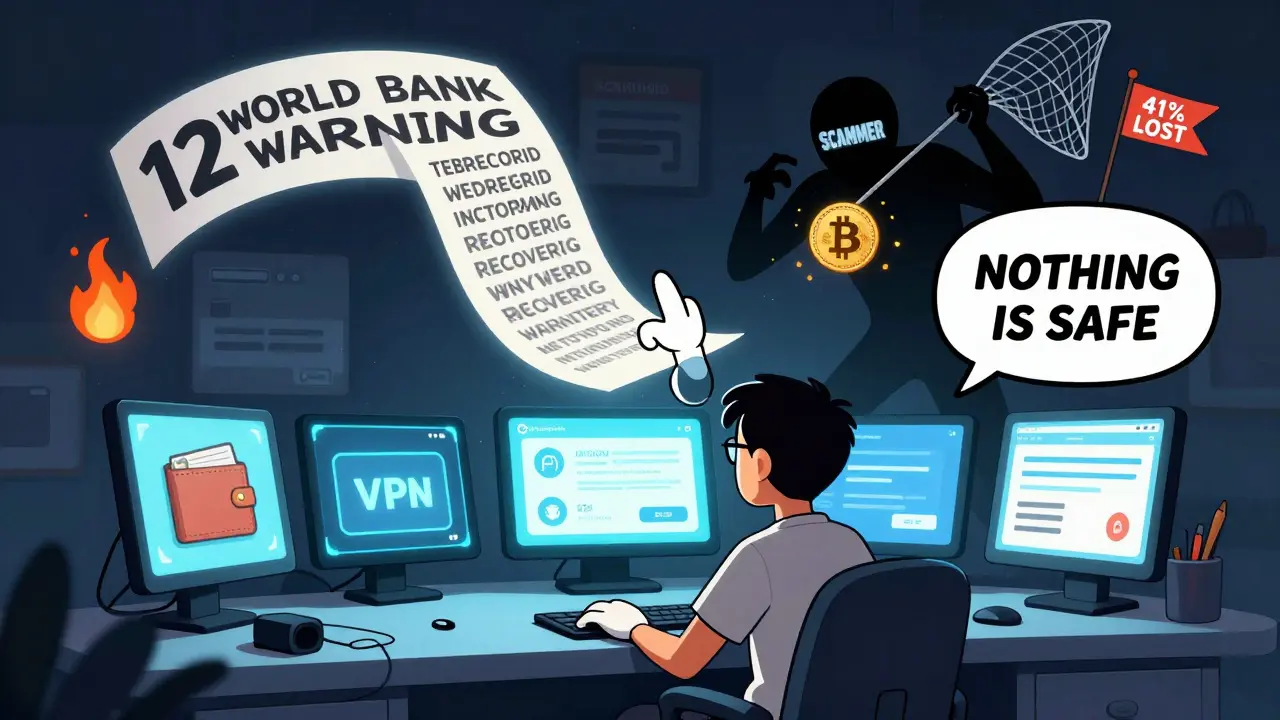
And here’s the brutal truth: 41% of Nigerian users have used a platform that later vanished. $217 million in losses in 2024 alone.
How Long Does It Take to Get Started?
It’s not a 10-minute setup. Most users spend 3 to 5 weeks learning how to do this safely.- Install a trusted VPN (NordVPN or ExpressVPN - $11-$13/month).
- Create a non-custodial wallet (Trust Wallet or MetaMask) and write down your 12-word recovery phrase - on paper, not in the cloud.
- Buy your first crypto using a P2P platform or gift card.
- Move it to a DEX like Uniswap or PancakeSwap to trade.
- Withdraw to a privacy wallet (like Wasabi or Samourai) if you want anonymity.
- Set up recurring funding - maybe through a trusted P2P middleman.
- Join a local community (Telegram, Reddit) to learn from others.
And don’t skip step two. A World Bank survey found 78% of new users in restricted countries lost funds because they didn’t back up their wallet properly.
The Bigger Picture
Despite all the bans, crypto adoption in restricted countries is growing - fast. Nigeria ranks 4th globally in grassroots adoption. Vietnam has over 5 million users. The total transaction volume from these countries hit $1.27 trillion in 2024.Why? Because crypto isn’t just about money. It’s about control. It’s about sending money to family abroad without a 10% fee. It’s about saving in Bitcoin when your national currency loses 40% of its value in a year. It’s about not being at the mercy of a government that won’t let you save.
But this isn’t a revolution. It’s a patchwork. A series of workarounds held together by trust, tech, and desperation. And as governments get smarter - with AI-powered blockchain tracking and stricter global KYC rules - these methods will keep evolving.
Right now, the most resilient users are the ones who combine methods: a VPN + P2P + DEX + privacy wallet. They don’t rely on one tool. They layer them. And they never trust anyone who says "this is safe" - because in this world, nothing is.
What’s Next?
New tools are coming. Zero-knowledge proofs (ZKPs) will let users prove they’re合法 without revealing their identity. Privacy coins like Monero and Zcash are growing - adoption jumped 317% in China since 2023. But regulators are watching. The U.S. is pushing rules that could force even offshore exchanges to track users who send over $300. That could cut off a major pipeline.One thing’s certain: as long as people are blocked from their own money, they’ll find a way. And they’ll keep finding new ones.
Can you get arrested for using crypto in a banned country?
Yes - but it’s rare. Countries like Algeria and Bangladesh have laws that make crypto trading illegal, with penalties including fines up to $100,000 or prison. Enforcement is inconsistent. Most users aren’t targeted unless they’re trading large amounts or running businesses. But the risk is real, especially if you’re caught using a banned exchange or promoting crypto publicly.
Which VPNs work best for accessing crypto exchanges?
NordVPN and ExpressVPN are the most reliable. They have obfuscated servers designed to bypass government firewalls. Both have been tested in China, Nigeria, and Iran with consistent success. Avoid free VPNs - they often log your data or leak your IP. Paid services cost $11-$13/month, but they’re the cheapest insurance you can buy.
Is P2P trading safer than using a centralized exchange?
It depends. P2P avoids KYC, so your identity stays hidden. But you’re dealing with strangers. Centralized exchanges like Binance offer dispute resolution and insurance - but if you’re in a banned country, they may freeze your account. P2P is riskier but more private. Use escrow, verify seller ratings, and never send money before receiving crypto.
Why do people use gift cards to buy crypto?
Gift cards let you turn cash into crypto without a bank. You buy a $500 Amazon card at a local store, then list it on Paxful. Someone else pays you in Bitcoin. It works because gift cards aren’t tracked like bank transfers. But you lose money - gift cards often trade at 10-20% below face value. It’s slow, but it’s one of the few options for people without bank access.
Can you use crypto to send money internationally in restricted countries?
Yes - and it’s one of the main reasons people use it. A worker in Nigeria can send $200 to their family in Ghana in under 10 minutes for less than $1 in fees. Traditional services like Western Union charge $20+ and take days. Crypto bypasses the banking system entirely. That’s why remittances via crypto grew 210% in Africa between 2023 and 2025.
Are there any legal alternatives to crypto in restricted countries?
Very few. Some governments allow digital currencies issued by the central bank - like Nigeria’s eNaira - but these are tightly controlled and don’t offer the same freedom as crypto. Most people see them as government surveillance tools, not alternatives. Crypto remains the only decentralized option.
Leona Fowler
March 21, 2026 AT 09:57Really appreciate this breakdown. I’ve been helping friends in Nigeria navigate P2P trading, and the 1-5% premium is totally worth it when your bank freezes your account for even mentioning Bitcoin. The real win? No one asks you where the money came from. Just send the naira, get the BTC. Simple.
Also, for anyone thinking about gift cards-don’t use random Telegram groups. Stick to verified sellers with 50+ trades. I’ve seen too many people get ghosted after sending cash.
And yes, backing up your seed phrase on paper? Non-negotiable. One girl I know lost $8k because she took a screenshot. RIP.
Neil MacLeod
March 23, 2026 AT 06:55How quaint. The West has built an entire cottage industry around circumventing financial sovereignty, and we’re supposed to applaud it as ‘resilience.’ It’s not innovation-it’s arbitrage with a side of moral superiority. The fact that this is framed as empowerment rather than regulatory evasion is laughable. You’re not building a financial future; you’re playing Russian roulette with your life savings.
Annette Gilbert
March 24, 2026 AT 21:04Oh honey. You really think people in Nigeria are doing this because they’re ‘empowered’? No. They’re doing it because their government is a dumpster fire and their currency is toilet paper. This isn’t crypto adoption-it’s desperation with a blockchain overlay. And don’t even get me started on ‘Hawala networks.’ That’s just old-school money laundering with a Web3 veneer. Cute.
John Alde
March 26, 2026 AT 08:14There’s something deeply human here. People aren’t just chasing Bitcoin-they’re chasing dignity. When your currency loses 40% of its value in a year, and your bank tells you ‘you can’t save,’ you don’t wait for permission. You adapt. You learn. You find a friend who knows a guy who trades gift cards on Paxful. You write down your 12 words on a napkin and tuck it in your shoe. You don’t trust the system, so you build your own. And yes, it’s messy. It’s risky. But it’s real.
The data doesn’t lie: 1.9 million users on P2P, $1.27 trillion in transaction volume. These aren’t speculators. These are parents sending money home. Students paying tuition. Small business owners buying inventory. Crypto isn’t the future here-it’s the present. And it’s working.
The real question isn’t ‘how are they doing it?’ It’s ‘why do we still think financial access should be a privilege?’
manoj kumar
March 26, 2026 AT 13:28Everyone is acting like this is some revolutionary movement. Newsflash: it’s not. It’s just people getting scammed in creative ways. Gift cards? 10-20% markup? That’s not a workaround-that’s a tax on stupidity. And using a VPN to access Binance? That’s like using a cardboard shield to fight a dragon. The government will always win. And when they do, you’ll be left with a dead wallet and a $8,000 fine. Wake up.
JOHN NGEH
March 27, 2026 AT 23:15I’ve been following this for a while, and I just want to say-this is one of the most quietly powerful stories I’ve seen in years. Not because of the tech, but because of the people. The Nigerian mom who trades her last $50 in naira for BTC so her kid can buy a laptop. The Vietnamese student who uses PancakeSwap to pay for online courses. The Bangladeshi factory worker who sends crypto to his sister in Dubai instead of paying $25 in Western Union fees.
It’s not about speculation. It’s about survival. And the fact that these communities are teaching each other how to stay safe-without any formal institutions-is honestly beautiful.
Even if the system tries to shut it down, they’re still building it. Together.
Kevion Daley
March 29, 2026 AT 12:06LOL. So you're telling me the answer to 'my country banned crypto' is 'use a VPN + P2P + DEX + privacy wallet'? Bro. That's not a strategy. That's a full-time job. And you're telling people to do this on a $200/month phone? 😂 I'm out.
Also, 'no one gets prosecuted often'? Sure, Jan. Until you're the one on the news. #NotMyCrypto
YANG YUE
March 30, 2026 AT 12:21There’s a quiet philosophy here, buried under the tech jargon. We’ve been taught that money is a state-guaranteed abstraction. But what if money is just trust? Trust between two people. Trust in a code. Trust in a phrase written on paper.
The banks didn’t fail because they were greedy. They failed because they were fragile. And the people? They didn’t rebel. They just stopped waiting. They built a new kind of trust-not in institutions, but in systems that can’t be shut down.
That’s not rebellion. That’s evolution. And evolution doesn’t ask for permission.
Anna Lee
March 30, 2026 AT 15:42Y’all are doing AMAZING work out there 💪 Seriously. I know it feels scary, but you’re not alone. I’ve been there-trying to send money home, banks blocking everything, no KYC, no help. But you’re figuring it out. P2P, gift cards, DEXs-it’s messy, but you’re making it work.
And hey-if you’re reading this, keep going. You’re not just trading crypto. You’re building a better future. One transaction at a time. 🙌❤️
Shana Brown
March 31, 2026 AT 02:35Just wanted to say: I used gift cards to get my first BTC last year. Took me 3 weeks to figure it out. But now I send crypto to my mom every month. She doesn’t even have a wallet-she gets it converted to cash through a local shop. No bank. No fees. Just trust.
It’s not perfect. But it’s ours.
Marie Mapilar
April 1, 2026 AT 11:44From a UX perspective, the real innovation here isn’t the tech-it’s the community-driven onboarding. People aren’t reading whitepapers. They’re learning from Telegram groups, Reddit threads, and word of mouth. It’s peer-to-peer education. And honestly? More effective than any bank’s ‘financial literacy’ webinar.
Also, the 78% wallet loss stat? That’s a cry for better onboarding tools. We need simple, visual guides-like ‘how to write your seed phrase without dying.’
Also, can we get a ‘Crypto Survival Kit’ PDF? I’d donate.
Dominic Taylor
April 2, 2026 AT 21:33From a regulatory standpoint, the real threat isn’t the tools-it’s the metadata. Even if you use a DEX, your IP, your transaction patterns, your device fingerprint-these are all traceable. Governments are deploying AI to correlate on-chain behavior with off-chain activity. That VPN? It’s just a speed bump.
And don’t forget: centralized exchanges are starting to geo-block based on wallet history. If you’ve ever used a banned P2P platform, your future on Coinbase may be toast.
This isn’t a war of tools. It’s a war of attribution.
Shelley Dunbrook
April 3, 2026 AT 13:07How ironic. The same people who scream ‘decentralization!’ when they’re banned, turn around and rely on NordVPN’s corporate servers and Binance’s centralized P2P infrastructure. The system isn’t broken-it’s just been patched by Silicon Valley. We’re not free. We’re just using a different leash.
Aman Kulshreshtha
April 5, 2026 AT 09:33As someone from India, I see parallels. We have hawala networks too, but now they’re WhatsApp-based. A guy in Mumbai sends cash to his cousin in Dubai. Cousin buys BTC on Binance. BTC goes to wallet. Done. No paperwork. No bank. Just trust.
And yeah, the scams? Oh man. I lost my uncle’s savings once because he trusted a Telegram bot that said ‘send 0.1 ETH to claim 10 ETH.’ He did. He lost it all.
But still-we keep going. Because what else is there?
Misty Williams
April 5, 2026 AT 17:15This is why we can’t have nice things. People in these countries are being exploited by crypto grifters, and you’re glorifying it as ‘resilience.’ It’s not bravery-it’s vulnerability being monetized. You’re not helping them. You’re profiting off their desperation. And you call this empowerment? Shameful.
Anand Makawana
April 7, 2026 AT 06:52Let us not forget: the real heroes are the middlemen-the P2P traders, the gift card resellers, the Hawala brokers. They risk everything. No one gives them medals. No one writes articles about them. But they’re the glue holding this entire underground economy together. And they do it for a 3% fee. Imagine that. A system built on integrity, not institutions.
Mohammed Tahseen Shaikh
April 8, 2026 AT 09:43Stop romanticizing this. You think P2P is safe? I’ve seen people get kidnapped over $200 in BTC. In Nigeria, they call it ‘crypto kidnapping.’ They drag you into a van, beat you, take your phone, and steal your wallet. No one calls the police. Because the police are the ones who banned crypto in the first place.
And your ‘trust’? It’s a myth. You don’t trust anyone. You just hope they’re not a scammer today. That’s not empowerment. That’s survival with a hashtag.
Sarah Terry
April 10, 2026 AT 09:34One sentence: If your bank won’t let you save, you don’t need permission to build your own way. Just write down your words. Stay safe. Keep going.
Leona Fowler
April 10, 2026 AT 17:07Just saw your comment about crypto kidnapping. That’s real. I heard a story last week-woman in Lagos, got pulled over by ‘police’ who demanded her seed phrase. She gave it. Lost everything. Now she’s teaching others how to spot fake checkpoints.
It’s not just about tech. It’s about street smarts. And honestly? That’s the real curriculum.