

There’s no mystery to why people chase airdrops. Free tokens. Free NFTs. No upfront cost. But not every airdrop is worth your time. The HashLand Coin (HC) airdrop is one of those cases where the promise sounds bold - synthetic NFTs tied to hash rate assets - but the reality is far more uncertain.
HashLand Coin isn’t just another crypto project throwing tokens at the wall. It claims to be the first platform to merge Intellectual Property with hash rate mining using something called Synthetic NFTs (S-NFTs). Think of it like this: instead of buying physical mining rigs, you own a digital asset that represents a share of mining power. Sounds futuristic? Maybe. But here’s the catch - it’s still mostly theory.
What Exactly Is the HashLand Coin Airdrop?
The airdrop isn’t handing out HC tokens directly. Instead, it’s distributing 1,000 exclusive NFTs. Each winner gets exactly one NFT. No more. No less. That’s it. No thousands of tokens. No long-term staking rewards. Just a single NFT tied to the HashLand ecosystem.
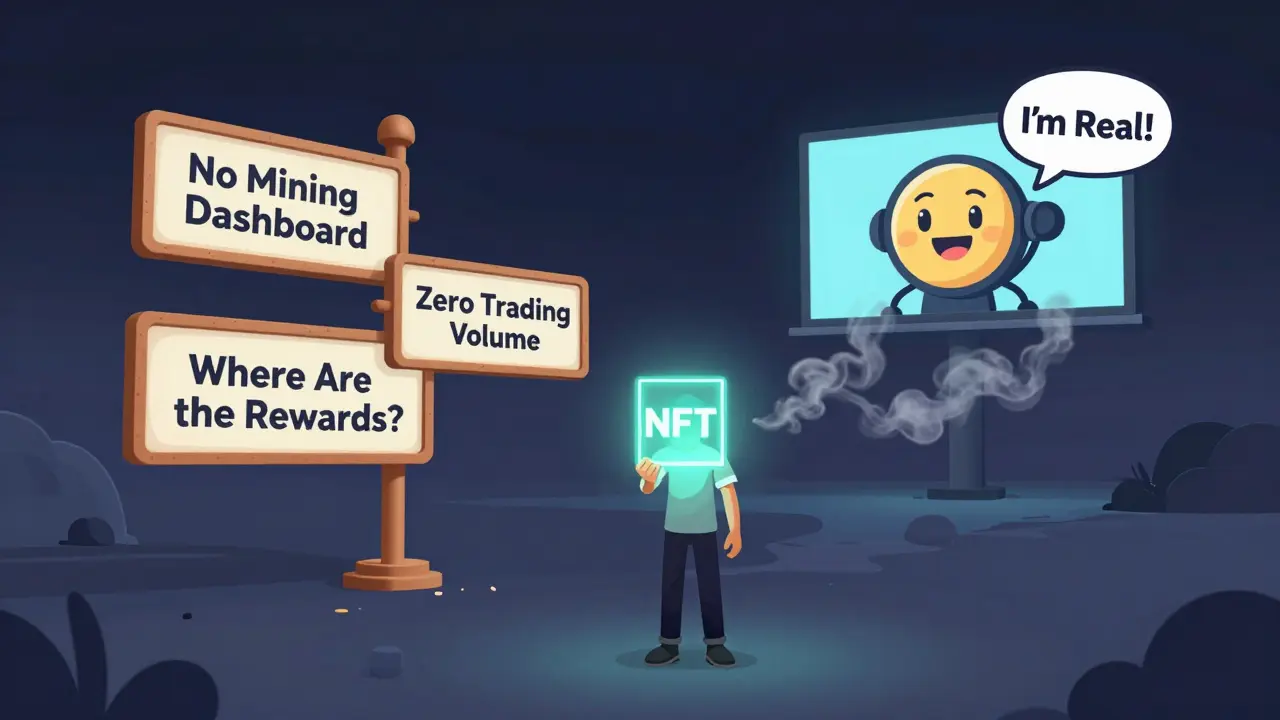
These NFTs aren’t just collectibles. According to the campaign, they’re meant to represent ownership in synthetic hash rate assets. In theory, owning one could let you earn mining rewards without owning hardware. But here’s the problem: there’s no public proof this works. No live mining dashboard. No transaction logs. No user testimonials. Just a whitepaper and a CoinMarketCap listing.
The campaign is live on CoinMarketCap. To enter, you need to:
- Search for HashLand Coin (HC) on CoinMarketCap
- Complete the registration form
- Follow the official HashLand social channels (Twitter, Telegram, etc.)
That’s it. No wallet deposits. No KYC. No fees. But here’s what they don’t tell you: only 1,000 people will win. With tens of thousands of crypto users checking CoinMarketCap daily, your odds are slim. And even if you win, the real value of that NFT? Unknown.
What Is HashLand Coin (HC)?
HC is the native token of the HashLand platform. It’s not listed on major exchanges like Binance or Coinbase in any meaningful way. Binance shows it at $0. Coinbase lists it at $0.0386, but with $0 trading volume. That means no one is buying or selling it. CoinMooner says its market cap is around $2.38 million - but that’s based on a circulating supply of 2.29 million HC tokens. The total supply? 20.95 million. Max supply? 21 million.
So why does the price vary so wildly? Because liquidity is nonexistent. There are only 8 exchanges listing HC. Most of them have zero trading activity. If you win an NFT, you might not even be able to sell it later. Or cash out. Or use it for anything practical.
HC was designed to do three things:
- Pay for in-platform purchases
- Give rewards to users
- Let holders vote on platform upgrades
But again - where are the purchases? Where are the rewards? Where’s the voting? There’s no dashboard. No user interface. No active community posts showing real usage. It’s all promises.

What Are Synthetic NFTs (S-NFTs)?
This is the core idea behind HashLand. Traditional NFTs are digital art, collectibles, or access passes. HashLand says it’s creating S-NFTs - NFTs that represent real mining power. You don’t need to buy a rig. You just buy or earn an NFT that gives you a slice of hash rate.
The platform uses three smart contracts:
- Minting Contract - creates the S-NFTs
- Purchase Contract - lets users buy shares of hash rate
- Mining Contract - distributes rewards based on actual mining output
It sounds solid. But here’s the reality: no one has seen these contracts in action. No audits. No public blockchain explorers showing active transactions. No miners using this system. The entire concept exists as a whitepaper and a marketing campaign.
Compare this to established projects like Foundry or Slush Pool - they’ve been running for years. Real miners. Real payouts. Real transparency. HashLand? Zero public proof.
Should You Participate?
Let’s cut through the noise. Here’s what you need to know before clicking "Enter Airdrop":
- You’re not getting HC tokens. You’re getting one NFT. That’s it.
- There’s no guarantee the NFT has value. No exchange lists it. No one’s trading it.
- HashLand has no track record. No product launch. No user base. No verified mining activity.
- The airdrop is likely a marketing stunt. It’s designed to inflate CoinMarketCap stats and create hype - not to build a real ecosystem.
That said, if you’ve got five minutes to spare and don’t mind the low odds, go ahead. It’s free. No risk. But don’t expect anything more than a digital badge in your wallet.
And if you’re hoping this NFT will turn into a cash cow? Don’t count on it. The market doesn’t care about unproven tech. Not unless it’s working.
What Happens After the Airdrop?
HashLand says winners will get a second NFT - called a "New Era NFT" - after the campaign ends. Again, no details. No timeline. No function. Just another promise.
Meanwhile, YouTube videos are popping up showing "how to claim your free HC tokens." But they’re not showing you how to mine. Or earn. Or use anything. They’re just guiding you through the CoinMarketCap form.
This isn’t a project. It’s a funnel.
The goal isn’t to build a mining platform. It’s to get your email. Your social handles. Your wallet address. And then… what? Sell your data? Launch a token sale later? Pump and dump? We don’t know. But we do know this: when a project has $0 trading volume and no real users, it’s not trying to solve a problem - it’s trying to collect attention.
Final Thoughts
HashLand Coin’s airdrop isn’t dangerous. But it’s not valuable either. It’s a low-stakes gamble on a high-stakes idea. If you win, you get an NFT. If you don’t, you’ve wasted five minutes.
The bigger question isn’t whether you should join. It’s whether HashLand can ever deliver on its promise. Can synthetic NFTs really replace physical mining rigs? Can a token with zero trading volume become a utility currency? Can a project with no users, no transactions, and no audits survive beyond its first marketing campaign?
Right now, the answer is no. But if you’re curious, go ahead. Enter the airdrop. Just don’t believe the hype. And never invest more than you’re willing to lose.
Howard Headlee
March 12, 2026 AT 17:18Zephora Zonum
March 13, 2026 AT 13:07Alex Thorn
March 14, 2026 AT 05:14PIYUSH KOTANGALE
March 15, 2026 AT 06:16Tina Keller
March 16, 2026 AT 03:06Douglas Anderson
March 18, 2026 AT 02:42Mara Alves Mariano
March 18, 2026 AT 21:45ann neumann
March 19, 2026 AT 12:26Anshita Koul
March 21, 2026 AT 12:02Lindsay Girvan
March 23, 2026 AT 09:59William Montgomery
March 24, 2026 AT 05:09vishnu mr
March 25, 2026 AT 22:18vasantharaj Rajagopal
March 27, 2026 AT 05:36Adam Ashworth
March 27, 2026 AT 15:07Anthony Marshall
March 28, 2026 AT 21:13Grace van Gent-Korver
March 29, 2026 AT 06:07