
You’ve probably seen Enosys pop up on your radar while browsing for new ways to earn yield or trade tokens. The name sounds like a standard centralized exchange, right? You might be expecting a familiar interface where you deposit funds and click 'buy' or 'sell.' But here’s the twist: Ēnosys isn’t just an exchange. It’s a sprawling Web3 ecosystem built entirely on the Flare Network. If you treat it like Coinbase or Binance, you’re going to run into friction fast. If you understand it as a suite of interconnected decentralized protocols, however, it offers some serious advantages-especially if you want to leverage Layer 1 rewards.
This review cuts through the marketing hype to tell you exactly what Ēnosys is, how its unique "interconnected" model works, and whether it’s worth your time and capital in 2026. We’ll look at the security audits, the real user experience, and the specific risks that come with tying your portfolio so closely to one blockchain network.
What Actually Is Ēnosys?
Let’s clear up the biggest misconception first. Ēnosys is a comprehensive Web3 software house and DeFi ecosystem rather than a traditional standalone crypto exchange. Founded in 2021 by a team of scientists and engineers, it operates primarily on the Flare Network mainnet, with an experimental testing ground on the Songbird Canary Network.
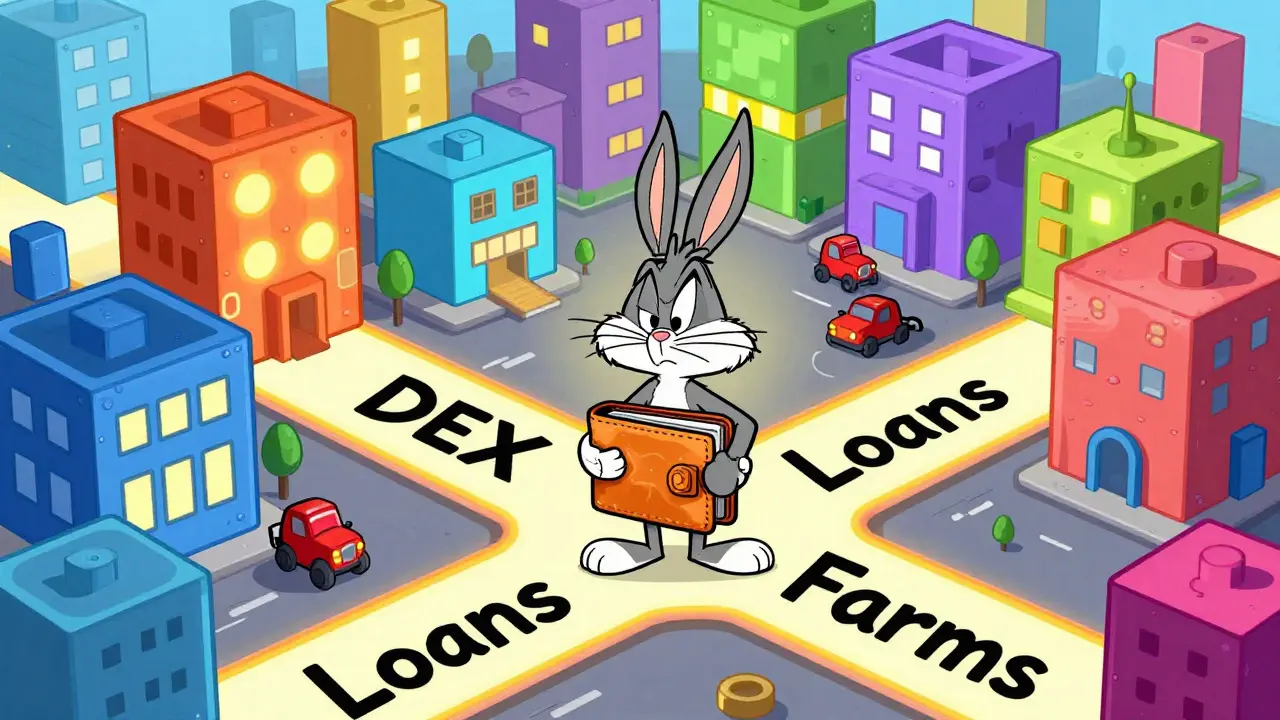
Instead of being a single app, think of Ēnosys as a neighborhood of different buildings that all share the same power grid. The core components include:
- DEX V2 and DEX V3: Decentralized exchanges for swapping tokens. V3 is the newer version featuring concentrated liquidity, which allows providers to allocate capital more efficiently.
- Loans: A protocol for interest-free borrowing against collateral.
- Farms: Yield farming opportunities that integrate Layer 1 rewards from the Flare Network.
- Bridge: A cross-chain tool to move assets between networks like Ethereum, BNB Chain, and Polygon.
- NFT Suite: Including Gallery (marketplace), Ermis (physical redemption), and Clover (fair distribution).
The big selling point here is synergy. In most DeFi setups, you have to jump between three different websites to swap, lend, and farm. With Ēnosys, these actions are linked. Tokens you earn from farming can instantly be used as collateral in the Loans protocol without leaving the ecosystem. This "closed-loop" design is what sets it apart from generic DEXs.
How the Ecosystem Works: The Interconnected Advantage
The magic of Ēnosys lies in its technical architecture. Most decentralized exchanges operate in isolation. You provide liquidity to Uniswap, but those earnings don’t automatically help you borrow on Aave unless you manually move them. Ēnosys changes this dynamic through its APYCloud is a central yield aggregator that distributes sustainable yields to governance participants across market conditions.
Here is how the flow typically works for a user:
- You connect your wallet (MetaMask, Trust Wallet, or Flare Wallet).
- You deposit assets into the Farms protocol to earn yield. Because this sits on the Flare Network, you often get additional L1 rewards on top of standard trading fees.
- You take those earned tokens and use them as collateral in the Loans protocol to borrow stablecoins.
- You use the borrowed stablecoins to provide liquidity on DEX V3, capturing further fees.
This loop is efficient, but it requires understanding. According to user surveys from early 2026, it takes about 8-10 hours of active learning to fully grasp how these protocols interact. It’s not a "set it and forget it" platform for beginners. However, once you get the hang of it, the capital efficiency can be significantly higher than using disjointed platforms.
Security and Safety: Should You Trust Your Funds?
In DeFi, security is everything. If you lose your private key, you lose your money. There is no customer support hotline to call back. So, how safe is Ēnosys?
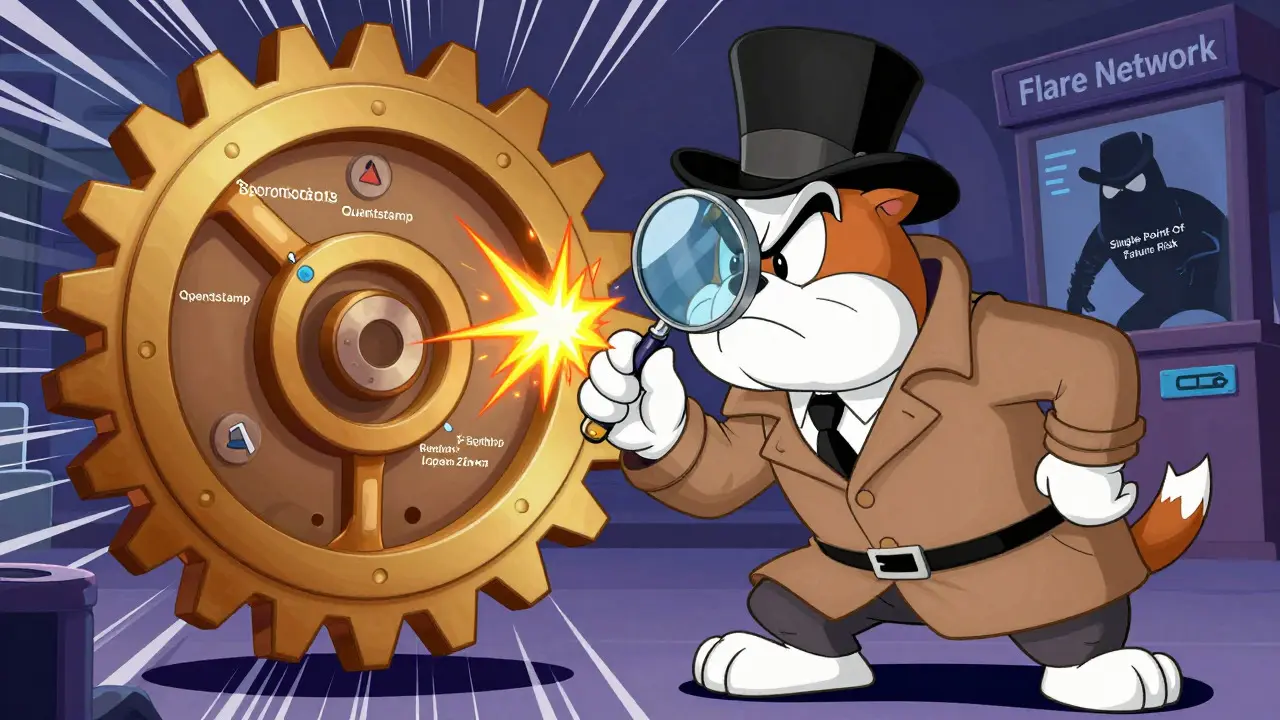
The platform has taken security seriously. As of late 2025, Ēnosys protocols have undergone 17 independent audits by reputable firms including Quantstamp and OpenZeppelin. They also test their code across 11 different environments before every release. That’s a rigorous process compared to many smaller DeFi projects that launch with minimal checks.
However, there is a structural risk you need to understand: single-point-of-failure dependency. Ēnosys is heavily tied to the success of the Flare Network. David Shin, Chief Analyst at Delphi Digital, noted in January 2026 that if Flare fails to achieve mainstream adoption, Ēnosys’ value proposition diminishes significantly. You aren’t just betting on Ēnosys; you’re betting on the entire Flare ecosystem.
Additionally, while the smart contracts are audited, human error remains a factor. During extreme market volatility in March 2024, users reported cascading liquidation risks due to the interconnected nature of the protocols. If one part of the chain gets stressed, it can pull down the rest. Always monitor your positions during high-volatility events.
User Experience: The Good, The Bad, and The Clunky
Let’s talk about the actual feel of using the platform. I’ve looked at hundreds of user reviews on Trustpilot, Reddit, and Twitter to give you a realistic picture.
The Good: Users love the integration. On Trustpilot, where Ēnosys holds a 4.3/5 rating based on 87 reviews, the most common praise (mentioned in 63 reviews) is the seamless transition between the DEX and lending protocols. You don’t have to re-authorize transactions constantly or switch chains mid-process. The support team is also highly rated, resolving issues within 24 hours in most cases.
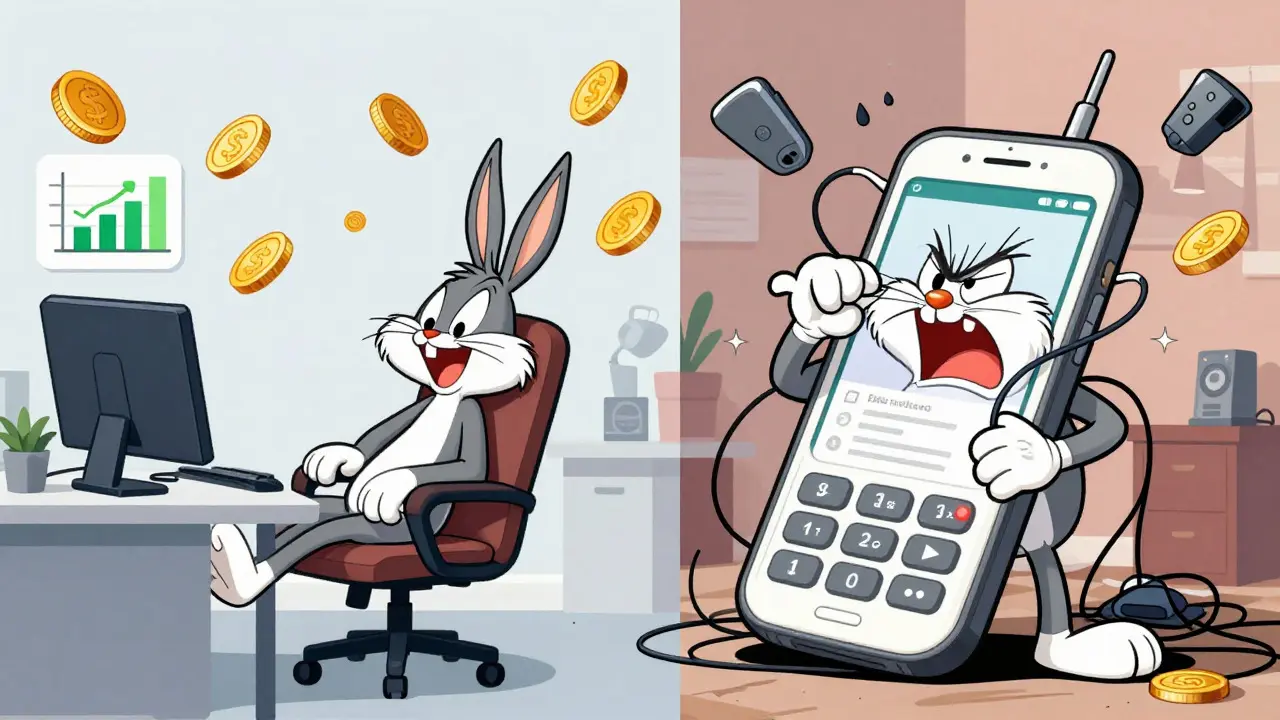
The Bad: The mobile experience is currently a pain point. Forty-one reviews specifically complained about a "clunky mobile interface" that lacks features available on desktop. If you plan to manage your DeFi portfolio on your phone, expect frustration. The developers have acknowledged this and scheduled a major UI/UX overhaul for Q2 2026, but until then, stick to a desktop browser.
Another issue is wallet connectivity. About 12% of new users report trouble connecting their wallets initially. This usually stems from incorrect network settings (forgetting to add the Flare Network RPC details). Make sure you follow their setup guide precisely.
| Feature | Ēnosys Ecosystem | Standard DEX (e.g., Uniswap) |
|---|---|---|
| Protocol Integration | Highly integrated (Swap, Lend, Farm linked) | Isolated (Requires manual bridging/moving) |
| Rewards Source | Trading Fees + Flare L1 Rewards | Trading Fees Only |
| Token Selection | Limited (~127 pairs on DEX V3) | Vast (1,800+ pairs) |
| Learning Curve | Steep (8-10 hours to master) | Moderate (Basic swaps are easy) |
| Cross-Chain Support | Built-in Bridge (7+ networks) | Usually single-chain focused |
Who Is Ēnosys For?
Not every crypto investor needs Ēnosys. Here is who will benefit most, and who should stay away.
Best For: • Experienced DeFi users who want to maximize yield through complex strategies. • Flare Network believers who want to utilize their FLR tokens effectively. • Users interested in NFT-DeFi hybrids (using the Gallery and Ermis protocols). • Those comfortable with self-custody and managing gas fees on multiple chains.
Not For: • Beginners who just want to buy Bitcoin or Ethereum easily. • Investors looking for deep liquidity on obscure altcoins (the token selection is limited). • People who prefer a simple, one-click mobile trading experience.
Getting Started: A Practical Guide
If you decide to dive in, here is the safest path forward:
- Set Up Your Wallet: Use MetaMask or Trust Wallet. Ensure you have added the Flare Network and Songbird Network to your list of custom RPCs. This is the most common stumbling block.
- Start Small: Don’t dump your entire portfolio in day one. Start with a small amount on the Songbird Canary Network (the testnet equivalent) to practice swapping and bridging without risking real capital.
- Join the Community: The official Discord has over 14,300 members. Participate in the weekly "Governance 101" sessions. Understanding the dual-token system (HLN and APS) is crucial for long-term participation.
- Use the Bridge Carefully: When moving assets from Ethereum or BNB Chain, check the current network congestion. During peak times, bridges can take 45+ minutes. Plan your moves accordingly.
- Monitor Your Positions: Because of the interconnected loans and farms, set up price alerts. Volatility can trigger liquidations faster than you expect.
Final Verdict
Ēnosys is not a replacement for your primary exchange. It’s a specialized tool for advanced DeFi strategies. Its strength lies in its integration and the extra layer of rewards provided by the Flare Network. If you are willing to spend the time learning the interface and managing the risks, it can offer superior yields compared to isolated DEXs.
However, keep an eye on the roadmap. The upcoming Q2 2026 UI update and Q3 2026 expansion to Solana and Avalanche could make this platform much more accessible. For now, proceed with caution, start small, and never invest more than you can afford to lose in any DeFi experiment.
Is Ēnosys a centralized or decentralized exchange?
Ēnosys is a decentralized ecosystem. It does not hold your funds in custody. Instead, it provides smart contract-based protocols (DEX, Loans, Farms) that allow you to interact directly with the blockchain using your own Web3 wallet.
What is the minimum investment to start using Ēnosys?
There is no strict minimum, but you need enough funds to cover transaction fees (gas) on the Flare Network and the initial deposit for liquidity or farming. Starting with $50-$100 is reasonable for testing purposes, though larger amounts are needed to see significant yield returns.
How does Ēnosys compare to Uniswap?
Uniswap is a standalone DEX with vast token variety but isolated functions. Ēnosys offers fewer tokens but integrates swapping, lending, and farming into one connected loop. Ēnosys also offers Layer 1 rewards from Flare, which Uniswap does not provide natively.
Is my data safe on Ēnosys?
Since Ēnosys is non-custodial, your funds remain in your wallet until you approve a transaction. The platform has undergone 17 security audits by firms like Quantstamp. However, always verify contract addresses yourself and beware of phishing links.
Can I use Ēnosys on my mobile phone?
Yes, but the experience is currently suboptimal. Many users report a clunky interface on mobile devices with missing features compared to the desktop version. A major UI overhaul is planned for mid-2026 to address this.
What happens if the Flare Network fails?
This is the primary systemic risk. Ēnosys is built on Flare. If the underlying network loses value or adoption, the utility and rewards within the Ēnosys ecosystem would likely decrease significantly. Diversification is key to mitigating this risk.
Ryan Robinson
August 3, 2026 AT 13:28hey guys, just read through this and i gotta say the whole "closed-loop" thing sounds kinda sus to me but also really interesting. like if u can farm then lend without moving stuff that saves so much gas fees right? im thinking about trying it out on songbird first cause why not lol. anyone else already in?
Matt Kay
August 4, 2026 AT 14:35too complex for me
Carl Michaud
August 5, 2026 AT 22:22let's be real here, this is just another centralized point of failure disguised as decentralization. the fact that they rely entirely on Flare Network means you're betting on a single horse in a race rigged by venture capitalists who have already exited their positions. the audits are theater. quantstamp has audited rug pulls before. the interconnectedness isn't synergy, it's contagion risk vectoring. when one protocol fails, the liquidity spiral will drain your collateral faster than you can blink. typical web3 snake oil.
Don Fizy
August 6, 2026 AT 20:32Hey Carl! :) Don't be so hard on it. Every new tech has risks. The key is education. If you start small on Songbird, you learn the ropes without losing your shirt. It's all about baby steps! 🚀
Dominic Greco
August 8, 2026 AT 00:30🚨🚨🚨 THEY ARE WATCHING YOU 🚨🚨🚨 The bridge is a honeypot. They track your wallet address across chains to build a profile for the CBDC rollout. Don't connect your main wallet!!! Use burner only!!! 👁️👄👁️
Eden Tadesse
August 9, 2026 AT 16:26I actually tried connecting my wallet yesterday and it was such a mess. I kept getting errors because I forgot to add the RPC details for Flare. It’s so annoying when these platforms assume you know what an RPC is. Why can’t they just make it work like MetaMask does for Ethereum automatically? I feel like they gatekeep the experience with unnecessary technical hurdles. Also, the mobile app is literally unusable, I had to switch to my laptop just to see my balance. Fix your UI please!
Prudence Flemming
August 10, 2026 AT 10:52the paradigm shift here is ontological. we are no longer interacting with discrete financial instruments but rather participating in a holistic yield topology. the APYCloud represents a central nervous system for capital allocation efficiency. it is not merely swapping tokens; it is the alchemical transmutation of idle assets into kinetic value streams via L1 incentives. the jargon is heavy but the underlying mechanics suggest a superior equilibrium state compared to fragmented DeFi silos. embrace the complexity or remain stagnant in the legacy fiat mindset.
Candice Cornett
August 10, 2026 AT 22:09everyone is so obsessed with yields they forget basic risk management. this platform is a casino dressed up as a bank. the moral failing of crypto is that it encourages gambling behavior under the guise of innovation. you people are throwing money at smart contracts written by anonymous devs who could vanish tomorrow. stop chasing the green arrow and start saving for retirement like normal humans do. it is pathetic really.
Lance Jantz
August 11, 2026 AT 21:21Ah, Candice, you sweet summer child clinging to the rusted anchor of traditional finance! To dismiss the symphony of algorithmic harmony that is Ēnosys is to reject the very essence of digital liberation! We are not gamblers, my dear, we are pioneers dancing on the edge of the blockchain abyss! The interconnected protocols are not a trap, they are a waltz! A beautiful, deadly waltz where every step generates more beauty (yield) than the last! Join us in the dance floor of the future!
Nick Darring
August 13, 2026 AT 01:10Look, I get the hype around the integration, but let's play devil's advocate for a second here because I genuinely think most people are missing the forest for the trees when it comes to the actual utility versus the marketing fluff that gets pumped into our Discord channels every single day by mods who are clearly incentivized to keep engagement high regardless of the product quality. Sure, the closed loop is cool in theory, but have you actually tried to execute a complex strategy during high volatility without feeling like you're defusing a bomb with a pair of scissors? I mean, come on, the liquidation cascades mentioned in the article are not some hypothetical scenario, they are a feature, not a bug, designed to punish those who don't monitor their positions every five minutes, which defeats the purpose of passive income for the average Joe who just wants to set it and forget it like they do with their index funds back in the old world economy.
Kat Bennett
August 13, 2026 AT 09:27I think Nick raises a valid point about the monitoring aspect, but I’ve found that if you take the time to understand the governance sessions and the dual-token system, it actually becomes quite manageable and even rewarding in a way that feels less like gambling and more like active participation in a growing ecosystem. I joined the Discord last month and attended the Governance 101 session, and honestly, it cleared up so many questions I had about how HLN and APS interact, which made me feel much more confident about starting with a small amount on the testnet to get a feel for the mechanics before risking any real capital on the mainnet.
Phil Babb
August 14, 2026 AT 16:35EXCELLENT POINTS EVERYONE!!! But let me tell you from a cultural perspective, this is exactly how decentralized communities evolve!!! Through debate and rigorous scrutiny!!! However, Phil here says: CHECK YOUR RPC SETTINGS!!! DO NOT FORGET THE BRIDGE TIMES!!! BE PATIENT!!! THE FUTURE IS NOW!!! LET'S GOOOO!!! 🔥🔥🔥
Matthew Smith
August 15, 2026 AT 14:16the nature of trust in a trustless system is a paradox that defines our era. we place faith in code yet fear the coder. enosys offers a structure but structure implies constraint. is it safe? safety is an illusion. risk is the only constant. therefore one must accept the probability of loss as the price of admission to the temple of yield. meditate on this.
Dave Kjendal
August 15, 2026 AT 14:49its fine if you dont mind reading docs for hours. most people wont bother. they want easy buttons. this is not that. its for nerds. good luck to them though. probably gonna lose money anyway.
Joy Kwant
August 16, 2026 AT 17:28You people are so naive. The author of this post is clearly shilling for the project. Look at the positive spin on the 'clunky' interface. They call it a 'pain point' but frame it as a temporary inconvenience while ignoring the fundamental flaw of relying on a niche blockchain. It’s emotionally draining to watch everyone fall for the same tired narrative of 'high yield equals good investment.' Wake up! Your greed is being exploited by developers who care more about their token dumps than your security. It’s disgusting how easily manipulated you all are.
Lorraine Surringer
August 17, 2026 AT 04:42Oh honey, Joy, you’re always so dramatic! 😘 But seriously, I’ve been using Enosys for months and the support team is actually super helpful. Yes, the mobile app is trash, I agree, but the desktop version is smooth once you figure out the wallet connection. And don’t listen to all the doom and gloom about Flare failing. The L1 rewards are legit! Just make sure you double-check everything before you sign transactions, okay? Stay safe out there! 💖