
Why Kazakhstan’s Power Grid Is on the Edge
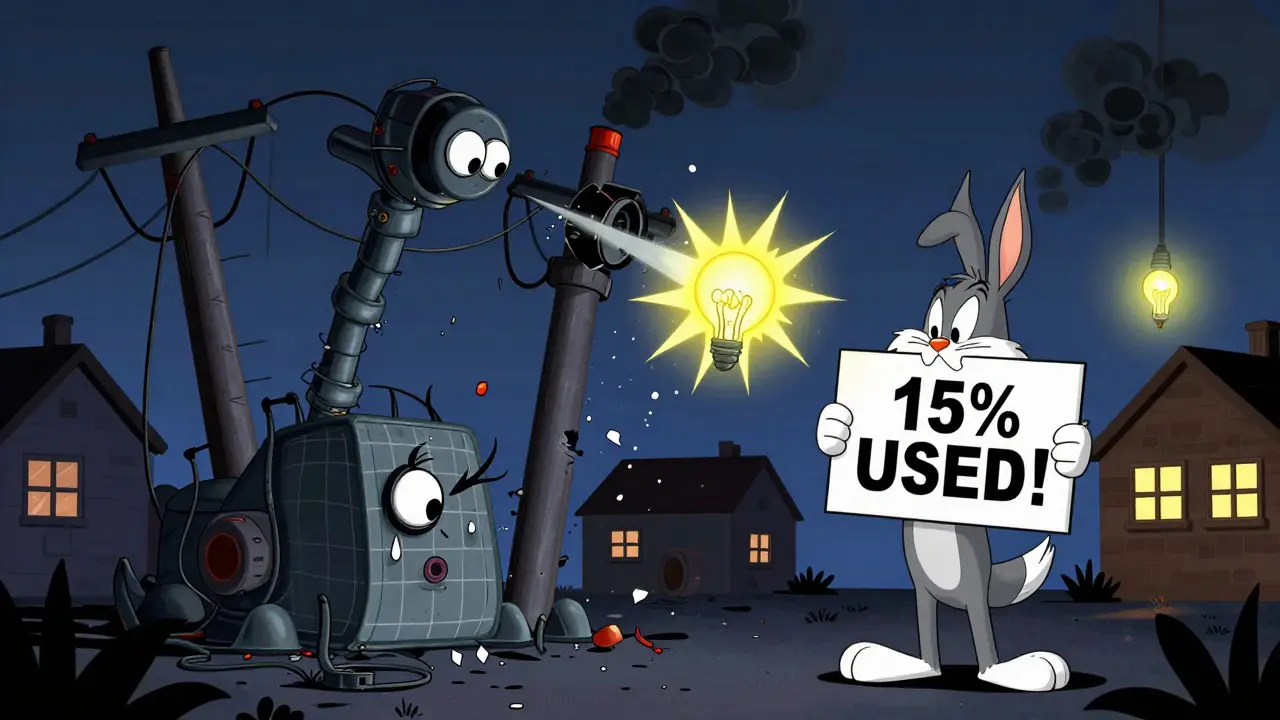
Kazakhstan’s electricity system is breaking down-not because of a sudden disaster, but because of decades of neglect. Over one-third of its power plants are 70% to 90% worn out. Some regional grids are worse: one report showed 97% deterioration. That means wires, transformers, and switches are literally falling apart. In Oral, a city in northern Kazakhstan, electricity losses hit 18% in recent years-meaning for every five kilowatts sent out, nearly one vanishes before it reaches homes or businesses. That’s not normal. In most developed countries, losses above 10% are considered unacceptable. The national grid, managed by KEGOC, has 220 active power plants. Only 144 of them are renewable. Solar and wind together produce less than 6% of the country’s total electricity. Even though Kazakhstan plans to build three 1-gigawatt wind farms and is pushing for renewables to overtake coal by 2025, the current system can’t handle the change. Coal plants are rigid-they can’t ramp up or down quickly. When solar panels suddenly stop producing at sunset, or wind turbines slow down, the grid has no flexibility to adjust. That’s why blackouts are becoming more common, especially in winter when heating demand spikes.The Hidden Cost of Electricity Waste
It’s not just about lights going out. Electricity losses cost Kazakhstan billions. Every kilowatt lost is a kilowatt that had to be generated, burned, and paid for. Regional grid operators report over 18,000 technical violations in the first eight months of 2024 alone-down from 28,000 in 2023, but still far above the 18,609 recorded in 2022. These aren’t minor issues. They’re broken meters, illegal connections, aging substations, and overloaded circuits. The Ministry of Energy admits the grid needs smart technology to track usage in real time, fix inefficiencies, and detect theft. But funding is scarce. Tariffs jumped 50% by April 2025, hitting households and small businesses hardest. People are paying more for less. The government’s plan to build a 2,000 MW North-South HVDC transmission line between 2024 and 2029 is a step forward. So is the push to unify the Western Zone into the national grid by 2040. But these are long-term fixes. Meanwhile, the system is crumbling. And something else made it worse.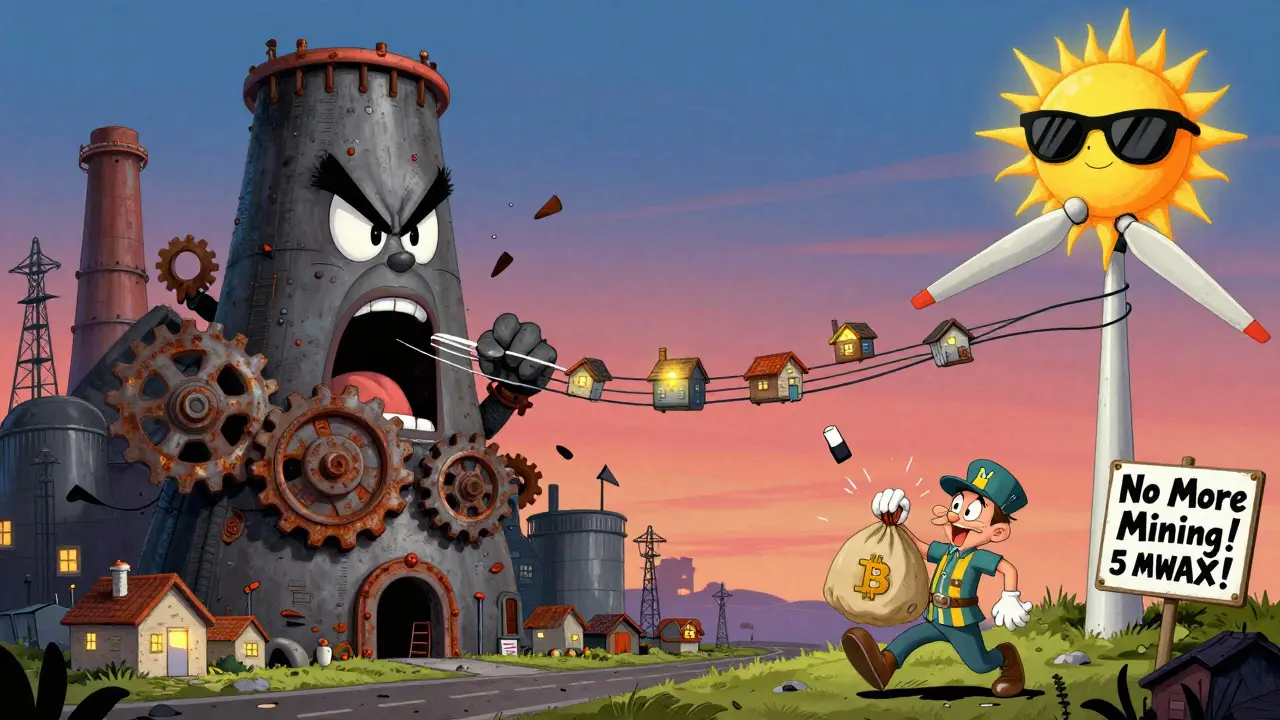
Crypto Mining’s Role in the Energy Crisis
Between 2021 and 2023, Kazakhstan became the world’s second-largest hub for Bitcoin mining after the U.S. Why? Cheap electricity, lax regulation, and proximity to Russia after its crackdown on mining. At its peak, crypto mining consumed up to 15% of Kazakhstan’s total electricity output. That’s more than all of Kazakhstan’s households combined. In some regions, mining farms accounted for over 30% of local demand. The government didn’t ban mining outright-but it didn’t need to. In early 2023, it started imposing strict new rules. Mining operations had to register with the Ministry of Energy. They were required to pay higher tariffs-up to 50% more than regular industrial rates. Unregistered miners faced immediate disconnection. By mid-2023, over 200 unlicensed mining sites were shut down. In 2024, the government introduced a cap: no mining farm could use more than 5 MW without special approval. That killed most large-scale operations. The ones that remained had to prove they used renewable energy or were located in areas with surplus capacity. The result? Mining activity dropped by nearly 70% from its peak. Bitcoin hash rate in Kazakhstan fell from over 18% of the global network to under 5%. The move wasn’t about ideology-it was survival. The grid couldn’t handle the load. Power plants were running 24/7 just to keep mining rigs cool. Schools and hospitals were getting brownouts. Farmers couldn’t run irrigation pumps. The government had to choose: keep the lights on for people, or keep them on for machines.Why Renewable Energy Isn’t Solving the Problem Yet
Kazakhstan has the sun, the wind, and the space for solar and wind farms. It’s got over $2.6 billion in renewable investment commitments. But money alone doesn’t fix a broken grid. The problem isn’t generation-it’s delivery. The existing transmission lines can’t carry power from the windy steppes of western Kazakhstan to the cities in the south. The grid was built for centralized coal plants, not scattered renewables. Without major upgrades, adding more solar panels just creates new bottlenecks. Small businesses and homeowners want to install rooftop solar and sell excess power back to the grid. The law allows it. But the upfront cost-$5,000 to $10,000 for a system that pays for itself in 8-10 years-is out of reach for most. There’s no financing program. No tax credit. No government subsidy. So while the rules are progressive, the reality is stagnant. People can’t afford to participate. The system stays stuck.
What’s Next for Kazakhstan’s Power System?
The government’s 2023-2032 grid modernization plan is ambitious. It includes upgrading 12,000 km of transmission lines, installing smart meters in 2 million homes by 2030, and launching a real-time balancing market for electricity. But progress is slow. The North-South HVDC line won’t be done until 2029. Smart grid tech is still in pilot phases. Meanwhile, electricity demand is projected to grow 3% per year through 2030. If mining returns in force-if Russia pushes its miners back across the border-Kazakhstan could be right back where it started. The country’s best hope lies in three things: strict enforcement of mining regulations, faster grid modernization, and targeted support for small-scale renewables. Without all three, the risk of nationwide blackouts grows. And when the power goes out in Almaty or Nur-Sultan, it’s not just a technical problem. It’s a political one.Can Kazakhstan Avoid a Repeat?
The answer isn’t whether Kazakhstan can build more wind farms. It’s whether it can build a smarter, fairer system. One where energy isn’t a free-for-all for foreign miners. Where households aren’t punished for the sins of unregulated industry. Where investment in renewables doesn’t just mean building more turbines, but fixing the wires that carry the power. Kazakhstan’s story isn’t unique. Other countries have faced crypto mining booms. Texas, Sweden, and even Georgia saw spikes in demand that strained their grids. But most acted faster. They raised prices, imposed caps, or outright banned mining during peak hours. Kazakhstan waited until the lights were flickering before it moved. Now, it has a chance to get it right. But time is running out.Was crypto mining banned in Kazakhstan?
Kazakhstan didn’t issue a full ban on cryptocurrency mining, but it imposed strict restrictions starting in 2023. Miners had to register with the government, pay higher electricity rates, and limit their power usage to 5 MW without special approval. Unregistered operations were shut down, and over 200 sites were disconnected in 2023. These measures cut mining’s share of national electricity use from 15% to under 5% by 2024.
How much of Kazakhstan’s electricity does crypto mining use?
At its peak in 2022-2023, crypto mining consumed up to 15% of Kazakhstan’s total electricity output-equivalent to the entire residential sector in some regions. By 2024, after regulatory crackdowns, mining’s share dropped to under 5%. That’s still more than some small countries use, but it’s no longer a threat to grid stability.
Why is Kazakhstan’s power grid so unreliable?
Over one-third of Kazakhstan’s power plants are 70-90% worn out. Regional grids have up to 97% deterioration in some areas. Transmission losses average 17.42%-far above the 10-12% considered normal in developed countries. Outdated infrastructure, lack of investment, and poor maintenance have created a system that can’t handle modern demand, especially with sudden spikes from mining or heating.
Are renewable energy sources helping Kazakhstan’s grid?
Renewables are growing but not yet helping enough. Solar and wind make up only 6% of total generation. While three 1-gigawatt wind farms are planned, the grid can’t absorb intermittent power without major upgrades. Transmission lines are too weak, and there’s no real-time balancing system. Until the wires are fixed, adding more solar panels won’t solve blackouts.
What’s being done to fix Kazakhstan’s power grid?
The government is building a 2,000 MW North-South HVDC transmission line between 2024 and 2029 to connect regions. It’s also planning to install smart meters in 2 million homes by 2030 and modernize 12,000 km of transmission lines. A new balancing market for electricity is in development. But progress is slow, and funding gaps remain. Without faster action, electricity shortages could become widespread by 2030.
Craig Nikonov
December 17, 2025 AT 18:51Shruti Sinha
December 18, 2025 AT 06:07Greg Knapp
December 20, 2025 AT 05:52Sean Kerr
December 20, 2025 AT 22:35Sammy Tam
December 21, 2025 AT 00:54Bradley Cassidy
December 21, 2025 AT 07:17Elvis Lam
December 21, 2025 AT 12:40Jonny Cena
December 22, 2025 AT 20:11Dionne Wilkinson
December 23, 2025 AT 22:29Emma Sherwood
December 24, 2025 AT 22:06Samantha West
December 26, 2025 AT 12:50Heather Turnbow
December 27, 2025 AT 01:39Sally Valdez
December 27, 2025 AT 09:48Sue Bumgarner
December 29, 2025 AT 04:50Terrance Alan
December 29, 2025 AT 05:28George Cheetham
December 30, 2025 AT 04:56Cheyenne Cotter
December 31, 2025 AT 11:40Jesse Messiah
January 1, 2026 AT 17:13Jack Daniels
January 2, 2026 AT 03:57Donna Goines
January 2, 2026 AT 06:41