

Angola turned off the power to crypto mining operations in April 2024-not because it hates Bitcoin, but because its hospitals were running on generators while mining farms ran 24/7 on stolen grid electricity.
Why Angola Banned Crypto Mining
Angola’s national grid can only produce 5,500 megawatts of electricity for a population of 39 million. That’s less than 420 kWh per person per year-ten times lower than the global average. Meanwhile, illegal crypto mining operations were sucking up 15% of the country’s total power during peak hours. Some mining farms used more electricity than entire neighborhoods. In Luanda and Benguela, transformer explosions became common as overloaded lines failed under the strain. One mining center in Sambizanga was drawing as much power as 300 homes. When the local clinic lost power for six hours during a child’s emergency surgery, the government had to act. The ban wasn’t about ideology. It was about survival. The Ministry of Energy and Water calculated that mining one Bitcoin in Angola consumed 1,440 kilowatt-hours-40 times more than a traditional bank transfer. The energy cost wasn’t just financial; it was human. Hospitals, schools, and water pumps were going dark while ASIC miners hummed in backrooms, cooling units running full blast.How the Ban Worked
The law was simple: any mining operation using more than 10 kilowatts of continuous power without government approval became illegal. Industrial-scale farms-those using over 100 kilowatts-were the main target. That’s about the power draw of 100 home air conditioners running nonstop. The government didn’t need to ban all crypto. It just needed to stop the energy theft. Enforcement started with smart meters. The National Electricity Agency (INE) scanned grid data for unusual 24/7 power spikes. A home might use 5 kW during the day and 1 kW at night. A mining rig? 150 kW, every hour, every day. That pattern screamed “illegal.” Then came the raids. In August 2025, during Interpol’s Operation Serengeti 2.0, Angolan police, trained in thermal imaging and power signature analysis, hit 25 mining centers. They seized 8,300 ASIC miners, 15,000 graphics cards, and 45 illegal power stations-some wired directly into high-voltage lines, bypassing meters and safety systems. The total value: $37.2 million. All 60 arrested individuals were Chinese nationals, who had been drawn to Angola by electricity as cheap as $0.03 per kWh-less than half the global average.The Human Cost of Mining
Before the ban, miners complained about unreliable power. They’d lose 40% of their equipment to sudden outages. To keep running, they bought diesel generators-raising their costs by 35%. Some paid $500 a month in bribes to utility inspectors just to keep their rigs online. But the real victims were Angolans. In Benfica, Luanda, small shop owners saw their electricity bills jump 22% in 2023 because the grid was overloaded. In Lobito, miners reported 24-hour blackouts during dry season, forcing them to run generators through the night. In Sambizanga, transformer explosions shut down hospitals. One Reddit user, u/AngolaTech, summed it up: “I saw our clinic running on a generator while mining farms had their own industrial transformers.” That post got over 1,200 upvotes.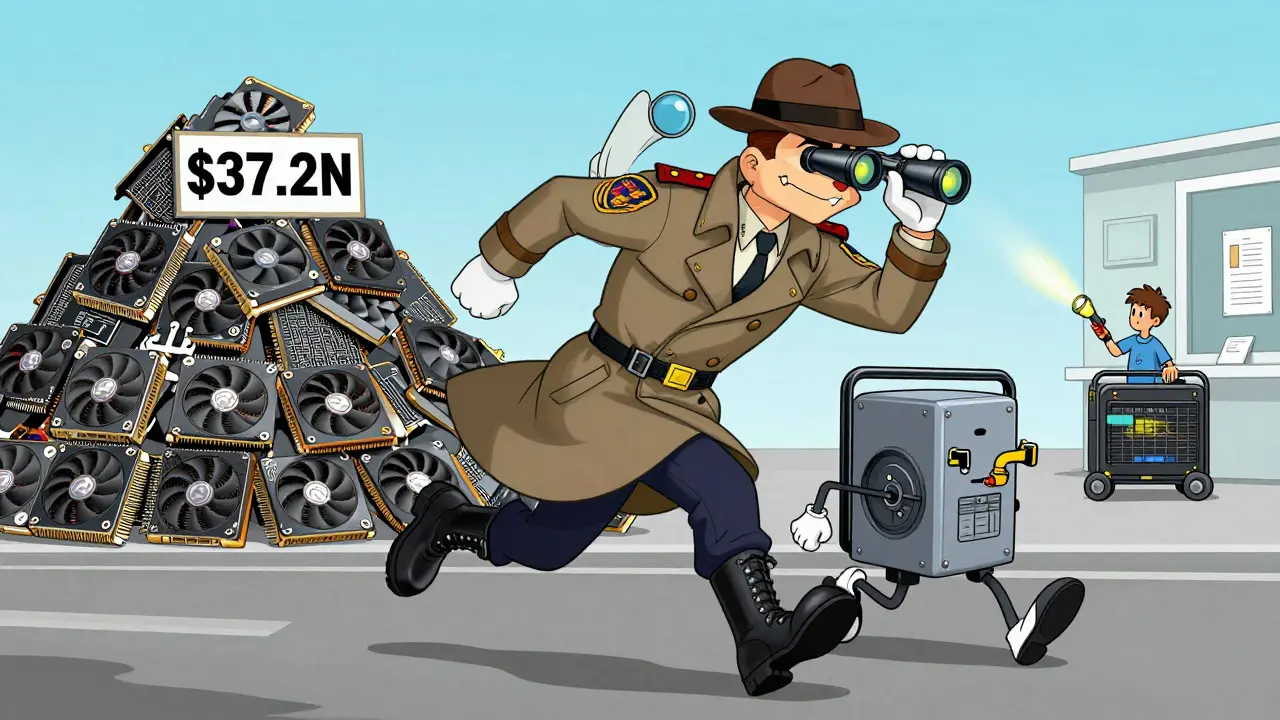
What Happened to the Seized Equipment
The government didn’t just destroy the machines. They inventoried them using blockchain tracking systems provided by Interpol. Machines worth more than $10,000 were auctioned off after 90 days. But most of the 23,300 seized units were too old or damaged to resell. Instead, the government redirected them. In September 2025, officials announced 65% of the confiscated mining hardware would go to public universities for computer science labs. Another 35% would be used by municipal offices to run e-government services. It wasn’t about profit-it was about repurposing waste into public tools.Why Renewable Energy Didn’t Save Mining
Angola has one of the highest solar potentials in Africa: 2,200 kWh per square meter annually. But the ban didn’t make exceptions for solar-powered miners. Why? Because even if you used solar panels, you still needed to connect to the grid to stabilize your operation. And any grid connection-even a small one-risked drawing backup power during cloudy days, stealing from households. The government’s rule is clear: no grid connection. No exceptions. That means a miner would need to run entirely off-grid-huge battery banks, solar arrays covering acres, and no fallback. It’s technically possible. But economically? Not for most. The startup cost for a single 100-kilowatt off-grid mining farm would exceed $2 million. No one’s doing that.What’s Next for Angola?
The country’s energy crisis isn’t solved. Only 47% of Angolans have reliable grid access. The Cambambe Dam, which supplies 55% of the nation’s electricity, dropped to 38% capacity during the 2023 drought. Hydropower is unreliable. The $4.5 billion Cambambe III expansion-set to add 1,150 megawatts-won’t finish until 2028. In the meantime, Angola is testing new tools. In July 2025, 200 smart grid sensors were installed to detect the electromagnetic signatures of mining rigs. That means the government can now identify a hidden farm in 72 hours-not weeks. There’s one crack in the wall: in September 2025, President João Lourenço met with Solax Power to discuss pilot projects for off-grid solar mining. But Energy Minister João Baptista Borges made it clear: “Any future authorization would require 100% off-grid renewable energy with no grid connection whatsoever.” That’s not a reopening. It’s a narrow, almost impossible door. Only a handful of deep-pocketed foreign investors could ever meet those conditions.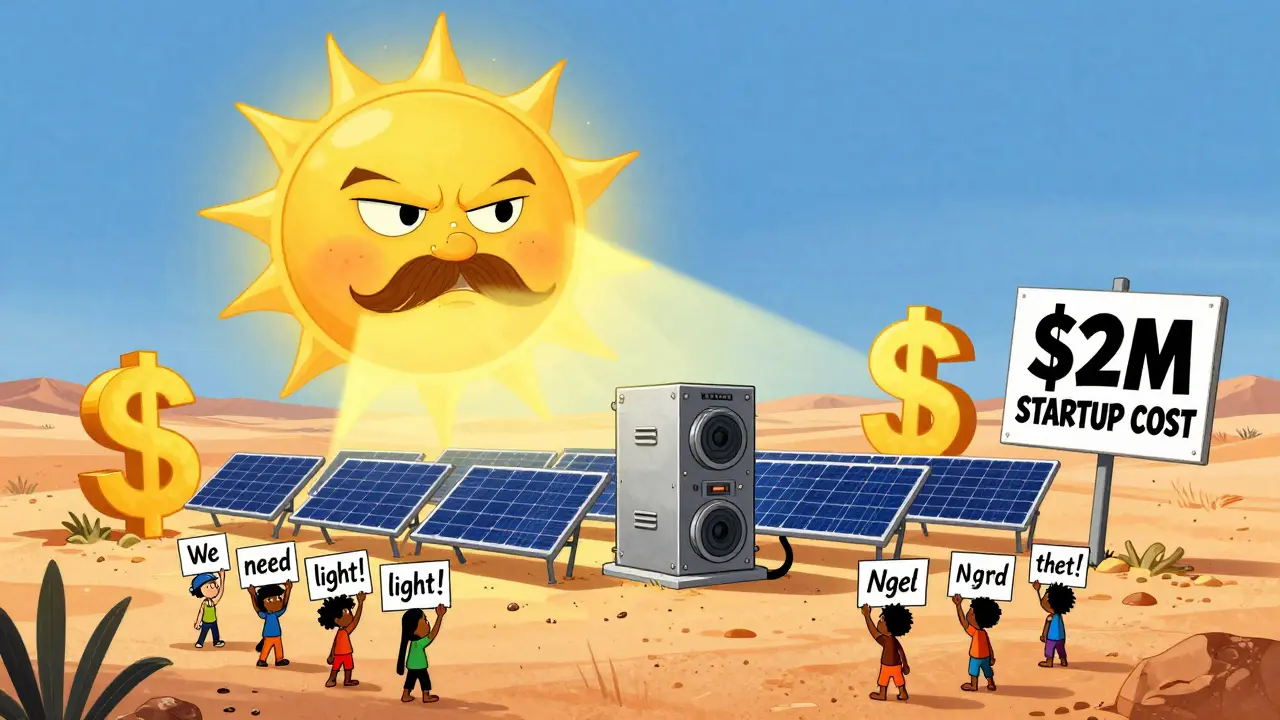
Denise Paiva
January 5, 2026 AT 15:49Angola didn't ban crypto mining they banned energy theft and frankly I'm shocked more countries haven't done the same
People treat electricity like it's infinite but it's not
When your hospital loses power because some guy in a basement is chasing digital coins you're not a tech pioneer you're a parasite
And yes I'm aware this sounds like a lecture but someone has to say it
Charlotte Parker
January 6, 2026 AT 18:29Oh wow a country actually put people before profit
How quaint
Next they'll ban billionaires from buying private islands made of gold
Meanwhile in the US we're still debating whether a toaster can be taxed
Angola's got more guts than the entire G7 combined
Calen Adams
January 7, 2026 AT 05:21Let me break this down for the crypto bros who think decentralization means they can steal grid power
ASICs aren't magic boxes they're power hogs
15% of national grid during peak? That's not innovation that's systemic looting
And the fact they seized 8,300 ASICs? That's not a raid that's a hardware graveyard
Real innovation is building resilient grids not exploiting broken ones
Angola just did the math and chose survival over speculation
Meenakshi Singh
January 8, 2026 AT 15:54angola said no to crypto theft and now the whole web3 world is crying 😭
but like... imagine if you took your neighbor's wifi to stream porn and got caught
you'd be the villain
but crypto miners? They're "pioneers" 🤡
also 37.2 million in seized gear? That's a lot of ASICs with no chill 💀
Kelley Ramsey
January 9, 2026 AT 21:15This is so important... I just cried reading about the child’s surgery interrupted by a blackout
And then I read about the mining rigs running 24/7 with cooling units humming...
It’s not just unfair-it’s inhumane
Why do we celebrate innovation that harms the most vulnerable?
Angola didn’t shut down technology-they prioritized life
And that’s not a policy-it’s a moral imperative
Thank you, Angola, for having the courage to say no
And thank you for repurposing the hardware for schools-what a beautiful act of redemption
Michael Richardson
January 10, 2026 AT 23:13Angola banned crypto because they're too weak to handle real tech
Western countries don't need to be babysat
Let them starve if they can't keep their lights on
Bitcoin is freedom
And freedom isn't free
It's stolen power and bold choices
Sabbra Ziro
January 12, 2026 AT 05:56I think we need to pause and recognize how rare this moment is
Here’s a country that could’ve gone the easy route-tax it, regulate it, ignore the human cost
But they chose to see the people behind the statistics
That child in the clinic? That’s someone’s daughter
That transformer explosion? That’s someone’s home going dark
Angola didn’t ban crypto-they chose to stop stealing from the poor
And that’s a kind of courage we don’t see enough of
Krista Hoefle
January 13, 2026 AT 09:36Angola banned crypto? Lmao
They probably just can’t handle real tech
Also who even mines crypto anymore? It’s all dead now anyway
Also the whole thing sounds like a scam
And why are all the miners Chinese? Suspicious
Also why is this even a thing??
Jessie X
January 14, 2026 AT 11:27Imagine being so desperate for power you're running a clinic on a generator while someone else runs a mining farm with industrial transformers
That's not a policy failure
That's a moral failure
Angola didn't ban Bitcoin
They just stopped letting it kill people
Simple
And right
Kip Metcalf
January 14, 2026 AT 22:52Man I used to mine crypto back in 2021
Now I look at this and feel sick
It wasn't just about the power
It was about the people who lost it
Angola did the right thing
Even if it cost them some crypto cash
Some things are worth more than profit
Natalie Kershaw
January 15, 2026 AT 02:07Let’s reframe this: this isn’t a crypto ban-it’s a grid justice initiative
ASICs aren’t evil, but using stolen electricity to run them? That’s the problem
And repurposing the hardware for universities? Genius
Turns waste into education
Angola didn’t kill innovation
They redirected it toward human outcomes
That’s not policy
That’s leadership
Mujibur Rahman
January 16, 2026 AT 18:25Angola's move is textbook energy sovereignty
Most African nations are stuck in the colonial trap-exporting raw resources while importing tech infrastructure
Here they seized control of their own grid and redirected stolen assets into public good
That’s not just policy-it’s decolonization in action
And the fact they used blockchain to track seized hardware? Brilliant
They weaponized the very tech they banned to ensure transparency
That’s next-level governance
Mollie Williams
January 18, 2026 AT 05:33I keep thinking about the 1,440 kWh per Bitcoin
That’s enough to power a home for two months
Or charge a thousand phones
Or run a ventilator for 600 hours
What does it say about us that we call that "progress"
When it means a child’s surgery is paused
When it means a mother can’t boil water for her baby
When it means a teacher can’t turn on the lights after sunset
Angola didn’t ban a technology
They chose to honor the quiet dignity of survival
And maybe that’s the most revolutionary thing of all
Tre Smith
January 20, 2026 AT 00:25There is no moral high ground here
Angola banned mining because they were economically incompetent
They failed to invest in grid infrastructure
They failed to attract legitimate energy development
They failed to create a regulatory framework
Instead of fixing the system they destroyed a sector
This is not justice
It is administrative cowardice
And the repurposing of hardware is a PR stunt
Not a policy achievement