
Most people looking for a new crypto exchange want speed, low fees, and deep liquidity. They don't want to lose money to slippage or get stuck in a dead project. That is why you need to look closely at EchoDex, which claims to be the first-generation decentralized exchange built on the Linea Network. On paper, it sounds promising. It uses ZK-EVM technology and promises rewards via its native $ECP token. But does it actually work for your daily trades?
The short answer is no. If you are looking for a reliable place to swap tokens in 2026, EchoDex is not it. It has virtually zero trading volume, no public security audits, and almost no user community. In the world of DeFi, that makes it dangerous. This review breaks down exactly what EchoDex is, why it failed to gain traction, and where you should go instead.
What Is EchoDex?
EchoDex is a decentralized exchange (DEX) operating exclusively on the Linea blockchain. Linea is a Layer 2 scaling solution created by ConsenSys, the same company behind MetaMask. The idea behind EchoDex was to provide fast, cheap swaps using Zero-Knowledge Ethereum Virtual Machine (ZK-EVM) technology. It launched in 2023 when Linea’s mainnet was rolling out, hoping to catch early adopters.
Unlike centralized exchanges like Binance or Coinbase, EchoDex does not hold your funds. You connect your wallet-usually an Ethereum-compatible one like MetaMask-and trade directly from it. The platform offers standard DEX features: token swapping, liquidity pool creation, and yield farming. Users can earn the native ECP token through these activities.
However, being "first" on a network doesn’t guarantee success. By late 2025, EchoDex had failed to attract meaningful users. Data from CoinGecko showed a 24-hour trading volume of just $84.75 in November 2025. To put that in perspective, major DEXs handle billions daily. EchoDex is effectively invisible in the market.
The Liquidity Problem
Liquidity is the lifeblood of any exchange. It means there are enough buyers and sellers so you can trade without moving the price too much. EchoDex has almost none.
| Exchange | 24h Volume | Status |
|---|---|---|
| EchoDex | $84.75 | Untracked / Low Liquidity |
| Uniswap | $1.2 Billion+ | Industry Leader |
| SyncSwap (Linea) | $47 Million | Active Linea DEX |
| PancakeSwap | $200 Million+ | Top Tier |
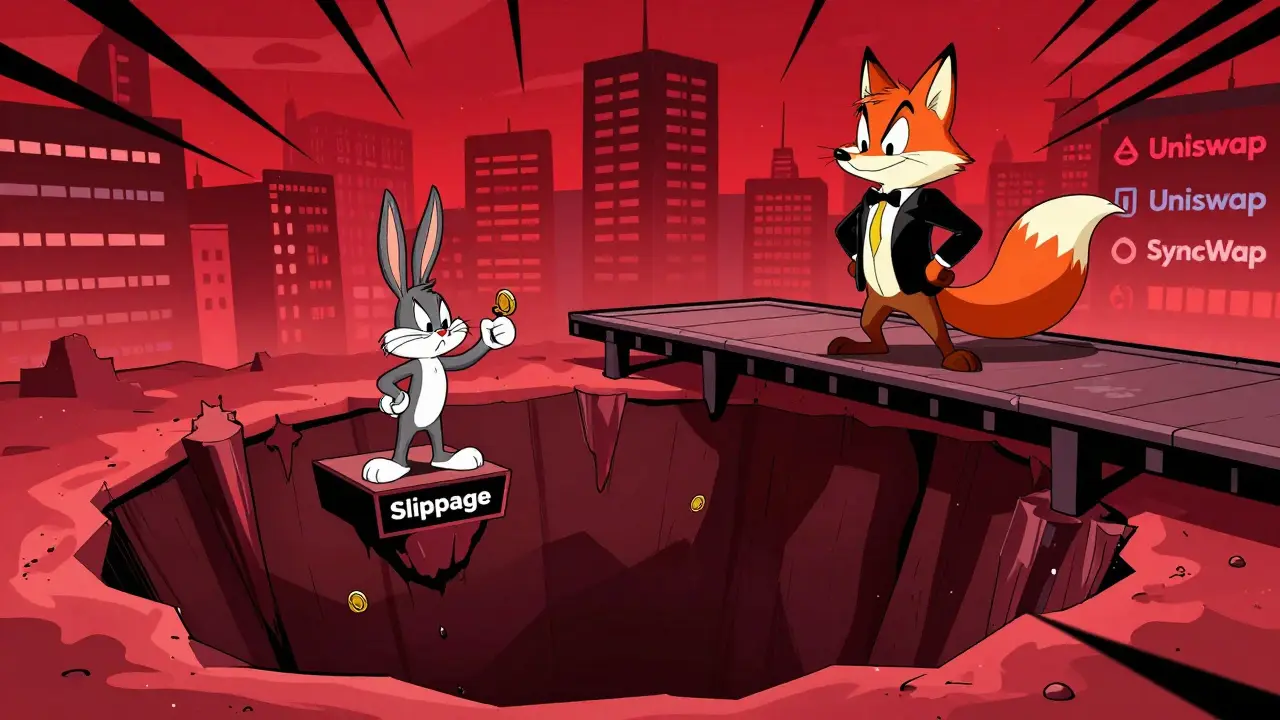
When you try to trade on EchoDex, you face massive slippage. Slippage is the difference between the expected price of a trade and the price at which the trade is executed. With only $59.55 in volume for its most active pair (ECP/WETH), even a small trade could crash the price or fail entirely. CoinMarketCap lists EchoDex as an "Untracked Listing," meaning it doesn't meet the minimum thresholds for reliable data monitoring.
This lack of liquidity isn't just inconvenient; it's a red flag. It suggests that either no one is using the platform, or developers are hoarding tokens. For a regular trader, this means you likely cannot enter or exit positions safely.
Security and Trust Issues
In crypto, if a platform hasn't been audited, assume it's unsafe. Security audits involve independent firms checking smart contract code for vulnerabilities. EchoDex has no publicly available audit reports from reputable firms like CertiK or OpenZeppelin.
Without audits, you have no proof that the code is secure. This opens the door to several risks:
- Honeypot Scams: Code that lets you buy tokens but prevents you from selling them.
- Rug Pulls: Developers draining the liquidity pool and disappearing.
- Hidden Backdoors: Functions allowing admins to freeze your assets or mint unlimited tokens.
ICO Rankings, a site that tracks initial coin offerings, described EchoDex in November 2025 as "more of a ghost than a working exchange." They noted "no liquidity, no audits, no trust." This sentiment is echoed across social media, where mentions of #EchoDex are mostly bots promoting the $ECP token rather than genuine users discussing features.
Compare this to established platforms. Uniswap undergoes continuous audits and has a bug bounty program. dYdX maintains an active Discord with 85,000+ members and transparent documentation. EchoDex has no active Discord, no Telegram group, and no responsive support team. If something goes wrong with your transaction, you have nowhere to turn.
ECP Tokenomics: A Warning Sign
The native token, ECP, has a total supply of 100 million tokens. According to CoinMarketCap, about 9.25 million were circulating as of November 2025. However, these numbers are questionable given the platform's activity levels.
The tokenomics rely heavily on "farming" and "staking" rewards. While this sounds attractive, it often masks a lack of real utility. If the only reason to hold ECP is to farm more ECP on a platform with no external demand, the value will likely drop to zero. There is no clear use case for ECP outside of EchoDex itself, such as governance rights or payment for services.
Furthermore, the lack of regulatory clarity adds risk. In many jurisdictions, tokens distributed via farming mechanisms without proper disclosures can be classified as unregistered securities. This puts holders at legal risk if regulators crack down on obscure DeFi projects.
Why Did EchoDex Fail?
EchoDex didn't fail because the technology was bad. Linea is a solid Layer 2 solution with $1.8 billion in Total Value Locked (TVL). The problem was execution and competition.
First, it entered a crowded market. Even within the Linea ecosystem, competitors like SyncSwap offered better liquidity and user experience. SyncSwap processed $47 million in 24-hour volume in November 2025, dwarfing EchoDex. Users naturally flock to platforms where they can actually trade.
Second, EchoDex lacked multi-chain support. Modern DEXs like Mono Protocol offer unified balances across multiple blockchains and MEV-resistant execution. EchoDex remained confined to Linea, limiting its reach. Without cross-chain bridges or partnerships, it couldn't attract users from other ecosystems.
Third, there was no marketing or community building. Successful DEXs invest heavily in education, tutorials, and community engagement. EchoDex provided basic interface docs but nothing else. No YouTube reviews, no Reddit discussions, no influencer partnerships. In the attention economy of crypto, silence equals death.
Better Alternatives for Linea Traders
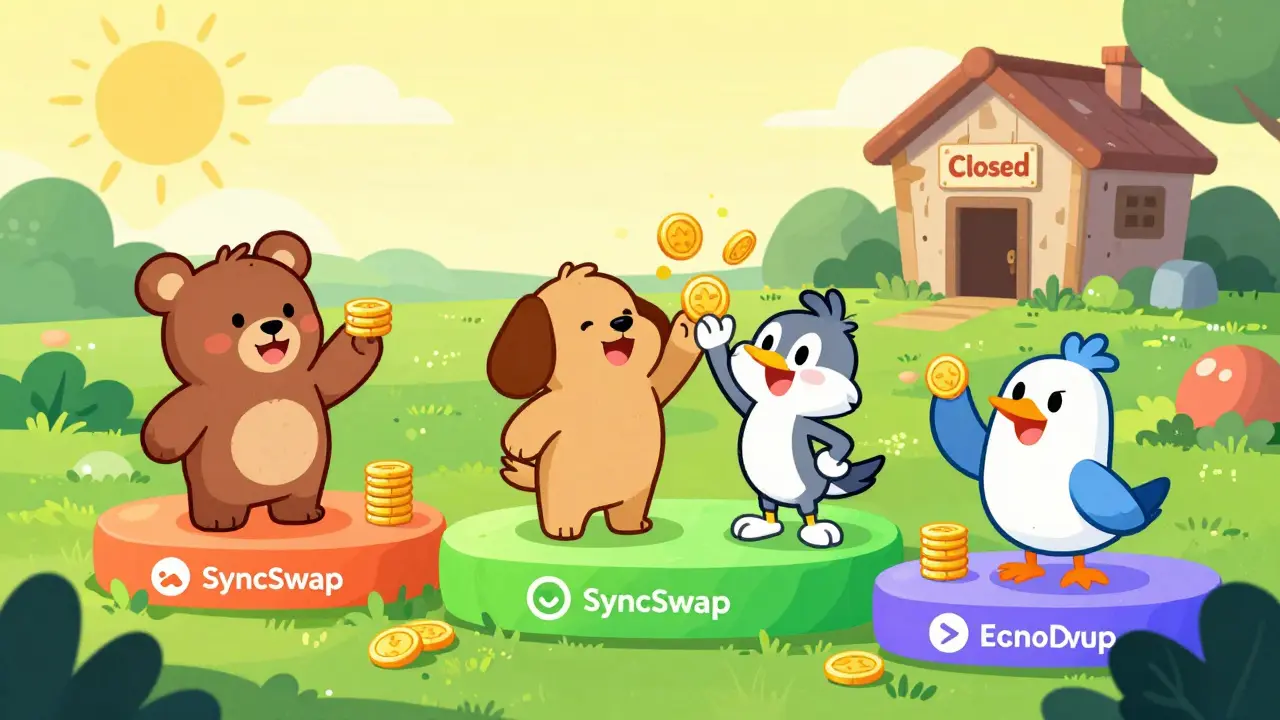
If you want to trade on Linea or similar networks, you have much safer options. Here is what you should consider instead:
- SyncSwap: The leading DEX on Linea. It has deep liquidity, active development, and a strong user base. Ideal for swapping ETH and stablecoins on Linea.
- Uniswap: The gold standard for Ethereum-based trading. Available on Linea via aggregators. Best for high-volume trades and maximum security.
- dYdX: A top-tier decentralized exchange focused on derivatives. Great for advanced traders who want leverage and MEV protection.
- PancakeSwap: Dominant on BNB Chain but expanding. Offers high liquidity and frequent yield opportunities.
These platforms have proven track records, regular audits, and large communities. They may charge slightly higher fees than a theoretical "cheap" DEX, but they ensure your capital stays safe.
Who Should Avoid EchoDex?
You should avoid EchoDex if you fall into any of these categories:
- New Crypto Users: You lack the technical knowledge to assess smart contract risks. One mistake could cost you everything.
- Investors Seeking Safety: If you want to preserve capital, do not touch unaudited protocols with zero volume.
- High-Volume Traders: You need deep liquidity to execute large orders without slippage. EchoDex cannot handle trades over $100.
- People Looking for Passive Income: Yield farming on EchoDex offers illusory returns. The underlying asset (ECP) has no real value, so you are farming worthless tokens.
The only scenario where EchoDex might make sense is if you are a developer experimenting with Linea integration and want to test edge cases. Even then, the lack of documentation makes it frustrating.
Final Verdict
EchoDex is a cautionary tale. It shows how quickly a DEX can become irrelevant without liquidity, security, and community. As of May 2026, it remains a "ghost exchange"-technically live but functionally dead. Do not deposit funds here. Do not stake your savings here. Stick to established platforms like Uniswap, SyncSwap, or dYdX where your money has a chance of staying safe.
In crypto, trust is earned through transparency and performance. EchoDex has delivered neither. Save yourself the hassle and the risk. Choose a platform that respects your time and your capital.
Is EchoDex safe to use?
No, EchoDex is not considered safe. It lacks public security audits from reputable firms, has extremely low liquidity, and shows signs of being abandoned. Using it exposes you to high risks of scams, rug pulls, and loss of funds.
What is the ECP token worth?
The ECP token has negligible value due to the lack of trading volume and utility. With only minimal activity on the ECP/WETH pair, there is no reliable market price. Holding ECP carries significant risk of total loss.
Can I withdraw my funds from EchoDex?
Technically, yes, since it is a decentralized exchange and you hold your own keys. However, due to extreme slippage and low liquidity, you may not be able to sell your tokens at a fair price, or at all. Transactions may also fail due to gas issues or contract errors.
Why did EchoDex fail?
EchoDex failed due to a combination of factors: lack of liquidity, absence of security audits, poor marketing, and strong competition from other Linea DEXs like SyncSwap. Without users or trust, it became inactive.
What are the best alternatives to EchoDex on Linea?
The best alternative on Linea is SyncSwap, which offers high liquidity and active development. Other excellent options include Uniswap (via aggregators) and dYdX for advanced trading. These platforms are audited, trusted, and widely used.
Does EchoDex require KYC?
No, EchoDex does not require Know Your Customer (KYC) verification because it is a decentralized protocol. However, this also means there is no customer support or recourse if you encounter issues.
Is Linea Network itself safe?
Yes, Linea is a legitimate Layer 2 solution developed by ConsenSys. It is secure and widely used. The issue lies with specific applications like EchoDex built on top of it, not the underlying blockchain infrastructure.