
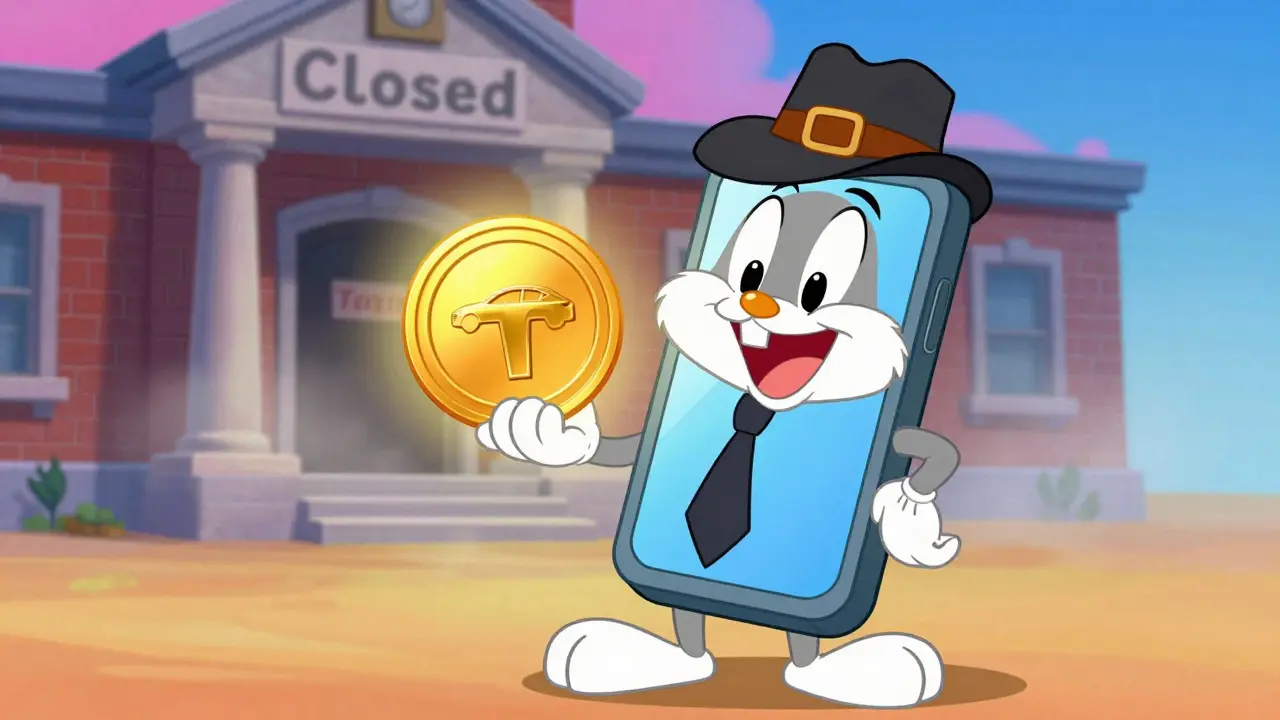
Imagine buying a slice of Tesla or Amazon stock without needing a traditional broker, paying tiny fees, and settling the trade in seconds. That is the promise of DSTOQ, a platform that turns traditional financial assets into digital tokens. But here is the catch: unlike giants like Binance or Coinbase, DSTOQ operates in the shadows of limited public data. It is an "untracked" listing on major aggregators, meaning you won’t find live volume charts or user reviews to guide your decision. So, is it a hidden gem for accessing global markets, or a risky experiment? Let’s break down what we know about this unique bridge between Wall Street and the blockchain.
What Is DSTOQ?
DSTOQ is not your typical cryptocurrency exchange where you buy Bitcoin or Ethereum. Instead, it specializes in tokenizing traditional financial securities onto the Stellar blockchain. Founded with the mission to democratize access to global financial markets, DSTOQ acts as a hybrid exchange. It bridges traditional finance (TradFi) and decentralized finance (DeFi) by converting conventional assets-like stocks, bonds, ETFs, and commodities-into tradeable security tokens.
The key representative behind the platform is Craig McGregor, who has explained their methodology in industry presentations. The core idea is simple but powerful: if you can put value on a blockchain, anyone with a smartphone can access it. DSTOQ focuses heavily on emerging markets, starting with Vietnam, with plans to expand across Africa, South America, and Asia. This mobile-first approach targets underbanked populations who have smartphones but lack access to traditional brokerage accounts.
How the Technology Works: The Stellar Advantage
To understand DSTOQ, you need to understand its foundation: the Stellar Network. Unlike Ethereum, which often suffers from high gas fees and slow transaction times during peak congestion, Stellar is built for speed and low cost. DSTOQ leverages Stellar’s central limit order book system, which operates entirely on-chain.
Here is how the process works:
- Tokenization: DSTOQ takes a traditional asset, such as a share of Tesla. Through a proprietary legal framework, they create a security token that represents one share. This token functions as a depository receipt.
- One-to-One Relationship: Each token maintains a strict 1:1 relationship with the underlying traditional asset. If the real stock price moves, the token value moves with it.
- On-Chain Trading: Users trade these tokens against an order book directly on the Stellar blockchain. You select specific prices, just like on a traditional exchange, but with the transparency and decentralization benefits of blockchain technology.
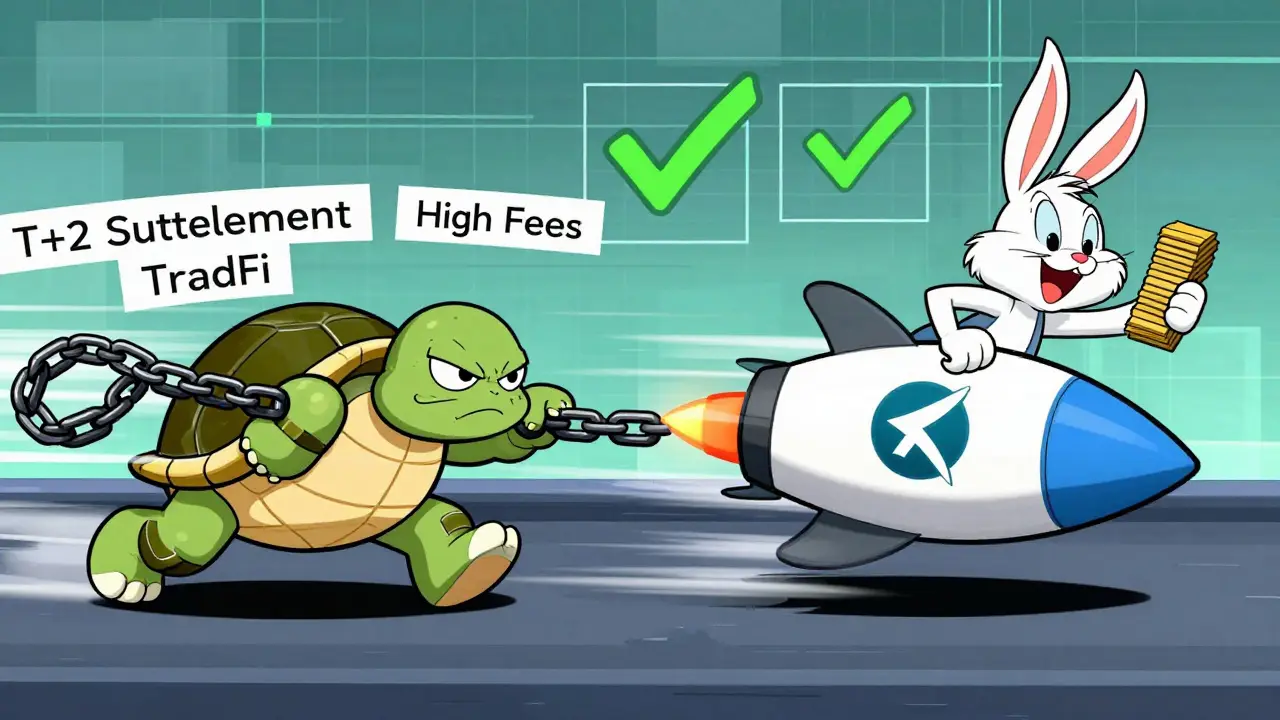
This structure allows for near-instant settlement. In traditional markets, settling a stock trade can take two days (T+2). On DSTOQ, using Stellar, settlement happens in seconds. This efficiency is crucial for traders in developing economies where capital velocity matters.
Assets Available for Trade
While most crypto exchanges focus on speculative coins, DSTOQ offers exposure to stable, established assets. The platform provides an extensive range of investment options including:
- Blue Chip Stocks: Shares from high-profile companies like Tesla and Amazon.
- Bonds: Government and corporate debt instruments.
- ETFs and Indices: Broad market exposure through tokenized funds.
- Commodities: Physical assets represented digitally.
This variety makes DSTOQ attractive to conservative investors who want the benefits of blockchain (low fees, accessibility) without the extreme volatility of native cryptocurrencies. However, because the platform is still expanding, the exact list of available assets may vary by region due to regulatory restrictions.
Pros and Cons: A Balanced View
Every platform has trade-offs. Here is what stands out when evaluating DSTOQ compared to alternatives like tZERO, Securitize, or traditional brokers.
| Feature | DSTOQ | Traditional Broker (e.g., Fidelity) | Crypto Exchange (e.g., Binance) |
|---|---|---|---|
| Asset Type | Tokenized Real-World Assets (Stocks, Bonds) | Traditional Securities | Native Cryptocurrencies |
| Settlement Time | Seconds (via Stellar) | Days (T+2) | Minutes to Hours |
| Fees | Low (Stellar network costs) | Variable (Commissions, spreads) | Moderate to High |
| Accessibility | Mobile-first, Emerging Markets | Requires Bank Account/KYC | Global, but regulated per region |
| Data Transparency | Low (Untracked Volume) | High (Regulated Reporting) | High (Public Ledgers) |
The Good: DSTOQ lowers the barrier to entry for investors in developing nations. By using Stellar, they avoid the prohibitive costs associated with Ethereum-based tokenization. The legal framework ensures that these tokens are compliant, offering a layer of safety that pure DeFi protocols lack.
The Bad: The lack of public trading data is a significant red flag. CoinMarketCap lists DSTOQ as "untracked," which means there is no verified volume data. This makes it impossible to assess liquidity. If you buy a tokenized stock, can you sell it instantly? Without visible order books or volume metrics, you don't know. Additionally, specific fee structures and KYC requirements are not clearly detailed in public documentation.
Risks and Regulatory Considerations
When dealing with tokenized securities, regulation is everything. DSTOQ claims to operate within a sophisticated legal framework, ensuring that each token is a valid depository receipt. However, the specific licenses held by DSTOQ in target markets like Vietnam or African nations are not publicly disclosed.
You should be aware of three main risks:
- Liquidity Risk: With untracked volume, there is a chance that you might struggle to find a buyer for your tokens at a fair price.
- Counterparty Risk: While the tokens are on the blockchain, the underlying assets are held off-chain by custodians. If the custodian fails, your token could become worthless.
- Regulatory Uncertainty: Laws regarding security tokens vary wildly by country. What is legal in one jurisdiction might be banned in another, potentially locking your funds.
Unlike major exchanges that publish quarterly compliance reports, DSTOQ’s operational scale and regulatory approvals remain opaque. This obscurity is common for early-stage projects in the Security Token Offering (STO) space, but it requires extra caution from users.
Who Should Use DSTOQ?
DSTOQ is not for everyone. If you are a day trader looking for deep liquidity and instant execution on major pairs, stick to established crypto exchanges or traditional brokers. DSTOQ is best suited for:
- Investors in Emerging Markets: Those in Vietnam, Africa, or South America who face barriers to opening traditional brokerage accounts.
- Tech-Savvy Investors: Individuals comfortable with blockchain wallets and understanding the nuances of security tokens.
- Diversifiers: Portfolios seeking exposure to traditional assets via a decentralized infrastructure to reduce reliance on centralized banking systems.
If you fall into these categories, DSTOQ offers a compelling, albeit experimental, path to global market access. For mainstream investors in developed countries, the lack of data and regulatory clarity makes it a secondary option at best.
Final Thoughts
DSTOQ represents an ambitious attempt to merge the stability of traditional finance with the accessibility of blockchain. By leveraging the Stellar network, they solve the cost and speed issues that plague other tokenization platforms. However, innovation comes with uncertainty. The absence of transparent trading data and clear regulatory disclosures means you must do your own due diligence. Start small, verify the legal status in your country, and ensure you understand the custody model before committing significant capital.
Is DSTOQ a safe place to store my money?
Safety depends on your definition. DSTOQ uses the secure Stellar blockchain for transactions, which is technically robust. However, the platform lacks public audit trails and detailed regulatory licensing information. Because it deals with tokenized securities, the safety of your underlying assets relies on the off-chain custodians holding the actual stocks or bonds. Always use cold storage for any native cryptocurrencies you hold, and only invest what you can afford to lose on newer platforms like DSTOQ.
Why is DSTOQ listed as "Untracked" on CoinMarketCap?
CoinMarketCap marks exchanges as "untracked" when they do not meet specific criteria for data verification, such as consistent API reporting, sufficient trading volume, or direct confirmation of data accuracy. This does not necessarily mean the exchange is fraudulent, but it indicates that DSTOQ either has low trading activity or has not integrated its data feeds with major aggregation services. This limits your ability to see real-time price movements and volume trends.
Can I buy real Tesla stock on DSTOQ?
You can buy a *tokenized representation* of Tesla stock. This is a security token that tracks the price of Tesla shares one-to-one. Legally, it functions as a depository receipt. However, you do not own the actual share in the traditional sense unless you go through a redemption process, which may involve additional steps and regulations depending on your location. Check DSTOQ's specific terms of service for details on ownership rights and voting privileges.
Which countries can use DSTOQ?
DSTOQ initially targeted Vietnam as its primary market, with expansion plans for Africa, South America, and Asia. These regions were chosen due to high mobile penetration and limited access to traditional financial markets. However, availability depends on local regulations regarding security tokens. Users in restricted jurisdictions, such as certain US states or countries with strict capital controls, may face limitations or bans. Always verify local laws before participating.
How does DSTOQ compare to Ethereum-based tokenization platforms?
The main difference lies in cost and speed. Ethereum networks can experience high "gas" fees and slower transaction times during periods of high demand. DSTOQ uses the Stellar Network, which is designed for financial transactions with negligible fees and settlement times measured in seconds. This makes DSTOQ more efficient for trading fractional shares of stocks and bonds, where high transaction costs would otherwise eat into profits.
kamal ifrani
June 2, 2026 AT 15:18another untracked exchange popping up like a weed in the crypto garden. you really think this is safe? its a total scam waiting to happen. nobody audits these things and they hide behind 'emerging markets' excuses. just stick to regulated brokers or you will lose your shirt.
Edith Mair
June 3, 2026 AT 15:41the lack of liquidity data is actually a massive red flag that most people ignore. if you cannot see the order book depth, you have no idea if you can exit your position when the market moves against you. it is not about being early, it is about not getting trapped in an illiquid asset class with zero transparency.
Eric Grosso
June 4, 2026 AT 02:59i mean sure the tech sounds cool but why would i trust some random custodian with my tesla shares? feels sketchy af tbh. plus stellar fees are low but if the platform rug pulls u r screwed anyway. just buy etfs on robinhood or whatever.
Sam Dashti
June 5, 2026 AT 09:21look at the sheer audacity of trying to democratize finance while hiding the volume metrics. it is like selling a car without letting you check the odometer. the concept of tokenizing real-world assets is brilliant, truly revolutionary even, but execution matters more than hype. without verified on-chain data for trading activity, this is just a fancy wallet wrapper for a traditional brokerage account that charges hidden fees.
Debbie Lewis
June 7, 2026 AT 04:34i am just watching from the sidelines. seems interesting for people in vietnam maybe but for us here in the us it feels like too much risk for too little reward. the regulatory gray area is huge right now.
Dana Rapoport
June 7, 2026 AT 23:01it is important to consider who this is actually helping. for someone in a developing nation with no bank access, this could be life changing. we should support innovation that bridges gaps, even if it comes with risks. let us encourage responsible experimentation rather than shutting it down immediately because it does not fit our current financial models.
trisya hazriyana
June 9, 2026 AT 20:15tokenization is inevitable. the legacy system is broken. slow settlement high fees gatekeeping. dstoq fixes this. skeptics are just jealous they missed the boat again. typical fud from people who still pay $10 commissions per trade. wake up.
lorna erni
June 11, 2026 AT 14:59stop telling people what to do! if they want to try it fine. but dont act like you know better than everyone else. i bet half of you guys never even tried using stellar network properly. get off your high horse and let innovation happen. it is annoying how defensive people get about new tech.
Joe Clements
June 11, 2026 AT 22:07i understand the skepticism but it is nice to see options outside the big exchanges. i just wish there was more clarity on the legal side. knowing exactly which licenses they hold would make me feel a lot safer putting any money in there. hope they release more info soon.
Rosie Morris
June 12, 2026 AT 11:48omg this sounds so complicated lol. i just want to buy bitcoin and forget about it. stocks on blockchain seems like too much hassle for me personally. maybe later when it is easier to use.
stalin brian
June 13, 2026 AT 21:59hey guys i think this is pretty cool actually. especially for my friends in india where banking can be tricky sometimes. the fact that it uses stellar is a big plus because gas fees on eth are insane. lets give them a chance to prove themselves instead of hating immediately.
saradee dee
June 14, 2026 AT 11:05i am so excited about this possibility!! imagine being able to invest in global markets from anywhere in the world. it gives me so much hope for financial freedom. please tell me more about how it works in africa!
Hadleigh Edwards
June 15, 2026 AT 07:46while the immediate concerns regarding liquidity and regulatory opacity are certainly valid and warrant a cautious approach from potential investors, one must also appreciate the broader narrative of technological evolution within the financial sector, as platforms like DSTOQ represent a significant step towards the convergence of traditional securities and decentralized infrastructure, potentially offering unprecedented accessibility to underbanked populations across emerging markets such as Vietnam and parts of Africa, thereby challenging the entrenched monopolies of legacy banking institutions and fostering a more inclusive global economic ecosystem over time.