
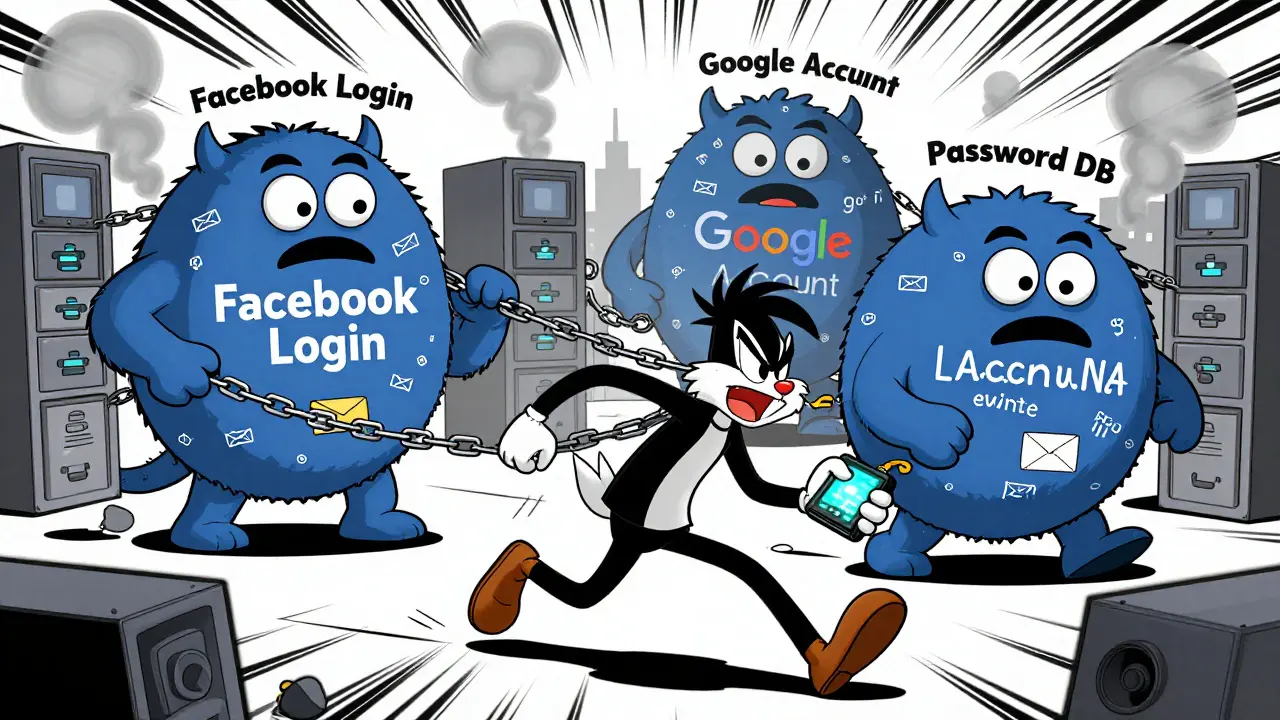
Every time you sign up for a new app, fill out a form, or log in with Google or Facebook, you’re handing over pieces of your identity to someone else. Your name, email, birthdate, even your phone number - all stored in databases you can’t see, can’t control, and can’t delete. If one of those companies gets hacked, your data is out there. Forever. And there’s nothing you can do about it.
What if you could hold your own identity like a physical passport - not stored in someone else’s server, but in your own digital wallet, locked with your private key? That’s what decentralized identity management (DIM) offers. It’s not science fiction. It’s already being built, tested, and used by governments, universities, and startups around the world.
What Exactly Is Decentralized Identity?
Decentralized identity means you own your identity, not a company or government. Instead of relying on centralized systems like Facebook Login or government ID databases, you use cryptographically secured digital tools to prove who you are - without handing over your entire life story.
The core of this system is something called a Decentralized Identifier (DID). A DID isn’t your email or phone number. It’s a unique string of letters and numbers - like did:ethr:0x123...abc - that points to a public record on a blockchain. This record doesn’t contain your personal details. It just holds the public key that can verify your identity. Think of it like a digital fingerprint that only you can unlock.
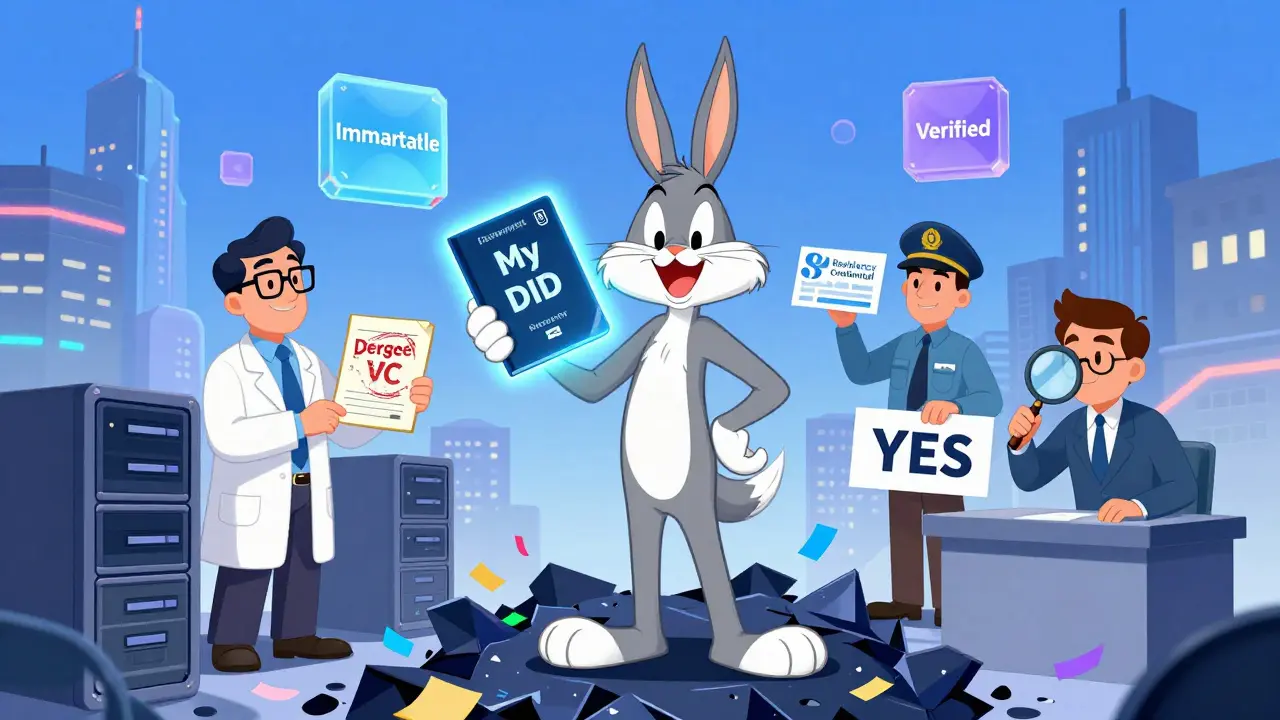
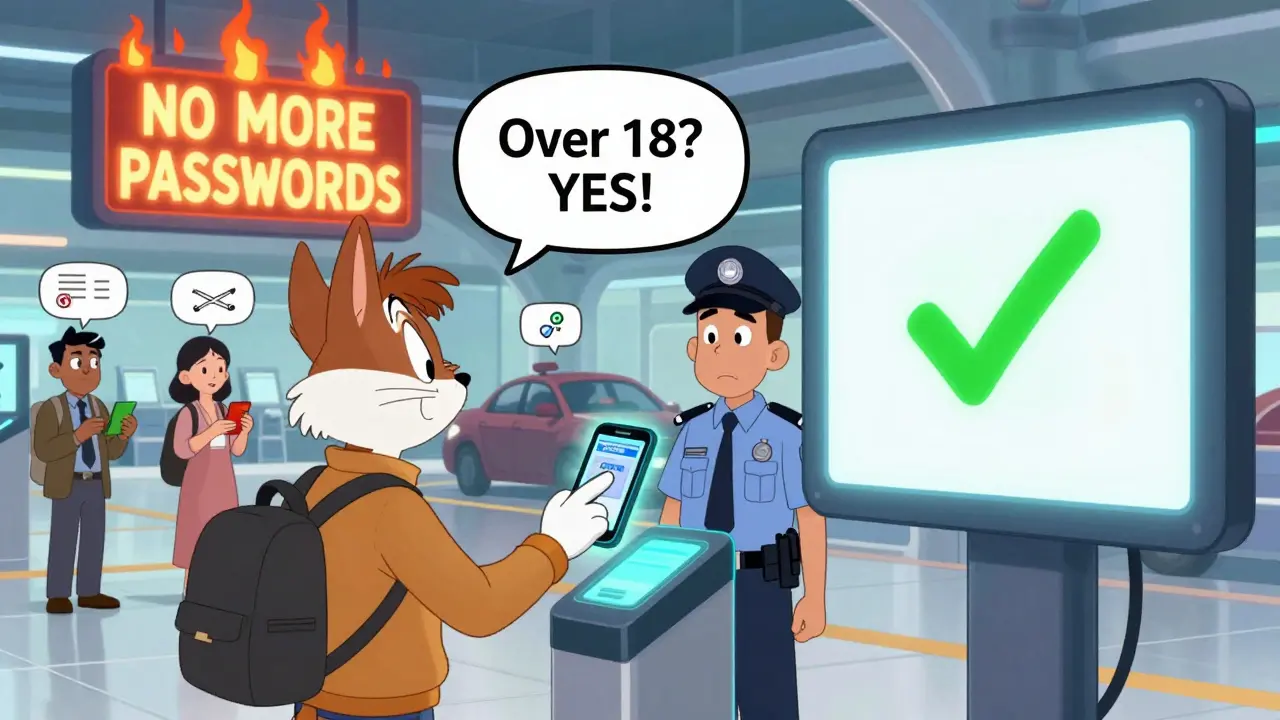
When you need to prove you’re over 18, for example, you don’t send your driver’s license scan. You send a cryptographically signed message - a Verifiable Credential (VC) - issued by a trusted party like your government or university. The verifier checks the signature, confirms it’s real, and sees only what you allow: “Yes, this person is over 18.” No name. No address. No ID number.
How It Works: Issuers, Holders, and Verifiers
Decentralized identity runs on three simple roles:
- Issuers - trusted organizations that give out credentials. A university issues a degree credential. A city issues a residency proof. A bank issues an income verification.
- Holders - you. You store these credentials in a digital wallet on your phone or computer. These wallets are encrypted and protected by your private key. No one else can access them.
- Verifiers - businesses or services that ask you to prove something. A rental platform checks your age. A job site verifies your degree. They don’t store your data. They just validate the signature.
This setup removes the middleman. No more storing your data in 10 different places. No more password resets. No more data breaches that leak millions of records. Even if a verifier gets hacked, they don’t have your identity - they just saw a yes/no answer.
Self-Sovereign Identity: The Gold Standard
Decentralized identity is the umbrella. Self-Sovereign Identity (SSI) is the ideal version under it. SSI means you have total control. No one can freeze your account. No one can delete your credentials. You decide who sees what, when, and why.
Imagine you’re applying for a loan. Instead of uploading your tax returns, bank statements, and pay stubs, you pull out a single verifiable credential from your wallet: “Verified income of $65,000/year.” The lender checks the signature, confirms it came from your government’s tax agency, and approves your loan. They never see your name, address, or Social Security number. You never gave them your full file.
This isn’t theoretical. Estonia’s e-Residency program uses similar principles. The EU is rolling out a digital wallet for citizens to store and share official documents. The U.S. Department of Homeland Security is testing SSI for border crossings. These aren’t experiments - they’re live deployments.
Why Blockchain? Isn’t That Just for Crypto?
Blockchain isn’t the identity itself. It’s the backbone. It doesn’t store your name, birthdate, or credit card. It stores the public DID - a tiny, tamper-proof pointer that says, “This key belongs to this identity.” Everything else - your degrees, licenses, employment history - lives encrypted in your wallet, off-chain.
Why not just use a regular database? Because databases can be hacked, altered, or shut down. Blockchains are immutable. Once a DID is recorded, no one can erase it or change it. That’s what gives users trust. You don’t need to rely on a company’s promise. You can verify the proof yourself.
Some systems use Ethereum, others use Hyperledger Indy, or Sovrin, or even private blockchains. The key isn’t the chain - it’s the standard. The W3C DID specification ensures that no matter which system you use, your DID can be verified anywhere else that follows the same rules.
Real Benefits: Privacy, Security, and Simplicity
Here’s what decentralized identity actually fixes:
- No more password fatigue. You don’t need 20 different passwords. Your identity is one key.
- No more data leaks. Hackers can’t steal your identity from a central database because there isn’t one.
- No more oversharing. You prove only what’s needed. Age? Yes. Home address? No.
- No more account lockouts. If you lose your phone, you can recover your wallet with a backup phrase - no customer service call needed.
- No more tracking. Companies can’t build profiles on you just because you logged in with Google.
Companies like Okta and Ping Identity say decentralized identity is the future. CrowdStrike calls it a fix for the broken security model of today. Why? Because centralized identity is a single point of failure. Decentralized identity is distributed. One breach doesn’t mean a thousand identities are exposed.
The Challenges: It’s Not Perfect Yet
Don’t get it twisted - decentralized identity isn’t ready for everyone. Right now, it’s mostly for tech-savvy users, developers, and early adopters.
Here’s what’s holding it back:
- Wallet complexity. Managing private keys is still hard. If you lose your recovery phrase, you lose your identity. No reset button.
- Limited verifier adoption. Most websites still want your email and password. Until big players like Amazon or PayPal support it, most people won’t switch.
- Fragmentation. There are dozens of DID methods and wallet apps. Not all work together yet.
- Legal gray areas. Who’s liable if a credential is forged? What happens if a government refuses to issue a credential?
But these aren’t dead ends - they’re growing pains. Wallets are getting simpler. Apple and Google are exploring SSI integration. The W3C is pushing for universal standards. Adoption will follow usability.
Where It’s Heading: The Next 5 Years
By 2030, your digital identity won’t be tied to a company. It’ll be yours - stored on your phone, backed up on a USB drive, and usable anywhere.
Imagine:
- Signing a lease with a verifiable credential from your landlord’s blockchain system.
- Boarding a flight by proving your vaccination status without showing your passport.
- Applying for a job by sharing your verified work history from your previous employer’s system - no LinkedIn profile needed.
Regulations like GDPR and the EU’s Digital Identity Wallet are forcing change. Users are tired of being tracked. Companies are tired of liability. Decentralized identity answers both.
The shift won’t happen overnight. But it’s already started. The question isn’t if it will happen - it’s whether you’ll be ready when it does.
Jon Visotzky
December 8, 2025 AT 16:56So you're telling me I can finally stop using the same password everywhere and not have to remember 17 different ones? I'm in. Been waiting for this since 2018
Glenn Jones
December 8, 2025 AT 22:01Oh great another blockchain solution for a problem that doesn't exist. You think some crypto bros with fancy wallets are gonna fix identity? Bro I lost my keys once and now I'm stuck in a digital purgatory. This is just centralized control with more steps and zero customer service. Also why is everyone so obsessed with blockchain like it's magic fairy dust? 🤡
Joe West
December 10, 2025 AT 11:20Hey I've been testing DID wallets for my startup and it's wild how much simpler it makes onboarding. We cut our support tickets by 70% because people aren't getting locked out or forgetting passwords. The real win? Users feel in control. One guy told me he finally felt like he owned his data for the first time. That's powerful. Wallets are getting easier too - Apple's new SSI beta is a game changer.
Mariam Almatrook
December 11, 2025 AT 02:02One must question the ontological underpinnings of this so-called "self-sovereign identity" paradigm. It presumes an individualistic epistemology that is fundamentally incompatible with the collective social contract. The notion that one can disentangle identity from institutional verification is not merely technologically naive, but ethically perilous. Who shall arbitrate disputes when credentials are revoked without recourse? The market? The algorithm? This is not liberation-it is anarcho-capitalist fantasy dressed in cryptographic finery.
nicholas forbes
December 12, 2025 AT 18:49Glenn, I get your frustration. I lost my recovery phrase once too. But that’s why the ecosystem is building better recovery options-social recovery, multi-sig wallets, trusted contacts. It’s not perfect yet, but it’s evolving. And honestly? Better than handing my SSN to every sketchy SaaS startup.
Regina Jestrow
December 14, 2025 AT 08:39Wait so if I lose my phone and my backup phrase… I just… disappear? Like my entire digital self is gone? No one can help me? That’s terrifying. I don’t think I’m ready for this. I barely remember my Wi-Fi password.
Lore Vanvliet
December 15, 2025 AT 15:21AMERICA IS THE ONLY COUNTRY THAT CAN MAKE THIS WORK. EVERYONE ELSE IS JUST COPYING OUR TECH. EESTONIA? LOL THEY'RE A TINY COUNTRY WITH 1.3 MILLION PEOPLE. THE EU? THEY'RE JUST TRYING TO CONTROL US. THIS IS A LIBERAL PLOT TO ERASE NATIONAL IDENTITY. I WILL NEVER USE A DIGITAL WALLET THAT DOESN'T HAVE A TRUMP EMOJI IN IT 🇺🇸🔥
Brooke Schmalbach
December 17, 2025 AT 14:45You're all missing the point. This isn't about privacy. It's about power. The people who built this system? They're the new gatekeepers. Same old game, just with different keys. And now you're proud of carrying your own chains? Brilliant.
Tom Van bergen
December 19, 2025 AT 08:42If identity is a social construct then who is the self that is sovereign? And if the self is not fixed, how can its identifier be immutable? Blockchain doesn't solve the metaphysics of being. It just logs it.
Sandra Lee Beagan
December 20, 2025 AT 02:06As someone who works with Indigenous communities in Canada, I’ve seen how centralized ID systems erase people. This tech? It’s not perfect, but it’s the first time we’ve had a tool that lets people define themselves without needing state approval. My aunt got her birth certificate verified via DID last month-first time in 40 years she felt seen. That’s not just tech. That’s healing.
Ben VanDyk
December 20, 2025 AT 11:53So… you’re saying I don’t have to give my birthdate to Spotify anymore? Cool. I’m still gonna use my fake name and a burner email.
Nina Meretoile
December 21, 2025 AT 19:39This is the future 🌱✨ I’ve been waiting for this my whole life. Imagine a world where your identity doesn’t get sold to advertisers, where you can just… be. No tracking. No profiling. Just you and your truth. I cried when I first used my VC to prove my age. It felt… dignified. We’re not just building tech. We’re building a kinder internet.
Barb Pooley
December 22, 2025 AT 20:26Who’s really behind this? I’ve read that the same people who pushed for the Patriot Act are now funding these "decentralized" projects. This is just a way to track us better under the guise of privacy. They want us to think we’re free while they still have the master key. They always do.
Shane Budge
December 23, 2025 AT 07:03Works in theory. Real world? No one’s gonna use it until Amazon does.
sonia sifflet
December 23, 2025 AT 07:13Why are you all so excited about this? In India, we have Aadhaar-a national ID that works for 1.3 billion people. It’s centralized, yes, but it gives poor people access to banking, food, healthcare. You want to give up that system for something only rich techies understand? This is elitist nonsense. You think your blockchain wallet will help a farmer in Bihar? Wake up.
Adam Bosworth
December 24, 2025 AT 13:34Bro I tried to set this up and my wallet crashed and now I can’t log into my Netflix account. Also my dog licked my recovery phrase paper. I think he ate it. I’m now a ghost in the digital world. This is a scam. I’m moving to a cabin in Montana. No internet. No identity. Just me and my goats.
Uzoma Jenfrancis
December 25, 2025 AT 07:10Western tech arrogance. You think your blockchain is superior because it’s "decentralized"? Nigeria has been managing identity through community elders and local registries for centuries. You don’t need a blockchain to be sovereign. You need respect. This system ignores our ways. It’s not progress. It’s cultural erasure.
Renelle Wilson
December 26, 2025 AT 22:01While I deeply appreciate the technical innovation and the aspirational vision of self-sovereign identity, I must emphasize the critical importance of inclusive design and equitable access. For individuals without digital literacy, stable internet, or access to smartphones, this system risks exacerbating existing social disparities. The ethical imperative is not merely to build better tools, but to ensure that no one is left behind in the transition. We must advocate for hybrid models-where decentralized identity complements, rather than replaces, accessible, human-centered verification systems.
Elizabeth Miranda
December 28, 2025 AT 21:47I’ve been using a DID wallet for a year now. It’s quiet. It’s simple. I don’t think about it until I need it. Then it just works. No passwords. No forms. Just a tap. I used it to rent a car last week. The guy at the counter didn’t even blink. That’s the beauty of it-when it works right, you don’t notice it at all.
Chloe Hayslett
December 29, 2025 AT 18:57Oh wow. So now instead of Facebook spying on me, I get to spy on myself? How revolutionary. I’m sure the NSA loves this. "Oh look, they’re using their own keys! So much easier to monitor." This is just identity management with a side of delusion.
Jonathan Sundqvist
December 31, 2025 AT 01:54My buddy’s a dev at a big bank. They’re testing this for loan apps. Said the compliance team lost their minds when they realized they don’t have to store any personal data anymore. "We’re not even supposed to have this info," he said. So yeah… this might actually save companies from lawsuits. That’s the real reason it’s gonna win.