

On July 24, 2025, Algeria didn’t just tighten its rules on cryptocurrency - it erased them entirely. With the passage of Law No. 25-10, the country made it illegal to own, trade, mine, promote, or even talk about Bitcoin and other digital assets. This isn’t a gray-area regulation. It’s a full criminal ban, enforced by police, courts, and banks working together. If you’re holding crypto in Algeria, you’re breaking the law. If you’ve ever posted about it online, you could be prosecuted. This isn’t theoretical - people are already being arrested.
What Exactly Is Banned?
Algeria’s law doesn’t just block exchanges or trading platforms. It targets every single layer of the crypto ecosystem. Under Article 6 bis, the following are all criminal offenses:
- Possessing any cryptocurrency, even if you never traded it
- Buying, selling, or transferring digital assets
- Mining Bitcoin or Ethereum using your computer or hardware
- Running or operating a crypto exchange or wallet service
- Advertising, promoting, or educating others about crypto - including YouTube creators, bloggers, or podcasters
- Using crypto to pay for goods or services
There’s no loophole. Even holding crypto in a private wallet counts as a violation. The law doesn’t care if you bought it before the ban or inherited it. If you have it now, you’re at risk. And it’s not just individuals - businesses that even mention crypto on their websites can be shut down. Influencers who once taught people how to use Binance now face the same penalties as drug traffickers.
How Harsh Are the Penalties?
The punishment is severe and designed to scare people away. Violators can face:
- Prison sentences from two months up to one year
- Fines between 200,000 and 1,000,000 Algerian dinars (roughly $1,540 to $7,700 USD)
These aren’t small fines. For many Algerians, that’s more than a year’s salary. And unlike fines in other countries, these are enforced aggressively. Authorities don’t just issue warnings - they arrest people. In the first six months after the law took effect, over 300 cases were filed across major cities like Algiers, Oran, and Constantine. Most involved individuals who held small amounts of Bitcoin or Ethereum, sometimes just a few hundred dollars’ worth.
What’s worse, the law allows authorities to seize any device used in crypto activity - phones, laptops, mining rigs - without a warrant. Your hardware can be confiscated, and you’ll have to go to court just to get it back, if you’re lucky.
Who’s Enforcing This?
Algeria didn’t leave enforcement to one agency. It built a multi-layered system to hunt down crypto users:
- Bank of Algeria monitors bank transactions for signs of crypto-related payments and freezes accounts linked to suspicious activity
- Banking Commission ensures no bank, payment processor, or fintech firm facilitates crypto transfers - even indirectly
- Security Authorities use digital surveillance to track crypto wallet addresses, IP logs, and social media posts promoting digital assets
- Judicial System prosecutes cases with fast-tracked hearings, often without bail
- Financial Intelligence Unit works with international partners to trace cross-border crypto flows
This isn’t random policing. It’s a coordinated state operation. Authorities have access to bank records, internet traffic data, and even social media analytics to identify violators. A simple Google search for “how to buy Bitcoin in Algeria” can now trigger an investigation if it leads to a local user’s profile.

Why Did Algeria Do This?
The government says it’s protecting the Algerian Dinar and preventing money laundering. Officials argue that crypto could be used by terrorist groups or criminals to move money without oversight. They point to guidance from the Financial Action Task Force (FATF), an international body that pushes countries to combat financial crime.
But the timing tells another story. Just a year before the ban, Algeria was one of the fastest-growing crypto markets in North Africa. Chainalysis reported that peer-to-peer trading volumes had surged 400% in 12 months. Young Algerians were using crypto to send money abroad, invest in DeFi, and bypass inflation that hit 12% in 2024. Many saw it as a way out of a stagnant economy.
The ban didn’t just stop trading - it crushed a generation of tech talent. Blockchain developers, crypto educators, and even freelance coders who built wallet apps suddenly became criminals. Universities stopped offering blockchain courses. Startups shut down overnight. The brain drain began: over 1,200 tech professionals left Algeria in the first six months after the ban, most moving to Tunisia, Egypt, or the UAE.
How Does This Compare to the Rest of the World?
While Algeria is locking down crypto, most of the world is doing the opposite. The European Union passed MiCA - a full regulatory framework that lets crypto firms operate legally under strict rules. The U.S. has dozens of licensed crypto exchanges. Even Nigeria, with its own economic challenges, allows crypto trading through regulated platforms.
Algeria’s approach is more like China’s 2021 ban - but even broader. China banned exchanges and mining but didn’t criminalize personal possession. Algeria does. China let people hold crypto privately. Algeria doesn’t. Algeria’s law is among the strictest in the world, comparable only to Egypt’s 2023 decree and North Korea’s state-controlled crypto operations.
Neighboring countries are moving in the opposite direction. The UAE has become a crypto hub, with Dubai offering licenses to blockchain firms. Bahrain has a national digital currency pilot. Algeria’s isolation is growing.
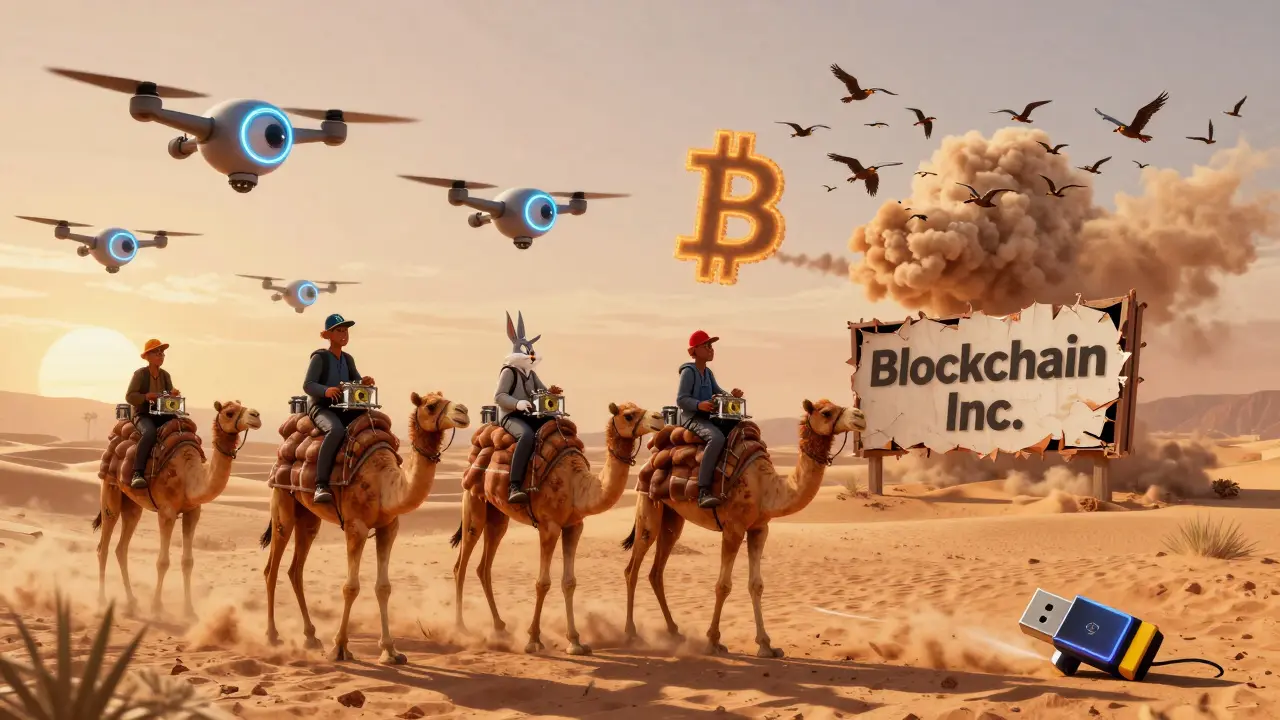
What Happens to Everyday People?
You don’t need to be a hacker or a trader to get caught. Here are real cases from 2025-2026:
- A university student in Algiers was arrested after posting a TikTok video explaining how to use a crypto wallet. He had never bought crypto - he was just trying to help others understand it.
- A small business owner in Oran was fined after a customer paid him 0.02 BTC for a service. He didn’t know it was illegal - he accepted it because he’d seen others do it.
- A mining operation using solar panels and subsidized electricity was raided. Six people were jailed. Their equipment was melted down and sold as scrap.
- A woman in Constantine inherited $3,000 worth of Ethereum from a relative abroad. She didn’t sell it - she just kept it. She was charged with illegal possession.
These aren’t outliers. They’re standard cases. The law doesn’t distinguish between intent, scale, or knowledge. If you touched crypto, you’re guilty.
What’s the Long-Term Impact?
Algeria’s ban isn’t just about money - it’s about control. The government wants to keep its financial system closed, centralized, and completely under state authority. It fears losing power to decentralized networks. But the cost is high.
Algeria’s tech sector is collapsing. Venture capital has vanished. Foreign investors avoid the country. Young people who once dreamed of building blockchain apps now study engineering abroad, knowing they can’t work in their field at home.
The ban hasn’t stopped crypto use - it’s driven it underground. Black-market exchanges now operate through encrypted apps and Telegram channels. People use cash to buy crypto from smugglers. The risks are higher, the prices are inflated, and the dangers are real. But people still want access to global finance.
Algeria’s stance may look strong today. But history shows that bans like this rarely last. When people can’t access tools they need, they find ways around them - often at greater cost. The real question isn’t whether Algeria can enforce the ban. It’s whether it can afford the consequences.
Stephen Gaskell
January 18, 2026 AT 14:09Crypto is a scam dressed up as innovation. Algeria did the right thing. No country should let digital ghosts undermine its currency.
CHISOM UCHE
January 19, 2026 AT 04:46The regulatory architecture here is a textbook case of monetary sovereignty enforcement via cryptographic obsolescence. The central bank’s surveillance mesh, combined with FATF-aligned AML protocols, effectively neutralizes peer-to-peer value transfer vectors. This isn’t prohibition-it’s financial sovereignty reclamation.
Chris Evans
January 19, 2026 AT 10:02Imagine a society where the state decides what your mind can conceive as value. Crypto isn’t just money-it’s a philosophical rebellion against centralized control. Algeria didn’t ban Bitcoin. It banned the idea that people can define worth without permission. And that’s far more dangerous than any coin.
When a government fears decentralized trust more than corruption, you know it’s terrified of its own people’s autonomy.
Sarah Baker
January 20, 2026 AT 12:39To the students, small business owners, and inheritors caught in this net-I see you. This isn’t justice, it’s punishment for dreaming bigger than the system allows. But please don’t give up. The world is waking up. Your courage isn’t erased just because your wallet is.
There are communities abroad waiting to welcome your skills. You’re not a criminal. You’re a pioneer who got caught in a time warp.
Pramod Sharma
January 21, 2026 AT 20:09Algeria’s move is stupid. But not surprising. Control over money = control over people. History repeats.
nathan yeung
January 22, 2026 AT 02:13Hard to blame them really. Inflation’s wild, unemployment’s high, and crypto was becoming a parallel economy. Maybe the ban was meant to buy time to build something better. Still, crushing people for holding a few coins? That’s overkill.
ASHISH SINGH
January 22, 2026 AT 18:31They’re lying. This isn’t about money laundering. This is about the deep state teaming up with the IMF to kill any tech that lets people escape their economic prison. You think they don’t know crypto is just a tool? They know. That’s why they’re scared. They’re burning books but the words are already out there. Watch how fast this cracks open.
Vinod Dalavai
January 23, 2026 AT 09:11Man I feel for the miners with solar panels. That’s innovation right there. Sad they got their rigs melted down like scrap. Hope they got out. 🙏
Callan Burdett
January 24, 2026 AT 19:35This is the future. Every nation will choose: control or freedom. Algeria picked control. And in doing so, they just signed the death warrant of their own tech future. But hey-at least their citizens won’t get confused by blockchain.
Anthony Ventresque
January 25, 2026 AT 12:21Is there any data on how many people actually held crypto before the ban? I’m curious if this was really a widespread issue or just a few hundred people making noise online. Also, what’s the black market rate for BTC in Algiers now?
Nishakar Rath
January 26, 2026 AT 17:12Who cares about these crypto bros they’re just lazy rich kids trying to avoid real work. Let them starve in their encrypted wallets. The dinar is sacred and if you dont like it move to dubai loser
Jason Zhang
January 27, 2026 AT 03:05Algeria’s ban is the most honest crypto policy in the world. No pretending. No ‘regulation.’ Just: ‘We own your money, and you don’t get to choose.’
It’s brutal. It’s clear. And honestly? I respect that. Even if I think it’s doomed.
Katherine Melgarejo
January 28, 2026 AT 07:59So let me get this straight-teaching someone how to use a wallet = drug trafficking level crime? Cool. I’ll just go back to writing checks in crayon. 🤡
Patricia Chakeres
January 28, 2026 AT 11:45This is obviously a psyop orchestrated by the Cabal to eliminate decentralized finance before it threatens their digital ID rollout. You think they don’t know crypto is the only thing keeping the global elite from total surveillance? This ban? It’s a trap. They want you to panic. They want you to run to their ‘regulated’ platforms. Don’t be fooled.
Jill McCollum
January 30, 2026 AT 08:47so like… if i inherited some btc from my aunt who lived in canada… is that illegal now? 😅 i mean i didnt even know it was a thing until i saw this post. also i think algeria is kinda tragic tbh. like… imagine not being able to learn about web3 bc u might go to jail. smh