

For years, the answer to whether crypto was allowed in Nigeria was a messy "yes, but not really." Banks would block transactions, regulators would issue warnings, and users would rely on peer-to-peer (P2P) workarounds. But as we move through 2026, that gray area has hardened into concrete rules. If you are asking which crypto exchanges are banned in Nigeria today, the short answer is: any exchange without a Securities and Exchange Commission (SEC) license.
The landscape shifted dramatically with the passage of the Investments and Securities Act (ISA) 2025. This law didn't just tweak existing rules; it redefined digital assets as securities. This means the old days of operating under the radar are over. Today, the ban isn't necessarily on specific brand names like Binance or Coinbase by default, but on their operational status within Nigerian borders if they haven't secured local regulatory approval.
The New Rule: No License, No Operation
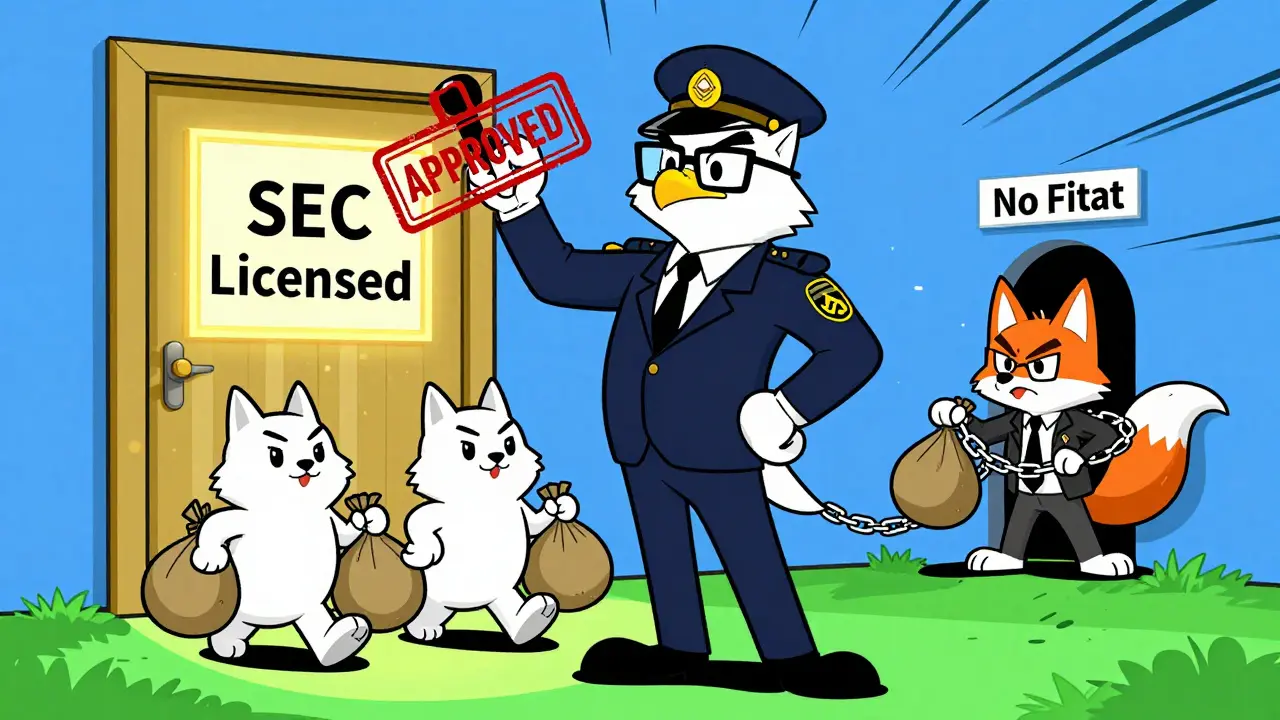
To understand what is banned, you first have to understand what is legal. Under the ISA 2025, signed by President Bola Ahmed Tinubu in March 2025, all Virtual Asset Service Providers (VASPs)-which includes crypto exchanges-must be licensed by the Nigerian SEC. This replaces the fragmented oversight of previous years with a single, strict authority.
If an exchange operates in Nigeria without this license, it is effectively banned. The SEC has the power to suspend, revoke, or deny licenses, and unlicensed platforms face immediate enforcement actions. This includes blocking access via telecommunications providers and prohibiting banks from servicing accounts linked to these platforms.
This creates a clear divide:
- Licensed Platforms: Can operate legally, accept Naira deposits, and offer full services.
- Unlicensed Platforms: Are functionally banned for fiat transactions. While you might still technically log in, you cannot deposit or withdraw Naira legally, and your access may be blocked at the network level.
As of mid-2026, only a handful of domestic platforms have successfully navigated this rigorous vetting process. Most international giants remain in a state of restricted operation or complete suspension of local fiat services.
The Binance Situation: Restricted, Not Fully Banned?
Binance is the elephant in the room for most Nigerian traders. For many, "banned" means "I can't use my favorite app." So, where does Binance stand? It’s complicated, but the trend is toward restriction.
In February 2024, Binance suspended Naira trades on its P2P platform. Around the same time, local telecom operators blocked access to Binance’s domain. Technically, Binance hasn’t been issued a permanent, total ban that prevents all forms of access. You can still maintain an account and trade crypto-for-crypto. However, the ability to convert Naira to crypto directly through the platform is gone.
Why does this matter? Because without the ability to onboard fiat currency legally, an exchange is useless to the average Nigerian user who needs to buy Bitcoin with Naira. Furthermore, accessing the site often requires a VPN to bypass ISP blocks. Using a VPN to access financial services exists in a regulatory gray area. While not explicitly criminalized for individual users in every case, it violates the terms of service of most internet providers and puts your funds at risk if the platform decides to freeze accounts associated with prohibited jurisdictions.
So, is Binance banned? For practical purposes involving Naira, yes. It is restricted from offering core banking-integrated services. Until Binance secures a local SEC license-which remains uncertain-it will likely remain in this limbo state.
Who Is Actually Legal? The Licensed Exchanges
If you want to trade safely and legally in Nigeria in 2026, you need to stick to platforms that have cleared the SEC hurdle. The licensing process is tough. It requires robust Anti-Money Laundering (AML) checks, Know Your Customer (KYC) protocols, and significant capital reserves. As a result, the list of approved exchanges is short.
Two major domestic players lead the pack:
- Quidax: One of the first to receive early SEC approvals in 2024. Quidax has positioned itself as a compliant bridge between traditional finance and crypto, offering seamless Naira integration.
- Busha: Another pioneer in the licensed space, Busha focuses heavily on security and institutional-grade compliance, making it a popular choice for larger traders.
These platforms represent the "white list." They are monitored, regulated, and protected by the new legal framework. If an exchange is not on this growing list of licensed entities, assume it is operating illegally in Nigeria.
| Exchange | Regulatory Status | Naira Support | Access Method |
|---|---|---|---|
| Quidax | Licensed (SEC) | Yes (Direct Bank Transfer) | Standard Web/App Access |
| Busha | Licensed (SEC) | Yes (Direct Bank Transfer) | Standard Web/App Access |
| Binance | Unlicensed / Restricted | No (P2P Suspended) | VPN Often Required |
| Coinbase | Unlicensed | No | Blocked/Restricted Access |
| Kraken | Unlicensed | No | Blocked/Restricted Access |
The Cost of Non-Compliance: Fines and Risks
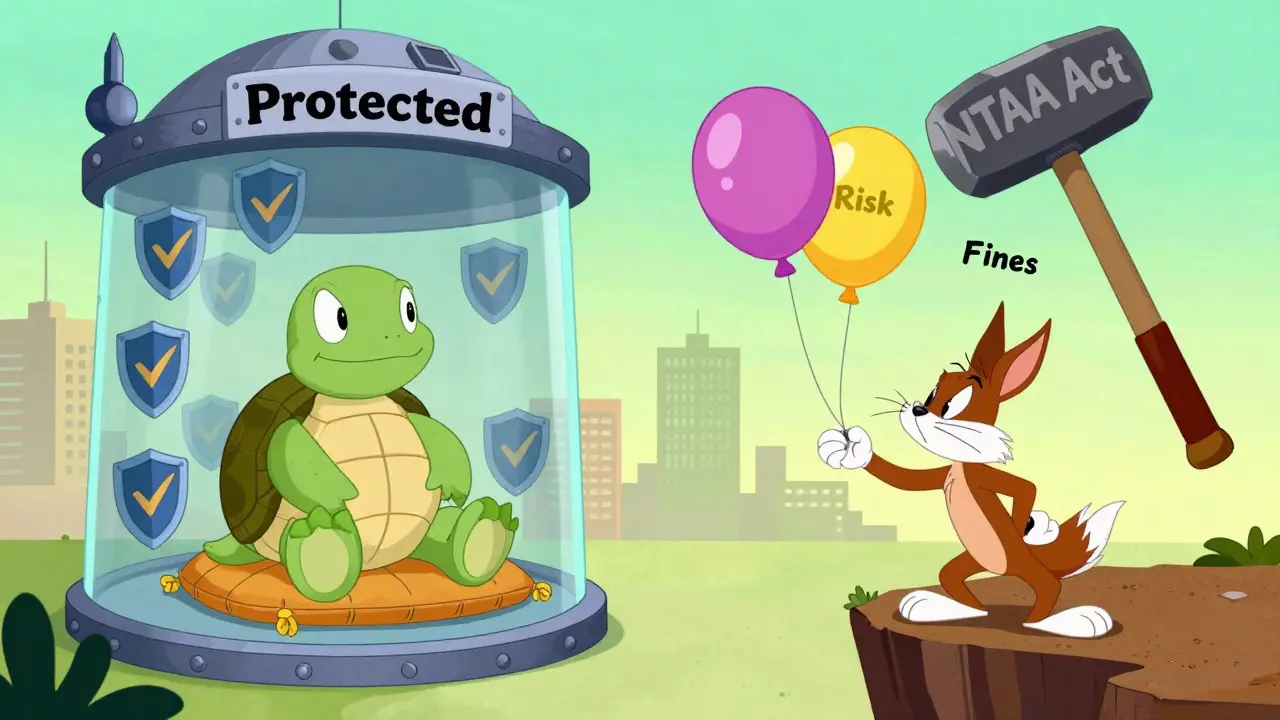
You might wonder why anyone would risk using an unlicensed exchange. The incentives to comply have grown significantly due to the Nigeria Tax Administration Act (NTAA) 2025. Signed into law in June 2025 and taking full effect in 2026, this act introduces severe penalties for non-compliant VASPs.
Here is the reality check: If you use an unlicensed exchange that fails to report transactions correctly, the platform faces fines starting at ₦10 million ($6,693) for the first month of default, plus ₦1 million ($669) for each subsequent month. These costs are often passed down to users in the form of higher fees, frozen assets, or sudden shutdowns.
More importantly for you as a user, the lack of regulation means no consumer protection. If a licensed exchange like Quidax or Busha freezes your account due to fraud, you have a regulatory body (the SEC) to appeal to. If an unlicensed offshore exchange disappears with your money, you have no recourse. The Economic and Financial Crimes Commission (EFCC) and the Nigerian Financial Intelligence Unit (NFIU) now have enhanced powers to investigate crypto-related fraud, including accessing telecommunications records. Being caught using illegal channels can complicate your financial standing significantly.
Why Did Nigeria Change Its Approach?
The shift from blanket bans to selective licensing wasn't random. It was driven by data. Between July 2024 and June 2025, Nigeria received an estimated $92.1 billion in cryptocurrency value. That is nearly double the activity seen in South Africa during the same period. You cannot ban what half the economy relies on.
The Central Bank of Nigeria (CBN) lifted its ban on banks servicing crypto businesses in late 2023, paving the way for the current structure. The government realized that prohibition was pushing activity underground, creating tax evasion and money laundering risks. By bringing exchanges into the light via the ISA 2025, they can tax transactions, monitor illicit flows, and protect investors.
This approach positions Nigeria as a potential fintech hub in Africa. Instead of chasing users away, the goal is to attract legitimate investment while cracking down on scams. The ISA 2025 also explicitly bans Ponzi schemes and enhances investigative tools, showing a focus on consumer safety rather than just control.
What About Decentralized Finance (DeFi)?
A common question is whether DeFi protocols are banned. Since DeFi platforms don't have a central entity to license, they fall into a different category. Currently, there is no specific ban on using decentralized wallets or interacting with smart contracts. However, the NTAA 2025 implies that any service facilitating taxable transactions must report them. Future regulations in 2026 and beyond are expected to clarify how DeFi interfaces accessible from Nigeria should be treated, particularly regarding stablecoins and cross-border monitoring.
For now, the primary target of the "ban" is centralized exchanges that handle custody of funds and facilitate fiat on-ramps. If you are swapping tokens on a decentralized protocol, you are less likely to face direct platform restrictions, but you still bear the full burden of tax compliance.
How to Stay Safe and Compliant in 2026
Navigating the Nigerian crypto market in 2026 requires vigilance. Here is your checklist for staying out of trouble:
- Check the SEC Register: Before signing up for any exchange, verify if it holds a valid VASP license from the Nigerian SEC. The regulator publishes lists of approved entities.
- Avoid "Too Good to Be True" Promises: Unlicensed platforms often promise high returns to attract users before vanishing. Stick to established, licensed brands.
- Understand the Tax Implications: With the NTAA 2025 in force, your crypto gains are taxable. Keep records of all transactions on licensed platforms to simplify filing.
- Be Cautious with VPNs: While using a VPN to access global information is common, using it to bypass financial regulations carries risk. If the platform detects your location, they may freeze your assets.
- Enable Two-Factor Authentication (2FA): Regulatory compliance doesn't replace personal security. Always use hardware keys or authenticator apps, not SMS verification.
The era of wild west crypto trading in Nigeria is ending. The ISA 2025 has drawn a line in the sand. On one side, you have secure, licensed, and protected platforms like Quidax and Busha. On the other, you have unlicensed exchanges like Binance (for fiat services) and others that operate in a shadowy, risky space. Choosing the right side isn't just about following rules; it's about protecting your hard-earned money.
Is Binance completely banned in Nigeria?
Binance is not completely banned in the sense that you cannot hold an account or trade crypto-to-crypto. However, its Naira trading services (P2P and direct deposits) are suspended, and access to its website is often blocked by ISPs. Without a local SEC license, it cannot legally offer fiat on-ramps, making it functionally restricted for most Nigerian users needing to convert Naira.
Which crypto exchanges are legal in Nigeria in 2026?
As of 2026, the primary legally licensed exchanges include Quidax and Busha. These platforms have obtained VASP licenses from the Nigerian Securities and Exchange Commission (SEC) under the Investments and Securities Act (ISA) 2025. Always check the latest SEC register for updates, as more platforms may gain approval.
What happens if I use an unlicensed crypto exchange?
Using an unlicensed exchange exposes you to significant risks. Your funds are not protected by Nigerian consumer laws, and you have no recourse if the platform fails or engages in fraud. Additionally, banks may freeze accounts linked to suspicious unlicensed activities, and you may face difficulties with tax compliance under the Nigeria Tax Administration Act (NTAA) 2025.
Did the Central Bank of Nigeria (CBN) lift the crypto ban?
Yes. In late 2023, the CBN lifted its circular prohibiting banks from servicing crypto businesses. This move paved the way for the current regulatory framework where banks can interact with licensed crypto exchanges, facilitating legal Naira transactions for compliant platforms.
Are cryptocurrencies legal in Nigeria?
Yes, cryptocurrencies are legal in Nigeria, but they are classified as securities under the Investments and Securities Act (ISA) 2025. This means they are subject to strict regulation, taxation, and licensing requirements for exchanges. Ownership and trading are permitted, but only through regulated channels.