
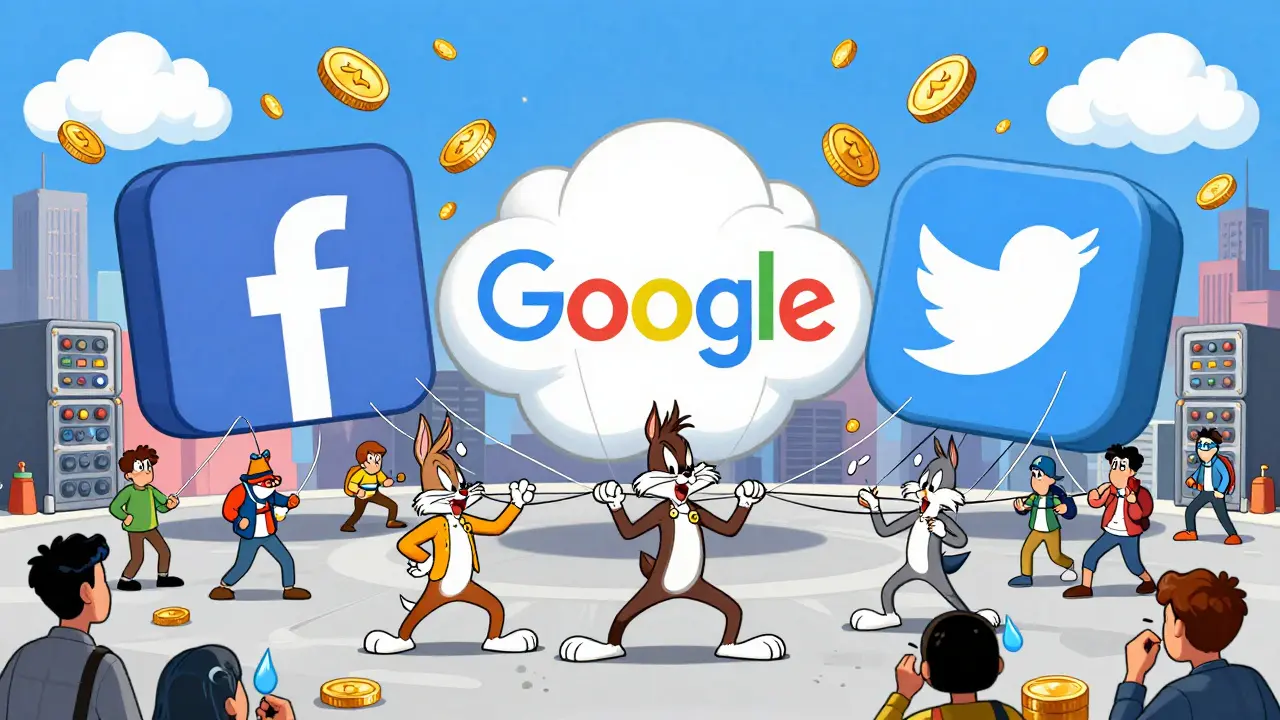
Web3 isn’t just another tech buzzword. It’s a rewrite of how the internet works - not by adding features, but by flipping the power structure. For over a decade, we’ve lived in Web2: platforms like Facebook, Google, and Twitter that let us create content, connect, and spend money - but never truly own anything. Your data? Owned by them. Your digital art? Locked in their servers. Your identity? Controlled by their login systems. Web3 changes that. It’s built on one simple idea: you should own your digital life.
Decentralization: No Single Boss, Just Rules
Web2 runs on centralized servers. One company controls the database, the rules, and the shutdown button. Web3 throws that out. Instead, it uses blockchains - distributed ledgers spread across thousands of computers worldwide. No single entity owns or controls them. If one node goes down, the network keeps running. That’s decentralization. This isn’t just technical. It’s political. Think of it like replacing a bank with a public ledger everyone can verify. In Web2, if PayPal freezes your account, you’re stuck. In Web3, if you hold your own crypto in a wallet you control, no one can take it away - unless they steal your private key. That’s the difference between permission and autonomy. Ethereum, launched in 2015, became the engine of Web3 because it allowed developers to build apps on top of a decentralized network. After the 2022 Merge, Ethereum stopped using energy-hungry mining and switched to proof-of-stake, where validators lock up ETH to secure the network. Today, over 1 million people are staking ETH, making Ethereum more secure and more decentralized than ever.User Ownership: Your Data, Your Assets, Your Rules
In Web2, you’re the product. You post, like, share - and companies sell your attention and behavior to advertisers. You never see a dime. Web3 flips this. You create value, and you keep it. How? Through digital ownership. Your NFT isn’t just a JPEG stored on a server. It’s a token on a blockchain with a verifiable history. You own it. You can sell it. You can use it in other apps. OpenSea, the largest NFT marketplace, processed over $23 billion in sales in 2021 - not because people were buying pixels, but because they were buying proof of ownership. Your identity works the same way. Web3 gives you a self-sovereign identity - a digital ID you control, not a username tied to Google or Apple. You decide who sees your data, when, and for what. No more “Sign in with Facebook” traps. Just your wallet address and cryptographic proof. This isn’t theoretical. In 2021, 17,500 people pooled $47 million in ETH to bid on a rare copy of the U.S. Constitution. They didn’t need a corporation. They didn’t need a lawyer. They used a smart contract to coordinate and buy as a group. That’s user ownership in action.Trustless Systems: No Middlemen, Just Math
Web2 relies on trust. You trust PayPal to process your payment. You trust Facebook to protect your data. You trust your bank not to lose your money. But trust gets broken. All the time. Web3 replaces trust with math. That’s what “trustless” means. It doesn’t mean no trust - it means you don’t need to trust a person or company. You trust the code. Smart contracts - self-executing programs on blockchains - handle everything from sending crypto to locking up collateral for a loan. If the conditions are met, the contract executes automatically. No bank. No broker. No customer service call. Uniswap, a decentralized exchange, lets you swap tokens directly from your wallet. No sign-up. No KYC. No middleman taking a cut. In 2023, it handled over $1.1 trillion in trades. That’s not magic. That’s code running on a public, transparent network. The catch? Code can have bugs. The DAO hack in 2016 stole $60 million because of a flaw in its smart contract. That’s why audits matter. And why users need to learn how to verify addresses and check contract code before interacting with any dApp.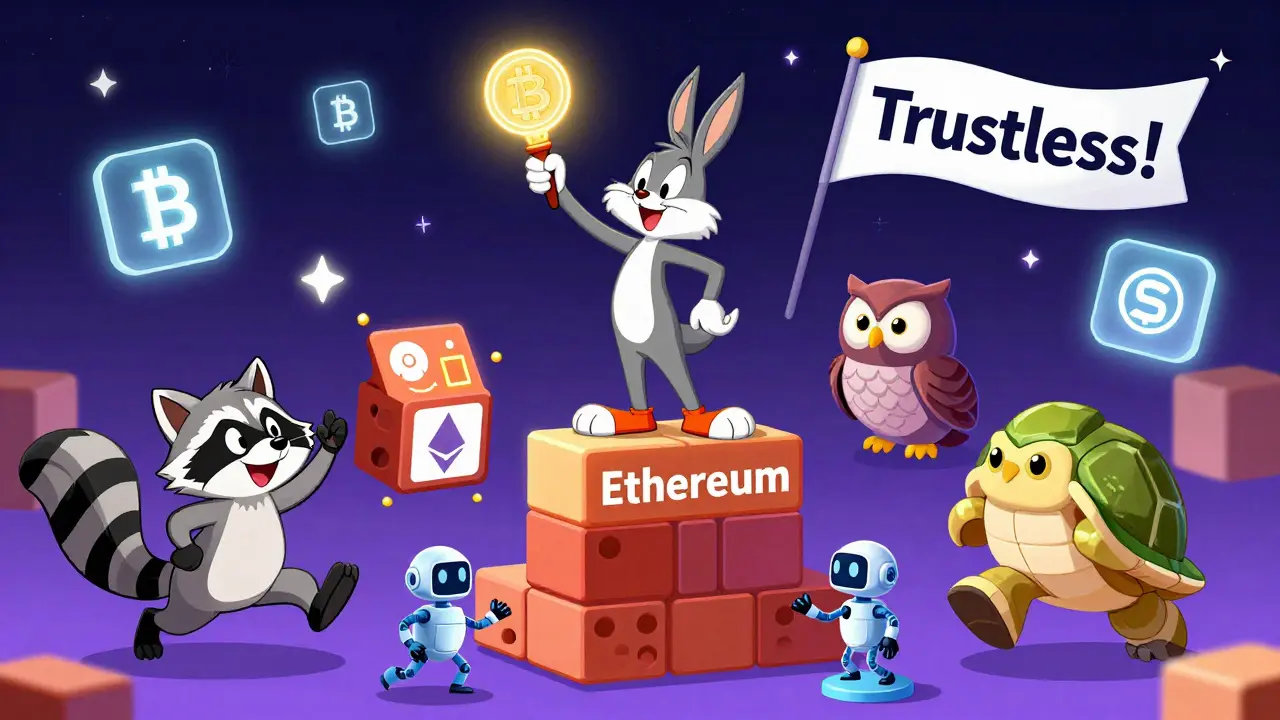
Native Payments: Crypto Isn’t Optional - It’s the Foundation
In Web2, payments are an add-on. You use PayPal, Stripe, or credit cards to buy things. In Web3, crypto is built in. Every transaction, every interaction, every reward happens in digital assets. Why does this matter? Because it enables microtransactions, global access, and new economic models. In a game built on Web3, you don’t just buy a skin - you own it. You can sell it. You can take it to another game. And you get paid in crypto the moment you earn it - no waiting for a payout cycle. DeFi (decentralized finance) apps like Aave and Compound let you lend, borrow, or earn interest without a bank. Interest rates are set by supply and demand on the blockchain. You can earn 5% APY on stablecoins from your phone - anywhere in the world, with no bank account. But there’s a cost. Gas fees on Ethereum can spike to $50 or more during peak times. That’s why layer-2 solutions like Arbitrum and Optimism have exploded. They handle transactions off the main chain, then batch them back on. Throughput jumped from 15-20 transactions per second to 2,000-4,000. That’s the future: fast, cheap, and still decentralized.Interoperability: Breaking Down the Walls
One of Web3’s biggest promises is that your assets and identity should work everywhere. Not locked in one app. Not trapped on one blockchain. Right now, that’s still a work in progress. Ethereum, Solana, Polygon, and others operate as separate networks. But bridges and protocols like Chainlink and LayerZero are building the pipes between them. Soon, you might hold an NFT on Ethereum, use it in a game on Solana, and pay for it with stablecoins on Polygon - all without converting or moving assets manually. This isn’t just convenience. It’s freedom. You shouldn’t have to choose between ecosystems. Web3’s goal is to let you move freely - like the open web was meant to be.
The Real Challenges: UX, Security, and Adoption
Web3 sounds powerful. But it’s still hard to use. New users often abandon dApps after the first step. Why? Wallet setup. Seed phrases. Gas fees. Confusing interfaces. A 2022 MetaMask study found 78% of new users quit during onboarding. A Consensys survey showed 43% lost funds because they misplaced their recovery phrase. Security is another issue. While the blockchain itself is nearly impossible to hack, your wallet isn’t. Phishing scams, fake websites, and malicious smart contracts are rampant. You can’t blame the network if you click a link that steals your keys. Adoption is still tiny. Only 64 million active Web3 addresses exist globally - less than 1% of internet users. Most people still don’t know what a wallet is. But enterprise adoption is growing. 61% of Fortune 500 companies are experimenting with blockchain, mostly for supply chain tracking and loyalty programs.What’s Next? The Road to Mainstream
Web3 isn’t going to replace the internet overnight. But it’s already changing how we think about ownership, value, and control. Upgrades like Dencun (expected in early 2024) will slash layer-2 transaction costs by up to 90%. That’s the key to mass adoption: making Web3 feel as simple as using Instagram. Regulation is catching up too. The EU’s MiCA law, effective in 2024, will set clear rules for crypto assets. The U.S. is still fragmented, but pressure is building for clarity. The real test? Will Web3 deliver real value beyond speculation? Right now, most users still treat crypto like a lottery ticket. But the tools are here: self-owned identity, decentralized finance, verifiable ownership, community governance. The next wave won’t be about buying NFTs. It’ll be about using them - to prove your credentials, access services, or earn income. Web3 isn’t about technology for technology’s sake. It’s about giving people back control. The internet was built to be open. Web2 made it corporate. Web3 is trying to make it ours again.What’s the difference between Web2 and Web3?
Web2 is the internet we use today - centralized platforms like Facebook, YouTube, and Amazon where companies own your data and control your access. Web3 is decentralized: you own your data, your assets, and your identity through crypto wallets and blockchain technology. In Web2, you create content but don’t profit from it. In Web3, you can earn tokens for contributing to platforms, and your digital items are truly yours to sell or use elsewhere.
Do I need cryptocurrency to use Web3?
Yes, for now. Most Web3 applications require crypto to interact - whether it’s paying gas fees to send a transaction, staking tokens to vote in governance, or buying NFTs. You don’t need to trade or speculate, but you do need a wallet and some cryptocurrency (like ETH or USDC) to get started. Think of it like needing a credit card to shop online - you don’t have to use it for investments, but you need it to use the system.
Is Web3 secure?
The blockchain itself is extremely secure - once data is recorded, it’s nearly impossible to alter. But your wallet isn’t. If you lose your private key or seed phrase, your assets are gone forever. Scammers target users through fake websites, phishing links, and malicious smart contracts. Security in Web3 is your responsibility. Always verify addresses, use hardware wallets for large holdings, and never share your recovery phrase.
Can I use Web3 without coding?
Absolutely. You don’t need to write code to use Web3. Apps like MetaMask, OpenSea, and Uniswap let you interact with blockchain technology through simple interfaces. You just need to understand basic concepts: wallets, gas fees, and verifying contracts. The learning curve is steep at first, but many users get comfortable in a few hours with the right guides.
Why is Ethereum so important to Web3?
Ethereum is the foundation of most Web3 apps. It was the first blockchain to support smart contracts - self-executing programs that run without intermediaries. Over 57% of all Web3 developers build on Ethereum. After the 2022 Merge, it became far more energy-efficient and scalable. While other blockchains like Solana and Polygon are growing, Ethereum still leads in security, developer tools, and ecosystem size.
What are the biggest risks of Web3?
The biggest risks are user error (losing keys), scams, regulatory crackdowns, and scalability issues. High gas fees and slow speeds on Ethereum’s main chain can make transactions expensive and frustrating. Regulatory uncertainty in the U.S. could limit access to certain apps. And while the tech is promising, most users still don’t understand how to use it safely. Web3 is powerful, but it’s not foolproof.
Web3 isn’t a product. It’s a shift - from control to ownership, from trust to verification, from platforms to protocols. It’s messy, slow, and frustrating sometimes. But it’s also the first real attempt to fix the internet’s biggest flaw: the fact that we built it, but never owned it.
Joseph Pietrasik
January 28, 2026 AT 19:29Pamela Mainama
January 29, 2026 AT 23:56Rachel Stone
January 30, 2026 AT 03:57Nickole Fennell
January 30, 2026 AT 07:49Rico Romano
January 31, 2026 AT 17:58Freddy Wiryadi
February 1, 2026 AT 14:36Dahlia Nurcahya
February 2, 2026 AT 15:36William Hanson
February 3, 2026 AT 01:13Lori Quarles
February 4, 2026 AT 09:57Jeremy Dayde
February 4, 2026 AT 22:00Steven Dilla
February 6, 2026 AT 11:29Ramona Langthaler
February 8, 2026 AT 08:31Andrea Demontis
February 8, 2026 AT 21:01