
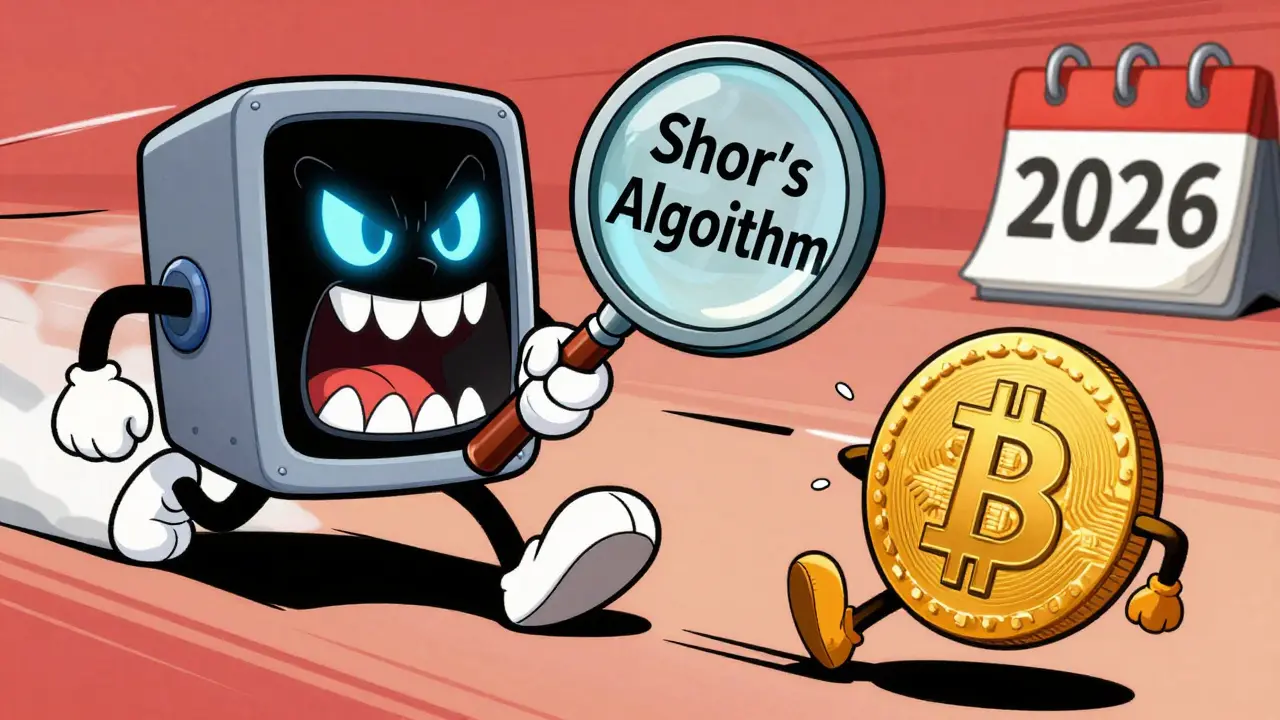
Imagine handing over the keys to your house to a stranger because you didn't check the lock's brand. In the world of cryptocurrency, that’s exactly what happens when digital signature vulnerabilities go unnoticed. These aren’t just theoretical glitches; they are real-world cracks in the armor that protect billions of dollars in assets. Whether it’s a hacker stealing funds from a DeFi protocol or a future quantum computer unraveling years of encrypted history, understanding these weaknesses is no longer optional-it’s survival.
We often assume that if a transaction is signed, it’s safe. But as we move into 2026, the landscape has shifted dramatically. The same algorithms that secured Bitcoin in its early days are now facing existential threats from advancing technology and clever exploit strategies. This guide breaks down the most common digital signature vulnerabilities in crypto, why they matter, and how you can protect yourself right now.
The Quantum Threat: The Sword of Damocles
The biggest looming threat to digital signatures isn’t a bug in the code today; it’s the hardware of tomorrow. Most major cryptocurrencies, including Bitcoin and Ethereum, rely on elliptic curve cryptography (ECC). Specifically, they use ECDSA (Elliptic Curve Digital Signature Algorithm). For decades, this was considered unbreakable by classical computers. However, quantum computers operate on entirely different physics.
Quantum machines can run Shor’s algorithm, which solves the discrete logarithm problem efficiently. This means a sufficiently powerful quantum computer could derive a private key from a public key almost instantly. Deloitte’s analysis suggests that while current quantum tech isn’t ready, a machine with enough qubits could break an RSA-2048 key in hours and potentially compromise Bitcoin signatures within 30 minutes. Why does this timeline matter? Because Bitcoin transactions take about 10 minutes to confirm. If an attacker can generate a valid signature faster than the network confirms yours, they can steal your funds before you even realize it happened.
The risk is immediate due to "harvest now, decrypt later" attacks. Adversaries are already recording public keys and transaction data today, storing them for the day when quantum computers become powerful enough to crack them. With roughly 25% of circulating Bitcoin sitting in older, more vulnerable address formats, the exposure is significant. Experts like Dr. Michele Mosca have warned that quantum-capable machines could emerge by 2029 with high probability, making migration to post-quantum cryptography urgent.
| Algorithm | Used By | Quantum Resistance | Signature Size |
|---|---|---|---|
| ECDSA | Bitcoin, Ethereum | Vulnerable | ~72 bytes |
| EdDSA | Solana, Monero | Vulnerable | ~64 bytes |
| CRYSTALS-Dilithium | NIST Standard (Future) | Resistant | ~2,420 bytes |
| Winternitz OTS | IOTA | Resistant | Variable/Large |
Signature Malleability: Changing the Rules Mid-Game
Before we worry about quantum computers, there’s a simpler flaw that has plagued blockchains for years: signature malleability. In simple terms, this vulnerability allows an attacker to alter a digital signature without changing the underlying message or invalidating the cryptographic proof. It sounds minor, but it can have devastating consequences.
In 2014, Bitcoin suffered from this issue, allowing attackers to change transaction IDs. This led to confusion and double-spending fears. While improvements like Segregated Witness (SegWit) reduced this risk significantly, legacy transactions still exist. More recently, smart contract platforms have faced similar issues. If a contract relies on a specific transaction hash to verify ownership or completion, a malleable signature can trick the contract into thinking a different event occurred.
The Parity Multisig Wallet hack in 2017 is a stark example. Attackers exploited flaws in how signatures were verified, leading to the loss of over 150,000 ETH. Today, while core protocols are safer, many decentralized applications (DeFi) still implement custom signature verification logic. Trail of Bits found that 68% of audited DeFi protocols used non-standard verification methods, increasing their vulnerability exposure nearly fivefold compared to those using established libraries like OpenZeppelin.

Cross-Chain Replay Attacks: One Key, Many Doors
As the crypto ecosystem expands across multiple chains-Ethereum, Binance Smart Chain, Polygon, and others-a new vulnerability emerged: cross-chain replay attacks. This happens when a signature created on one blockchain can be reused on another because the networks share identical contract code or lack proper chain differentiation.
Imagine signing a document to authorize a payment on Bank A. If Bank B uses the exact same paper and ink, and doesn’t stamp it with a unique identifier, someone could photocopy your signature and submit it to Bank B. In crypto, this is called a "replay attack." The 2022 Poly Network incident saw attackers move $80 million across networks by replaying signatures that weren’t properly bound to a specific chain ID.
To combat this, standards like EIP-712 introduced typed data structures that embed chain IDs directly into the signature domain. However, not all wallets or contracts adhere to this. Users often report losing funds because their wallet interface didn’t clearly display which chain they were signing for. Always double-check the chain ID and the domain separator before approving any transaction. If a request looks vague or lacks context, it’s a red flag.

Frontrunning and Parameter Exclusion
Another subtle vulnerability involves what gets included-and excluded-in the hash calculation of a signature. Some systems inadvertently leave certain parameters out of the signed data. An attacker can then manipulate these unsigned parameters before the transaction is executed.
This is particularly dangerous in DeFi protocols where timing and price feeds are critical. If a signature doesn’t bind the slippage tolerance or the recipient address securely, an attacker can modify these values after you’ve signed but before the transaction is processed. Metana’s 2024 security report noted that 17% of audited DeFi protocols had such flaws. This enables "frontrunning," where bots detect your pending transaction and adjust the terms to their advantage, leaving you with a worse deal or total loss.
The solution lies in rigorous auditing and using standardized libraries. Developers must ensure every critical parameter is hashed into the signature. For users, sticking to well-known, audited protocols reduces this risk significantly. Never interact with new, unaudited contracts that ask for broad permissions.
How to Protect Your Assets in 2026
Knowing the vulnerabilities is half the battle. The other half is taking actionable steps to secure your holdings. Here’s how you can mitigate these risks today:
- Use Hardware Wallets: Devices like Ledger or Trezor keep your private keys offline, reducing the attack surface for remote exploits. They also provide clear displays of transaction details, helping you catch replay attacks or malformed requests.
- Enable SegWit and Native SegWit Addresses: On Bitcoin, always use Bech32 addresses (starting with 'bc1'). These support SegWit, which eliminates most signature malleability issues. Avoid legacy addresses starting with '1' or '3'.
- Check for Chain IDs: When signing transactions on multi-chain wallets like MetaMask, verify the network name and chain ID explicitly. Look for EIP-712 structured data rather than raw hex strings.
- Avoid Reusing Addresses: To mitigate quantum risks, never reuse addresses. Each transaction should generate a new address so that the public key is only exposed briefly during confirmation.
- Monitor for Post-Quantum Upgrades: Keep an eye on blockchain developments. Projects like Ethereum and Polkadot are working on integrating post-quantum algorithms like CRYSTALS-Dilithium. As these roll out, update your software to support them.
The transition to quantum-resistant cryptography will be costly and complex, requiring years of coordinated effort. But individual users can start preparing now by adopting best practices and staying informed. Remember, in crypto, your keys are your castle-but only if the locks are solid.
What is the biggest threat to digital signatures in crypto?
The most significant long-term threat is quantum computing. Algorithms like Shor’s can break the elliptic curve cryptography (ECDSA) used by Bitcoin and Ethereum, potentially allowing attackers to derive private keys from public keys. Short-term threats include signature malleability and cross-chain replay attacks.
Are my Bitcoin funds safe from quantum attacks right now?
Currently, yes. Existing quantum computers do not have enough qubits to break ECDSA. However, "harvest now, decrypt later" attacks mean adversaries are collecting data for future decryption. To stay safe, avoid reusing addresses and consider moving funds to quantum-resistant solutions as they become available.
What is signature malleability?
Signature malleability is a vulnerability where an attacker can alter a digital signature without invalidating it or changing the message. This can confuse systems that rely on transaction hashes for verification, leading to double-spending or smart contract failures.
How do I prevent cross-chain replay attacks?
Ensure your wallet supports EIP-712 typed data, which includes chain-specific identifiers in the signature. Always verify the chain ID displayed in your wallet before signing. Avoid using outdated interfaces that don’t show clear network information.
When will blockchains adopt quantum-resistant signatures?
Major projects like Ethereum and Polkadot are targeting implementation between 2027 and 2028. NIST selected CRYSTALS-Dilithium as a standard in 2024, accelerating development. However, full migration will take time due to the need for consensus and backward compatibility.
Michelle Bonahoom
May 5, 2026 AT 04:36stop acting like we need a guide for this stuff. its obvious that if you dont check your wallet settings you get drained. people are just lazy and blame the tech instead of themselves. i see too many americans falling for these scams because they refuse to read the docs. it is pathetic honestly.
Matt Davis
May 6, 2026 AT 01:31You are absolutely wrong about the quantum timeline being imminent. The article sensationalizes the threat to sell clicks. Shor's algorithm requires millions of error-corrected qubits, which we are decades away from. Do not let fear mongers dictate your portfolio strategy. It is a classic case of media hype overriding technical reality.
Albert Lee
May 7, 2026 AT 16:49I really appreciate this breakdown because it helps me feel more secure in my investments. Knowing that SegWit addresses are safer gives me peace of mind. I was worried about my old Bitcoin holdings but now I know exactly what steps to take next. Thank you for making such complex topics accessible to everyone who wants to learn.
Ankush Pokarana
May 9, 2026 AT 16:21the essence of security lies not in the code but in the human element which often fails to grasp the philosophical implications of trustless systems when we consider the quantum threat we must also consider the ethical responsibility of developers to migrate before the harvest now decrypt later attacks become viable it is a long road ahead
Bianca Vilas Boas Lourenço
May 10, 2026 AT 18:22oh wow another doom post 🙄 as if my keys aren't already safe in a lead box buried under my floorboards. please tell me more about how i'm going to lose everything tomorrow 😂 meanwhile im just chilling with my sats. stop trying to scare us into buying hardware wallets you're not fooling anyone here 🤡
Yash Lodha
May 12, 2026 AT 05:39The central banks are aware of the quantum threat and are using it as an excuse to push CBDCs. They want to break privacy so they can track every transaction. The 'vulnerabilities' are manufactured crises to justify total surveillance. Wake up sheeple. The real attack is on your freedom not your private key.
Jesse Alston
May 13, 2026 AT 02:36Great points here! 👍 I always recommend checking the chain ID explicitly. I lost some ETH once because I didn't notice I was on a testnet fork. Using EIP-712 typed data structures is a game changer for clarity. Keep sharing this info with your friends! 🚀
Sarah C
May 13, 2026 AT 08:10This is really helpful information. I never realized that signature malleability could still affect DeFi protocols today. I will definitely start using Bech32 addresses for all my Bitcoin transactions. Thanks for the clear explanation on how to protect our assets.
Kimberly Herbstritt
May 14, 2026 AT 18:23I disagree that quantum computers are the biggest threat right now. Social engineering and phishing are far more dangerous. People give away their seeds because they click on fake links. We should focus on user education rather than hypothetical future tech threats.
Sharada Vakkund
May 15, 2026 AT 17:09Let's discuss the cross-chain replay attacks more. It is crucial for everyone to understand how different chains interact. If you are moving assets between Ethereum and Polygon, make sure your wallet supports proper domain separation. Community knowledge is power!
Sudarshan Anbazhagan
May 15, 2026 AT 22:20it is imperative that one understands the historical context of cryptographic failures before dismissing current vulnerabilities as mere theoretical constructs the failure to adopt best practices is a reflection of intellectual laziness and a disregard for the rigorous standards required in secure system design
John Gonzalez Bentham
May 17, 2026 AT 01:30this article is trash. you guys dont know anything about crypto. segwit is outdated and nobody uses legacy addresses anymore. stop spreading FUD about quantum computers. its all a scam to sell expensive hardware wallets. wake up people.
Ellie Riddell
May 17, 2026 AT 13:05sarcastically speaking, i am terrified of the quantum apocalypse coming for my dust. but seriously, the point about reusing addresses is valid. i stopped doing that years ago. maybe the real vulnerability is our own paranoia driving us to buy every new gadget.
Destiny Kilby
May 19, 2026 AT 06:38i have been following the development of post-quantum cryptography closely. the transition will be difficult but necessary. it is important to note that not all blockchains are moving at the same pace. users must remain vigilant and informed about the specific upgrades of their chosen networks.
Jerry CUNNINGHAM SR
May 20, 2026 AT 19:59It is essential that we approach this topic with respect for the complexity involved. The advice given here is sound and aligns with industry best practices. I encourage everyone to verify their wallet settings regularly. Collaboration and shared knowledge are key to securing our digital assets.
Shelby Cantu
May 21, 2026 AT 15:39Use hardware wallets. Check chain IDs. Don't reuse addresses. Simple steps that save money. Stay safe out there!
Tobias Gjerlufsen
May 22, 2026 AT 07:27you idiots think you are smart by reading this garbage. the real exploit is in the human brain. you are all sheep following trends. i have seen the code behind the scenes and it is full of holes. none of you understand the true depth of the vulnerability landscape. pathetic.
Ruben Michel
May 22, 2026 AT 11:17The distinction between ECDSA and EdDSA resistance profiles is often misunderstood by the layperson. While both are vulnerable to quantum attacks, the implementation details vary significantly. One must exercise discernment when evaluating protocol security claims. Ignorance is not a valid defense.
Gavin Wonnacott
May 22, 2026 AT 11:54I find it amusing that you think a simple guide can protect you. The elites are already harvesting your keys. You are playing a game you cannot win. Stop pretending you have control over your financial destiny. It is an illusion designed to keep you compliant.
Samara McCallum
May 22, 2026 AT 18:45i guess we are all just waiting for the other shoe to drop. maybe the quantum computer is already here and we just dont know it. or maybe it is all a big joke. either way i am just going to hold my bags and hope for the best. life is weird like that.
Sheldon Friesen
May 24, 2026 AT 16:23Look, I get the panic, but let's stay rational; the math doesn't lie, yet! 😉 However, the point about signature malleability is spot on. I've seen contracts fail because of this exact issue. Please, for the love of Satoshi, use standard libraries! 🛑
Tricia Alach
May 25, 2026 AT 10:40thats so cool! i never knew about the harvest now decrypt later thing. sounds kinda scary but also interesting. i will try to remember to check my wallet settings. thanks for sharing this info with us all.