

Imagine finding a new place to buy groceries. It has a shiny website, promises the freshest produce at half price, but there are no reviews, no physical address, and nobody in town has ever heard of it. You wouldn't walk in, would you? In the world of cryptocurrency, Colodax is exactly that kind of store. If you are reading this because you found a link to Colodax on a comparison site or an ad promising easy profits, stop right here. The evidence suggests that Colodax is not a legitimate financial platform. It lacks any verifiable presence in the real-world crypto market.
I’ve spent years analyzing digital assets from my desk in Wellington, New Zealand, where regulatory standards for financial services are strict. When I look at Colodax, I don’t see a company; I see a ghost. There is no code on GitHub, no registered business entity, and no independent security audits. This review isn’t about listing features like trading fees or supported coins because those details simply do not exist in a trustworthy format. Instead, we will look at why Colodax raises every alarm bell a seasoned trader should know.
The Silence Speaks Volumes
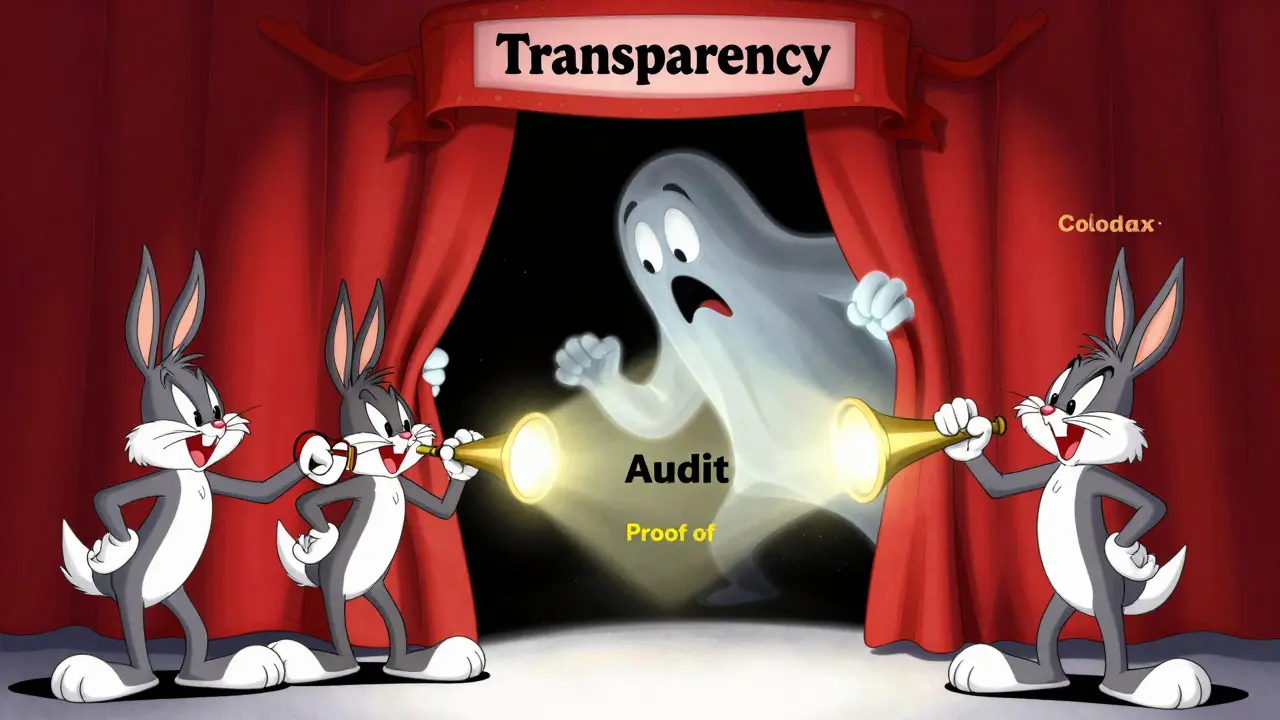
In the cryptocurrency industry, transparency is the currency of trust. Legitimate exchanges like Coinbase or Kraken publish their proof-of-reserves regularly. They show you that they actually hold the assets they claim to have. Colodax does none of this. If you search for "Colodax proof of reserves" or "Colodax audit report," you find nothing. Zero results from reputable cybersecurity firms like Kudelski Security or the Cloud Security Alliance.
This silence is dangerous. In 2024, the crypto exchange market was valued at $7.8 billion. Major players process billions in monthly volume. Yet, Colodax appears nowhere in market share analyses from firms like Statista or CryptoCompare. How can a platform claim to be "highly reputable" if it doesn't even register on the radar of industry analysts? It’s like claiming to be a major airline while having no planes, no flights, and no passengers.
Why is there no information about Colodax?
The lack of information is a primary red flag. Legitimate businesses leave a digital footprint through news articles, regulatory filings, and user discussions. Colodax only appears on low-quality SEO-generated comparison sites, suggesting it may not be a real operational entity.
Generic Marketing vs. Real Security
Let’s look closer at what little information exists about Colodax. References appear on sites like Slashdot and SourceForge, but these aren’t original reports. They are generic marketing blurbs. One page claims Colodax uses an "elastic, multi-stage wallet strategy." Another says it employs "the most reliable security technologies available." These are empty phrases. They mean nothing without technical specifics.
Real security is specific. For example, Coinbase stores 98% of customer funds in cold storage-offline wallets disconnected from the internet. They use Multi-Party Computation (MPC) to split keys among different servers. Does Colodax use MPC? Do they have hardware security modules (HSMs)? Do they undergo penetration testing by third-party firms? The answer is no, because there is no documentation to prove it. Claiming to have "two-factor authentication" is table stakes in 2026. Every legitimate app has this. But without knowing if it supports TOTP apps or hardware keys like YubiKey, the claim is meaningless.
Consider the Cloud Security Alliance’s guidelines for crypto exchanges. They require rigorous controls for data flows, credential management, and access logs. Colodax provides zero evidence of complying with these standards. It’s like a bank saying they have a vault but refusing to show you the lock.
The Comparison Trap
You might have seen Colodax listed next to names like OKCoin or XeggeX on comparison websites. This is a common tactic used by fraudulent platforms. By placing their name alongside known entities, they try to borrow credibility. However, a quick check reveals that these comparisons lack substance. There are no metrics on liquidity, spread, or uptime. Just vague assertions that Colodax is "better" or "safer."
When you compare Colodax to established giants like Binance or Kraken, the difference is stark. Binance publishes regular security bulletins. Kraken has been operating since 2011 with a clear track record. Colodax has no history. No launch date, no founder interviews, no roadmap updates. In an industry where "exit scams"-where creators disappear with user funds-are a known risk, a platform with no history is a massive liability.
| Feature | Legitimate Exchanges (e.g., Coinbase) | Colodax |
|---|---|---|
| Proof of Reserves | Published regularly | None available |
| Security Audits | Third-party verified | No evidence |
| Regulatory Licenses | BitLicense, FinCEN registration | Unknown/None |
| User Reviews | Thousands on Trustpilot/Reddit | Zero credible reviews |
Who Is Behind Colodax?
Every legitimate financial institution has a legal entity behind it. You can look up Coinbase Global Inc. in Delaware corporate records. You can find Kraken’s headquarters in San Francisco. Who owns Colodax? Where are they incorporated? What is their tax ID number? These questions remain unanswered.
In New Zealand, where I live, the Financial Markets Authority (FMA) maintains a list of registered financial service providers. Colodax is not on it. In the United States, the SEC and CFTC regulate crypto activities. Colodax has no filings there either. Operating without regulatory oversight means there is no recourse for you if your funds vanish. You cannot complain to a regulator because there is no one watching.
This anonymity is typical of phishing sites or fake exchanges designed to steal deposits. They create a professional-looking interface, accept small test deposits to build trust, and then disappear when larger amounts are sent. Or worse, they manipulate the order book so you can never withdraw your money, citing "maintenance" or "verification issues" indefinitely.
What To Look For Instead
If you are looking to trade cryptocurrency, prioritize safety over obscure promises. Here is a checklist of non-negotiable features for any exchange you consider using in 2026:
- Verifiable Proof of Reserves: The exchange must publish cryptographic proofs that they hold 1:1 backing for user assets.
- Independent Security Audits: Look for reports from firms like Kudelski Security or Trail of Bits.
- Regulatory Compliance: Ensure the exchange holds licenses in jurisdictions like the US, UK, EU, or New Zealand.
- Cold Storage Policy: At least 95% of assets should be stored offline.
- Active Community Presence: Real users discuss pros and cons on Reddit, Twitter, and Trustpilot.
Exchanges like Coinbase, Kraken, and Binance meet these criteria. They are not perfect-they have had outages and fee changes-but they are transparent. You know who you are dealing with. With Colodax, you are dealing with a void.
The Risk of Engaging
Why would anyone use Colodax? Perhaps the ads promise lower fees or exclusive tokens. But the cost of a potential scam far outweighs any minor savings. Losing your entire investment is a 100% loss. A slightly higher fee on a trusted platform is a manageable cost.
Furthermore, interacting with suspicious sites can compromise your personal data. Even if you don’t deposit money, signing up often requires email verification, phone numbers, and sometimes identity documents. This data can be sold or used for phishing attacks later. Protecting your digital hygiene is just as important as protecting your capital.
Is Colodax a scam?
While we cannot definitively label it a scam without direct evidence of fraud, all indicators point to high risk. The lack of transparency, regulatory compliance, and verifiable security measures makes it unsafe to use. It exhibits characteristics common to fraudulent operations.
Where did I hear about Colodax?
Colodax primarily appears on SEO-generated comparison pages on sites like Slashdot and SourceForge. These listings often use generic marketing language and do not represent genuine endorsements or detailed reviews.
Can I recover funds if I deposited into Colodax?
Recovery is highly unlikely. Without a registered legal entity or regulatory oversight, there is no mechanism for dispute resolution. Immediate action with your bank or payment provider is recommended if a transaction was recent.
What are safe alternatives to Colodax?
Stick to well-established, regulated exchanges such as Coinbase, Kraken, Binance, or local options compliant with your country's financial regulations. Always verify proof of reserves and security audits before depositing funds.
Does Colodax have mobile apps?
There is no verified presence of Colodax on official app stores like Apple App Store or Google Play. Any app claiming to be Colodax should be treated with extreme caution and likely avoided.
The cryptocurrency space moves fast, and new platforms pop up daily. But speed should never come at the expense of due diligence. Colodax fails the basic tests of legitimacy. It offers no value, provides no transparency, and poses significant risks. Save yourself the headache and stick to platforms with proven track records. Your digital assets deserve better than a mystery box.
Mark Tuason
July 9, 2026 AT 01:11It is quite refreshing to see such a thorough analysis of the red flags associated with Colodax. The comparison to legitimate exchanges like Coinbase and Kraken highlights the stark differences in transparency and regulatory compliance. I appreciate the emphasis on proof of reserves, as this is often overlooked by newcomers who are eager for quick profits. The absence of any verifiable business entity or security audits is indeed a significant concern that should deter potential users.
Ella Collinson
July 9, 2026 AT 02:59The lack of cryptographic verification mechanisms in Colodax’s infrastructure suggests a fundamental disregard for standard industry protocols regarding asset custody and liquidity management. Without multi-party computation (MPC) implementations or hardware security modules (HSMs), the platform cannot guarantee the integrity of user funds against sophisticated attack vectors. Furthermore, the absence of third-party penetration testing reports from reputable firms indicates a critical vulnerability in their operational security posture.
Ray Arney
July 10, 2026 AT 11:31I just checked out the site myself after seeing some ads. It looks pretty slick but yeah, there's no real info anywhere. Thanks for breaking it down here.
Andrew Schneider
July 11, 2026 AT 08:44Oh, please! 🙄 Another article trying to scare people away from 'new' opportunities because they don't fit the old guard narrative. Maybe Colodax is just too innovative for your rigid thinking! 🚀💎 Who needs boring audits when you have high returns? Don't be such a buzzkill! 😜
Eric Braddock
July 12, 2026 AT 20:55You think this is about safety? Please. This is part of the grand suppression algorithm designed to keep retail investors trapped in centralized fiat systems while the elite hoard digital gold. Colodax is likely a front for a shadow banking network operating outside SEC jurisdiction to bypass capital controls. Wake up, sheeple! They want you scared so you stay poor. 🕵️♂️👁️
Nick G
July 12, 2026 AT 23:47I understand that everyone has different perspectives on what constitutes a safe investment platform, and it is important to respect those viewpoints even if they differ from the mainstream consensus. However, considering the global nature of cryptocurrency, one must also look at how various cultures approach financial trust and whether the lack of local regulatory presence truly equates to malice or simply a different operational model that prioritizes decentralization over traditional bureaucratic oversight.
Nick Wengel
July 13, 2026 AT 19:47I just stick to the big names like Binance and Coinbase. It seems easier to know where my money is going when the company has been around for years. Why risk it on something nobody knows?
Alicia Hull
July 14, 2026 AT 19:23This is a crucial point that many people overlook: the importance of due diligence before depositing any funds. We must demand transparency from these platforms. If they cannot provide proof of reserves or independent security audits, they should not be trusted with our hard-earned money. Let us hold them accountable!
Johan Otto
July 15, 2026 AT 22:39Boring stuff. Just give me the green arrows. 📈
Anuj Kashyap
July 17, 2026 AT 05:46In the grand tapestry of human endeavor, the pursuit of wealth through speculative instruments often reveals more about our collective anxieties than the instruments themselves. 😂 One might ponder if the silence of Colodax is a void or merely a canvas waiting for the paint of hype. But alas, without the brush of regulation, the picture remains abstract and potentially chaotic. 🤔
Tracy Marshall
July 18, 2026 AT 20:20its obvious theyre hiding something because why would a legit company not have an address? its unethical to operate in the shadows and i feel bad for anyone who falls for this trap :((
Guy Davis
July 20, 2026 AT 15:34scam alert!! dont trust them!!
KEITH WONG
July 22, 2026 AT 05:33lol another victim looking for validation. smart money moves elsewhere. 🤡
Natalie Lucas
July 23, 2026 AT 12:32you guys are missing the point! its all about the community vibe and early adoption. dont let fear stop you from winning big! ✨
Curtis Johnson
July 25, 2026 AT 02:36I really hope everyone stays safe out there. It's terrifying to think about losing everything to a ghost platform. Let's support each other by sharing verified info only. ❤️