
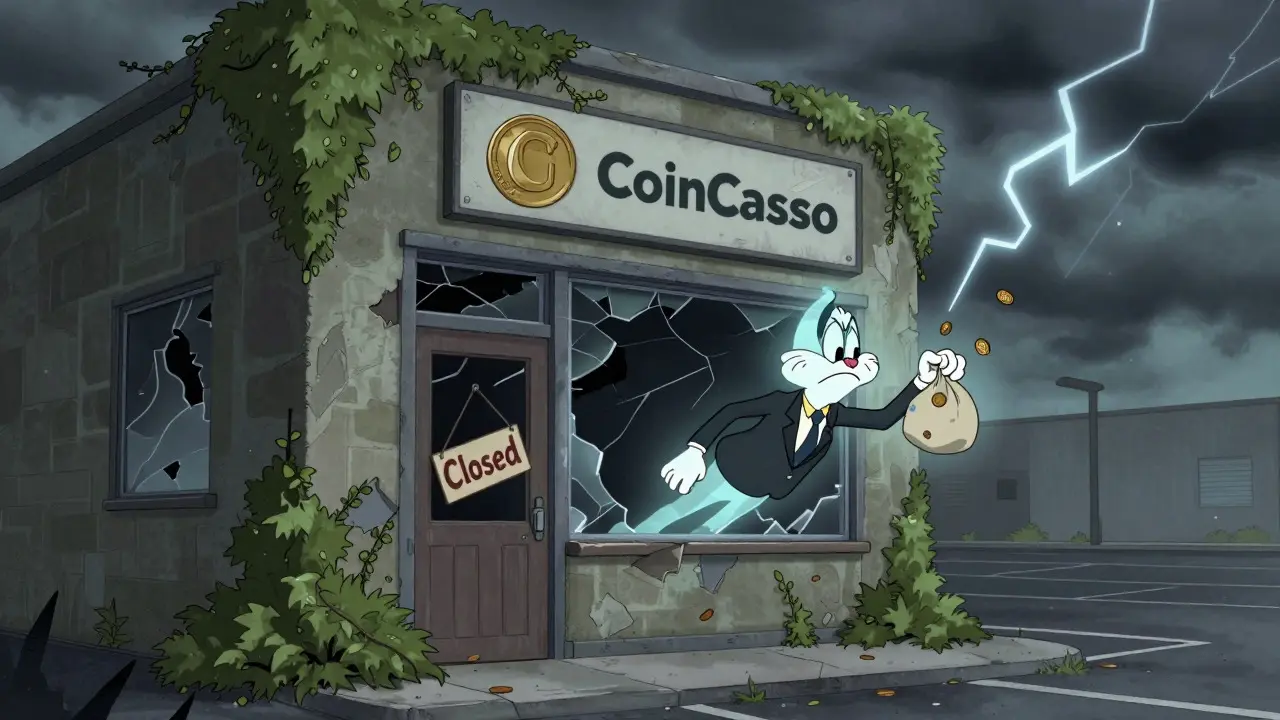
Is CoinCasso still a safe place to trade your digital assets? If you are searching for this platform today, the answer is likely not what you hope for. Multiple authoritative sources now indicate that CoinCasso is no longer operational, with its status marked as "dead" in industry graveyards and listed as "out of business" since mid-2025. Before you deposit another cent, you need to understand why this once-Estonian-based exchange has become a cautionary tale in the crypto world.
This review breaks down the history, the red flags, and the current reality of CoinCasso. We will look at who ran it, what it promised, and why experts warn against engaging with it now. Whether you are a new trader checking options or an old user trying to recover funds, this guide provides the facts you need to make a smart decision.
The Current Status: Dead or Alive?
Let's start with the most critical fact: CoinCasso appears to be defunct. As of July 24, 2025, Forex Peace Army updated its records to list the exchange as "Out of business." Cryptowisser.com has gone further, placing CoinCasso in their "Exchange Graveyard," a section dedicated to platforms that have ceased operations permanently. This isn't just a rumor; it is backed by a lack of recent regulatory updates and a significant drop in user activity over the last few years.
If you are reading this in 2026, the window for legitimate trading on this platform has closed. The entity that operated under the name CoinCasso from 2019 to approximately 2025 is no longer a viable option for spot trading or fiat-to-crypto conversion. Any website currently claiming to be the official CoinCasso site should be treated with extreme skepticism, as they may be phishing sites or rebranded scams using the old name to lure in victims.
Who Was Behind CoinCasso?
CoinCasso originally positioned itself as a European-focused cryptocurrency exchange. According to historical data from Cryptowisser, the platform was registered in Estonia and held two specific licenses issued by the Estonian Police and Border Authority:
- FRK000282: Financial services providing a virtual currency wallet service.
- FVR000340: Financial services providing exchange of virtual currency against fiat currency.
These licenses gave it a veneer of legitimacy in the early days. However, TradersUnion.com’s 2025 review later identified the entity as a fraudulent exchange, noting discrepancies in its registration details, suggesting it may have also been linked to Lithuania. This confusion over jurisdiction is a classic red flag. Legitimate exchanges usually have clear, verifiable headquarters and regulatory standing in one primary jurisdiction. CoinCasso’s shifting narrative regarding its base location raised alarms among compliance experts long before it disappeared.
Trading Features and Fees: What Was Offered?
When it was active, CoinCasso tried to compete with major players by offering a familiar interface. The platform built its trading engine on TradingView, which provided users with professional-grade charting tools. This was a smart move to attract serious traders who rely on technical analysis rather than simple buy/sell buttons.
Here is how the core specifications looked during its operational period:
| Feature | Details |
|---|---|
| Fiat Currencies Supported | EUR, PLN, USD |
| Cryptocurrencies Supported | BTC, ETH, USDT, and select altcoins |
| Maker/Taker Fees | 0.125% - 0.25% |
| Minimum Deposit (Fiat) | 1 PLN or 20 EUR |
| Minimum Deposit (Crypto) | 1 EUR equivalent |
| Order Types | Limit, Market, Stop Market, Stop Limit |
| Languages | English, Polish, Russian, Turkish |
While the fees were competitive, the real killer was liquidity. In December 2021, Cryptowisser recorded a 24-hour trading volume of only $107,613. To put that in perspective, Binance was processing over $50 billion daily at the time. That means CoinCasso represented less than 0.0002% of the market share. For a trader, low liquidity means high slippage-your buy order might push the price up significantly, costing you more than expected. It also makes exiting positions difficult if you need to sell quickly.
The Red Flags: Why Experts Warned Against It
Why did such a small exchange disappear so completely? Several warning signs emerged years before it shut down. First, there was the issue of transparency. Despite holding Estonian licenses, the company struggled to provide clear information about its actual asset custody. Did they use cold storage? How much of user funds were insured? These questions went unanswered for many users.
Second, customer support became a source of anxiety rather than relief. BTCC.com, a well-known competitor, issued a stark warning in their knowledge base: "Contacting the CoinCasso customer service is part of the scam. They will feign to work with you, to transfer your crypto out of their wallet or off of their [platform]." This suggests that when users tried to withdraw funds, they weren't dealing with a technical glitch but a deliberate effort to extract more money or assets from them.
Third, the regulatory environment tightened. The Estonian Financial Intelligence Unit revoked numerous crypto licenses between 2021 and 2022 for non-compliance. While CoinCasso wasn't explicitly named in every revocation headline, its disappearance aligns with this wave of cleanup. Many smaller exchanges that relied on loose interpretation of rules found themselves unable to survive the stricter oversight.
User Experiences: The Mixed Bag
Not every user had a nightmare story, which can be confusing. PartnerKin.com aggregated three user assessments describing the platform as "simple to use with a clean interface." One reviewer even gave it five stars, calling it the "Best crypto exchange with EURO currency and SEPA." So, what gives?
The discrepancy often lies in the timeline. Positive reviews usually came from the initial phase-signing up, making a first deposit, and seeing a nice dashboard. The negative experiences typically emerged during the withdrawal process. When you try to take your money out, that's when the friction appears. If the liquidity is low, withdrawals might be delayed. If the company is already planning an exit, those delays become permanent.
Forex Peace Army noted that while some users praised the SEPA transfer capabilities for Euro transactions, these advantages were overshadowed by the operational instability. For a regular person, a fast deposit is meaningless if you can't get your money back out. That is the fundamental test of any financial institution, and CoinCasso failed it for many.

Alternatives to Consider in 2026
Since CoinCasso is no longer an option, where should you go? You want platforms with high liquidity, transparent regulation, and a track record of survival. Here are a few alternatives that dominate the market in 2026:
- Binance: Still the global leader in volume. Best for advanced traders who need deep liquidity and a wide range of pairs.
- Coinbase: Known for strong regulatory compliance in the US and Europe. Ideal for beginners who prioritize security and ease of use.
- Kraken: A veteran in the space with a strong reputation for security and customer support. Good for mid-level traders.
- Gate.io: Often cited as a direct alternative to smaller exchanges like CoinCasso. It offers a wider variety of altcoins and has maintained stable operations.
When choosing, always check the current regulatory status in your country. An exchange might be great globally but restricted locally. Always verify if they hold licenses from bodies like the FCA (UK), BaFin (Germany), or ESMA-regulated entities in the EU.
What to Do If You Are Stuck on CoinCasso
If you are one of the few users who still has funds locked in a CoinCasso account, here is your game plan. First, stop sending more money. If "customer support" asks you to pay a fee, tax, or gas cost to unlock your withdrawal, it is almost certainly a secondary scam. The original platform is dead; anyone contacting you now is likely a third-party fraudster.
Document everything. Take screenshots of your balance, transaction history, and any emails. Check if the domain name of the website matches the official one from 2021-2023. If you deposited via bank transfer, contact your bank immediately. Ask for a chargeback if the transaction was recent, though success rates for crypto transfers are low. If you deposited via card, your chances are better.
Finally, consider reporting the case to local consumer protection agencies or the Estonian Financial Supervision Authority if you believe the original license holders are still accountable. While recovery is rare, it is worth a shot if you have substantial losses.
Frequently Asked Questions
Is CoinCasso legit in 2026?
No, CoinCasso is widely considered defunct and potentially fraudulent. Major tracking sites like Cryptowisser and Forex Peace Army mark it as "dead" or "out of business." Avoid using it for new trades.
Can I withdraw my funds from CoinCasso?
Withdrawals are highly unlikely to succeed through normal channels. Be wary of anyone asking for fees to release funds, as this is a common post-shutdown scam tactic. Contact your bank if you used fiat deposits recently.
Where was CoinCasso based?
CoinCasso claimed to be registered in Estonia with specific financial licenses. However, later reports suggested links to Lithuania, creating confusion about its true legal standing.
What was the main reason for CoinCasso's failure?
Extremely low liquidity and potential regulatory non-compliance were key factors. With daily volumes under $100k compared to billions on competitors, it struggled to retain users, leading to its eventual disappearance.
Are there good alternatives to CoinCasso for European users?
Yes. Binance, Coinbase, and Kraken all offer robust services for European users with SEPA support. Gate.io is also a popular choice for those looking for a wider variety of altcoins.